
REVIEW · TENERIFE AUDIO TOURS
San Cristobal de La Laguna : Cathedral ticket w/ audioguide
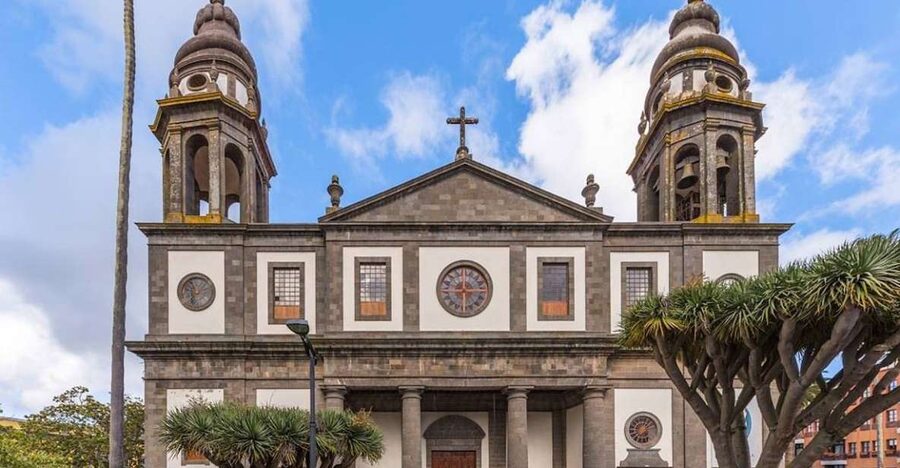
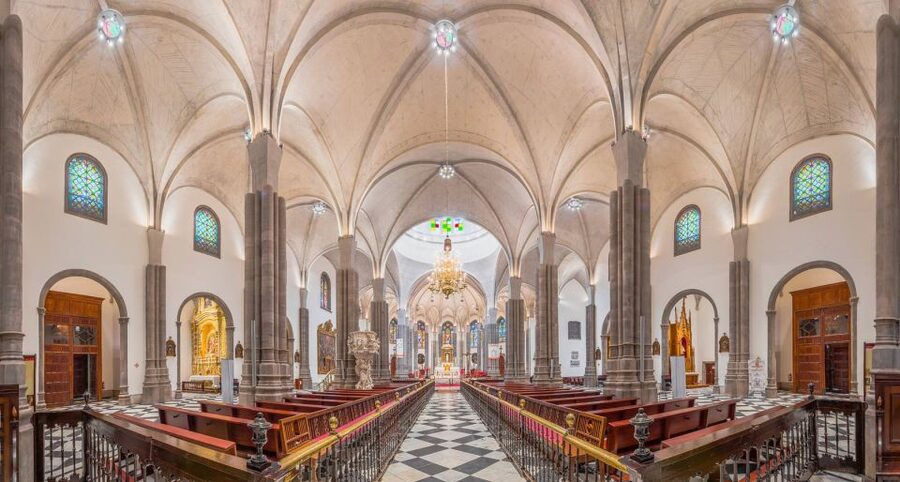
San Cristóbal de La Laguna’s cathedral is a striking mix of old and new. The neoclassical facade is the only original part of the building, while inside you’ll find a largely neo-Gothic church with high ribbed vaults, an ambulatory, a Baroque altarpiece, and an Italian marble pulpit. I like that the visit places you in the center of a UNESCO World Heritage city and gives you an audio guide in five languages.
I also like the low $8 price, especially if you want context rather than a quick look inside a church. The main thing to keep in mind is that free entry does not include the audio guide, so check exactly what your booking covers before you arrive. The church also calls for modest clothing and quiet behavior.
Key points to know
- The facade is the original survivor: The grand neoclassical front is the only original part of the present cathedral.
- The interior tells a different story: Inside, neo-Gothic vaults and an ambulatory replace the look suggested by the facade.
- The audio guide covers five languages: Choose English, Spanish, French, Italian, or German.
- The cathedral sits in a UNESCO World Heritage Site: You can pair the visit with a walk through historic La Laguna.
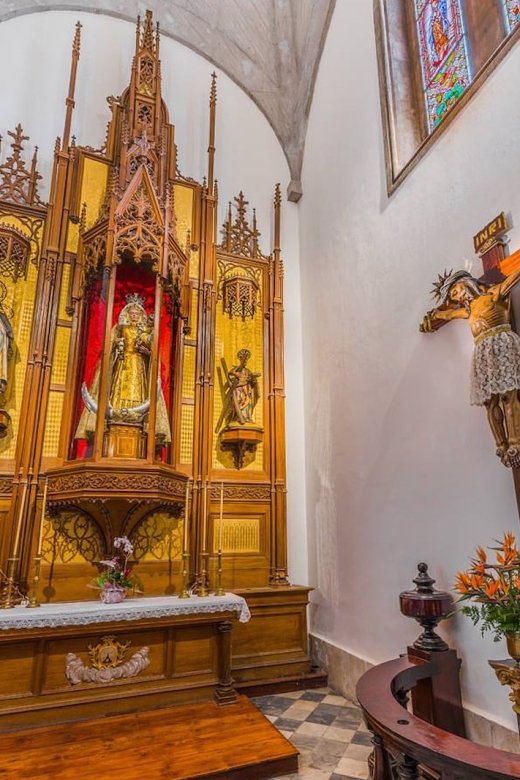
- The Baroque altarpiece is a major sight: Look for the altarpiece dedicated to the Virgen de los Remedios.
- The visit is self-paced: You receive admission and an audio guide rather than a scheduled walking tour.
A cathedral shaped by four centuries of change
The cathedral stands at the heart of San Cristóbal de La Laguna, a city recognized by UNESCO as a World Heritage Site in 1999. That setting matters. You are not visiting an isolated monument reached by a long trip outside town. The cathedral forms part of the city’s historic core, so it fits naturally into a day spent walking La Laguna’s streets.
The church began in the 16th century as the Parroquia de los Remedios. That early identity explains its connection to the Virgen de los Remedios, whose Baroque altarpiece remains one of the main artistic sights inside. The building did not become a cathedral until 1819.
The structure you see today came after a complete rebuilding at the start of the 20th century. This gives the visit an interesting tension. The cathedral has older religious roots, but much of the visible building is later work. If you expect a church where every wall and arch dates from the same period, you may find the story more complicated, and more interesting.
The building was declared an Asset of Cultural Interest in 1983. That designation reflects its architectural and artistic value, but the cathedral is also an active place of worship. You are entering a religious building first and a heritage site second. Keep your voice low, dress respectfully, and be ready for the atmosphere to feel quieter and more serious than a standard museum.
More Audio Tours in Spain:
- Barcelona: Sagrada Familia Entry Ticket with Audio Guide
★ 4.6 · 105,312 reviews - Barcelona: Casa Batlló Entry with Self-Audioguide Tour
★ 4.7 · 25,359 reviews - Granada: Alhambra Entry Ticket with Audio Guide
★ 4.1 · 5,950 reviews
Start with the surviving neoclassical facade
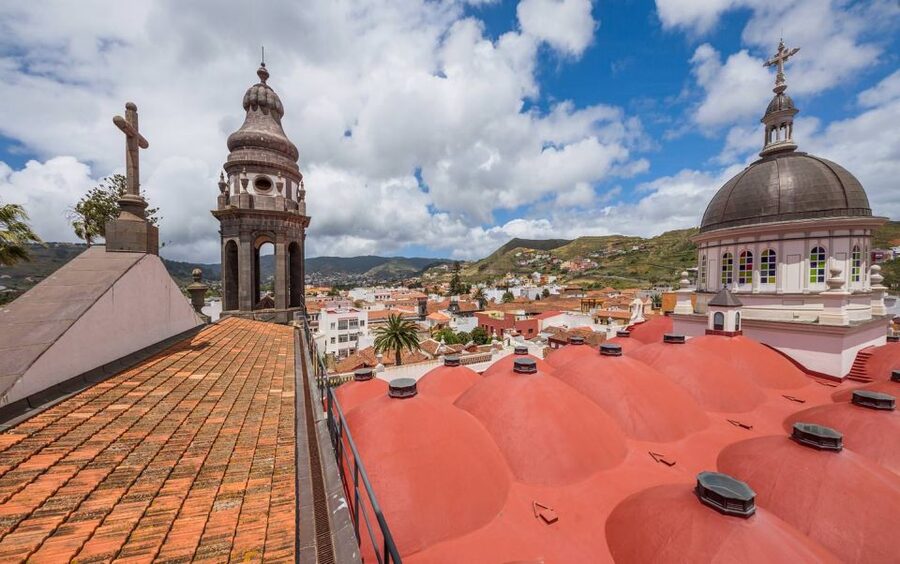
Begin at the main entrance, where you exchange or show your voucher. The facade deserves a careful look before you go inside because it is the only original part of the building that remains. Its grand neoclassical design gives the cathedral a formal, composed appearance.
The facade also prepares you for one of the visit’s best contrasts. From outside, the building presents a neoclassical face. Inside, the architecture shifts to a neo-Gothic style, with high ribbed vaults and an ambulatory. I like this change because it makes the cathedral feel like a record of different building campaigns rather than a single frozen design.
Take a moment here to look up and consider the scale of the entrance. The facade is not just a way into the church. It is the clearest surviving link to the earlier structure, so it carries unusual importance for anyone interested in the cathedral’s development.
There is no scheduled guide leading a group through this opening stage. Instead, you explore with the supplied audio guide. That gives you freedom to pause at the facade, enter when ready, and set your own pace.
Hear the story in five languages
The audio guide is available in English, Spanish, French, Italian, and German. For many visitors, this is the main reason to choose the paid visit instead of simply walking in for free. A church can be visually impressive but hard to understand without a little explanation. The guide gives meaning to the building’s dates, styles, and artworks.
The information provided does not name an individual guide, so you should not expect a live tour led by a particular person. The English-language host or greeter can assist at the entrance, while the main interpretation comes through the audio guide.
I like this setup for an architectural visit because you can stop listening when you want to look closely. You can also give more time to the altarpiece, pulpit, or Treasury rather than moving at a group’s speed. The tradeoff is that you do not get a personal conversation or the chance to ask a guide follow-up questions.
The audio guide is described as using current technology, but the practical point is simple: it turns a short church visit into a more informed one. If you already know a great deal about La Laguna Cathedral, you may be content with free entry. If you want the story behind what you see, the added interpretation is more useful.
Read the neo-Gothic interior
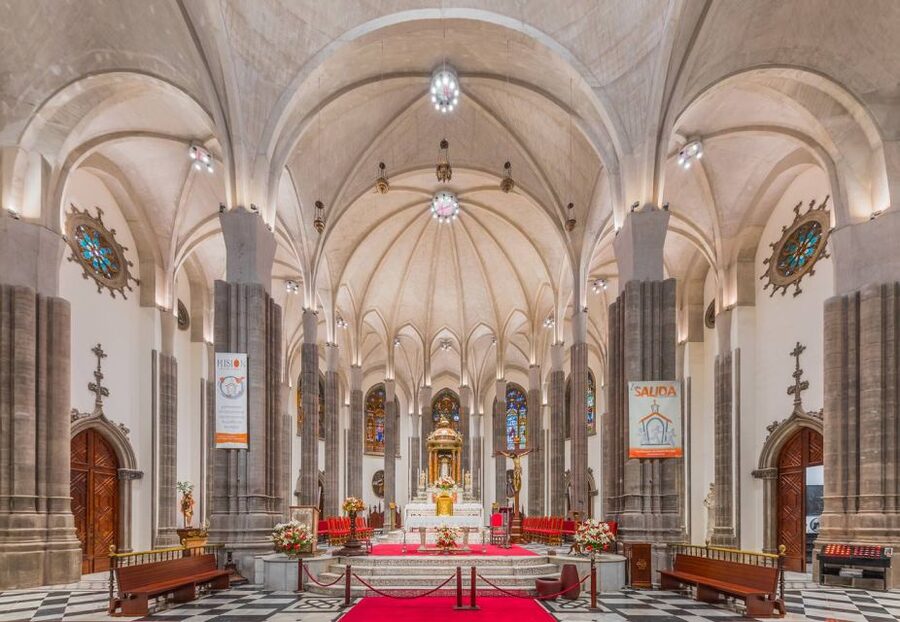
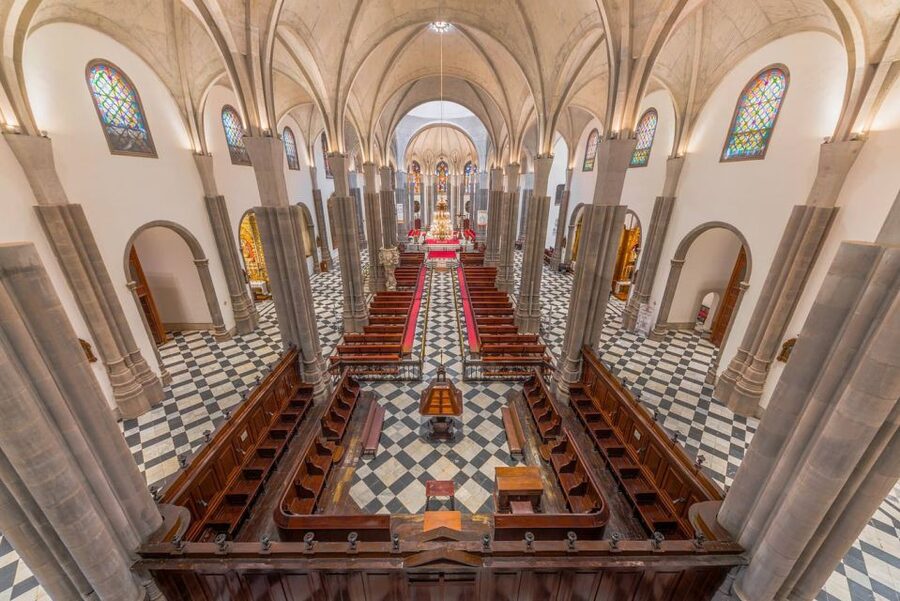
Once inside, look up first. The high ribbed vaults are among the clearest signs of the cathedral’s neo-Gothic design. They give the interior height and structure, creating a very different impression from the orderly neoclassical entrance.
The ambulatory is another important feature. It helps you understand the church as a planned cathedral space rather than only a large room with an altar at the end. Walk attentively and let the audio guide explain what you are seeing. The visit is not built around a long list of stops, so your attention can move between architecture and art.
The interior may appeal most to people who enjoy comparing styles. You can see how the facade, vaults, and decorative works belong to different artistic moments. That makes the cathedral a useful stop for anyone trying to understand how Spanish churches change over time.
Do not rush straight to the most famous artworks. The vaults and ambulatory establish the scale of the building, and they make the smaller details easier to appreciate. A few extra minutes looking upward can add more to the visit than simply ticking off the main objects.
Same place, a different route to walk:
- Barcelona: Palau de la Música Self-Guided Tour
★ 4.6 · 3,603 reviews - Casa Batllo Admission Ticket with Intelligent Audio Guide
★ 4.5 · 3,168 reviews - Madrid: Las Ventas Bullring Tour with Audio Guide
★ 4.6 · 3,154 reviews - Cordoba: Mosque-Cathedral E-Ticket with Audio Guide
★ 4.1 · 2,895 reviews
Spend time with the Virgen de los Remedios altarpiece
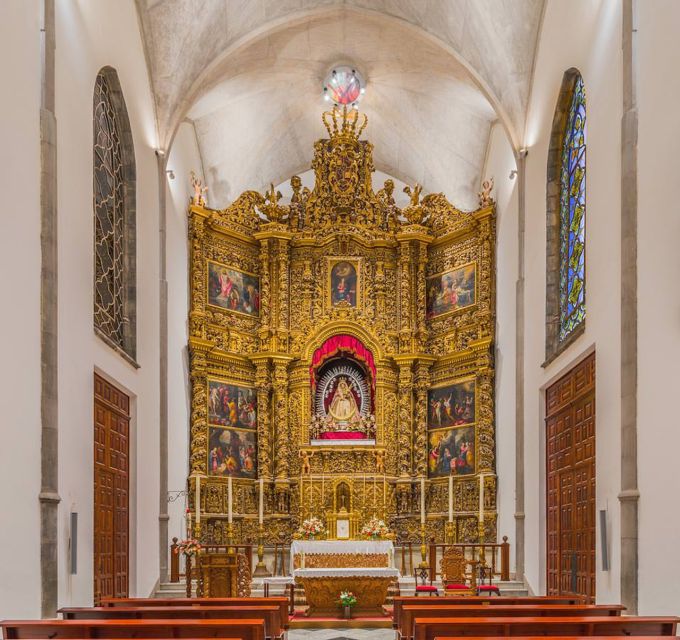
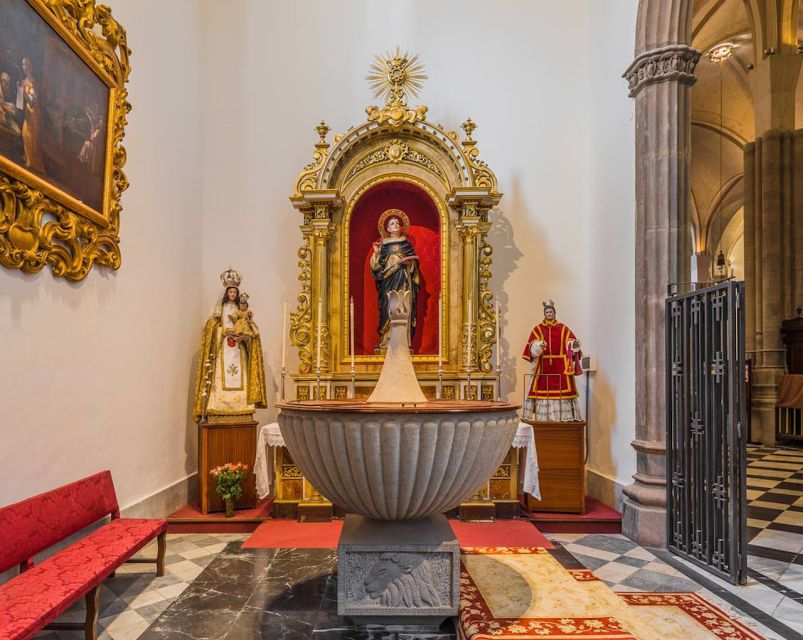
The Baroque altarpiece of the Virgen de los Remedios is one of the cathedral’s principal attractions. Its connection to the church’s original identity as the Parroquia de los Remedios gives it more than decorative importance.
Baroque art often rewards close looking, and the audio guide should help you place the altarpiece within the cathedral’s religious setting. Listen for the explanation, then look at how the altarpiece draws attention toward the devotional focus of the church.
I would give this stop more than a passing glance. Even if you are not an art specialist, you can appreciate the contrast between the ornate Baroque work and the cleaner lines of the surrounding architectural design. The cathedral offers several styles in a compact visit, and this altarpiece is the strongest example of its Baroque character.
The available information does not provide measurements, dates for the altarpiece, or details about individual artists. That means you should treat the audio guide as your source for the precise interpretation rather than assuming every detail from the general description.
Find the Italian marble pulpit
The monumental pulpit, made from Italian marble, is another clear focal point. It is easy to understand why this work is singled out: the material itself sets it apart from the surrounding structure, and its scale gives it a strong visual presence.
Look at the pulpit as both an artwork and a working part of the church. A pulpit was designed to make spoken religious teaching visible and audible, so its position and size carry a practical purpose as well as an artistic one.
This is a good place to use the audio guide rather than simply taking a photograph and moving on. The guide may help explain the pulpit’s role and artistic setting. Since no specific artist or date is provided, I would avoid expecting a full biography and focus instead on how the marble object fits the cathedral’s interior.
For visitors with limited time, the pulpit and the Virgen de los Remedios altarpiece are the two interior features I would prioritize after the main architectural spaces. They give you a quick sense of the cathedral’s artistic range.
Allow time for the Great Treasury
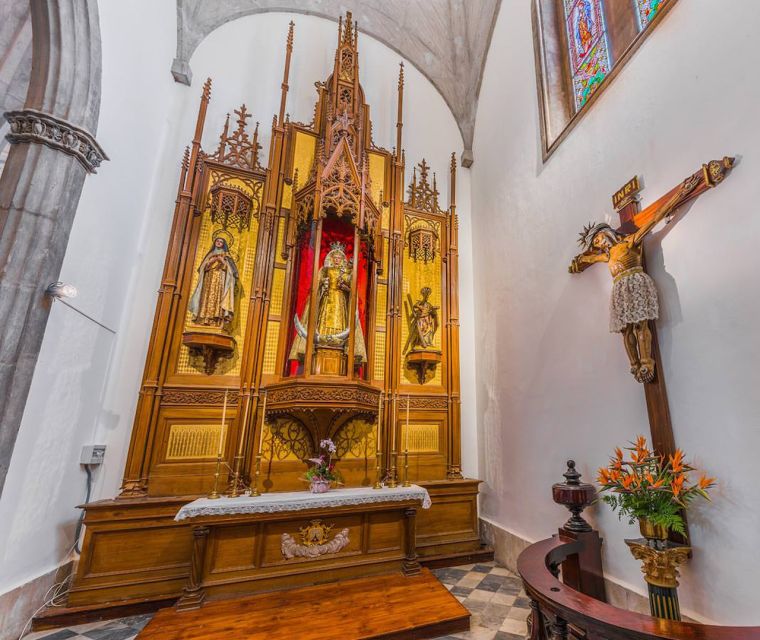
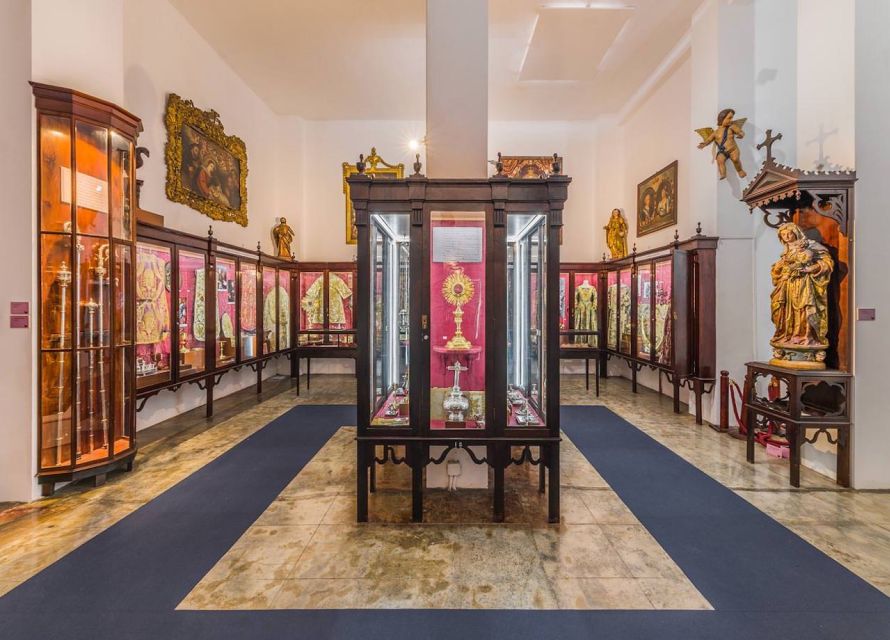
The Great Treasury contains religious, historic, and artistic objects connected with the cathedral. It adds another layer to the visit. Instead of looking only at the building, you can see the kind of objects preserved as part of its heritage.
Treasury rooms can be especially useful when you want to understand a church as a living institution. The cathedral is not just walls, vaults, and decoration. It is also a place that has gathered objects connected to worship and local history.
The exact number and type of objects are not specified, so plan to treat the Treasury as an additional area rather than expecting a large museum with a fixed gallery list. Its value will depend partly on your interest in religious art and historic collections.
I would not skip it automatically. If you have already paid for the audio-guided admission, the Treasury helps make the visit feel fuller. It also gives you a break from looking upward at the architecture and shifts your attention to individual works and objects.
What the $8 ticket really buys you
At $8 per person, the ticket is priced as a modest cultural visit rather than a major full-day attraction. The admission includes entry to the cathedral and the audio guide, with five language choices. For someone who wants the building’s story, that is a sensible price.
The value is strongest when you use the guide. If you plan to enter only for a few minutes, free admission may be enough. The important distinction is that free entry does not include the audio guide, so the paid option mainly buys you interpretation as well as admission.
The ticket is valid for one day, and availability should be checked for starting times. The activity is not described as a fixed-length guided tour, so you can expect a self-paced visit rather than a set itinerary with a group.
You can cancel up to 24 hours in advance for a full refund, and the reserve-now, pay-later option lets you hold the booking without paying immediately. Those terms are useful if your La Laguna plans may change, but they do not alter the basic nature of the visit: this is a flexible cathedral entry with audio commentary.
Who will enjoy this cathedral visit
I would recommend this experience to first-time visitors who want a clear introduction to La Laguna Cathedral without committing to a long guided tour. It also suits architecture fans, art lovers, and anyone already exploring the UNESCO-listed city center.
The five language options make it practical for international visitors. English speakers have a direct audio option, and the Spanish, French, Italian, and German choices cover several other common needs.
Families can also benefit from the flexible pace, although the church setting requires respectful behavior. You may need to keep children quiet and attentive, especially if worship is taking place.
This is less suitable if you want a live historian, a large group experience, or detailed answers to personal questions. No individual guide is named, and the format depends on the audio guide rather than ongoing commentary from a specialist.
The available rating is 4.2 out of 5 from six reviews, with a verified German booking from January 4, 2026 receiving five out of five. The German comment specifically praised the cathedral’s beauty and the audio guide. That matches the main strength of the experience: it combines a visually impressive church with simple, useful interpretation.
Practical tips for a respectful visit
Bring your voucher to the cathedral’s main entrance. The meeting point is straightforward, but you should check the available starting time before setting your day around the visit.
Dress in a way that suits a church. Respectful clothing and behavior are required, and quiet voices are part of the experience. This is not a place for a loud, rushed stop between other activities.
Start outside with the neoclassical facade, then enter and give yourself time for the vaults and ambulatory before focusing on the altarpiece, pulpit, and Treasury. That order lets you understand the building before concentrating on its details.
Use the audio guide in the language that gives you the most comfortable listening experience. If you speak more than one of the available languages, choose the one you can follow while also looking closely at the architecture.
Should you book the La Laguna Cathedral ticket?
Book it if you want more than a quick look inside and value a flexible visit with clear commentary. The combination of the original neoclassical facade, neo-Gothic interior, Baroque altarpiece, Italian marble pulpit, and Great Treasury gives you plenty to examine for a modest $8.
Skip the paid option if you only want free entry and do not need explanations. The audio guide is the main extra, and the visit does not include a named live guide or a longer city tour.
For most visitors already exploring San Cristóbal de La Laguna, I think the ticket makes sense. It adds a focused cultural stop to your day, gives context to the cathedral’s changing architecture, and lets you experience this place as both a major monument and a house of God.
FAQ
Where does the cathedral visit begin?
Meet at the main entrance of the cathedral with your voucher.
What does the ticket include?
The ticket includes entry to the cathedral and an audio guide.
Which languages are available for the audio guide?
The audio guide is available in Spanish, English, French, Italian, and German.
Can I enter the cathedral for free?
Free entrance is available, but it does not include the audio guide.
How long is the ticket valid?
The ticket is valid for one day. Check availability for the applicable starting times.
What happens if I need to cancel?
You can cancel up to 24 hours in advance for a full refund. You can also reserve now and pay later.
Just added around Spain
- San Antonio Bay Self Drive Boat Rental★ 4.5 · 5 reviews
- Granada’s Realejo District: A Self-Guided Tour of the Old Quarter★ 4.0 · 5 reviews
- Granada Scavenger Hunt and Sights Self-Guided Tour★ 5.0 · 9 reviews
- Entrance to the Alhambra and Generalife with Audio Guide★ 3.5 · 38 reviews
- Gijon Self-Guided Sherlock Holmes Murder Mystery Game★ 3.5 · 4 reviews
- Montsacopa: An audio tour in the Volcano in the Centre of the City★ 4.5 · 3 reviews
- Mosque-Cathedral of Córdoba E-Ticket with Audio Guide★ 3.5 · 15 reviews
- City of Caliphs: A Self-Guided Walking Tour of Córdoba’s History★ 4.5 · 12 reviews
Tenerife Audio Tours, compared.

Self Drive Sunset & Stargazing in Teide National Park – No Dinner
Read our review →
Self Drive Sunset & Stargazing in Teide National Park with Dinner
Read our review →


Tenerife: Rent a Boat with No License, Self Drive
Read our review →

Puerto Colon: License-Free Self-Drive Boat in Tenerife
Read our review →
Browse the lists this tour appears in