
REVIEW · ITALY AUDIO TOURS
Rome: Colosseum Access and Self-Guided Virtual Reality Tour
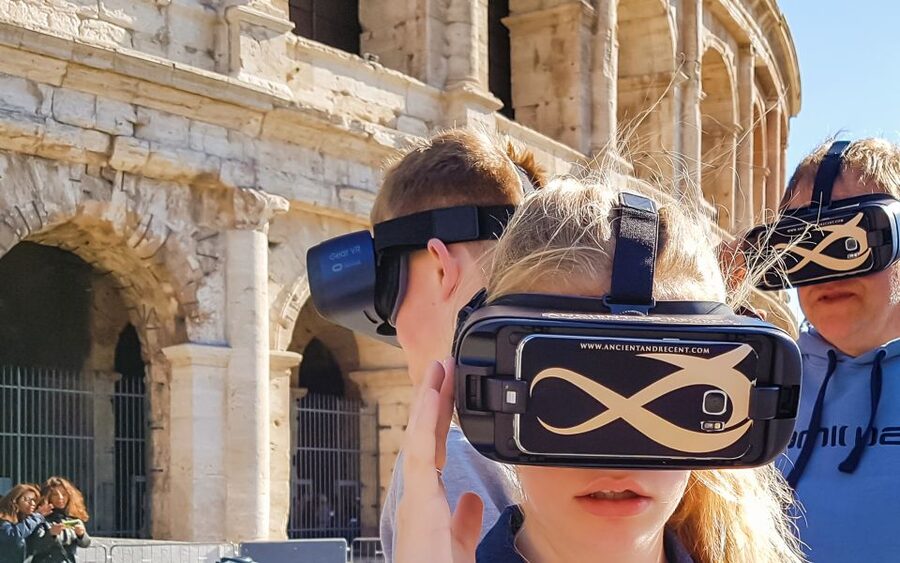
The clever part of this Colosseum visit happens before you enter the ancient ruin. A VR headset rebuilds the monument as it looked in 72 AD, showing the arena floor, underground, and surrounding square instead of leaving you to picture them from broken stone. I like that the experience gives you a clear sense of the building before you walk inside, and I like the freedom to explore the Colosseum, Roman Forum, and Palatine Hill at your own pace afterward.
The main trade-off is that this is not a live guided tour. The narration comes through your headset, the VR session takes place outside the monument, and access to the real underground, arena floor, and Third Ring is not included. Some people may also feel queasy using the equipment, so keep that in mind before booking.
Key points to know before booking
- Three ancient scenes in 3D: Visit the Colosseum Square, arena floor, and underground as they may have appeared in 72 AD.
- Independent sightseeing afterward: Your ticket covers the Colosseum, Roman Forum, and Palatine Hill, without requiring you to stay with a guide.
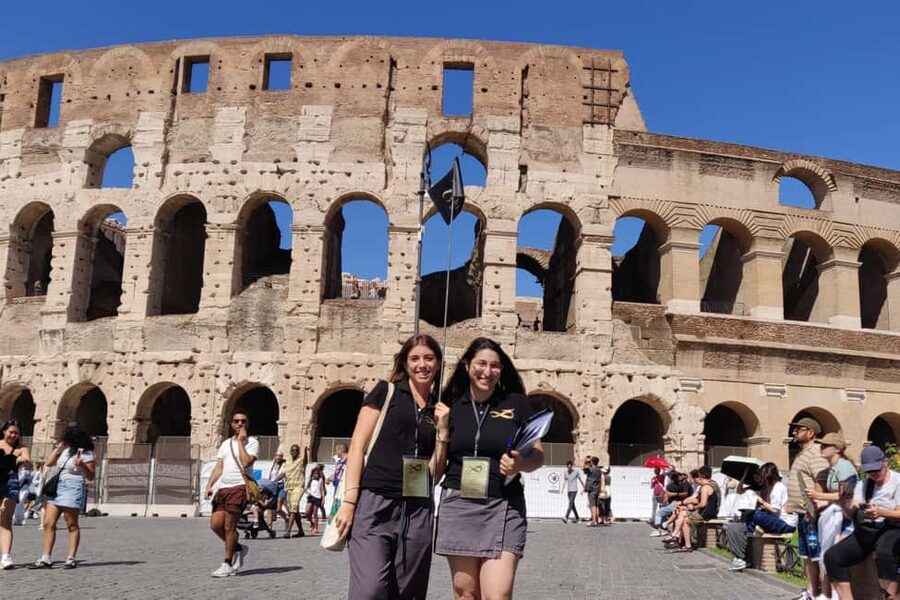
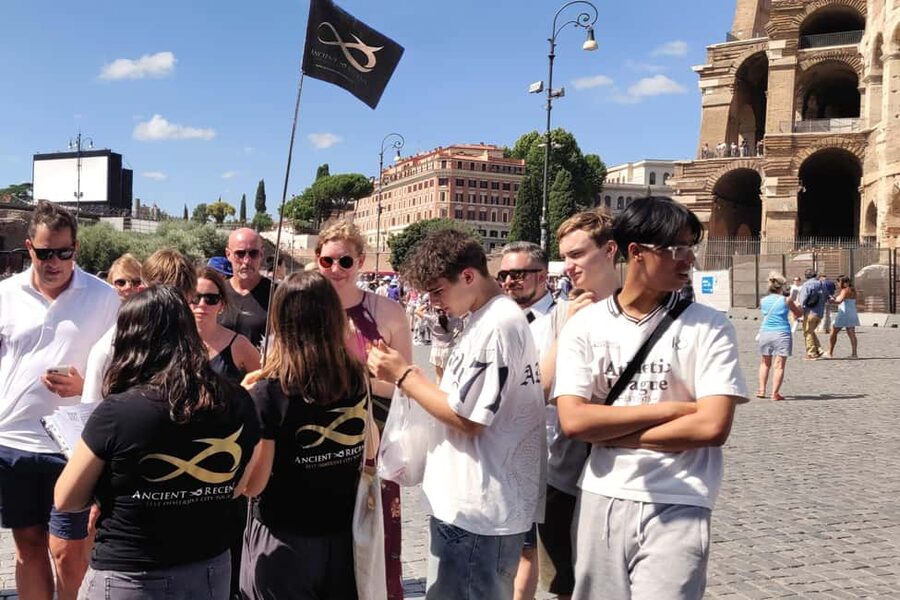
- Helpful staff at the Arch of Constantine: Look for a black flag marked Ancient and Recent near the Colosseum.
- Good for families: Children and teenagers often respond well to the visual format, with staff members such as Cristina, Claudia, Eleonora, and Valeria praised for being especially helpful.
- About $66.07 per person: The cost includes the 18 euro entry ticket, headset rental, audio commentary, fees, and insurance.
- Plan for comfort: Wear good shoes, leave large bags behind, and remember that the activity is non-refundable.
What this Colosseum VR experience actually does
A visit to the Colosseum can leave you with a familiar problem: you see enormous arches, exposed brick, and a damaged arena, but you must supply much of the missing picture yourself. This activity uses animated 3D reconstruction to fill in some of those gaps.
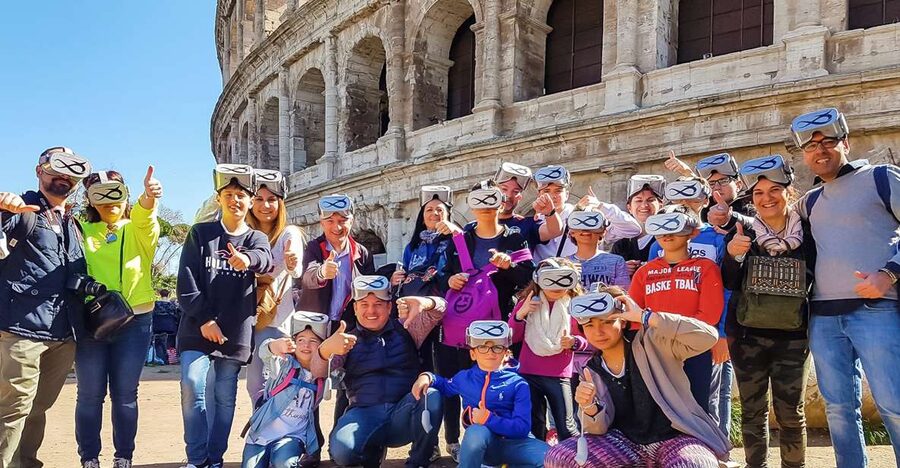
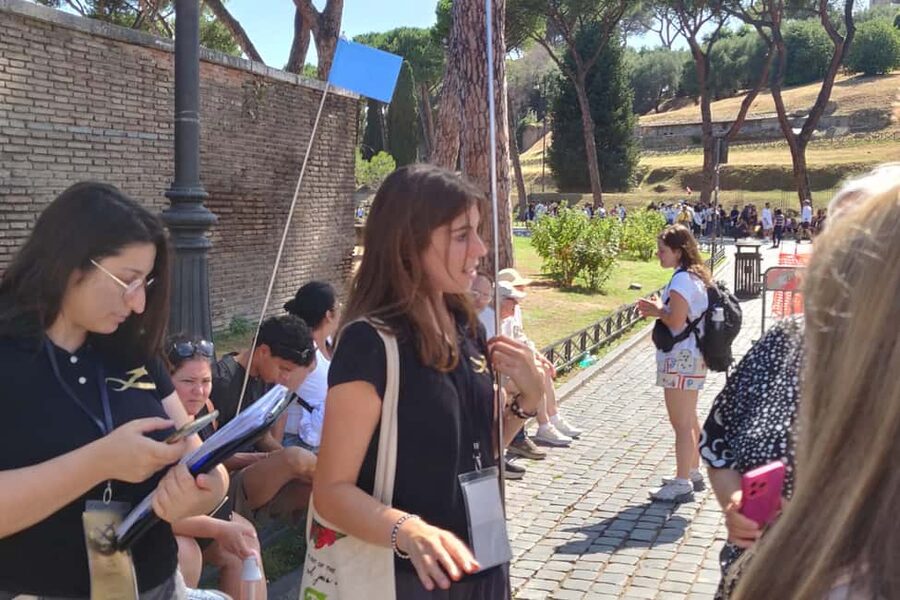
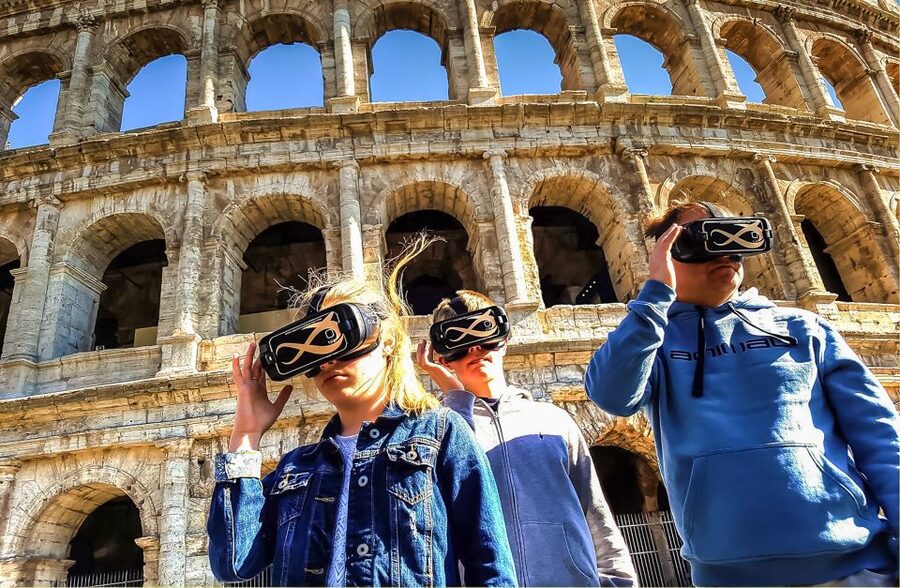
You meet an English-speaking VR assistant near the Arch of Constantine. Staff provide an Oculus headset, audio equipment, and a Samsung S7 rental. The commentary is available in English, Italian, Spanish, German, Portuguese, or French, depending on the option selected when you book.
The VR portion is self-guided. You are not following a live historian through the monument. Instead, the staff member helps fit and explain the equipment, then you move through the scenes at your own pace while the audio narration and images provide the structure.
That setup makes the experience fairly easy to follow. You can concentrate on the reconstruction rather than trying to keep up with a large group. It also gives younger visitors something active to do, instead of asking them to absorb a long spoken explanation beside a wall of ruins.
The full activity lasts about two hours. The VR portion takes roughly an hour, based on the practical experience of the program, and the remaining time is used to collect your entry ticket and begin your independent visit. You should still expect to spend longer at the archaeological site if you want to see all three included areas properly.
More Colosseum and Roman Forum Audio Tours in Italy:
- Rome: Colosseum & Forum with Audio Guide App -Optional Arena
★ 4.2 · 24,770 reviews - Rome: Colosseum, Forum, Palatine Hill Entry & Audioguide App
★ 4.4 · 10,957 reviews - Colosseum, Roman Forum & Palatine Hill with Audioguide App
★ 4.4 · 6,291 reviews
Meeting at the Arch of Constantine
The meeting point is at the side of the Colosseum by the Arch of Constantine. Look for staff holding a black flag with Ancient and Recent written on it.
This location matters because the area around the Colosseum can be crowded with tour leaders, ticket sellers, and visitors trying to find their group. The black flag gives you a useful visual marker, but it is still smart to arrive with enough time to locate the staff. One person noted that the meeting point was not immediately obvious, although Colosseum staff nearby could help point the way.
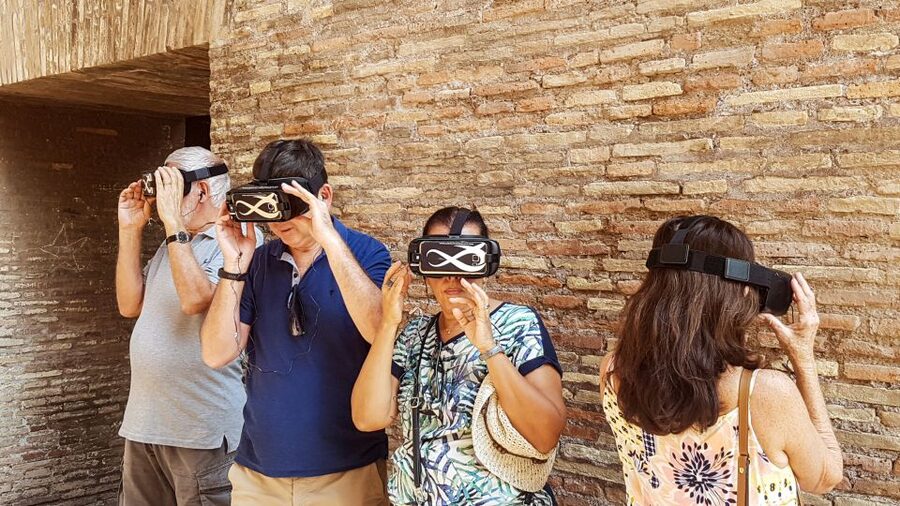
Once the staff member arrives, the group is usually moved to a suitable spot for the equipment. Shade can be valuable on a hot day, and the staff have also adapted when rain made the original outdoor position uncomfortable. The VR experience is held outside the monument for security reasons, so do not expect to put on the headset inside the Colosseum.
This outdoor arrangement has one clear benefit: you first see the ancient building in front of you, then compare it with the digital version. The contrast helps you understand what the ruins once represented.
Seeing the Colosseum Square in 72 AD
The first reconstruction presents the Colosseum Square as a functioning public space. Merchants, citizens, and gladiators appear around the building, giving you a sense of how much activity surrounded the arena.
This scene is useful because the Colosseum was not an isolated shell. It was part of a larger Roman setting filled with people, preparation, movement, and anticipation. The visual presentation helps you picture the building as a working venue rather than only an archaeological monument.
I especially like this part for first-time visitors who have not yet built a mental map of ancient Rome. The modern site can feel fragmented. A digital reconstruction gives you an instant reference point, showing how the outer structure and surrounding square related to one another.
The audio commentary adds background while you look around. Since the experience is self-guided, you can take a moment to inspect the reconstruction instead of being pushed onward by a live group. That said, the headset can make you feel slightly cut off from your companions and the busy surroundings. If you are visiting with a small child, an adult may need to keep an eye on them while another person is using the equipment.
Standing above the reconstructed arena floor
The second scene places you at the center of the arena floor, where gladiatorial combat once entertained Roman crowds.
This is the most direct way to understand the Colosseum as a performance space. From the actual ruins, you can look down into the exposed lower levels and imagine the missing wooden floor. In the virtual version, the arena becomes a complete setting, making its scale easier to grasp.
The experience does not give you physical access to the real arena floor. That distinction is important. The VR reconstruction shows you what it may have looked like, but the actual ticket does not include the Colosseum Underground, Arena Floor, or Third Ring.
For many people, this is still a worthwhile substitute because the reconstruction supplies the visual context that the regular ticket cannot. You get to see the arena as a complete stage, then enter the real Colosseum and examine its surviving structure without expecting parts of the monument that are not included.
Children and teenagers tend to connect quickly with this section because it turns an abstract explanation into a scene they can understand. Several staff members, including Cristina, Rebekah, Kristina, and Valeria, have been singled out for helping families set up the equipment and keeping the experience relaxed.
More Audio Tours in Italy:
- Rome: Pantheon Fast-Track Ticket and Official Audioguide
★ 4.5 · 27,353 reviews - Venice: Grand Canal Gondola Ride with App Commentary
★ 4.1 · 23,020 reviews - Florence: Timed Entry to Michelangelo’s David + Audio App
★ 4.6 · 19,496 reviews - Rome: City Sightseeing Hop-on Hop-off Bus with Audioguide
★ 4.0 · 16,045 reviews
Looking beneath the arena
The third reconstruction takes you below the arena into the underground areas. This is where wild animals and fighters waited before appearing in front of the crowd.
The underground scene adds an important human detail. The Colosseum was not only about what happened in front of thousands of spectators. Much of the preparation took place out of sight, below the floor, where people and animals were held before being brought into the arena.
Again, you are viewing a reconstruction rather than entering the actual underground. The activity specifically excludes physical access to that area. Still, the digital view helps you understand why the exposed lower levels are such an important part of the building.
The three scenes work best together. The square shows the public world around the Colosseum, the arena shows the spectacle, and the underground shows the machinery and waiting area beneath it. You get a clearer picture of how the monument functioned than you would from a quick walk around the surviving walls.
Entering the Colosseum after the VR session
After the virtual presentation, you collect your physical entry ticket from the staff. The ticket includes the Colosseum, Roman Forum, and Palatine Hill, with the 18 euro admission cost included in the overall price.
The ticket is designed to help you avoid the ticket desk queue. That is a real advantage in Rome, where a long wait can eat into the best part of your day. The entry process is not the same as having every security line removed, so you should still allow time for normal checks and movement through the site, but you are not starting by standing at the regular ticket counter.
The most effective order is usually to let the VR scenes give you the basic picture, then look for those details in the actual monument. Notice the surviving arches, the layered construction, and the exposed lower levels. The building will not look like the pristine digital version, but that contrast is part of the value.
You are free to visit at your own pace after entry. There is no live guide leading you through each stop, so you can linger, take photographs, or move on when you have seen enough. This suits independent visitors who prefer not to spend the entire visit with a group.
The downside is that you do not receive personal explanations once you enter. If you want a historian beside you answering questions about every wall and inscription, choose a traditional guided tour instead.
Walking through the Roman Forum and Palatine Hill
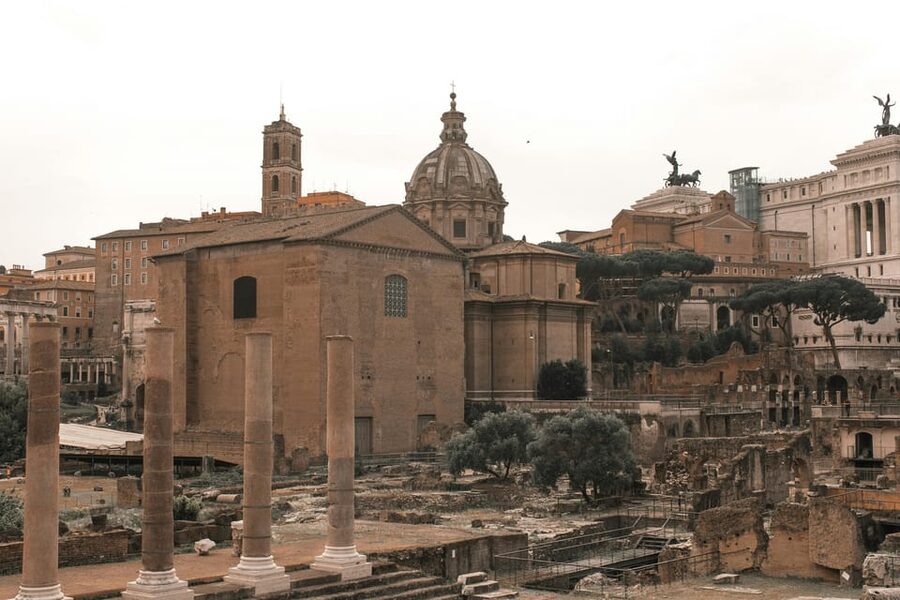
Your ticket also covers the Roman Forum and Palatine Hill. These areas are not part of the VR reconstruction, but they complete the visit by showing the wider setting of ancient Roman public and political life.
The Forum is a large archaeological area with ruins spread across an open site. Palatine Hill adds elevated views over the surrounding remains and gives you a chance to step away from the crowds around the Colosseum. You can visit both independently after entering, rather than being required to follow a fixed route.
Allow enough energy for this part. Comfortable shoes are specifically recommended, and that advice is worth taking seriously. You will be walking through an extensive archaeological complex rather than moving between a few indoor galleries.
One useful detail from the practical experience of this activity is that an early start can feel easier. A 9 a.m. session offers more shade and fewer people than a later visit. The exact starting times vary, so check availability before choosing your slot.
Some people have also found that the included ticket gives them flexibility to divide the Colosseum and Forum visit across more than one day, but you should confirm the ticket conditions attached to your specific booking before relying on that plan.
Is $66.07 a fair price?
At $66.07 per person, this is more expensive than buying a basic entry ticket alone. The included 18 euro admission is only one part of the cost. You are also paying for the VR headset, Samsung S7 rental, audio commentary, English-speaking assistant, physical ticket, booking service, fees, and third-party insurance.
I see the value in the package if you want a visual introduction and a simpler entry process. The VR scenes address the hardest part of visiting the Colosseum independently: understanding what the damaged structure once looked like. The ticket also covers three major archaeological sites, not just the amphitheater.
The price is less attractive if you already know Roman architecture well or simply want to walk through the ruins with a standard ticket. You are not receiving a private historian, restricted access to the arena, or entry to the underground. In that case, the extra cost pays mainly for the reconstruction and convenience.
For families, the calculation can be different. A child who might lose interest during a conventional history talk may pay attention to a moving 3D version of the Colosseum. The staff are also used to helping families, including visitors with young children and a stroller. One staff member created a quieter spot for a family with a two-year-old, which shows the practical value of having an on-site assistant, though you should not assume childcare is part of the service.
Who will enjoy this format most?
I would choose this activity for:
- Families with children or teenagers who respond better to pictures than long explanations.
- First-time visitors who want help understanding the original shape and purpose of the Colosseum.
- Independent visitors who do not want to remain with a live guide for the entire archaeological site.
- People who value avoiding the ticket desk queue.
- Anyone curious about the underground and arena floor but unable to book physical access to those areas.
I would choose another format if you want a detailed discussion with a historian, physical access to restricted sections, or a completely screen-free visit. Some people also experience motion sickness from VR, so the equipment may not suit everyone.
The audio guide languages are English, Italian, Spanish, German, Portuguese, and French. That gives you a useful choice, but the exact language must be selected during booking.
Practical advice for a smoother visit
Wear comfortable shoes. The Roman Forum and Palatine Hill involve walking across an archaeological site, and the two-hour activity is only the beginning if you explore all included areas.
Bring a passport or ID card for children. Leave luggage and large bags at your accommodation, because they are not allowed. Transportation is not included, so you must make your own way to the Arch of Constantine.
The activity is wheelchair accessible, but the VR session takes place outside the monument and the wider archaeological site may still involve uneven surfaces. If accessibility is important for your group, confirm the current route and site conditions before arrival.
The experience is non-refundable. Check the starting time carefully, and arrive with enough time to find the black Ancient and Recent flag. The hosts are generally described as friendly and attentive, with names including Sara, Rebekah, Claudia, Eleonora, Cristina, Kristina, Valeria, Stefania, and Ruben associated with especially positive service.
You may feel self-conscious at first wearing a headset beside ordinary sightseers. That feeling tends to pass once the reconstruction begins, but it is worth knowing that this is a public outdoor experience rather than a private room.
Should you book it?
Book this Colosseum experience if you want the ruins to make sense before you explore them. The VR scenes give you three useful viewpoints, the staff help with the equipment, and the ticket lets you continue into the Colosseum, Roman Forum, and Palatine Hill independently.
Skip it if you want a live guide, physical access to restricted sections, or the lowest possible admission price. For families and first-time visitors, though, the combination of visual storytelling, queue-saving entry, and free time afterward makes the $66.07 cost reasonable.
FAQ
Where do I meet the staff?
Meet at the Arch of Constantine beside the Colosseum. Look for staff holding a black flag marked Ancient and Recent.
How long does the activity last?
The activity lasts about two hours. Check availability for the starting times offered on your chosen date.
What does the VR experience show?
The reconstruction shows the Colosseum Square, the arena floor, and the underground areas as they may have appeared in 72 AD.
Can I enter the real underground or arena floor?
No. The included entry does not provide access to the real Underground, Arena Floor, or Third Ring.
What places does the included ticket cover?
The ticket covers the Colosseum, Roman Forum, and Palatine Hill. The 18 euro ticket cost is included in the price.
Which audio languages are available?
Audio commentary is available in English, Italian, Spanish, German, Portuguese, and French, depending on the language selected during booking.
Is the activity suitable for children and wheelchair users?
The activity is suitable for children, and a passport or ID card is required for children. It is wheelchair accessible, but unaccompanied minors are not allowed.
Just added around Italy
- Genoa Historic Centre Quest: A Self-Guided Puzzle Adventure★ 4.0 · 3 reviews
- Genova Walking Tour with Audio and Written Guide by a Local★ 4.5 · 33 reviews
- Self-Drive (No Licence) Boat Rental in Portofino Gulf★ 5.0 · 12 reviews
- Finance and Nobility: Explore medieval Genoa on a self-guided audio tour★ 4.5 · 7 reviews
- Florence: Uffizi Gallery Reserved Ticket & Digital Audio Guide★ 4.5 · 3 reviews
- Around Florence Hills: App‑Guided e‑Vespa Tour + Wine&Food★ 4.5 · 22 reviews
- Florence: Uffizi Gallery Audio Guided Tour led by Tour Leader★ 3.5 · 6 reviews
- Uffizi Gallery: Self-guided App Visit & Optional Accademia Museum★ 4.0 · 19 reviews
Italy Audio Tours, compared.

Rome: Pantheon Fast-Track Ticket and Official Audioguide
Read our review →
Rome: Colosseum & Forum with Audio Guide App -Optional Arena
Read our review →
Venice: Grand Canal Gondola Ride with App Commentary
Read our review →
Florence: Timed Entry to Michelangelo’s David + Audio App
Read our review →
Rome: City Sightseeing Hop-on Hop-off Bus with Audioguide
Read our review →
Venice: La Fenice Opera House Entry Ticket with Audio Guide
Read our review →
Rome: Colosseum, Forum, Palatine Hill Entry & Audioguide App
Read our review →Browse the lists this tour appears in