
REVIEW · ITALY AUDIO TOURS
R. Calabria: National Archaeological Museum & App audioguide
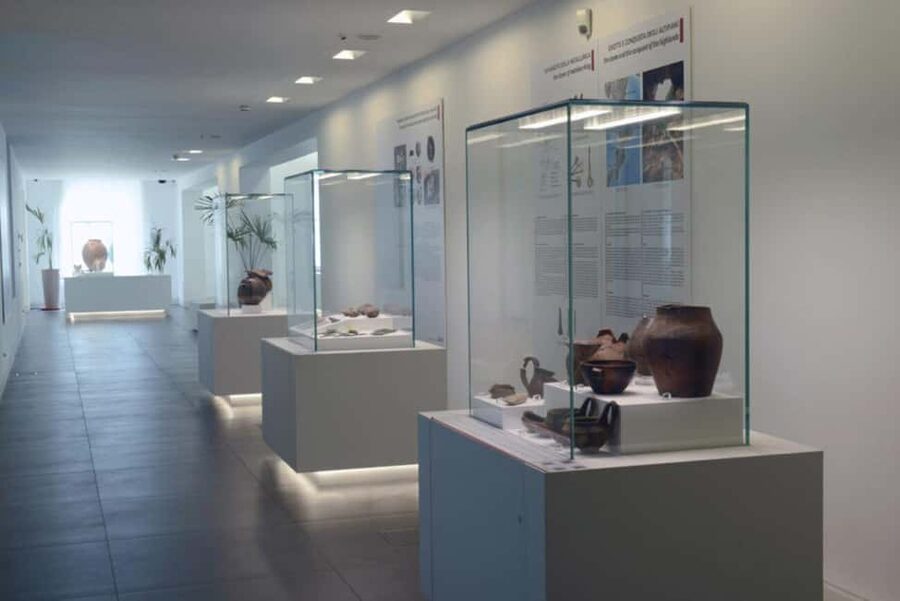
The Riace Bronzes are the headline act here: two remarkably preserved Greek statues that give this museum a powerful reason to visit Reggio Calabria. You’ll also find prehistoric, Greek, Hellenistic, and Roman objects arranged in a modern museum that is easier to follow than its size might suggest.
I like the informative exhibition posters, which help you understand what you’re seeing, and I like the chance to pair serious archaeology with views across the Strait of Messina. The main drawback is that this is an entry ticket with an app audioguide, not a personal guided tour, so you’ll need to manage your own pace and attention.
Key points before you go
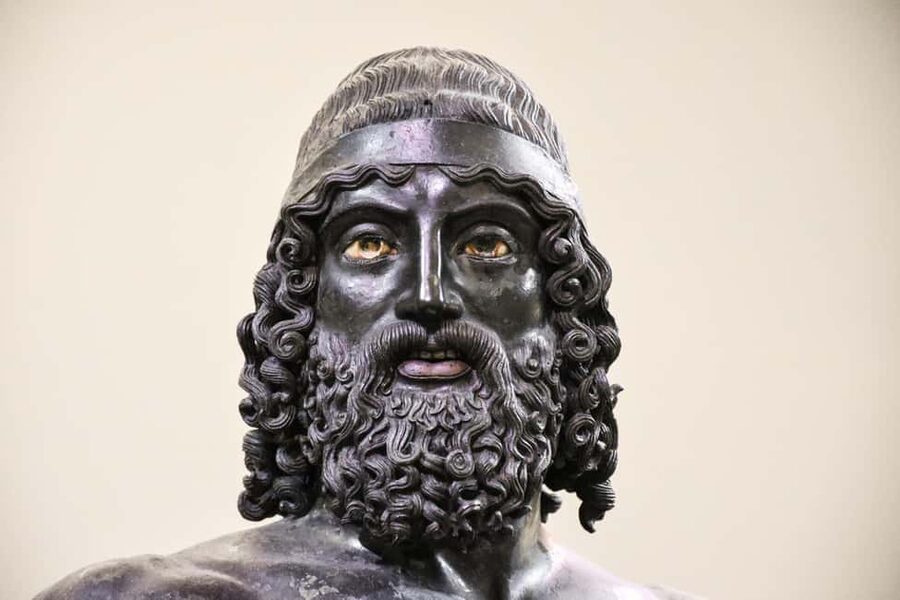
- The Riace Bronzes are the central attraction: Plan your visit around these celebrated Greek statues.
- The collections span many centuries: You’ll move from prehistoric material through the Greek and Roman periods.
- The Hellenistic Necropoli is an unexpected highlight: Burial objects found during construction add a personal side to the archaeology.
- The lapidary tells stories in stone: Inscriptions and architectural fragments offer direct evidence of ancient public life.
- The museum has useful written interpretation: Exhibition posters are informative and help lesser-known objects receive some attention.
- The ticket lasts one day: You can choose from the available entry times and explore the museum without a rushed fixed itinerary.
Why the Riace Bronzes make this museum worth your time
Reggio Calabria’s National Archaeological Museum is one of those places where a single room can justify a stop, but the rest of the building rewards you for staying longer. The two Riace Bronzes are the obvious draw. These ancient Greek statues are famous for their lifelike proportions, powerful poses, and unusually fine preservation.
I would give the bronzes your best attention rather than treating them as a quick photo stop. Their scale matters. Their surfaces, posture, and surviving detail make them feel less like distant textbook objects and more like carefully observed human figures. You can appreciate their artistry even if you are not an archaeology specialist.
The museum layout helps place them in a wider story. Instead of seeing the statues as isolated wonders, you can continue into collections that explain the long Greek presence in southern Italy and the later Roman period. The building’s modern arrangement is designed to guide you from one period to the next, giving your visit a clear shape.
The room dedicated to the bronzes is not available on every listed date. It will be closed on May 28, 29, and 30; June 18; July 2 and 3; and September 17 and 18. If you hold a ticket for one of those dates, you can visit the room on a different date within 30 days by showing the ticket at the office. Check this carefully before booking if the statues are your main reason for coming.
More Museum Audio Guides in Italy
- Venice: St. Mark Basilica Ticket, Audioguide+History Gallery
★ 3.9 · 4,780 reviews - Rome: Borghese Gallery Skip-the-Line Ticket & Audioguide
★ 4.3 · 4,318 reviews - Rome: Borghese Gallery Ticket + Audioguide or Guided Tour
★ 4.6 · 3,219 reviews
Moving from prehistoric objects to the Roman era
The museum’s collections cover a long stretch of time, from prehistoric periods through the Greek, Hellenistic, and Roman eras. That range is important because it keeps you from seeing Calabria as a place with only one ancient identity.
A large museum can sometimes feel like a storage room with labels. Here, the modern layout gives the collection a more readable order. You can watch materials, artistic styles, and public life change across the centuries. The experience is not only about famous objects. It is about seeing how different societies left traces in the same region.
The app audioguide can add structure, but this is still an independent visit. You should expect to set your own pace rather than follow a guide who adjusts the explanation to your interests. If you enjoy stopping for a long look at one object, you have that freedom. If you prefer a clear spoken narrative from start to finish, the lack of a personal guide may feel limiting.
Written exhibition posters are one of the museum’s practical strengths. They are informative and interesting, giving you enough context to understand why an object matters. They also help draw attention to pieces that might otherwise be overlooked beside the bronzes.
I recommend allowing time for those lesser-known displays. The museum’s best value is not simply the chance to see two celebrated statues. It is the chance to place them among a broader collection of artifacts from Calabria and the ancient Mediterranean.
The Hellenistic Necropoli adds a human story
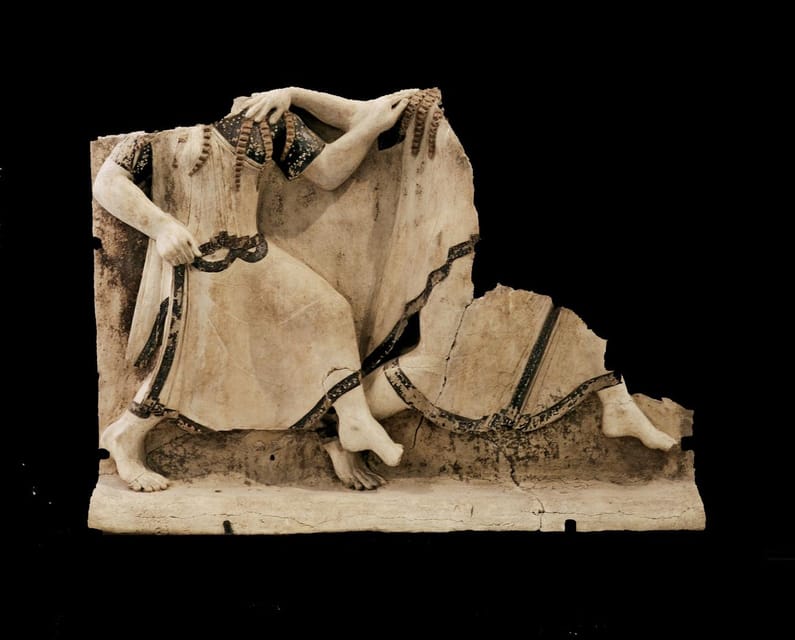
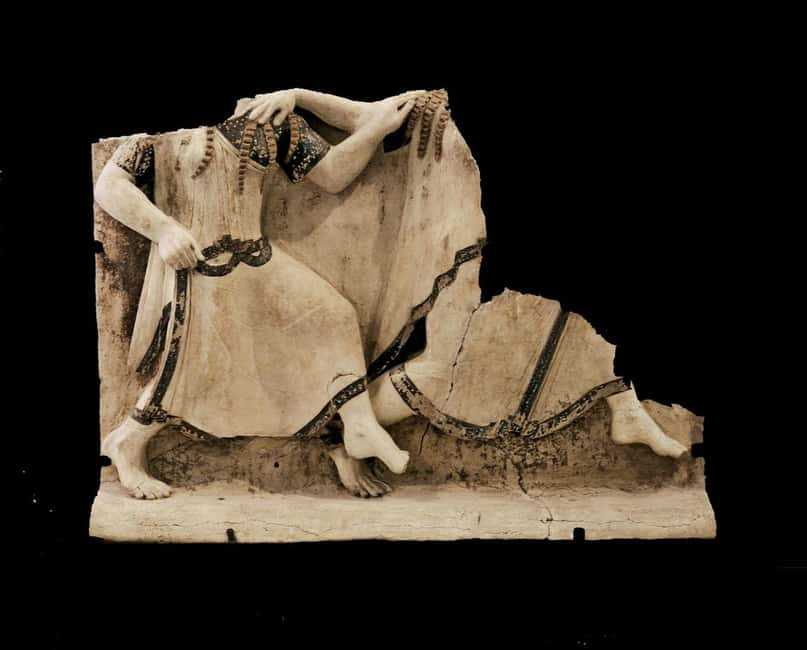
One particularly interesting section presents finds from a Hellenistic Necropoli discovered during construction of the museum. A necropolis is a burial area, so this part of the collection shifts the focus from public art and monumental buildings to the way people prepared for death.
Burial finds can be more revealing than grand statues. They show personal objects, customs, and beliefs connected with individual lives. You might find yourself spending more time here than expected because these objects create a direct link to the people who lived in the area.
The Hellenistic period was marked by cultural exchange across the Greek world. In Calabria, that story is not only told through large works of art. It also appears in burial practices and smaller finds. The museum gives you a chance to consider how ancient communities expressed identity and status beyond their public monuments.
This section is also useful if you are visiting with someone who finds rows of statues tiring. The burial discoveries offer a change in scale and subject. They make the museum feel less like a parade of masterpieces and more like a record of ordinary customs alongside major artistic achievements.
Reading ancient stone in the lapidary
The lapidary section gathers monumental inscriptions and architectural fragments. These pieces may not attract the same instant attention as the bronzes, but they can provide some of the clearest evidence about ancient communities.
An inscription can preserve a name, a dedication, an official message, or a reference to a building. Even when you cannot read the original language, the physical object still shows how public information was displayed. Architectural fragments, meanwhile, help you picture buildings that no longer survive in complete form.
I like this part of the museum because it slows the visit down. The bronzes ask you to look at the human form. The lapidary asks you to think about buildings, institutions, and public memory. The two experiences complement each other.
You will get more from the inscriptions if you resist the urge to hurry past them. Use the labels and app when you need help, then compare the written explanation with the stone itself. Small details in lettering, scale, and damage can make the objects more engaging.
More Smartphone App Tours in Italy:
- Rome: Colosseum & Forum with Audio Guide App -Optional Arena
★ 4.2 · 24,770 reviews - Venice: Grand Canal Gondola Ride with App Commentary
★ 4.1 · 23,020 reviews - Florence: Timed Entry to Michelangelo’s David + Audio App
★ 4.6 · 19,496 reviews - Rome: Colosseum, Forum, Palatine Hill Entry & Audioguide App
★ 4.4 · 10,957 reviews
A photographic laboratory with a different purpose
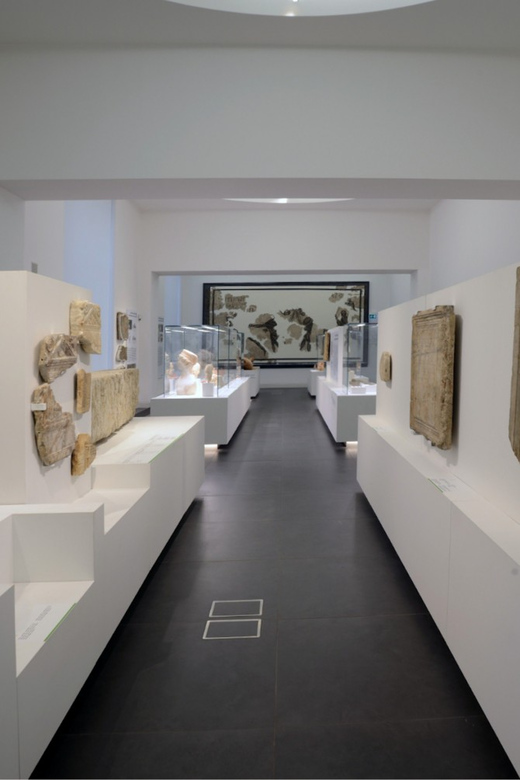
The museum also includes a state-of-the-art photographic laboratory and an archive of historical artifact photographs. This is a less obvious part of the visit, but it shows how archaeology depends on careful recording as well as excavation and display.
Photography preserves information about objects over time. It can document changes in condition, record details that are hard to see in person, and keep a visual record of pieces that may not always be on display. The archive gives you a glimpse of the work behind the exhibition rooms.
This section may appeal most to visitors interested in museum practice, conservation, or historic documentation. It is not a substitute for the major galleries, but it adds useful background. You see that the museum’s role is not limited to displaying ancient objects. It also studies and preserves them.
End beneath the glass-roofed courtyard
Near the end of your visit, take time in the inner courtyard. A striking glass roof lets natural light into the space and creates a calmer pause after the galleries.
The courtyard is a good place to gather your thoughts before leaving. You have just moved through prehistoric objects, Greek art, Hellenistic burials, inscriptions, Roman material, and photographic records. The open space gives the visit a natural breathing point.
The museum also offers views of the Strait of Messina. Those views add geographical context to everything you have seen inside. Ancient Calabria was not an isolated corner of Europe. The waterway connected communities and helped shape movement across the region.
I would not treat the view as a replacement for the archaeology, but it is a fine part of the overall experience. You can leave the galleries with a better sense of the setting that made Reggio Calabria an important place to study the ancient Mediterranean.
What the $19 ticket includes
At $19 per person, this is a reasonable price if you want the Riace Bronzes and prefer to explore independently. The ticket includes museum admission and an app audioguide. It also includes a Pemcards printed postcard that can be sent anywhere in the world, a small extra that gives the visit a personal souvenir.
The value depends on how much time you give the museum. If you rush in only to see the bronze statues, the price may feel high for a short stop. If you take time with the wider collection, the Hellenistic Necropoli, lapidary, photography material, courtyard, and views, the ticket makes better sense.
There is no personal guided tour included. That keeps the cost below many fully guided cultural experiences, but it also means you will not have someone available to answer questions or adjust the visit for your interests. The app is best for visitors who like self-guided sightseeing and want more than basic labels.
The one-day validity gives you flexibility within the chosen booking arrangement. Check the available starting times when you reserve, since the ticket is tied to entry availability. The last entry is one hour before closing, so do not arrive near the end of the day and expect a full visit.
Practical details that can affect your visit
You must exchange the GetYourGuide voucher at the museum ticket office before entering. Build in a little time for that step, especially if you are planning your arrival around a train, ferry, or other appointment.
Large bags, luggage, backpacks, and pets are not allowed. Travel light. If you are arriving with luggage, confirm where you can leave it before setting out, since the museum will not accept large items inside.
The museum is wheelchair accessible. That is useful for visitors who need step-free access, although the supplied information does not specify every detail of the route or facilities. If you have particular mobility needs, contact the provider or museum before your visit.
You can cancel up to 24 hours in advance for a full refund, and the reserve-now, pay-later option can help if your route through Calabria is still changing. These policies are helpful, but the dates when the Riace Bronzes room is closed deserve greater attention than the booking flexibility.
The activity ends at the museum, leaving you free to continue around Reggio Calabria. There is no transport component or return transfer, so plan the rest of your day from the museum location.
Who will enjoy this museum most
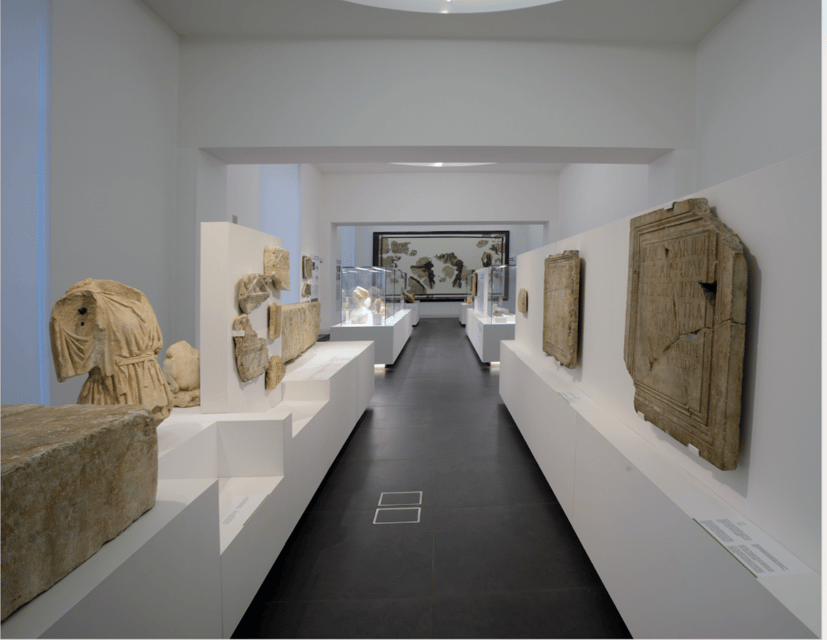
I would recommend this experience to anyone who appreciates ancient art but does not necessarily want a long formal tour. The museum gives you a strong headline attraction, a wide chronological range, and enough written support to make independent viewing worthwhile.
It suits travelers who want to combine culture with a city visit. The Strait of Messina views, the courtyard, and the museum’s central role in Reggio Calabria make it more than a single-room statue stop.
Families with older children may also find the variety useful. The bronzes provide an immediate visual hook, while the burial finds and inscriptions offer different ways into the past. Younger children may not stay engaged with every gallery, and there is no personal guide to tailor the experience, so keep your visit flexible.
History specialists could easily want more detail than an app audioguide provides. Still, the collection’s breadth and the photographic archive give serious visitors plenty to consider. The informative exhibition posters are especially useful when you want context without joining a group.
Should you book the Reggio Calabria museum ticket?
Book it if the Riace Bronzes are on your Calabria list, you want a self-guided visit, and you can spare enough time to explore beyond the main room. The combination of famous Greek statues, Hellenistic burial finds, inscriptions, photography, and Strait of Messina views gives the $19 ticket solid value.
Think twice if you need a personal guide, are carrying luggage, or can visit only on a date when the bronze room is closed. Check the closure dates first. For most independent visitors, though, this is a practical way to see one of southern Italy’s most important archaeological collections without committing to a fixed group tour.
FAQ
How much does the museum experience cost?
The listed price is $19 per person.
How long is the ticket valid?
The ticket is valid for one day. Available starting times depend on the date you select.
Is a guided tour included?
No. The ticket includes museum entry and an app audioguide, but not a personal guided tour.
Can I see the Riace Bronzes on every date?
No. The Riace Bronzes room is closed on May 28, 29, and 30; June 18; July 2 and 3; and September 17 and 18. Ticket holders for those dates can visit the room on a different date within 30 days by showing the ticket at the office.
Is the museum wheelchair accessible?
Yes, the activity is listed as wheelchair accessible.
Can I bring luggage or a backpack?
No. Pets, luggage, large bags, and backpacks are not allowed inside.
Just added around Italy
- Genoa Historic Centre Quest: A Self-Guided Puzzle Adventure★ 4.0 · 3 reviews
- Genova Walking Tour with Audio and Written Guide by a Local★ 4.5 · 33 reviews
- Self-Drive (No Licence) Boat Rental in Portofino Gulf★ 5.0 · 12 reviews
- Finance and Nobility: Explore medieval Genoa on a self-guided audio tour★ 4.5 · 7 reviews
- Florence: Uffizi Gallery Reserved Ticket & Digital Audio Guide★ 4.5 · 3 reviews
- Around Florence Hills: App‑Guided e‑Vespa Tour + Wine&Food★ 4.5 · 22 reviews
- Florence: Uffizi Gallery Audio Guided Tour led by Tour Leader★ 3.5 · 6 reviews
- Uffizi Gallery: Self-guided App Visit & Optional Accademia Museum★ 4.0 · 19 reviews
Italy Audio Tours, compared.
Rome: Pantheon Fast-Track Ticket and Official Audioguide
Read our review →
Rome: Colosseum & Forum with Audio Guide App -Optional Arena
Read our review →
Venice: Grand Canal Gondola Ride with App Commentary
Read our review →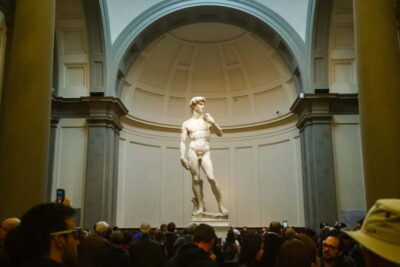
Florence: Timed Entry to Michelangelo’s David + Audio App
Read our review →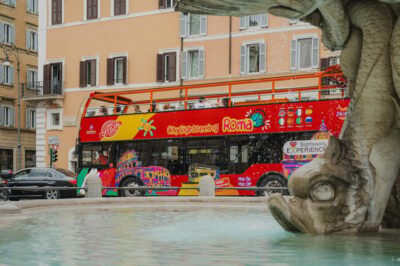
Rome: City Sightseeing Hop-on Hop-off Bus with Audioguide
Read our review →
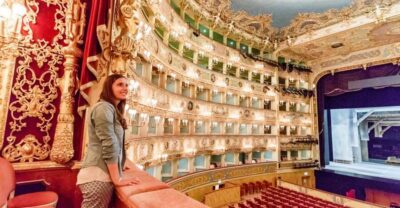
Venice: La Fenice Opera House Entry Ticket with Audio Guide
Read our review →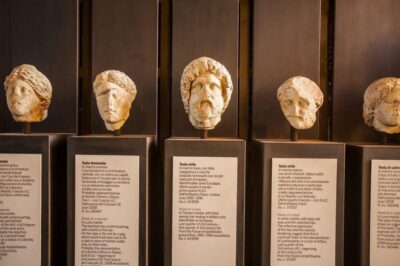
Rome: Colosseum, Forum, Palatine Hill Entry & Audioguide App
Read our review →Browse the lists this tour appears in