
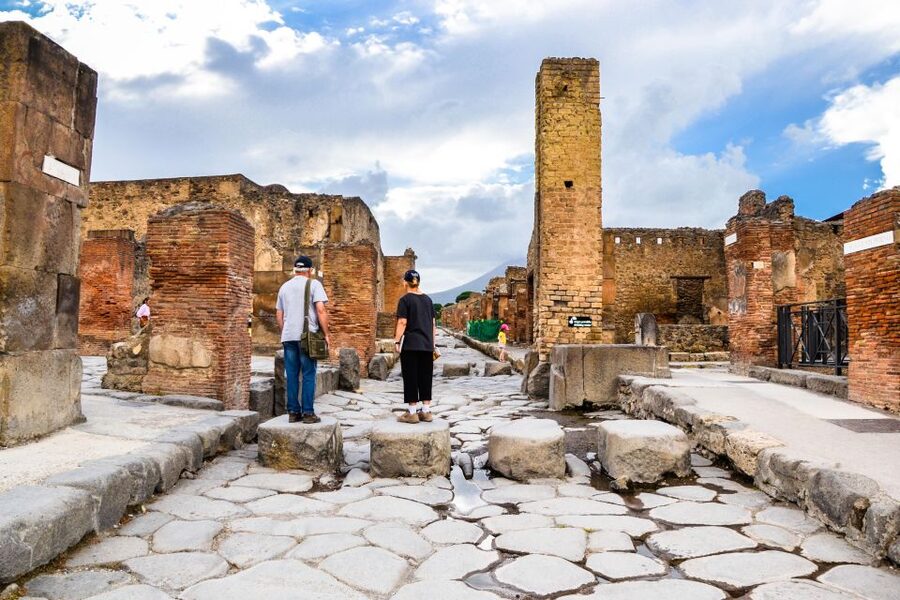
REVIEW · POMPEII AUDIO TOURS
Pompeii: Skip-the-Line Ticket with Audio Guide and Map
Pompeii is most powerful when you can set your own pace. This ticket gives you a full day to wander through streets frozen by Mount Vesuvius, from painted houses and temples to fast-food counters, theaters, and the casts of people caught in the eruption. The freedom to explore without a fixed group schedule is the main appeal.
I like two things here. First, the skip-the-line entry saves time at a busy archaeological site. Second, the map and audio guide give you a useful framework for a place that can otherwise feel vast and confusing. The main caution is the audio system: internet service can be unpredictable, and collecting or returning the device may add walking to your day.
Key points to know before you book

- Enter any time from 9:00 am to 3:00 pm: You are not tied to a short guided-tour slot.
- See Pompeii’s everyday side: Thermopolia, shops, baths, brothels, and homes show how ordinary Roman life worked.
- Visit the amphitheater and victim casts: These are among the site’s most memorable and sobering sights.
- Bring valid identification: You need an ID document to rent the audio guide.
- Pack light: Oversize luggage and large bags are not allowed.
- Expect a lot of walking: Comfortable shoes and clothes are essential, and the experience is not suitable for people with mobility impairments or heart problems.
Entering Pompeii between 9:00 am and 3:00 pm

Your visit begins outside the local office next to Pasticceria De Vivo. Look for the staff, usually wearing blue and yellow jackets. This meeting point is useful because you are not left to work out the ticket process alone, but you should allow time to find the office before heading to the archaeological entrance.
The ticket lets you enter during the stated window, from 9:00 am until 3:00 pm. That flexibility matters at Pompeii. You can arrive in the morning, when one verified visit found fewer people on site, or choose a later entry if your plans around Campania are tight. You still need enough time to walk through the ruins, so treating 3:00 pm as your arrival deadline rather than the start of your visit is the sensible approach.
The skip-the-line feature is valuable, but it does not turn Pompeii into a quick stop. You are entering a large ancient city, not a compact museum. Once inside, the best use of your ticket is to slow down and let the map help you choose a route.
More Skip-the-Line Audio Guide Tickets in Italy
- Pompeii: Skip-the-line Entry Ticket with Audio Guide & Map
★ 3.9 · 3,153 reviews - Pompeii: Skip-the-Line Entry Ticket with Digital Guide App
★ 4.1 · 770 reviews - Pompeii: Skip-the-Line Entry & Audioguide
★ 3.8 · 225 reviews
Why the map matters inside this ancient city
Pompeii’s streets can look simple at first, but the site contains a great deal to see. The updated map helps you locate the main sights and gives your visit some shape. Without it, you might spend too much time wandering and miss a theater, bath complex, house, or shop that sits away from your first route.
I would use the map in three stages. First, identify the major areas you most want to see. Next, choose a general direction rather than trying to follow every street. Finally, check the map as you go so you can adjust when a house or building catches your attention.
That last point is important. Pompeii rewards curiosity. A small doorway may lead to a frescoed home, a shop, or a space that reveals something about daily life. The map is not just a way to avoid getting lost. It helps you connect individual ruins into a picture of a working Roman town.
Frescoes, homes, and the details of daily life
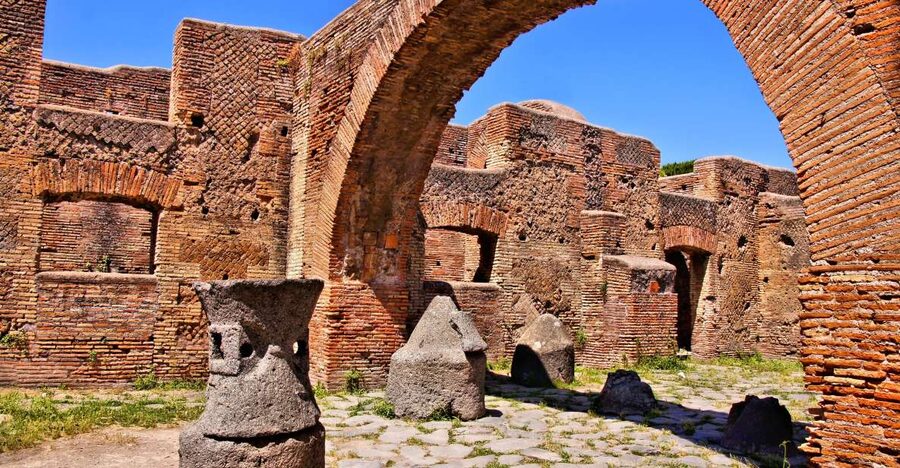
The frescoed houses are among the strongest reasons to visit. They give you a direct look at Roman taste, decoration, and private life. Walls that survived the eruption can still show painted scenes and patterns, making these homes more personal than a bare foundation or broken column.
Do not rush through the residential areas. Temples and public buildings are visually important, but the homes often explain how people used the city. Rooms, courtyards, wall paintings, and thresholds help you imagine Pompeii as a place where people cooked, traded, worshipped, relaxed, and entertained themselves.
You will also find shops along the ancient streets. These spaces make the city feel practical rather than ceremonial. Pompeii was not only a collection of grand buildings. It had businesses, food outlets, and places where people handled the ordinary tasks of urban life.
The audio guide can add useful context as you move from one building to the next. It is available in English, Italian, French, German, Hebrew, Russian, Chinese, Portuguese, and Spanish. The staff and instructors also work in English, Italian, Spanish, and French.
Thermopolia, baths, theaters, and brothels

One of Pompeii’s most interesting features is the thermopolium, a kind of ancient counter-service food shop. The description of it as the coffee and fast-food stop of its time gives you the right idea. These places make the ancient city feel surprisingly familiar. People needed quick meals, drinks, and social stops then just as they do now.
The baths show another side of Roman life. They were not simply places to wash. They were part of the city’s public rhythm, and their remains help explain how people spent time outside their homes. Look closely at the layout and decoration rather than treating the baths as a quick photo stop.
The theaters offer a different scale. Here, Pompeii becomes a city of public entertainment. You can compare these spaces with the more intimate settings of shops and homes, then use the audio guide to understand how public life fitted together.
The brothels are also part of the visit. Their presence is a reminder that Pompeii was an active commercial town with all the less polished parts of urban life. Depending on what is open during your visit, access to individual buildings can vary, so use the map to find the areas available on the day.
More Skip-the-Line Audio Guide Tickets in Pompei Campania:
- Pompeii & Herculaneum: Skip-the-line & Digital Guide App
★ 4.0 · 35 reviews - Pompeii: Skip-the-Line Ticket with Audio Guide and Map
★ 4.0 · 14 reviews - Pompeii: Skip the Line Ticket + Audioguide
★ 3.3 · 13 reviews - Pompeii Skip-the-Line Ticket and Audioguide
★ 4.2 · 7 reviews
The amphitheater and the human cost of the eruption
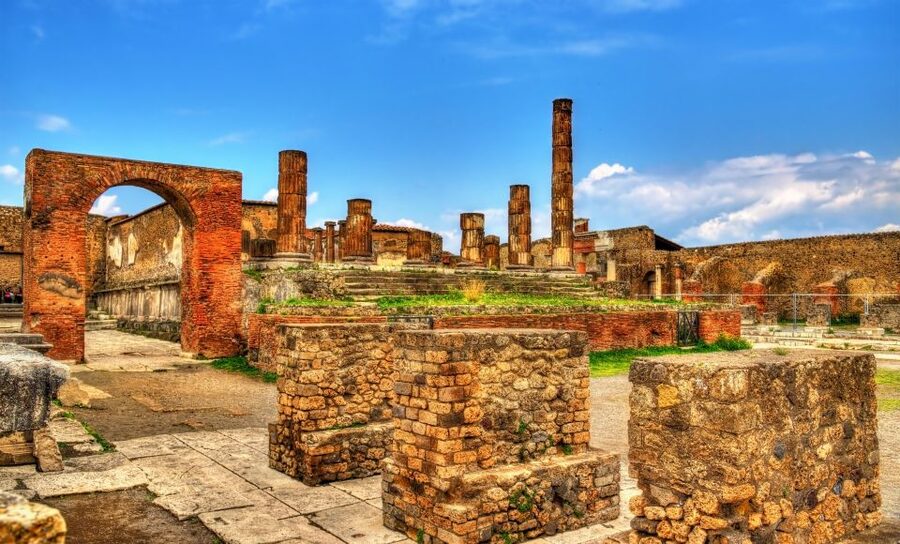
The Roman amphitheater is one of the major sights included in the visit. Its size and surviving form give you a clear sense of how public spectacles shaped city life. It is an important stop if you want to understand Pompeii beyond its private houses and painted walls.
The casts of the eruption victims are the most emotionally difficult part of the experience. They are not just archaeological objects. They make the disaster personal and show that Pompeii was a living community before Mount Vesuvius erupted.
I recommend approaching this area with time and care. The sight can change the tone of your visit. After admiring frescoes and street layouts, you are suddenly confronted with the human cost of the eruption. The audio guide may help explain the setting, but no recording can make these casts feel ordinary.
Together, the amphitheater and the victim casts show the two sides of Pompeii: a busy city built for living, and a community abruptly destroyed. That contrast is what makes the site more than a collection of ruins.
Using the audio guide without relying too heavily on it

An audio guide is helpful at Pompeii because there is so much to absorb. It can explain the purpose of a building, point out details you might overlook, and place the eruption in context. You can listen when you want and move on when a stop does not interest you.
The audio quality has received mixed feedback, so I would treat it as a helpful companion rather than the sole reason to book. One practical issue is connectivity. Internet service at Pompeii can be unpredictable, and a download may not work when you need it. There is an option to collect a physical audio device, but the pickup or drop-off point has been described as a 20-minute walk from the train station.
Bring valid identification. It is specifically required to rent the audio guide, and forgetting it could leave you without the feature you paid for. If the guide is delivered through a phone or requires a download, prepare before entering rather than waiting until you are surrounded by old stone walls and uncertain reception.
The updated map remains useful even if the audio causes trouble. You can still follow the streets, find the main attractions, and build a worthwhile visit without listening to every stop.
How much walking and effort should you expect?

Pompeii is not a low-effort attraction. The experience is listed as unsuitable for people with mobility impairments, heart problems, or altitude sickness. That guidance deserves attention. You will spend the day moving through an extensive archaeological site, often over uneven ancient streets and open areas.
Wear comfortable shoes. Comfortable clothing matters too, particularly because the visit is self-guided and you may be outside for much of your time. The exact conditions can vary, but there is no reason to make the walking harder with stiff shoes, heavy bags, or clothing that limits movement.
Large bags and oversize luggage are not allowed. Leave suitcases and bulky items elsewhere before arriving. This is both a site rule and a practical concern. A small load makes it easier to study walls, step over uneven surfaces, and keep your attention on the ruins.
Because the ticket is valid for one day, you can give yourself time rather than trying to race through every street. If your schedule allows only a short visit, use the map to focus on the amphitheater, casts, frescoed houses, baths, temples, shops, and theaters that matter most to you.
Is the $44 price good value?

The listed price is $44 per person. The included Pompeii admission is stated as €20, while the rest of the cost covers the skip-the-line arrangement, audio guide, map, and booking service.
That can be fair value if you want structure without joining a fixed guided group. You get the freedom to arrive within the entry window and choose how long to spend at each sight. The audio guide also gives you context without requiring you to read a guidebook while walking.
The value is weaker if you mainly want a basic entry ticket or already have a reliable guide. The audio experience may not work smoothly if connectivity is poor, and the physical device can involve an extra walk from the station. In that case, the added cost pays for convenience and flexibility, not guaranteed technical perfection.
I would book this option if you want help with orientation but do not want to follow a guide and group from one stop to the next. I would compare other options if your top priority is expert storytelling, guaranteed audio performance, or the lowest possible admission cost.
Who will get the most from this Pompeii visit?
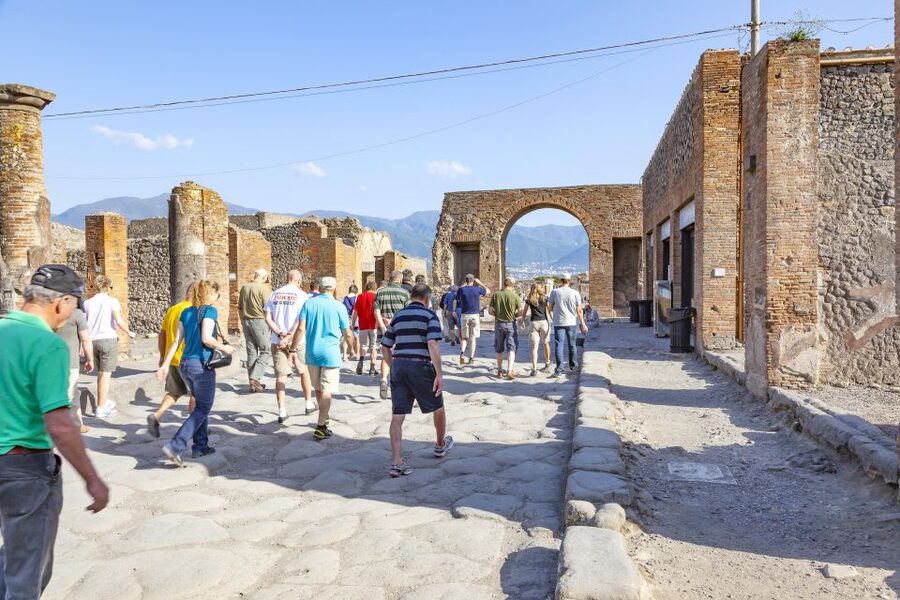
This experience suits independent sightseers who like to set their own rhythm. You can spend extra time in a house with good frescoes, pause at the theaters, or move quickly through sections that hold less interest. Families and mixed-interest groups may also appreciate that freedom, as long as everyone can manage the walking.
It is also a good fit for visitors making a broader Campania itinerary. The flexible entry window lets you place Pompeii around other plans instead of committing to one narrow departure time. Just remember that the site itself is extensive, so flexibility works best when you leave enough time for the visit.
You may prefer a different arrangement if you need step-free access, have heart concerns, or find long walks difficult. The same applies if you expect a highly personal explanation from a live guide. This product gives you an audio guide and staff assistance at the meeting point, not a dedicated historian walking beside you.
Booking decision
Book this Pompeii ticket if you want independent exploration with a useful map, quick access, and the option to listen in your preferred language. The ancient streets, frescoed houses, thermopolia, theaters, amphitheater, and victim casts provide plenty to see without a fixed route.
Think twice if the audio guide is your main reason for booking. Unreliable internet and the possible 20-minute walk for device collection or return are real practical concerns. Bring valid ID, wear good shoes, leave large luggage behind, and arrive with a simple plan for the sights you most want to see.
FAQ
What time can I enter Pompeii?
You can enter during the available period from 9:00 am to 3:00 pm. Check the stated availability when booking for the exact starting options.
Is the ticket valid for more than one day?
No. The activity is valid for one day.
What languages are available for the audio guide?
The audio guide is available in English, Italian, French, German, Hebrew, Russian, Chinese, Portuguese, and Spanish.
Do I need identification?
Yes. You must bring a valid ID document to rent the audio guide.
Where is the meeting point?
Meet the staff outside their office, directly next to Pasticceria De Vivo. The staff usually wear blue and yellow jackets.
Can I bring a large suitcase or oversize bag?
No. Oversize luggage and large bags are not allowed. Comfortable shoes and comfortable clothing are recommended.
Just added around Pompei Campania
- Pompeii Tour_Skip the line ticket + audioguide★ 4.7 · 17 reviews
- Pompeii, skip-the-line ticket with smartphone audio guide on App★ 3.0 · 4 reviews
- Pompeii: Skip-the-Line Ticket with Audio Guide and Map★ 3.9 · 5 reviews
- Pompeii: Skip-the-Line Ticket with Audio Guide and Map★ 4.0 · 14 reviews
- Pompeii: Pre-reserved ticket with audio guide★ 3.2 · 15 reviews
- Pompeii: Skip The Line Entrance Tickets + Audioguides★ 3.2 · 4 reviews
- Pompeii Skip-the-Line Ticket and Audioguide★ 4.2 · 7 reviews
- Pompeii: Skip the Line Ticket + Audioguide★ 3.3 · 13 reviews
Pompeii Audio Tours, compared.

Pompeii: Skip-the-line Entry Ticket with Audio Guide & Map
Read our review →
Pompeii: Skip-the-Line Entry Ticket with Digital Guide App
Read our review →

Pompeii: Skip the line ticket (art) + audioguide + map
Read our review →
From Pompeii: Vesuvius Entry with Transfer and Audioguide
Read our review →
Pompeii & Herculaneum: Skip-the-line & Digital Guide App
Read our review →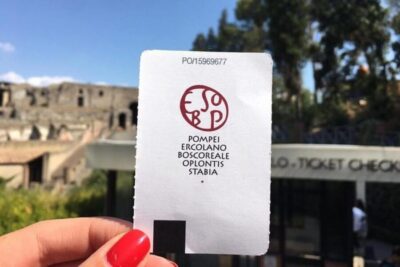
Herculaneum and Pompeii in one day: Audioguides + Tkts (art)
Read our review →
Browse the lists this tour appears in