
REVIEW · POMPEII AUDIO TOURS
Pompeii: Skip-the-Line Ticket with Audio Guide and Map
Pompeii gives you something few ancient sites can: a Roman city you can walk through street by street. Homes still show painted walls, shops open onto pavements, and the amphitheater sits among the ruins as a reminder that this was once a living town, not a museum built from fragments. I like the freedom to choose your own route, and I like having a map and audio commentary to add context as you go. The main caution is that the meeting point for exchanging your voucher is not at the station or main entrance.
At $44 per person, this is convenient, but not automatically a bargain. The ticket itself has value if skipping the ticket line saves you time, yet admission bought directly at Pompeii has been reported at about €18 to €22. Also, confirm the audio language before paying: several languages are advertised, but the supplied device has reportedly offered full audio only in English, with printed information in other languages.
Key points to know before you book

- The voucher exchange is in Via Roma 32: Find the office beside Pasticceria De Vivo, about five minutes on foot from the amphitheater entrance.
- Pompeii is a full-day walking visit: The ruins cover a large area, with uneven streets, open courtyards, and little shade.
- The audio guide may not work equally in every language: English audio has been specifically available, while other languages may come as a map or booklet rather than spoken commentary.
- The most rewarding stops are varied: Plan to see frescoed homes, baths, temples, fast-food counters, theaters, brothels, victim casts, and the amphitheater.
- The ticket is not the whole experience: You arrange your own transport, food, water, and route inside the archaeological site.
- Pack light: Backpacks and large bags are not allowed, and flash photography is prohibited.
Pompeii in one day, with freedom to wander
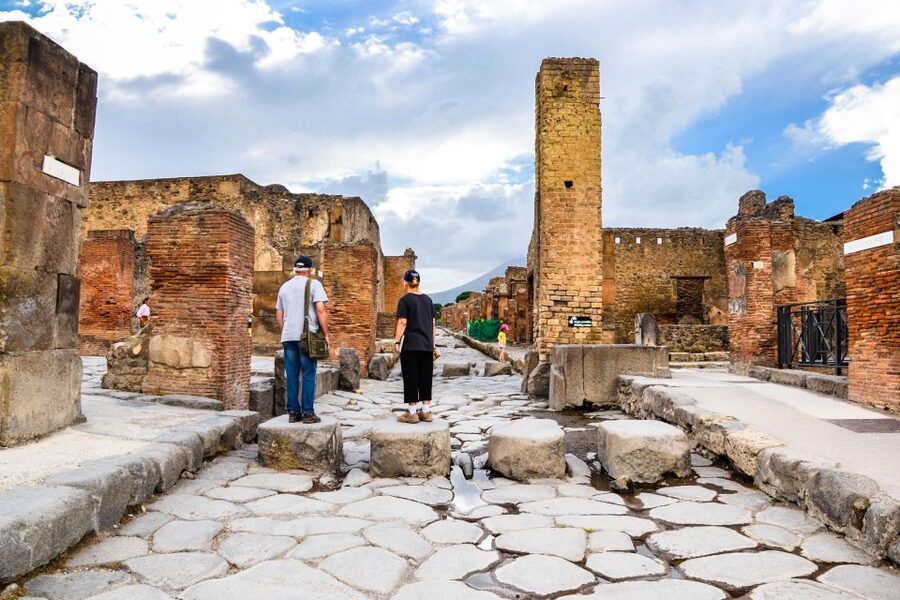
The strength of this experience is its simple format. You receive entry, a map, and an audio guide, then explore without a guide leading you from stop to stop. That suits me when I want time to examine a wall painting, pause in a courtyard, or skip a building that is closed or crowded.
Pompeii is not a compact collection of ruins. It is a substantial ancient city with many streets and separate areas to visit. Without a clear plan, you can spend a great deal of energy simply working out where you are. The map is meant to solve that problem, though the paper version has been described as difficult to follow, especially when used with the audio device.
Give yourself the whole day if possible. The ticket is valid for one day, and rushing through the site would undercut its main pleasure. Pompeii rewards slow looking. A scratched shop counter, a painted household shrine, or a worn paving stone can be as interesting as a grand temple if you understand what you are seeing.
More Skip-the-Line Audio Guide Tickets in Italy
- Pompeii: Skip-the-line Entry Ticket with Audio Guide & Map
★ 3.9 · 3,153 reviews - Pompeii: Skip-the-Line Entry Ticket with Digital Guide App
★ 4.1 · 770 reviews - Pompeii: Skip-the-Line Entry & Audioguide
★ 3.8 · 225 reviews
Getting the ticket near the amphitheater gate
Before entering the excavations, you must exchange your voucher for the valid admission ticket. The meeting point is at Via Roma 32, beside Pasticceria De Vivo in Pompeii. From there, the amphitheater gate is about a five-minute walk.
This is an important detail if you arrive by train or expect to walk directly to the main entrance. The exchange office is not right at the station and is not at the main archaeological gate. Build in time to locate it, especially if you have a timed start or are visiting during a busy period.
The skip-the-line benefit applies to the ticket line, not to every part of the process. You still need to find the exchange point and collect the entrance ticket first. I would save the confirmation on your phone, note the exact street address, and avoid arriving with a tight schedule.
What the audio guide really adds
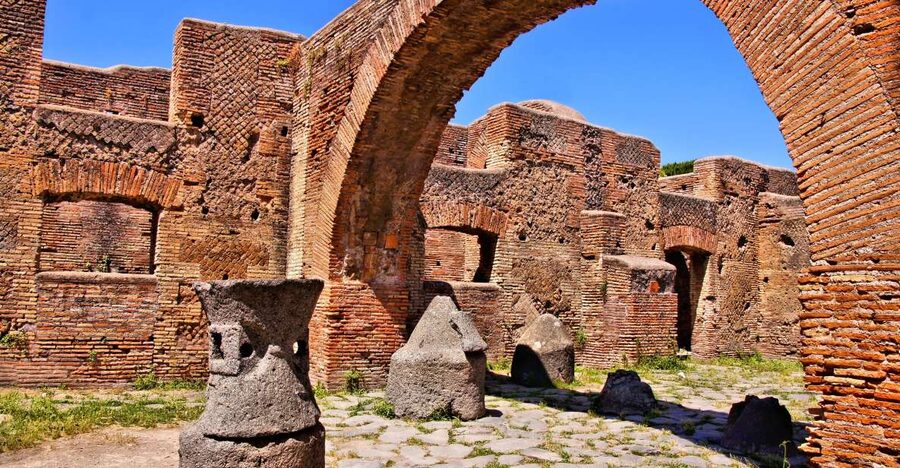
An audio guide can turn a confusing group of walls into a readable city. It can explain why a particular room mattered, what a shop sold, or how a bath complex worked. It also lets you stop and restart information instead of keeping pace with a human guide.
The advertised language options are English, French, Italian, German, Spanish, Russian, Polish, Hebrew, Chinese, Dutch, and Portuguese. However, the practical setup deserves caution. Information supplied about the device indicates that the full spoken audiobook may be available only in English, while other language options may provide a written book with the map. The handset itself has also been described as working like a phone and not always operating smoothly.
For that reason, ask exactly what you will receive in your chosen language before booking or collecting the equipment. If you need detailed commentary in French, Polish, Spanish, or another language, do not assume that a listed language means a narrated audio program.
The content may also leave gaps. Pompeii has far more buildings than any basic audio route can cover, and some attractions may not be included. I would treat the commentary as a helpful introduction, not as a complete scholarly guide.
The domus and frescoed rooms

The private homes, or domus, are among the best reasons to visit Pompeii. Their rooms show how Roman domestic life was arranged around courtyards, decorated walls, and small spaces with specific functions. Even when a house is partly ruined, the surviving frescoes can give you a sense of color and style that stone foundations alone cannot.
Look beyond the most famous paintings. Doorways, garden features, household shrines, and floor patterns help explain how the house worked. The audio guide is useful here because a room can look empty until you know whether it was a reception space, dining room, sleeping area, or service room.
Not every house will be open at every moment. Archaeological sites change access as conservation work continues, so keep your route flexible. The map helps you mark alternatives rather than spending your visit searching for one building.
More Skip-the-Line Audio Guide Tickets in Pompei Campania:
- Pompeii: Skip-the-Line Ticket with Audio Guide and Map
★ 4.0 · 117 reviews - Pompeii & Herculaneum: Skip-the-line & Digital Guide App
★ 4.0 · 35 reviews - Pompeii: Skip-the-Line Ticket with Audio Guide and Map
★ 4.0 · 14 reviews - Pompeii: Skip the Line Ticket + Audioguide
★ 3.3 · 13 reviews
Baths, temples, shops, and thermopolia
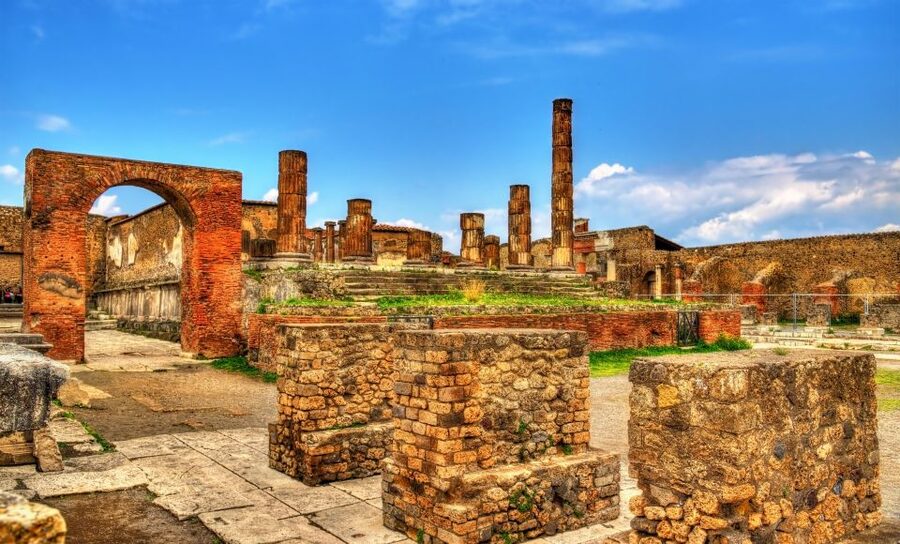
Pompeii is especially enjoyable when you move from grand monuments to ordinary daily places. The baths show how public life included washing, social time, and carefully designed rooms. Temples reveal the religious side of the city, while shops open onto the streets and make the old town feel practical rather than distant.
The thermopolia are a highlight for many visitors. These were Roman food and drink counters, often compared with a quick café or fast-food shop. Their built-in counters and serving openings make it easy to picture people stopping for a meal instead of preparing everything at home.
These modest places are where a map and audio explanation earn their keep. A temple may be recognizable, but a counter or shop can seem like a random stone structure without context. I would not race from one famous house to another. Mix major monuments with these everyday spaces, and Pompeii becomes easier to understand.
Theaters, brothels, and the city’s public side
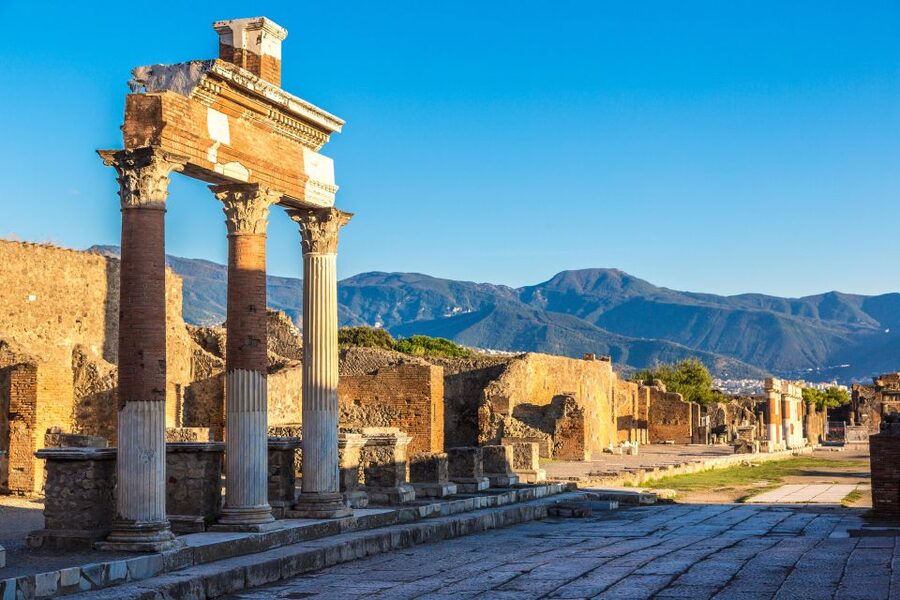
The theaters show Pompeii as a place of entertainment, not only worship and business. They also help you understand the scale of public gatherings and the importance of performance in Roman life.
The brothels are another stop often included in a Pompeii visit. They are valuable not because they offer a sensational detour, but because they add an unpolished look at the city’s social world. The site presents many layers of Roman life, from formal religion to food service and commercial sex.
The route can feel scattered because there is no single, perfectly marked path through every major sight. Use the map to group nearby stops. If the audio route sends you back and forth, trust your own sense of direction and save distant sections for later.
The casts of the eruption victims

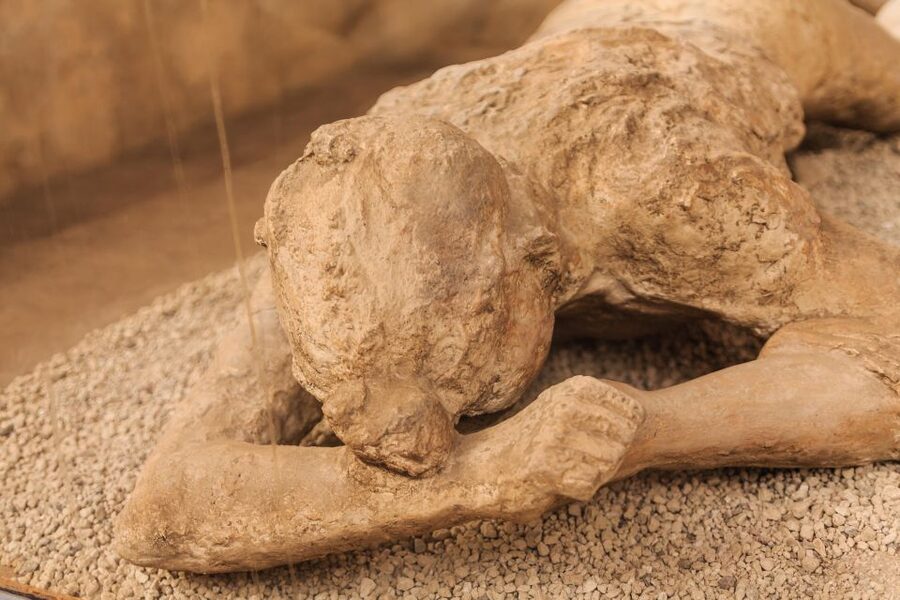
The casts of victims are among Pompeii’s most emotionally difficult sights. They show the human cost of the eruption of Mount Vesuvius and put faces, bodies, and sudden death at the center of the visit.
Approach this area quietly and give yourself time. It can be tempting to hurry because Pompeii offers so many buildings to see, but the casts deserve more than a quick photograph. They are not just archaeological objects. They are a direct reminder that the city was interrupted by disaster.
The audio guide can provide useful context about the eruption and the excavation process, though the amount of detail may depend on the language and route you receive. If this is a major reason for your visit, check the map early so you can locate the display rather than relying on chance.
The amphitheater and the scale of Pompeii

The Roman amphitheater is one of the clearest highlights. It is among the best-preserved Roman amphitheaters, and its form remains easy to read. You can see how the seating and arena were arranged, then compare that large public venue with the narrow streets and small businesses elsewhere in the city.
Its location also makes it useful for planning. The amphitheater gate is about five minutes from the ticket exchange point on Via Roma, so it may be your first or final major stop. Starting here gives you a clear landmark and places you inside the excavations quickly after collecting your ticket.
Do not assume that seeing the amphitheater means you have seen Pompeii. It is an impressive anchor, but the private homes, food counters, baths, and streets provide the detail that makes the city memorable.
Cost, convenience, and the value question
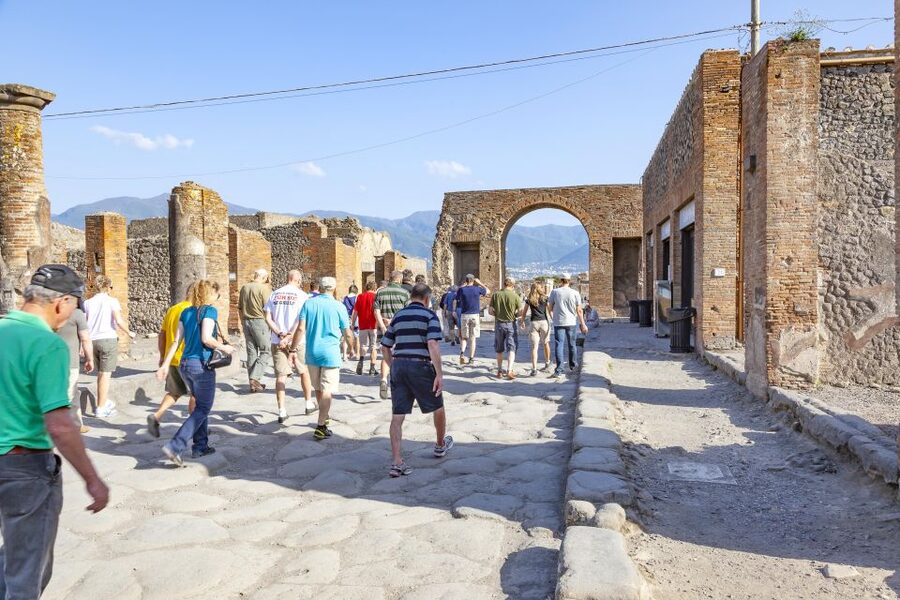
At $44 per person, the package charges for more than admission. You are paying for the ticket exchange service, skip-the-line access, the map, and the audio guide. That can make sense if you value convenience, dislike queueing, or want commentary without joining a group.
The price deserves a close look, though. Direct admission at the park has been reported at roughly €18 to €22, and purchasing at the site may be straightforward during quieter periods. If the ticket line is short and you are comfortable using your own guide app or printed material, this package may cost more than you need to spend.
The package becomes easier to justify when time matters. A line avoided at a busy entrance can be worth money, especially if Pompeii is one part of a packed Campania schedule. The audio guide also saves you from preparing every building in advance, provided your language option works as expected.
I would compare three things before booking: the direct admission price for your date, the actual language format offered, and how much you value a ready-made route. The decision is less about luxury and more about how much planning you want to do yourself.
Practical advice for a smoother visit
Wear shoes made for prolonged walking. The site has a lot of ground to cover, and ancient streets are not designed like modern sidewalks. A hat, sunscreen, and water are sensible because you may spend long periods outdoors.
Bring a camera, but do not use flash. Backpacks and large bags are not allowed inside the excavations, so carry only what the rules permit. The supplied information says the experience is not suitable for wheelchair users or people with mobility impairments, so anyone with access needs should check directly before booking.
Meals and drinks are not included. Plan your own food and water arrangements, and do not count on the ticket package to provide hotel pickup, drop-off, or transportation. Those parts are entirely separate.
Free cancellation is available up to 24 hours before the visit, and you can reserve now and pay later. That flexibility helps if your Campania plans are still shifting, but it does not remove the need to check the voucher exchange location and language details.
Who should book this Pompeii experience
I would consider this a reasonable choice for a first visit if you want independent sightseeing, skip-the-line entry, and basic interpretation in one booking. It suits people who prefer to stop when they wish rather than follow a group schedule.
It is less suitable if you want a polished, highly detailed spoken tour in a language other than English, or if you expect the audio route to cover every major building. It also may not suit budget-focused visitors who are happy to buy admission directly and prepare their own map or guide.
For the best result, treat the audio guide as support rather than your only plan. Mark the amphitheater, victim casts, domus, baths, thermopolia, theaters, temples, shops, and brothels before entering. That small amount of preparation will help you avoid wandering in circles.
Should you book it?
Book it if saving time at the ticket line matters, you want to explore alone, and English audio is acceptable for you. The combination of a one-day ticket, map, and commentary can make a large archaeological site easier to handle.
Skip it if the $44 price feels high compared with direct admission, if you need guaranteed spoken commentary in another language, or if you want a guide who can answer questions and adjust the route. In that case, direct entry with your own carefully chosen guide may offer better value.
FAQ
Where do I exchange the voucher for the entrance ticket?
The exchange point is at Via Roma 32 in Pompeii, beside Pasticceria De Vivo. It is about a five-minute walk from the amphitheater entrance to the ruins.
How long is the ticket valid?
The ticket is valid for one day. Check the available starting times when selecting your visit.
Is the ticket skip-the-line?
Yes. The package includes skip-the-line access to the ticket line, but you still need to exchange your voucher for the valid entrance ticket first.
What languages are available?
The listed languages are English, French, Italian, German, Spanish, Russian, Polish, Hebrew, Chinese, Dutch, and Portuguese. Confirm the exact format before booking because the spoken audio may not be available in every listed language.
Is hotel pickup included?
No. Hotel pickup and drop-off are not included, and you must make your own way to the meeting point.
Are food and drinks included?
No. Meals and beverages are not included.
What should I bring?
Bring comfortable shoes, a hat, sunscreen, water, and a camera. Flash photography is not permitted.
Can I bring a backpack or use a wheelchair?
Backpacks and large bags are not allowed inside the excavations. The experience is not suitable for wheelchair users or people with mobility impairments.
Just added around Pompei Campania
- Pompeii Tour_Skip the line ticket + audioguide★ 4.7 · 17 reviews
- Pompeii, skip-the-line ticket with smartphone audio guide on App★ 3.0 · 4 reviews
- Pompeii: Skip-the-Line Ticket with Audio Guide and Map★ 4.0 · 14 reviews
- Pompeii: Pre-reserved ticket with audio guide★ 3.2 · 15 reviews
- Pompeii: Skip The Line Entrance Tickets + Audioguides★ 3.2 · 4 reviews
- Pompeii Skip-the-Line Ticket and Audioguide★ 4.2 · 7 reviews
- Pompeii: Skip the Line Ticket + Audioguide★ 3.3 · 13 reviews
- Pompeii & Herculaneum: Skip-the-line & Digital Guide App★ 4.0 · 35 reviews
Pompeii Audio Tours, compared.

Pompeii: Skip-the-line Entry Ticket with Audio Guide & Map
Read our review →
Pompeii: Skip-the-Line Entry Ticket with Digital Guide App
Read our review →
Pompeii: Skip the line ticket (art) + audioguide + map
Read our review →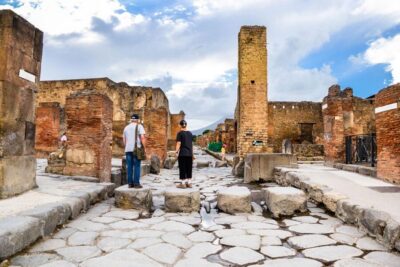
Pompeii: Skip-the-Line Ticket with Audio Guide and Map
Read our review →
From Pompeii: Vesuvius Entry with Transfer and Audioguide
Read our review →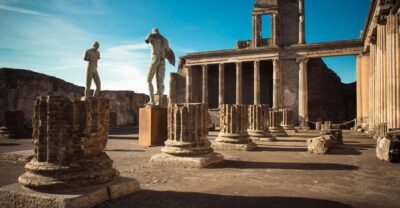
Pompeii & Herculaneum: Skip-the-line & Digital Guide App
Read our review →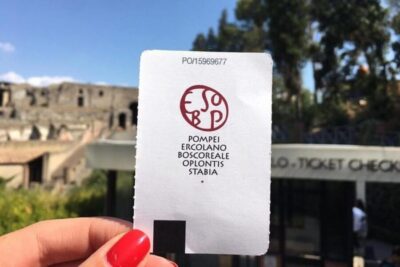
Herculaneum and Pompeii in one day: Audioguides + Tkts (art)
Read our review →Browse the lists this tour appears in