
REVIEW · NAPLES AUDIO TOURS
Pompeii: Skip-the-Line Entry Ticket with Audio Guide or Tour
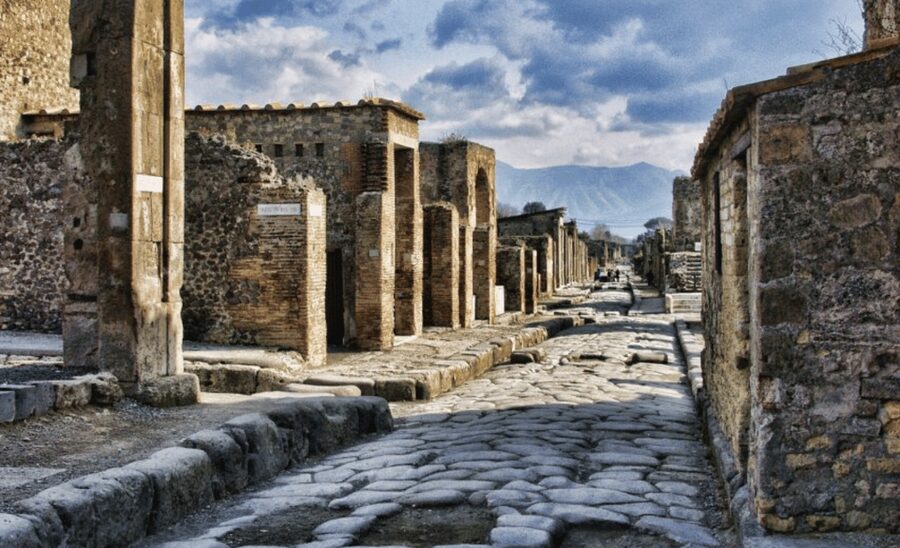
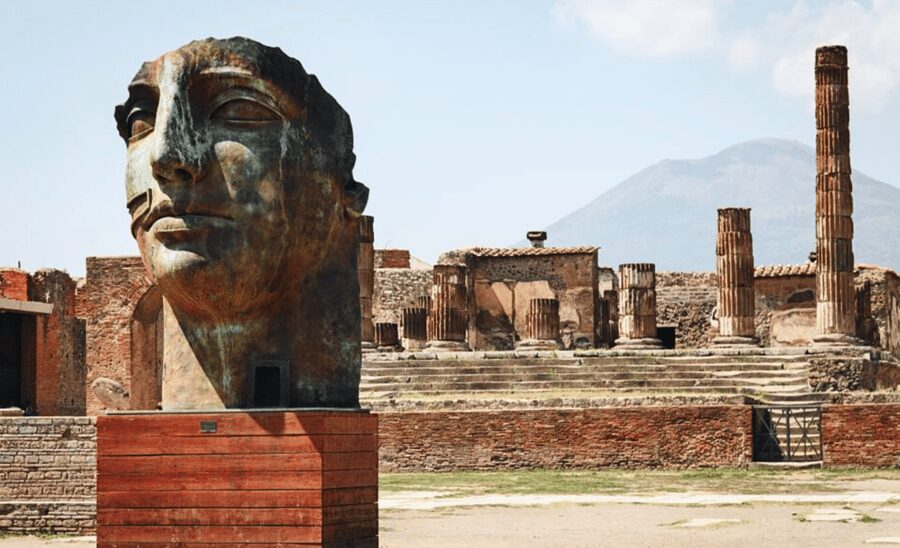
Pompeii is far more than a handful of ruins. You are walking through a Roman city, with streets, villas, temples, theaters, shops, fountains, and plaster casts still arranged around the daily life that ended in 79 C.E. I like the fast-track entry, which saves time at the ticket queue, and the freedom to remain inside after a guided tour ends. The view toward Vesuvius helps make the site feel immediate rather than museum-like.
The audio guide and digital map suit independent visitors who want to stop where they please, especially families and people who do not enjoy being tied to a group. The main caution is that the app can be awkward: autoplay and GPS do not always work, the site map may not be supplied, and two hours is only enough for a selective visit.
Key points at a glance
- Collect tickets beside the entrance: Pick up your official Pompeii ticket at the Vox City point in Piazza Esedra, in front of Hotel Vittoria.
- Choose your style of visit: Use the phone audio guide at your own pace, or select a live tour in English, Spanish, or Italian.
- See a real Roman city: The route can include the Forum, House of the Faun, theaters, public baths, markets, fountains, and temples.
- Allow more than two hours if possible: The booked activity lasts two hours, but you can usually remain inside afterward and explore farther.
- Prepare your phone before arrival: Download the audio guide from the voucher QR code, charge your phone, and bring headphones.
- Know what is excluded: The ticket does not cover the suburban villas, including the Villa of the Mysteries, Villa of Diomedes, or Villa Regina.
Collecting your ticket at Piazza Esedra
The meeting point is easy to identify once you know what to look for. Go to the Vox City information point in Piazza Esedra, in front of Hotel Vittoria, close to the excavations entrance. You exchange your voucher for the official entry ticket there, rather than presenting the booking directly at the gate.
This extra step is simple, but it matters. Do not walk straight to the archaeological entrance and expect the phone voucher to act as your admission ticket. Give yourself a few minutes to find the booth, collect the ticket, and reach the correct entrance.
The most consistent strength of this experience is the ticket handoff. Staff have helped with directions and audio downloads, and the meeting point is close to the entrance. The fast-track benefit applies to the ticket-buying queue, so you can avoid waiting to purchase admission on site. You should still arrive early for a live tour, since the guide leaves at the booked time.
More Skip-the-Line Audio Guide Tickets in Italy
- Mount Vesuvius: Skip-the-Line Ticket and Smart Digital Guide
★ 4.2 · 2,780 reviews - Herculaneum: Skip-the-Line Entry Ticket with Audio Guide
★ 4.3 · 870 reviews - Naples: Royal Palace Entry Ticket with Digital Audio Guide
★ 4.1 · 146 reviews
Fast-track entry and the first view of Pompeii
Once inside, Pompeii immediately feels larger than most first-time visitors expect. The excavated area covers about 44 square hectares, and the activity information also describes a site of roughly 50 hectares. Either way, this is a city-sized visit, not a compact monument you can cross in half an hour.
The Forum is a natural place to begin. It was Pompeii’s civic and religious center, and the view toward Mount Vesuvius gives you the basic story in one glance: this was an active Roman town beneath a volcano that eventually buried it.
From there, the streets lead past temples dedicated to Venus, Apollo, and Jupiter. Their surviving columns and foundations are impressive, but the real pleasure comes from noticing how the religious buildings sit among homes, shops, public spaces, and working infrastructure.
You can also see aqueduct remains, fountains, and paved streets. These practical details help you picture a functioning city. Pompeii is strongest when you look beyond the grand temples and notice the ordinary systems that supplied water, directed traffic, and supported daily business.
The audio guide: useful, but bring a map
The self-guided option uses your own smartphone. Commentary is available in English, French, Spanish, German, and Italian, with a digital map showing points of interest around the site. You should download the guide before arriving by scanning the QR code on your voucher.
I like the basic idea. You are not forced to follow a fixed route, and you can pause at a house, skip a theater, or return to a detail that caught your eye. The audio clips are generally short, which works well in the heat and keeps younger listeners from losing patience.
The app also works as a written guide, allowing you to tap a site on the map and read information. That is useful when the ruins are crowded or when you want to revisit a building without listening to the full commentary.
The weak point is navigation. The guide is not the official Pompeii audio system, so its numbering may not match signs or other guide materials. Autoplay has failed for some users, meaning you may need to select each location manually. GPS playback can also be unreliable.
Do not assume the app will lead you through the most important sights in a neat order. It may list more than 100 points of interest, which sounds generous but can make a short visit harder to plan. I would use the map as a reference, not as your only route plan. If you want a clear overview, pick up a site map at the entrance or prepare a short list of priorities before you go.
Your phone battery matters here. A two-hour visit with GPS, audio, and photographs can use more power than expected, so a charged phone or battery pack is sensible. Bring your own headphones, since they are not included.
The live tour option with an art historian
If you select the guided version, an art historian leads the visit in English, Spanish, or Italian. This is the better choice if you want context without managing an app while walking over uneven ancient streets.
A live guide can also make the site easier to read. Pompeii has many similar-looking walls, courtyards, and foundations, and it is not always obvious what you are seeing. A good guide points out the difference between a home, shop, bath, temple, and public building, then explains how each fitted into Roman life.
Guides named Grace, Maria, and Mario have received especially warm personal praise for clear explanations, humor, and friendly presentation. One guide was described as having spent 45 years at Pompeii and being able to cover a great deal despite crowds. That kind of local experience is valuable because the route can change depending on open buildings, queues, weather, and congestion.
The tour lasts about two hours, but the ticket lets you stay inside afterward and continue alone. This is an excellent arrangement: use the live guide to understand the main parts of the city, then wander back to the houses or streets that interest you.
The tradeoff is less freedom during the guided portion. You move with the group and follow the guide’s priorities. If you already know Pompeii well or prefer stopping for photographs whenever you wish, the audio option may suit you better.
More Skip-the-Line Audio Guide Tickets in Naples:
- Vesuvius National Park Skip-The-Line Ticket and Audio Guide
★ 3.4 · 141 reviews - Naples: Herculaneum Entry Ticket with Digital Audio Guide
★ 4.0 · 14 reviews - Barcelona: Sagrada Familia Entry Ticket with Audio Guide
★ 4.6 · 105,312 reviews - Rome: Pantheon Fast-Track Ticket and Official Audioguide
★ 4.5 · 27,353 reviews
Houses, mosaics, and the details that bring Pompeii to life
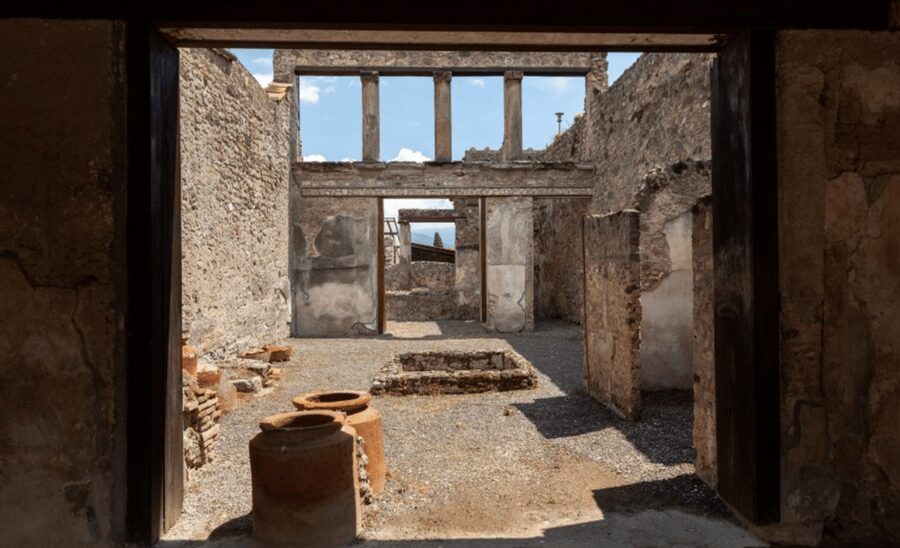
The House of the Faun is one of the major residential highlights. Its size and decoration give you a sense of how wealthy Pompeii’s upper class could live. Look for the surviving layout of courtyards and rooms rather than expecting a furnished palace. The scale of the building is part of the story.
Public baths offer a different kind of insight. Intricate mosaics and the remains of bathing rooms show how much attention Romans gave to shared social spaces. These are not simply decorative ruins. They point to a daily routine built around washing, meeting, exercise, and conversation.
At Sirico’s house, an inscription translates as Welcome, profit. It is a small detail, but it gives the city a human voice. You can also encounter wine jars marked with Vesuvinum, a playful name combining Vesuvius and wine. Details like these make Pompeii feel inhabited by shopkeepers, hosts, workers, and families rather than by an anonymous ancient population.
The marketplaces help complete that picture. Their remains suggest buying, selling, food preparation, and public exchange. The guide can add useful background, but even without narration, the arrangement of counters, walls, and lanes rewards close attention.
Theaters, temples, and plaster casts
The grand theater is one of the most atmospheric places to pause. Its curved seating and open setting make it easier to imagine performances and public gatherings. You may also find it a good place to rest briefly, particularly on a hot day.
The temples give you the grander side of Pompeii. Venus, Apollo, and Jupiter each connect the city to Roman religion and public ceremony. Their surviving foundations and columns are more impressive when you understand that these were working religious centers, not isolated monuments.
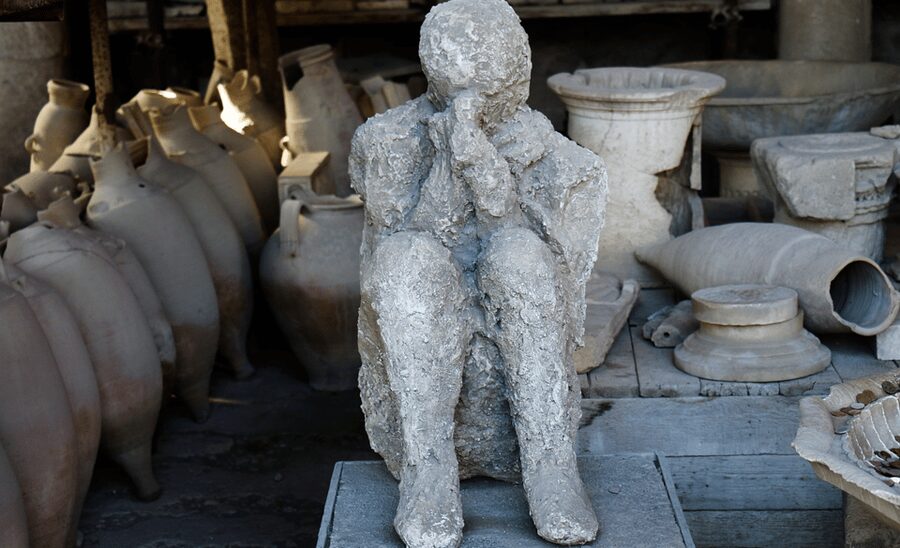
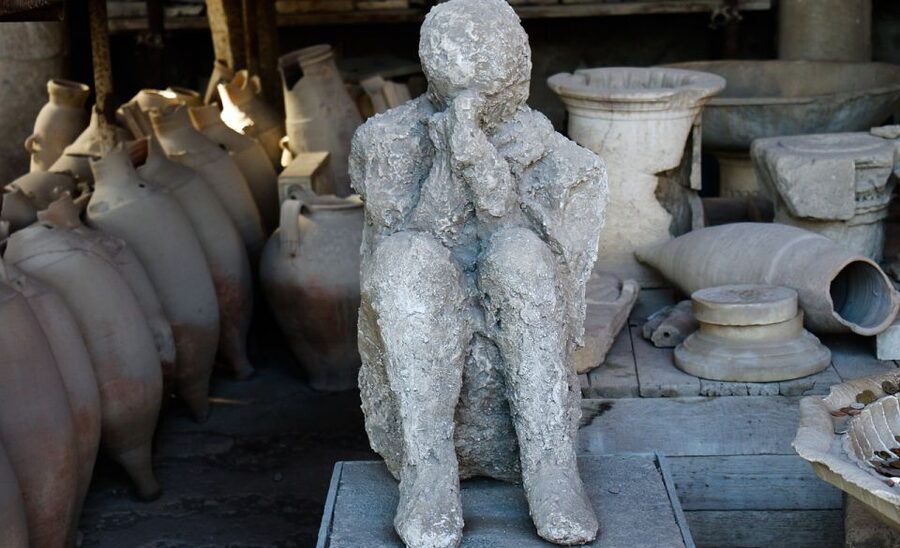
The plaster casts of eruption victims are among the most difficult sights. They were made from cavities left in the hardened ash, preserving the positions of people caught during the disaster. They can be disturbing, so families may want to prepare younger children before the visit.
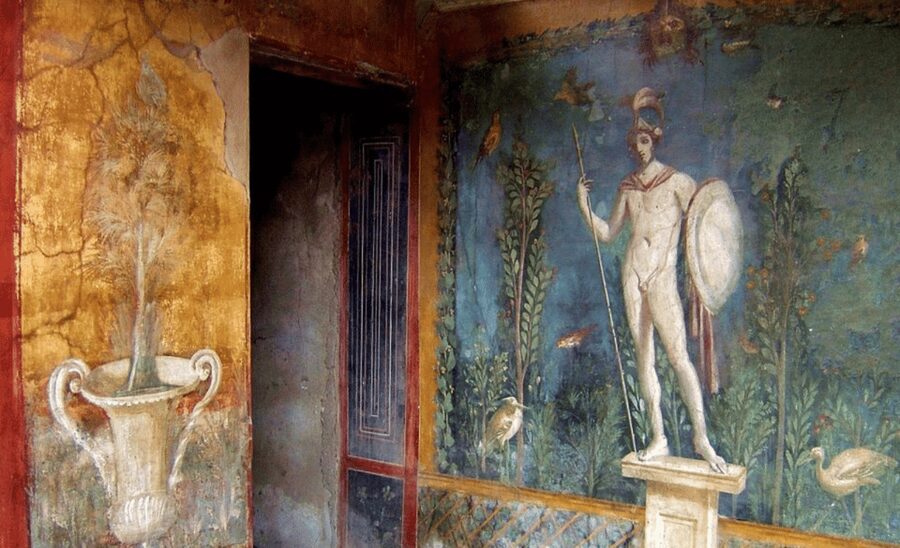
The eruption in 79 C.E. destroyed Pompeii, but the ash also preserved walls, household objects, painted surfaces, and street plans. That uneasy combination is what makes the site so powerful. You are seeing both a catastrophe and a record of ordinary life.
How long you need, and what two hours really means
The booked activity is listed as two hours, which is enough for a brisk introduction or a focused guided route. It is not enough to inspect every house and street in a site this large.
Many people spend two to four hours inside, and some stay longer. One useful advantage of this ticket is that you can remain after the guided portion, so the two-hour schedule does not have to end your visit.
For a short visit, I would prioritize the Forum, the temples, the House of the Faun, a public bath, the theater, and selected streets near the entrance. If you have extra time, follow the map toward more residences and fountains rather than trying to check every audio point.
Weather can change the experience quickly. Summer sun makes the broad paved streets tiring, while rain can turn the visit into a slower, slippery walk. Bring water, sun protection, and suitable shoes. The site has limited shade across its wide open areas, and there is little reason to rush through a house simply to reach the next point on the app.
Price and value at $37
At $37 per person, this is not the cheapest way to enter Pompeii. The official admission ticket alone has been priced lower, so you are paying extra for the booking service, fast-track arrangement, ticket collection, and optional audio or live guidance.
The value depends on your priorities. During a busy period, avoiding the ticket-purchase queue can protect a useful part of your day. The nearby collection point is convenient, and the option to remain inside afterward adds flexibility.
The audio guide is harder to rate as a sure value. Some people find its short explanations and map helpful, while others find the app confusing, poorly matched to site names, or unreliable with autoplay. If the audio fails, the entry ticket still works, but the part you paid extra for may not add much.
The guided option makes a stronger case for the price if you want the site explained clearly. A live guide can keep you moving through a huge archaeological area and point out details you might pass without noticing. I would choose that option for a first visit, especially if you have only two hours.
Who should book this Pompeii experience?
Choose the audio option if you want independence, prefer short explanations, and are comfortable using your phone for maps and playback. It works well for couples, families with different interests, and anyone who wants to stop for photographs without holding up a group.
Choose the live tour if Pompeii feels intimidatingly large, if you want historical context, or if you are visiting for the first time. English, Spanish, and Italian are available, and the guides can help you make sense of the site in a limited time.
This is less suitable if you expect a fully polished official audio system, a printed map included automatically, or direct phone entry with no ticket exchange. Download the guide in advance, bring headphones, and keep a backup plan in mind.
Should you book it?
I would book this experience for the convenient entrance and the live guided option, with the audio package treated as a useful extra rather than the main reason to buy. The fast-track ticket collection is straightforward, and Pompeii itself is extraordinary enough to justify careful planning.
For the best value, select the guided tour if your budget allows and stay inside afterward to explore at your own pace. If you choose audio only, arrive prepared with a charged phone, headphones, and your own short list of must-see buildings.
FAQ
Where do I collect the Pompeii ticket?
Collect the official entry ticket at the Vox City information point in Piazza Esedra, in front of Hotel Vittoria.
Can I use the voucher directly at the Pompeii entrance?
You must exchange the voucher for the official entry ticket at the Vox City point before entering.
Does the ticket skip all lines?
It skips the ticket-purchase line. You should still arrive at the meeting point before a booked live tour departure.
How long does the activity last?
The booked activity lasts two hours. Visitors typically spend two to four hours inside Pompeii, and you can continue exploring after a guided tour ends.
What languages are available for the live tour?
Guided tours are available in English, Spanish, or Italian.
What languages are available for the audio guide?
The audio commentary is available in English, French, Spanish, German, and Italian.
Do I need my own phone and headphones?
Yes. You need a charged smartphone and your own headphones. Headphones and a mobile device are not included.
How do I download the audio guide?
Scan the QR code on your voucher and download the guide before arrival. This is best done before reaching Pompeii in case the connection is slow.
Are the suburban villas included?
No. The ticket does not include the Villa of the Mysteries, Villa of Diomedes, or Villa Regina.
Can I cancel or pay later?
You can cancel up to 24 hours in advance for a full refund. The booking also offers reserve now and pay later, so payment is not required at the time of reservation.
Just added around Naples
- National Archaeological Museum synchronized audioguided tour without QR or app★ 4.0 · 4 reviews
- Naples:Pompeii SkiptheLine Ticket audioguide Round-Trip Bus★ 4.1 · 18 reviews
- Naples: Monuments and Historic District Self-Guided Tour★ 4.0 · 50 reviews
- Naples from Above: Castel Sant’Elmo Ticket & Audio Guide★ 4.0 · 53 reviews
- Naples: daily/weekly transport ticket, map and audio guide★ 4.8 · 4 reviews
- Naples Audioguide – TravelMate app for your smartphone★ 4.6 · 7 reviews
- Naples: Herculaneum Entry Ticket with Digital Audio Guide★ 4.0 · 14 reviews
- Campania: Pompei+Herculaneum+Vesuvius audio guide★ 3.6 · 10 reviews
Naples Audio Tours, compared.

Mount Vesuvius: Skip-the-Line Ticket and Smart Digital Guide
Read our review →
Herculaneum: Skip-the-Line Entry Ticket with Audio Guide
Read our review →
From Naples: Caserta Palace Ticket and Train with Audioguide
Read our review →

Naples: National Archaeological Museum Tour & Digital Guide
Read our review →
Self-Guided Island Tour: CLEAR/Standard Kayak, SUP-Bonita Springs
Read our review →
Naples: National Archaeological Museum audio guide
Read our review →
Naples: Royal Palace Entry Ticket with Digital Audio Guide
Read our review →Browse the lists this tour appears in