

REVIEW · SWITZERLAND AUDIO TOURS
The Many Faces of Geneva: Self-Guided Audio City Tour
Geneva’s main sights take on a sharper edge on this self-guided audio walk. The Jet d’Eau becomes more than a fountain, the Reformation Wall raises questions about mercy, and the city’s monuments are tied to jealousy, courage, pride, justice, and folly. It is a clever way to see familiar landmarks through human stories rather than dates alone.
I like the flexible 365-day validity, which lets you choose your own day, and the clear route with photos and detailed directions. I also like the unusual subject: this is not simply a list of Geneva’s sights. The drawback is that the commentary may feel repetitive or slow if you prefer a brisk sightseeing walk, and there is no live guide to answer questions.
Key points at a glance
- A moral map of Geneva: The route links fountains, monuments, churches, courts, and public buildings with human virtues and sins.
- A 1.5 to 2 hour walk: You visit many of central Geneva’s best-known sights in one compact route.
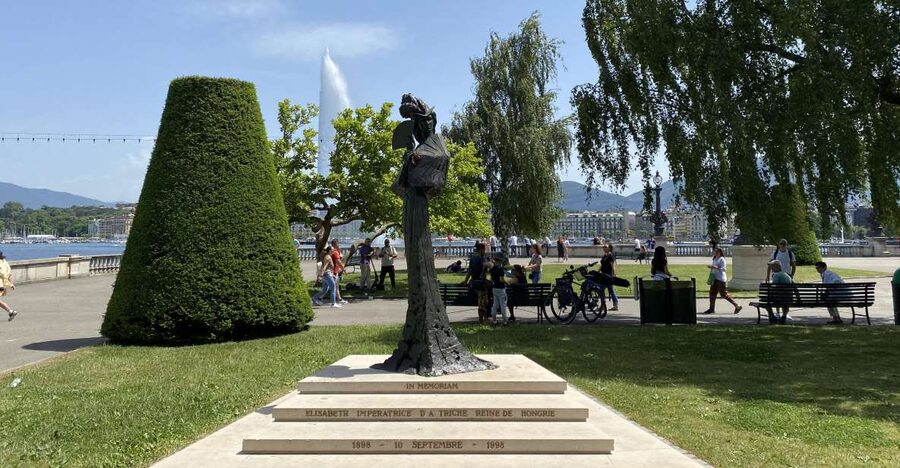
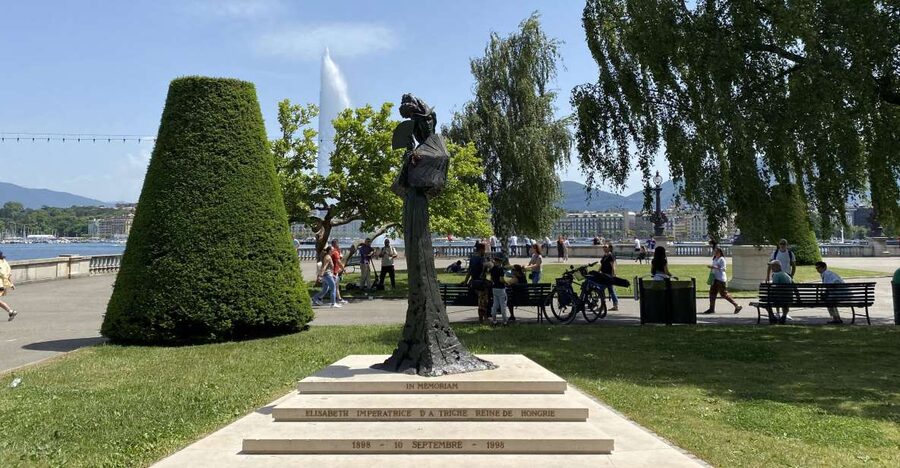
- Start at the Sissi monument: The tour begins at the memorial to Empress Elisabeth of Austria.
- English or French audio: A professional speaker provides the commentary through your phone.
- Good value at $13: The price is modest if you want an independent introduction to Geneva and do not need a personal guide.
- Bring your own setup: You need a charged smartphone, mobile internet, and headphones.
Geneva through virtues, sins, and sharp human contradictions
The central idea is simple: every stop is connected to a virtue, a vice, or the uneasy gap between the two. That gives the walk a theme you can remember after the landmarks begin to blur together.
I like this approach because Geneva can sometimes feel like a city of impressive but separate sights. The fountain is over there, the cathedral is up the hill, the Reformation Wall is farther on, and the old town fills in the gaps. This tour gives those places a common thread.
The tone is not just moral instruction. Several stops depend on contradiction. A person may champion equality and still behave badly in private. A building may have sheltered the poor but also confined beggars and people considered insane. Religious leaders may have preached reform while being accused of hard-heartedness.
That tension is the best reason to choose this tour. You are not only being told what a monument is. You are being asked to consider what it says about the people who made Geneva, governed it, worshipped in it, or suffered there.
The route is intended for people aged 16 and older. That makes sense, since the stories include murder, prostitution, death sentences, and moral wrongdoing. Younger children may find the walk too abstract or too serious.
More Audio Tours in Switzerland:
- Zurich: City Bus Tour with Audio Guide and Lake Cruise
★ 4.3 · 1,195 reviews - Basel: Sightseeing Bus Tour with Audio Guide
★ 4.1 · 377 reviews - Zurich City Tour with Audio Commentary
★ 4.0 · 372 reviews
Starting with Empress Elisabeth and a shocking murder
The tour begins at the monument to Empress Elisabeth, often called Sissi. You plug in your headphones, open the link supplied after booking, and begin the commentary from your smartphone.
The first story concerns how Elisabeth was killed by an anarchist. This is a strong opening because it brings a very human event into a public square. Instead of beginning with a broad history lesson, the route begins with a person, a political belief, and a violent act.
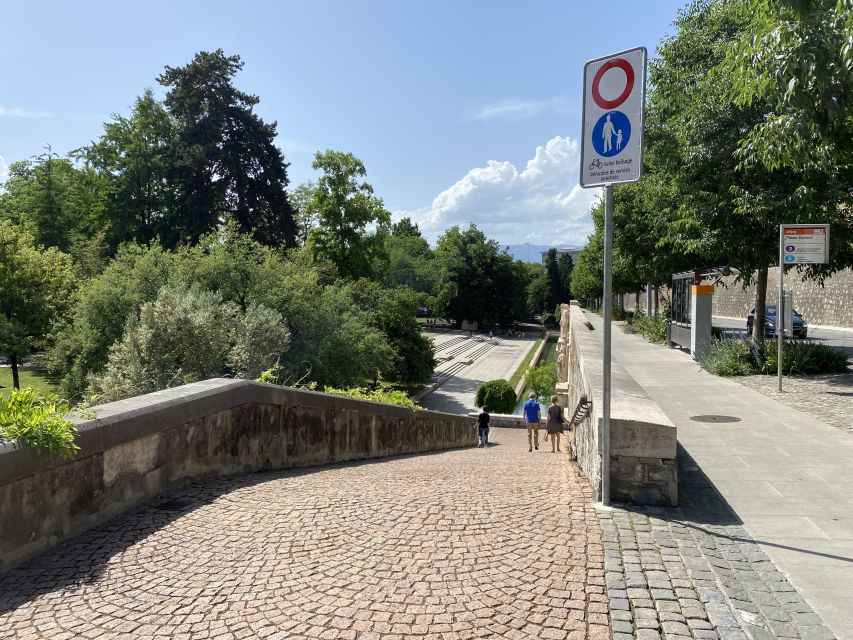
You should expect to pause at the monument rather than rush straight onward. The audio format works best when you look carefully at each stop while listening. Since the directions include photos, you can compare the image on your phone with what you see around you.
There is no guide waiting at the starting point. That matters. You need to arrive with the audio link ready and your phone charged. If your internet connection is weak, the experience may be less smooth, since the tour specifically requires internet access.
The Jet d’Eau and the idea of doing good
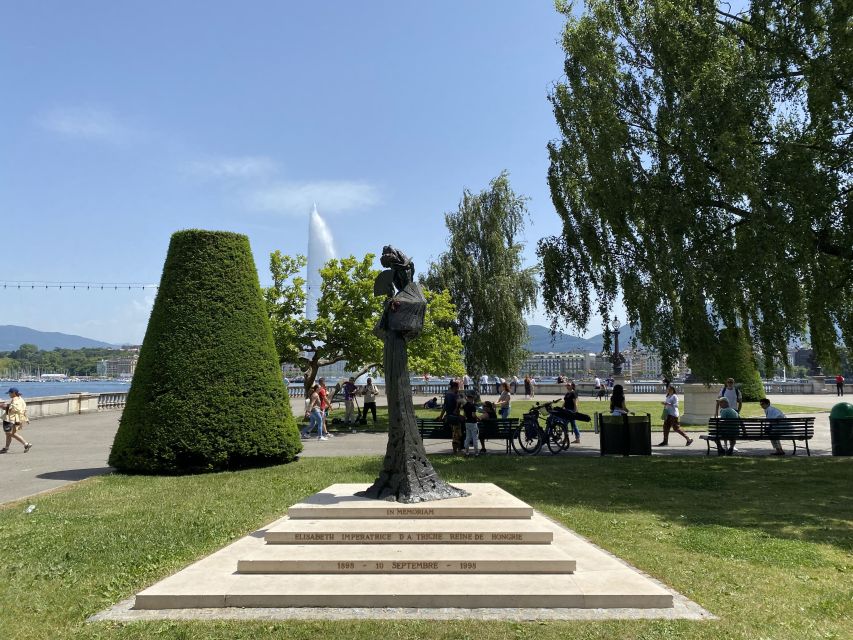
From the Sissi monument, the route takes you toward the Jet d’Eau, Geneva’s famous water fountain and one of the largest fountains in the world.
Most people see it as a symbol of Geneva or a fine photo stop. This tour asks you to consider how it can be connected with doing a good deed. That shift is useful because it stops the fountain from being just a visual attraction.
The commentary also gives you a reason to look more closely at something you might otherwise photograph and leave. The fountain is treated as part of a larger question: how can a public work affect people and make the world better?
You should allow a little flexibility here. The route is described as lasting 1.5 to 2 hours, but your pace will depend on how long you spend listening, taking photos, and looking around. The audio is self-paced, so you are not tied to a group or a fixed departure time.
Brunswick, Rousseau, and the uncomfortable side of famous men
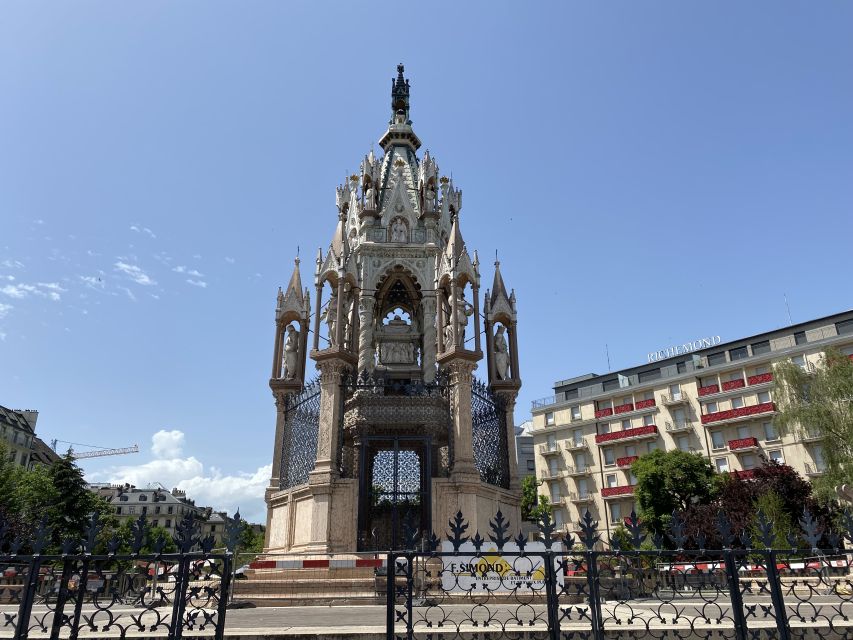
Next comes the Brunswick monument, where the audio points out images connected with virtues. This is the kind of small visual detail that is easy to miss without guidance.
The tour then reaches the monument to Jean-Jacques Rousseau. Rousseau is linked with ideas of social equality, but the commentary also addresses the affairs with married women that he confessed to. That contrast gives the stop its bite.
I appreciate this kind of treatment. It avoids turning famous people into flawless heroes. You can respect an influential idea while still acknowledging the person’s private conduct. For a short city tour, that is a more useful lesson than simple praise.
The Rousseau stop also shows the limits of a self-guided format. The material seems designed to make you think, but there is no live guide to explain the wider political or philosophical context if you want more. If you enjoy asking follow-up questions, a guided group walk may suit you better.
Same place, a different route to walk:
- Zurich: City Top Attractions Tour by Bus with Audio Guide
★ 4.3 · 282 reviews - Audioguided sightseeing cruise of Geneva
★ 3.5 · 144 reviews - Mt. Rigi Self-Guided Tour: Lake Lucerne Cruise and Mountain Spa
★ 4.5 · 83 reviews - Self-Guided Chamonix with Aiguille du Midi or Mer de Glace
★ 3.5 · 35 reviews
National Monument and Geneva’s public image
The National Monument is the next major stop. Here you learn why this particular monument won a competition.
That detail gives the route a useful local angle. Rather than only saying what the monument represents, the audio explains why it was selected. Public monuments are never accidental. Their design, placement, and selection tell you what a city wants to honor.
This is also a practical point in the walk. You are moving between well-known public sights, but the commentary keeps asking you to notice the choices behind them. The route is less about covering every museum or side street and more about reading Geneva’s central spaces.
You may find this part more interesting if you look at the monument before pressing play. First form your own impression, then listen to the explanation. That simple habit makes the audio commentary feel more like a conversation with the city.
The Flower Clock and the danger of pride
Geneva’s Flower Clock is an easy crowd-pleaser, but the tour connects it with pride. That may sound surprising at first, yet it fits the route’s broader interest in symbols of civic identity.
The clock is both decorative and public. It presents Geneva as a city of precision, beauty, and careful presentation. The audio encourages you to consider when civic pride becomes personal or collective vanity.
This is one of the shorter, more visual stops. You will likely understand the attraction quickly, but the moral angle gives you another reason to pause. It is also a good place to take a break from the more serious stories about murder, imprisonment, and death sentences.
The Palace of Justice, mercy, and the Lutheran church

At the Palace of Justice, the theme turns directly toward justice and mercy. The stop asks you to consider how a legal institution can represent both punishment and compassion.
That pairing matters. Justice is often presented as a simple matter of right and wrong, but mercy complicates it. The commentary seems to use the building to show that law is also about judgment, forgiveness, and the consequences of power.
The route continues to a Lutheran church, where different religions’ views of sin and good deeds come into focus. This is a thoughtful change of pace. Instead of treating religion as one single answer, the tour points you toward differences in how faith traditions understand salvation.
You do not need to be religious to get something from this part. The useful point is that Geneva’s churches and public buildings reflect competing ideas about how people should behave and how wrongdoing should be judged.
A Genevan fighter for justice and Geneva’s former red-light district

The walk then introduces a monument regarded as representing a Genevan fighter for justice. The supplied information does not identify the figure by name, so you should expect the audio to provide that detail at the stop.
This is followed by the history of prostitution in Geneva and the location of a former red-light district. The subject adds a more practical and social side to the tour. Geneva was not only shaped by theologians, political thinkers, and military figures. Its streets also had working communities and places that respectable public history often leaves out.
This section may be uncomfortable for some listeners, but it helps the tour avoid presenting the city as morally spotless. The broader theme is clear: the same city that celebrates justice also had systems and neighborhoods shaped by poverty, desire, exploitation, and social control.
Because the route includes adult themes, it is not suitable for children under 16. If you are traveling with older teenagers, consider their interest in serious historical subjects before booking.
Jeremiah, St. Pierre Cathedral, and the virtue of moderation
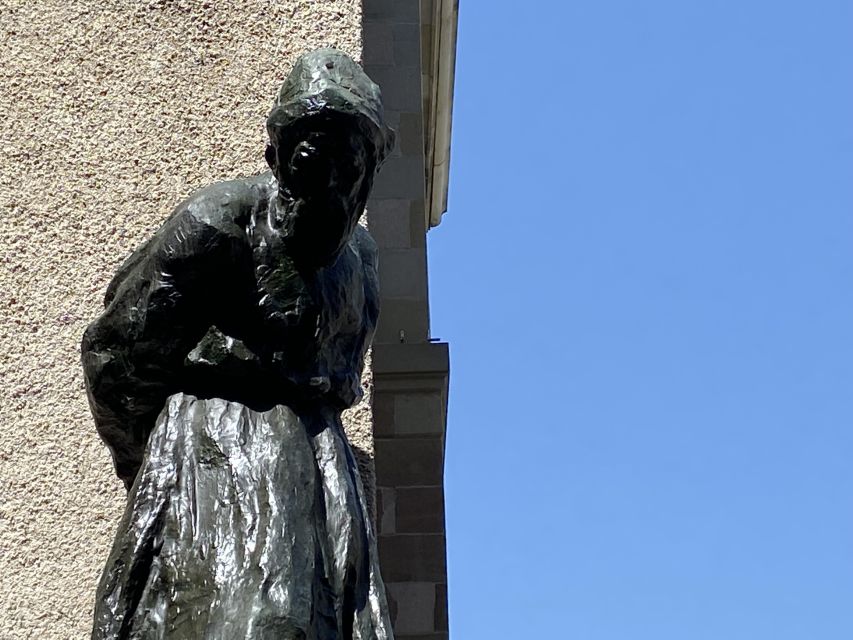
The statue of the Prophet Jeremiah comes next. Jeremiah is often called the weeping prophet, and the audio explains why.
This stop fits the tour’s interest in emotional extremes. Anger, sorrow, regret, and warning are not treated as simple weaknesses. They can also be responses to injustice or moral failure. The statue gives those ideas a human face.
At St. Pierre Cathedral, the theme shifts to temperance, or moderation. This is a fitting place to discuss control and restraint, especially after the earlier references to pride, passion, and excess.
The cathedral is one of Geneva’s essential sights, but the audio gives you a reason to see it through a particular moral lens. You may not get the architectural detail that a specialist cathedral tour would provide, but you do get a memorable connection between the building and a virtue.
The Town Hall bench and the reality of death sentences
The Town Hall provides one of the darker moments on the route. You see the long stone bench where Geneva’s judges pronounced death sentences, then hear about some of those cases in more detail.
This is a powerful stop because the setting is so plain. A stone bench may not look dramatic, yet it was tied to decisions that changed lives permanently. The audio turns an ordinary architectural feature into evidence of the city’s legal past.
I would listen carefully here and avoid treating the stop as a quick photo opportunity. The story works because of the contrast between the quiet building and the severity of the judgments made there.
This is also where the tour’s title makes the most sense. Justice is placed next to anger, mercy next to punishment, and public order next to human suffering. You are not asked to accept one simple verdict about Geneva. You are shown how a city can contain noble ideals and harsh actions at the same time.
The Reformation Wall and the problem of inflexibility
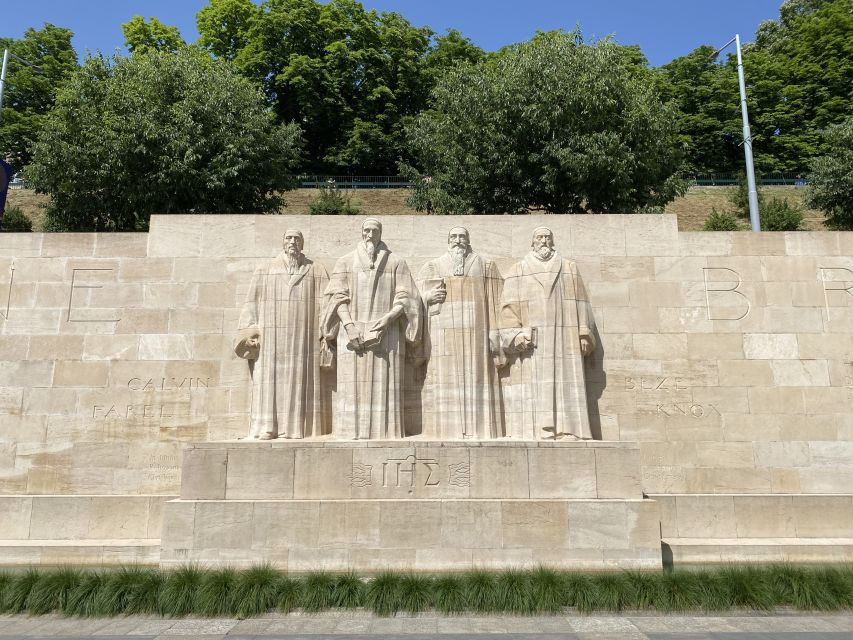
The Reformation Wall is among the tour’s most important stops. The audio explains which theologians depicted there were taunted for inflexibility, mercilessness, and heartlessness.
That framing is more pointed than the usual explanation of the wall. You still learn who is represented, but you also hear about criticism directed at religious leaders. The result is a less polished view of reform and authority.
The wall is a good place to slow down because it contains several figures and symbols. The supplied photos and directions should help you identify the relevant parts, but you will get more from the stop if you look at the whole monument before focusing on individual figures.
This portion will appeal to you if you like history presented as debate rather than a clean sequence of heroic achievements. It may frustrate you if you want precise dates, long biographies, or detailed architectural analysis. The tour’s main concern is moral character and human conduct.
Dufour, Dunant, and courage in public life
The final section includes the statue of Guillaume-Henri Dufour and a bust of Henri Dunant. The audio considers how both men struggled with evil.
These figures bring the route back to courage. After hearing about anger, envy, pride, prostitution, and punishment, you end with people associated with resistance to harmful forces.
The final fountain provides evidence of the courage of the Genevans. The information does not identify the fountain in advance, so the audio and directions reveal the exact stop as you follow the route.
Ending with courage gives the walk a more hopeful shape without pretending that the city’s moral problems disappeared. You move from human weakness toward the possibility of action. That is a satisfying way to close a tour built around virtues and sins.
What $13 gets you, and what it does not
At $13 per person, this is a modest purchase for a city introduction that covers many central sights. You are paying for the audio content, the route, photos, and directions, not for transportation, admission tickets, or personal guiding.
The value is strongest if you want to see Geneva independently and need help connecting the sights. The 365-day validity is especially useful if your plans change or you are booking before you know the exact day you will walk.
The value is weaker if you already know central Geneva well, dislike listening through headphones, or want a guide who can adapt the walk to your interests. You also need to provide your own phone, headphones, charged battery, and internet connection.
The overall rating is 3.9 from 44 reviews, with several strong ratings praising the self-paced format and the context it gives the city. One positive assessment described it as highlighting a bit of everything, while another found it interesting. At the same time, very short negative reactions included boring, and one low rating suggests that the purchaser felt the sights had already been made clear before buying. That mix tells me the tour depends heavily on your interest in the moral theme.
Who should choose this Geneva audio walk
I would choose it for a first visit when you want a low-cost orientation without joining a group. It suits independent adults who like history, public monuments, religion, politics, and stories about flawed people.
It also works well if you prefer to set your own pace. You can pause the audio, take photographs, spend more time at St. Pierre Cathedral, or move on when a stop does not hold your attention.
I would be cautious about booking it if you want a relaxed scenic stroll with light commentary. The material includes murder, prostitution, confinement, religious criticism, and executions. It is more serious than a standard sightseeing introduction.
I would also skip it if you need wheelchair access, since the experience is specifically listed as unsuitable for wheelchair users. Check your phone, headphones, and internet connection before starting. Those small preparations matter more here than they would on a guided walk.
Should you book The Many Faces of Geneva?
Book it if you want to see Geneva’s main sights while thinking about the people and moral choices behind them. For $13, the combination of a 1.5 to 2 hour route, English or French audio, photos, and one-year validity offers solid value.
Skip it if you prefer a live guide, a highly detailed architectural tour, or a light and cheerful introduction. The strongest reason to book is the unusual theme. Geneva’s fountains, monuments, courts, churches, and old town become connected by questions of justice, courage, pride, anger, and mercy.
FAQ
Where does the tour begin?
The tour begins at the monument to Empress Elisabeth, also known as Sissi, in Geneva.
How long does the tour take?
The route takes about 1.5 to 2 hours.
How much does the tour cost?
The price is $13 per person.
Is there a live guide?
No. This is a self-guided audio tour, and no live guide is present.
Which languages are available?
The audio guide is available in English or French.
What do I need to bring?
Bring headphones, a charged smartphone, and internet access.
How do I access the tour?
You use the internet link provided immediately after booking.
How long is the booking valid?
The activity is valid for 365 days. You should check availability for starting times.
Is the tour suitable for children?
It is not suitable for children under 16.
Can wheelchair users take this tour?
The activity is listed as unsuitable for wheelchair users.
Can I cancel the booking?
You can cancel up to 24 hours in advance for a full refund.
Do I have to pay when I book?
Reserve now and pay later is available, so you can book without paying immediately.
Just added around Switzerland
- Interlaken Scavenger Hunt and Sights Self-Guided Tour★ 5.0 · 4 reviews
- Attraction Ticket: Jungfraujoch Top of Europe self-guided trip★ 5.0 · 7 reviews
- Self-Guided Audio Tour to the Many Faces of Geneva★ 4.5 · 10 reviews
- Geneva Scavenger Hunt and Highlights Self Guided Audio Tour★ 5.0 · 5 reviews
- Unusual Audio Tour of Geneva★ 5.0 · 8 reviews
- Self-Guided Chamonix with Aiguille du Midi or Mer de Glace★ 3.5 · 35 reviews
- A Self-Guided Audio Tour of Geneva’s Old Town★ 4.5 · 7 reviews
- Zug Scavenger Hunt and Sights Self-Guided Tour★ 5.0 · 5 reviews
Switzerland Audio Tours, compared.
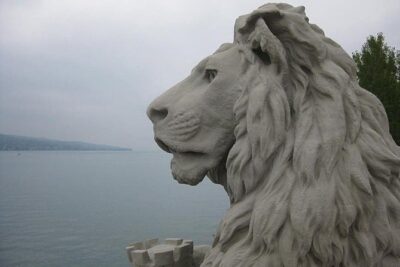
Zurich: City Bus Tour with Audio Guide and Lake Cruise
Read our review →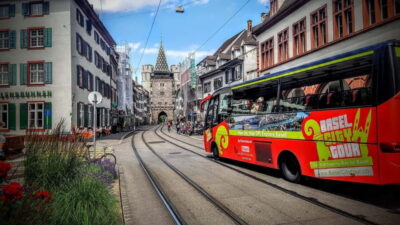
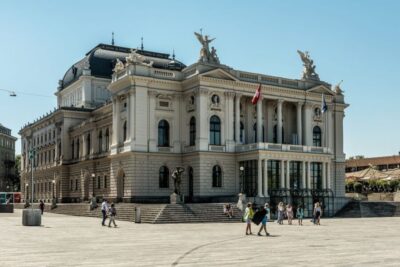
Zurich: City Top Attractions Tour by Bus with Audio Guide
Read our review →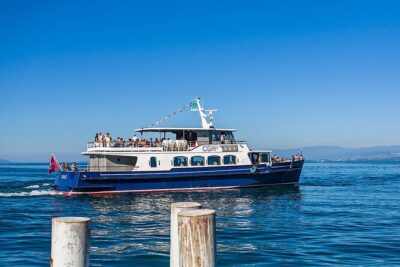
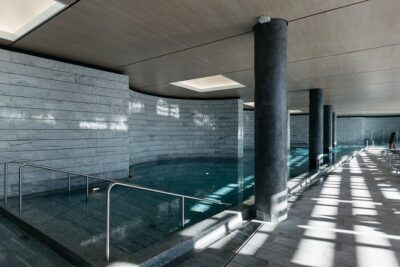
Mt. Rigi Self-Guided Tour: Lake Lucerne Cruise and Mountain Spa
Read our review →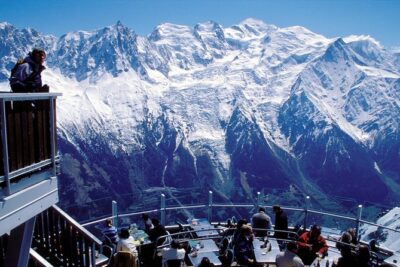
Self-Guided Chamonix with Aiguille du Midi or Mer de Glace
Read our review →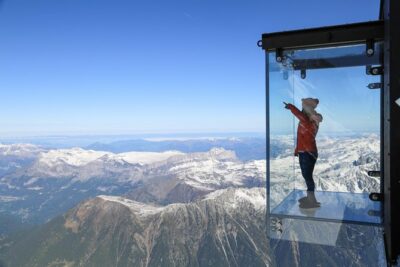
Chamonix Self-guided Sightseeing Tour from Geneva
Read our review →Browse the lists this tour appears in