
REVIEW · ROME AUDIO TOURS
Rome: Ostia Antica Archaeological Park Ticket & Audio App
Ostia Antica gives you something Rome itself often cannot: a whole Roman city you can walk through, with streets, apartment blocks, shops, baths, villas, mosaics, and frescoes still in place. I like the freedom to explore at your own pace, and I like that the ticket also covers several connected sites beyond the main ruins. The main catch is scale. This is a lot of walking, and the route is not always easy to follow.
I especially like the well-preserved mosaics and frescoes, which turn a field of ruins into a picture of daily life. The digital audio guide adds useful context, though it can be hard to match each explanation to the right building. Bring sturdy shoes, water, a charged smartphone, and a map if you can.
Key points
- A real Roman city, not just a single monument: Walk along ancient streets among apartments, villas, baths, and public buildings.
- Mosaics and frescoes are the stars: Many decorative floors and wall paintings remain clear enough to show how Roman spaces were used.
- The ticket reaches beyond Ostia Antica: It includes the Castle of Julius II, Museum of Ships in Fiumicino, Imperial Ports of Claudius and Trajan, and Necropolis of Porto on Isola Sacra.
- The audio app is helpful but not foolproof: It gives needed background, yet locating each stop can take patience.
- Plan for a full day on your feet: The site is large, paths are uneven, and shade and water should be treated as practical concerns.
- A photo postcard adds a pleasant extra: You can turn one of your own digital photos into a postcard for friends or family.
Why Ostia Antica feels different from Rome’s headline ruins
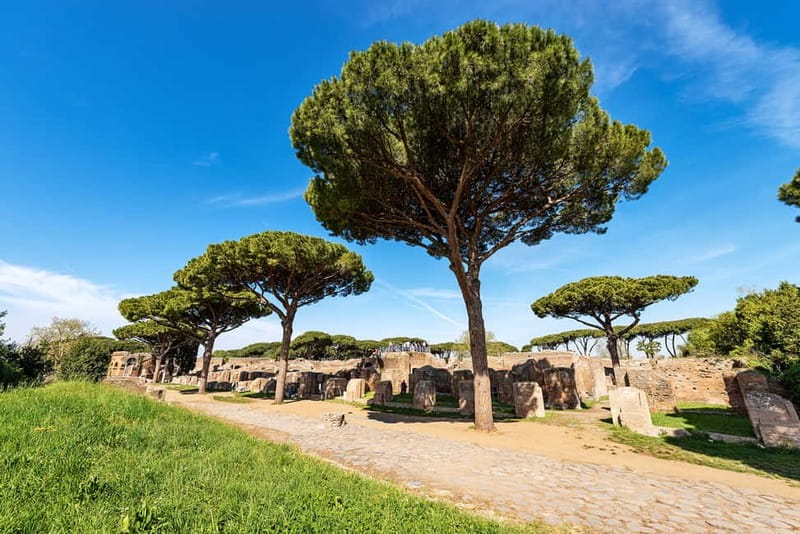
Ostia was Rome’s ancient port city, built at the mouth of the Tiber. Tradition credits King Ancus Marcius with founding it in 620 BC as a Roman colony. Over time, river silt covered the town, helping preserve buildings, mosaics, and wall paintings.
That matters when you visit. At the Colosseum, you see one enormous monument and then move on. At Ostia Antica, you can follow streets through a complete urban setting. You see where people lived, bathed, worked, worshiped, and gathered.
The experience is less about one dramatic viewpoint and more about slowly reading the city. A two-story apartment block can tell you about crowded urban life. A villa can suggest private wealth. A mosaic can identify the purpose of a room. The ruins make ancient society feel practical and close at hand.
I find that this is the strongest reason to visit. You are not simply looking at broken stone. You are walking through the remains of a functioning town.
More Smartphone App Tours in Rome:
- Rome: Colosseum & Forum with Audio Guide App -Optional Arena
★ 4.2 · 24,770 reviews - Colosseum, Roman Forum & Palatine Hill with Audioguide App
★ 4.4 · 6,291 reviews - Rome: Pantheon Priority Entry Ticket & Interactive App
★ 4.1 · 5,114 reviews
Entering the park and getting your bearings
You begin by exchanging your voucher at the Ostia Antica ticket office. Bring a valid passport or ID card, as identification is required. You also need a charged smartphone for the digital audio guide.
Transportation is not included, so you arrange your own way to the meeting point and back. That makes this a better choice for independent visitors who are comfortable handling the journey themselves. It also means you should allow extra time before entry rather than arriving at the ticket office just as you expect to start exploring.
Once inside, give yourself a few minutes to understand the layout. The park is extensive, and the route is not always obvious. Even with an audio guide or printed guidebook, it is possible to lose track of where you are.
That is not a minor detail. The size of Ostia is part of its appeal, but it can also make the visit tiring and confusing. I would save a map on your phone, carry water, and avoid treating the site as a quick stop between other major attractions.
Walking ancient streets and apartment blocks
The best part of Ostia is the ordinary city. Follow the ancient streets and look beyond the largest ruins. The remains of apartment blocks show how Roman residents lived in shared, multi-level housing rather than in private villas.
These buildings help correct the usual picture of ancient Rome as a city of emperors, senators, and monumental temples. Much of Roman life was more crowded and practical. People needed homes, shops, baths, places to meet, and services that kept a port city working.
The streets also give you a sense of movement. Instead of viewing isolated buildings from a distance, you pass between them as people once did. The physical layout helps explain the city better than a list of dates.
Use the audio guide for context, but keep your eyes on the route. The audio content can be useful, yet it may not always be obvious which building or feature it describes. Pause when necessary and compare the app with signs or a map.
Mosaics and frescoes worth slowing down for
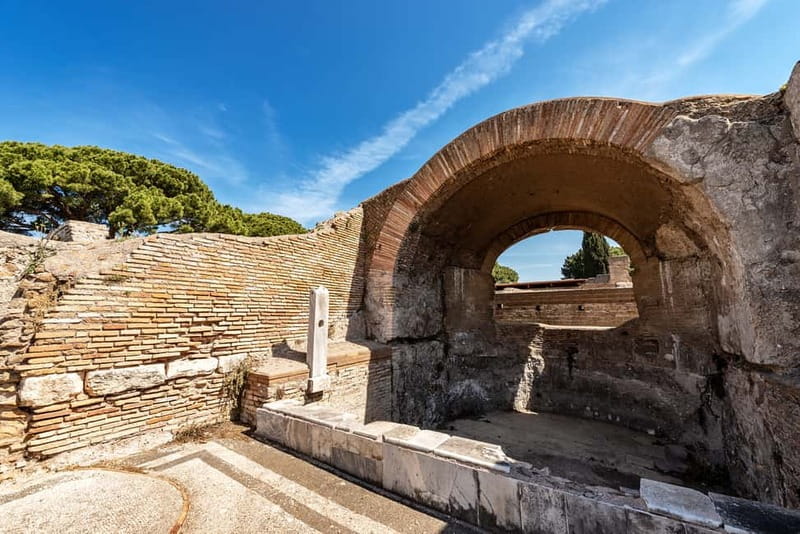
The mosaics are among the clearest rewards of the visit. Floors with preserved patterns and images show how decoration could communicate a room’s purpose, status, or connection to trade and public life.
Take time to look at the details rather than simply photographing each floor. A mosaic is not just attractive ancient artwork. Its position inside a building can help you understand how the space functioned.
Frescoes add another layer. The surviving wall paintings bring color and human scale to buildings that might otherwise seem like bare stone shells. Even fragments can show the care given to interiors two thousand years ago.
Conditions vary across the park, so the best-preserved examples deserve a slower look. This is where the audio guide earns its place. Without explanation, you may see a handsome floor or painted wall but miss why it matters.
The site has enough decorative work to reward visitors who enjoy close observation. If your ideal ancient site is only a quick photo stop, you may find the visit long. If you like details, the time passes more easily.
More Audio Tours in Rome:
- Rome: City Sightseeing Hop-on Hop-off Bus with Audioguide
★ 4.0 · 16,045 reviews - Rome: St. Peter’s Basilica & Dome Entry Ticket & Audio Tour
★ 4.2 · 7,537 reviews - Vatican & Sistine Chapel Ticket with Optional Audio Guide
★ 4.1 · 5,405 reviews - Rome: Castel Sant’Angelo Entry Ticket & Digital Audioguide
★ 4.7 · 5,347 reviews
Villas, baths, and the seaside setting
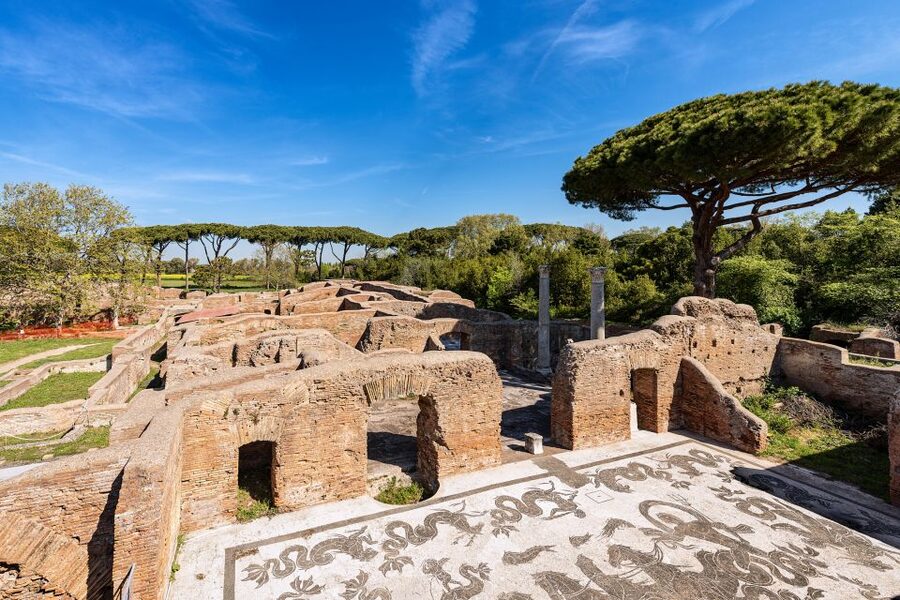
The villas of Procoio add a different mood from the apartment blocks. Here, the scale and design suggest wealth and private comfort. Their large bath complex shows how bathing was part of Roman social life, not simply a private household chore.
The baths are also useful for understanding how much planning went into an ancient city. A Roman settlement needed systems and shared facilities, and the remains at Ostia give you a physical sense of that organization.
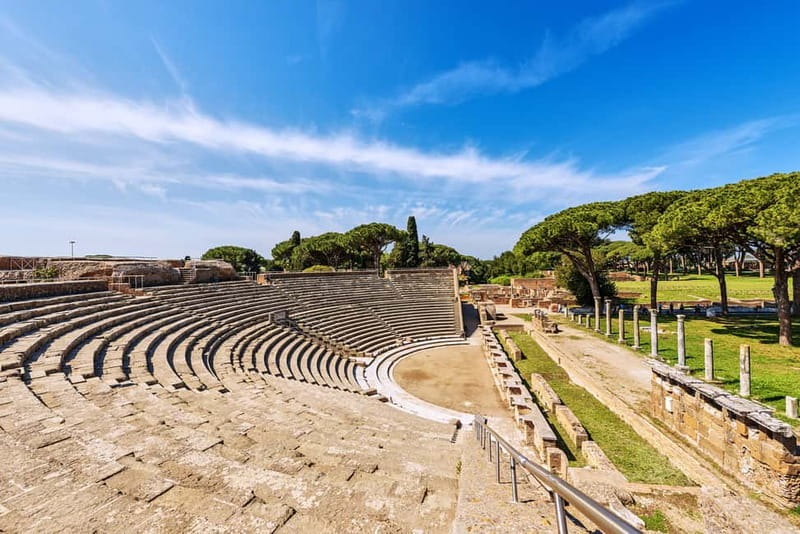
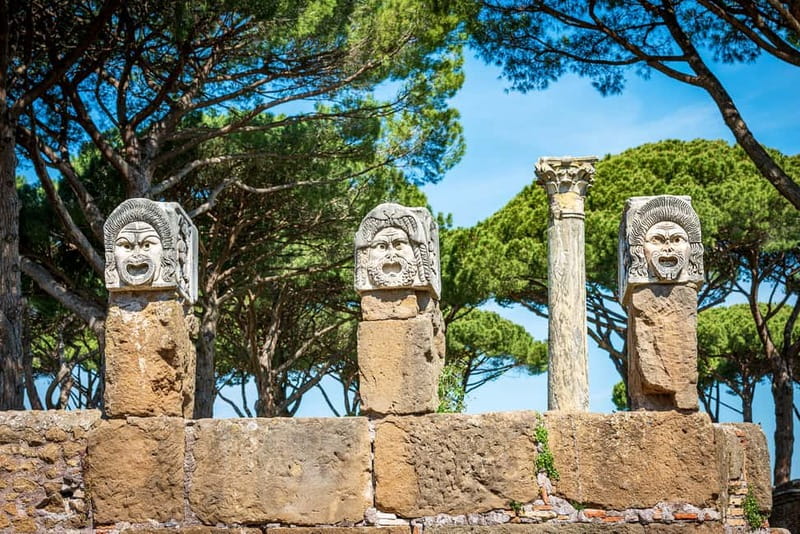
Another highlight is the amphitheater lined with striking theatrical masks made from stone. This is the kind of detail that can be easy to miss if you rush from one major ruin to the next. Look carefully at the decorative elements, not just the broad shape of the building.
The park’s coastal connection is important, too. Ostia was linked to Rome through the Tiber and served as a port city. The ruins make more sense when you picture a place shaped by trade, shipping, workers, residents, and public activity.
What the audio guide can and cannot do
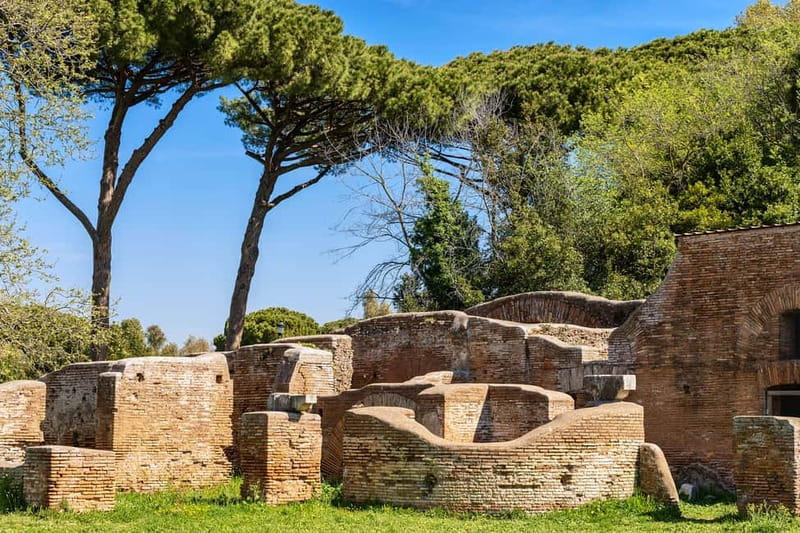
The digital audio guide is included, so you do not need to arrange a separate guide. It gives you background as you move through the city and helps explain why particular buildings, mosaics, and public spaces matter.
I would use it selectively rather than listening without pause. Start with the major areas, then stop the audio when you need to look around or work out your position. The main weakness is navigation. At times, it can be difficult to connect an audio stop with the exact building in front of you.
A printed or downloaded map can make the experience easier. You should also keep your phone charged, since the audio guide depends on it. Pack a portable battery if you have one, though the provided information only specifically requires a charged smartphone.
A personal guide would likely make orientation easier, but the audio format gives you more independence and usually more control over your pace. You can linger over a mosaic, skip a section, or take a break without holding up a group.
The extra sites covered by the ticket
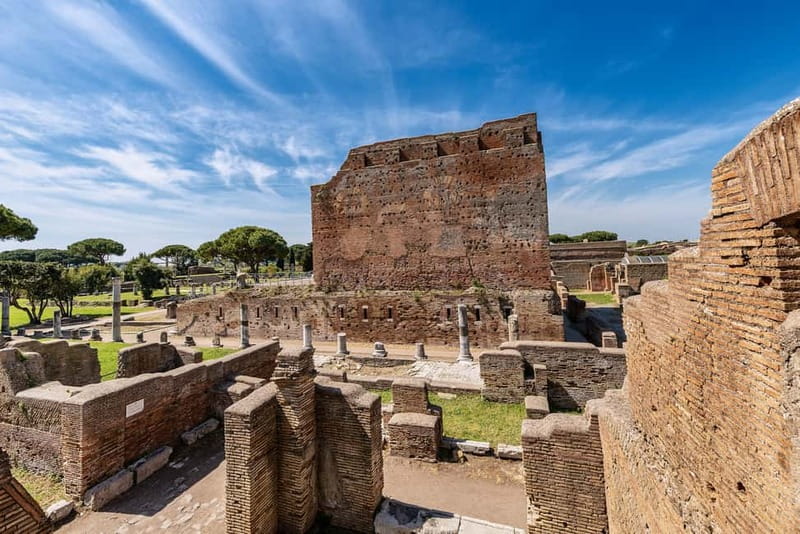
The admission is broader than Ostia Antica alone. It includes one admission to several sites and museums in the park area:
- Ostia Antica Archaeological Park
- Castle of Julius II
- Museum of Ships in Fiumicino
- Imperial Ports of Claudius and Trajan
- Necropolis of Porto on Isola Sacra
This wider access improves the value if you have enough time to use it. The ticket is not just for a single walk through ruins. It can support a fuller look at the ancient port system around Rome.
The Castle of Julius II gives the visit a later historical layer, while the Museum of Ships in Fiumicino connects with the maritime side of the area. The Imperial Ports and the Necropolis of Porto broaden your understanding of how the port region worked and how its communities handled burial.
Do not assume you can see every included site casually in one short outing. Transportation is not included, and the main Ostia park alone can take much of a day if you explore carefully. The extra admission is most useful to people staying in the area or planning multiple visits.
There is a time discrepancy in the supplied information: the main description says the ticket is valid for eight days from first activation, while the detailed conditions say seven days. Confirm the current validity period when booking or collecting your ticket. In either case, the ticket is intended to give you several days of flexibility, not just a single timed entry.
How much time and energy should you allow?
The duration is listed as valid for eight days from first activation, rather than as a fixed guided tour lasting a set number of hours. That is good news for flexible planning. You can choose how long to spend at Ostia and potentially return for the other included sites.
For the main archaeological park, plan around the fact that the ruins are extensive. One detailed visit can become an all-day walk. The paths are uneven, and sturdy shoes are more important than stylish ones.
Take water, especially in warm weather. The site is large enough that you do not want to finish your supply early and then keep walking. A small snack can also be sensible, though the available information does not promise food service at a particular point.
There is a cafe, but it can be difficult to find. If you use it, do not count on stumbling across it at exactly the moment you need it. Plan your break rather than assuming refreshments will always be close by.
The combination of uneven paths, long distances, and unclear routing makes this a poor match for anyone seeking a gentle, compact sightseeing stop. It suits you better if you enjoy walking and can accept a little uncertainty about the route.
The postcard is a small but useful extra
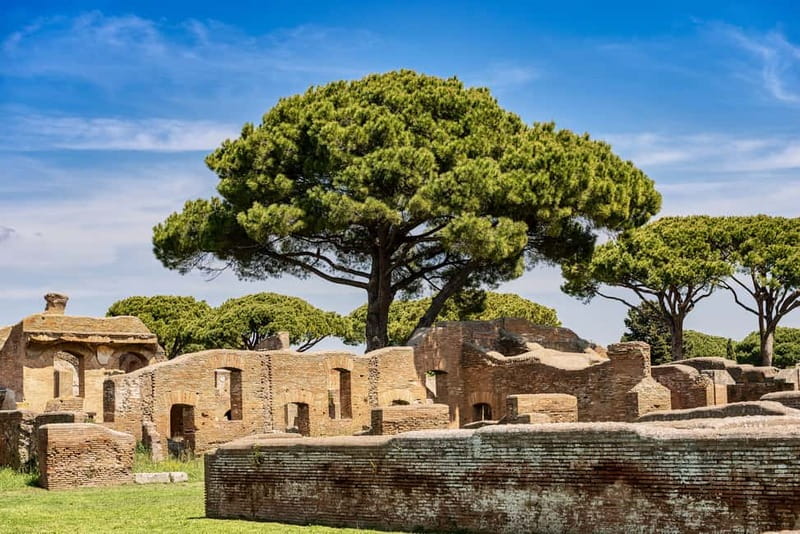
One unusual feature is the option to turn one of your own digital photos into a postcard and send it to friends or family anywhere in the world. It is a simple extra, but it fits the visit well.
Most ancient-site souvenirs are bought from a shop. This option lets you send something connected to your own day at Ostia. Take a photo you like, then use it for a more personal reminder of the visit.
Do not make the postcard feature the reason to buy the ticket. The archaeological park is the main attraction, and the postcard is best treated as a pleasant bonus.
Value at $27 per person
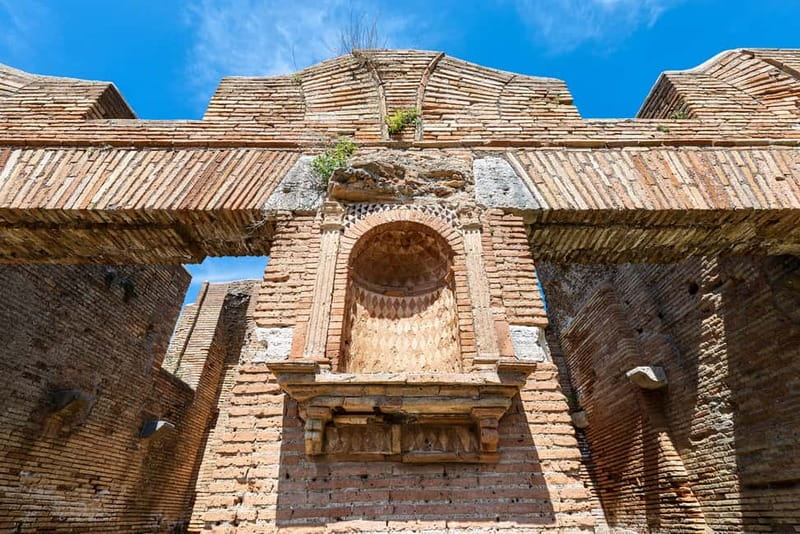
At $27 per person, the ticket offers fair value if you want more than a short look at Ostia Antica. The main park is large, the archaeological remains are unusually extensive, and the audio guide is included.
The value becomes stronger if you use the additional admission sites during the validity period. Castle of Julius II, the Museum of Ships in Fiumicino, the Imperial Ports of Claudius and Trajan, and the Necropolis of Porto on Isola Sacra give the ticket a wider reach than a basic single-site entry.
The price is less compelling if you only have time for a rushed visit or if you prefer a guided tour with someone handling the history and navigation. Transportation is extra, and the audio guide requires your own charged phone.
I see this as a good independent sightseeing ticket rather than a fully managed excursion. You pay for access and audio support, then take responsibility for transport, pacing, route-finding, and breaks.
Who should book this experience?
I would choose it if you want Roman history in an open-air setting and enjoy exploring without a fixed group schedule. It is especially good for visitors who want to see how ordinary buildings, public facilities, and private homes fit together.
It also suits repeat visitors to Rome who have already seen the best-known central monuments. Ostia offers a different kind of ancient experience, with more room to walk and more daily-life detail.
Families with older children may appreciate the scale of the city, but the long distances and uneven paths require patience. Anyone with limited walking stamina should think carefully before booking.
I would be cautious if you need clear route signs, a short visit, or constant personal explanation. The audio guide helps, but it does not remove the need to orient yourself. A map, water, and sensible footwear will make a real difference.
Final call: a strong choice for curious walkers
Book this ticket if you want to spend serious time with a preserved Roman city rather than simply check off another monument. The mosaics, frescoes, apartments, villas, baths, and theatrical stone masks give you a fuller picture of ancient life than a single grand structure can provide.
Choose it with realistic expectations. Ostia Antica is big, uneven, and not always easy to navigate. The ticket is best value when you can give the park plenty of time and use at least some of the additional sites during its validity period.
For independent visitors who bring sturdy shoes, water, ID, a charged phone, and a little patience, this is one of the most rewarding ancient sites near Rome.
FAQ
Where do I start the experience?
You start by exchanging your voucher at the Ostia Antica ticket office.
What is included in the ticket?
The ticket includes entry to Ostia Antica Archaeological Park, Castle of Julius II, Museum of Ships in Fiumicino, Imperial Ports of Claudius and Trajan, and Necropolis of Porto on Isola Sacra.
Is an audio guide included?
Yes. A digital audio guide is included with the admission ticket.
Is transportation included?
No. You arrange your own transportation to the meeting point and between any additional sites you visit.
How long is the ticket valid?
The main information states that it is valid for eight days from first activation. Another detailed condition states seven days, so confirm the current validity period when booking or collecting the ticket.
Can I visit the included sites more than once?
The ticket provides one admission to each of the listed sites and museums during its validity period.
Do I need identification?
Yes. You need to present a valid passport or ID card.
What should I bring?
Bring comfortable, sturdy shoes, a charged smartphone, and valid identification. Water is also a practical choice because the site is extensive.
Are the paths even?
No. The paths at the site are uneven, so suitable footwear is important.
Can I cancel the booking?
Yes. You can cancel up to 24 hours in advance for a full refund. A reserve-now-and-pay-later option is also available.
Just added around Rome
- Rome: St. Peter’s Basilica and Dome Entry + Audio Guide★ 4.5 · 13 reviews
- St. Peter’s Basilica: Hosted Entrance & Digital Audioguide★ 4.1 · 35 reviews
- Sorrento & Pompeii Day Trip from Rome Audio Guide Tour★ 4.2 · 50 reviews
- Rome:St. Peter’s Basilica Hosted Entry + Official Audioguide★ 3.4 · 10 reviews
- Rome:Ostia Antica Skip-the-line Ticket & Audioguide★ 4.3 · 11 reviews
- Rome+Jubilee Audioguide – TravelMate app for your smartphone★ 4.2 · 38 reviews
- Rome: St. Peter’s Basilica Entry Ticket and AudioGuide★ 4.4 · 57 reviews
- Colosseum, Roman Forum, Palatine Hill access and AudioGuide★ 4.7 · 12 reviews
Rome Audio Tours, compared.
Rome: Colosseum & Forum with Audio Guide App -Optional Arena
Read our review →
Rome: City Sightseeing Hop-on Hop-off Bus with Audioguide
Read our review →
Rome: St. Peter’s Basilica & Dome Entry Ticket & Audio Tour
Read our review →
Colosseum, Roman Forum & Palatine Hill with Audioguide App
Read our review →
Vatican & Sistine Chapel Ticket with Optional Audio Guide
Read our review →
Rome: Castel Sant’Angelo Entry Ticket & Digital Audioguide
Read our review →
Rome: Pantheon Priority Entry Ticket & Interactive App
Read our review →
Rome: Castel Sant’Angelo Entry Ticket & Audio App
Read our review →Browse the lists this tour appears in