

REVIEW · ROME AUDIO TOURS
Rome: Navona Square Underground Ticket with Audio Guide
Five meters below Piazza Navona, the Stadium of Domitian gives you a glimpse of Rome that most people miss while admiring the fountains above. This was the first and only stadium built entirely from masonry in Ancient Rome, with room for as many as 30,000 spectators.
I like two things right away: the site puts Roman sports at the center of the story, and the displays use old photographs, videos, and 3D reconstructions to help you picture the missing upper levels. The multilingual audio guide also lets you set your own pace.
The main drawback is size. The underground area is smaller than many people expect, and a careful visit usually takes about 45 minutes to an hour. Some numbered stations can be confusing, and a few visitors found the audio did not always match the images perfectly.
Key points to know
- Five meters below Piazza Navona: See the ancient foundations beneath one of central Rome’s best-known squares.
- A stadium for up to 30,000 people: Learn how spectators were arranged and how Roman sport worked.
- Useful visual aids: Unpublished photographs, panels, video, and 3D images rebuild the ancient setting.
- Self-guided format: There is no live guide, so you move through the archaeological site with an audio guide.
- Optional drinks afterward: Add one cocktail with snacks, or two wines with a traditional appetizer board.
- Allow about an hour: The visit is focused rather than sprawling, which works well between major sights.
Finding the Entrance at Piazza Navona
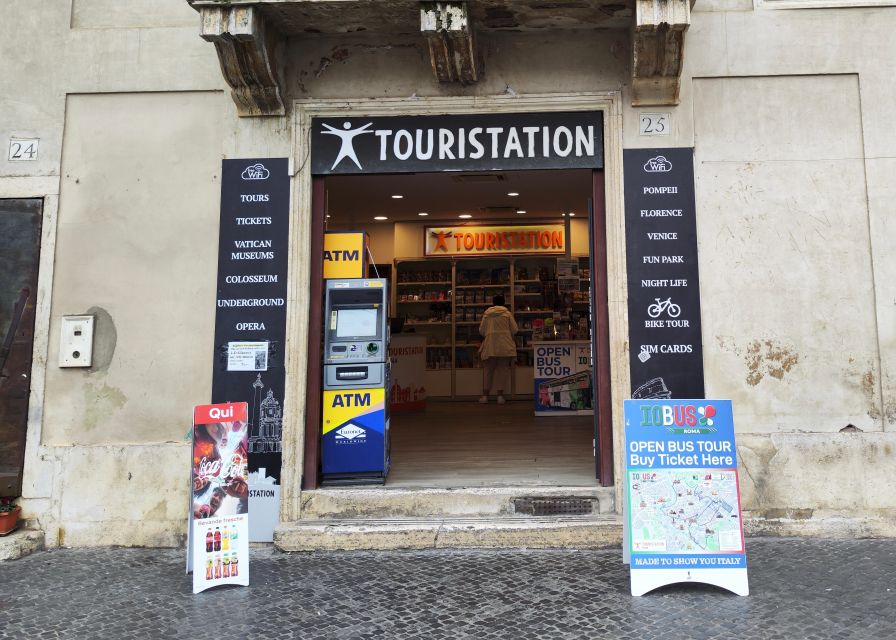
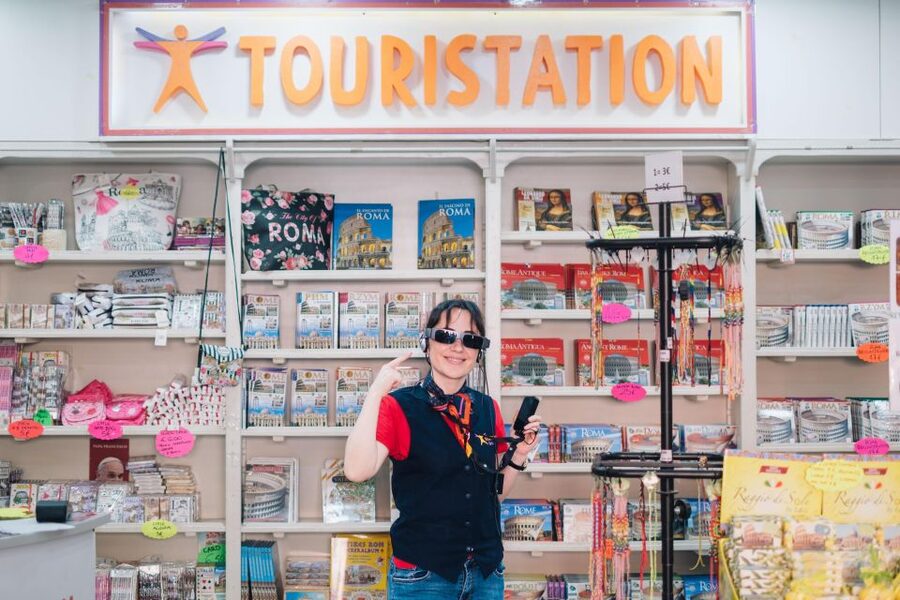
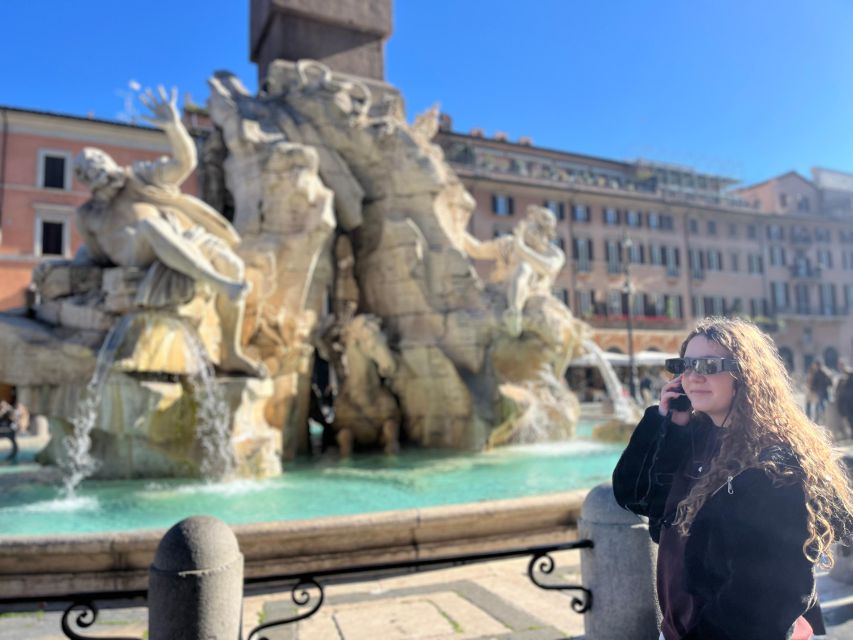
The meeting point is the tourist point in front of the main fountain at Piazza Navona, 25. That location is easy to reach once you are in the square, but the ticket process can require a little patience.
If you have a phone voucher, you may be directed to a separate ticket office before entering the underground site. The extra walk has caused confusion for some people, especially when they expected to scan the voucher at the entrance. I would arrive early enough to allow an additional 5 to 10 minutes for ticket redemption and follow the staff’s instructions.
Once inside, the site is clearly marked. That matters here because the exhibition combines open ruins, numbered information points, pictures, and audio stations. Take a moment at the beginning to get the route straight instead of rushing to the first recording.
There is no transportation included. You reach the site on your own, and the whole experience takes place in central Rome at Piazza Navona.
More Audio Tours in Rome:
- Rome: Colosseum & Forum with Audio Guide App -Optional Arena
★ 4.2 · 24,770 reviews - Rome: City Sightseeing Hop-on Hop-off Bus with Audioguide
★ 4.0 · 16,045 reviews - Rome: St. Peter’s Basilica & Dome Entry Ticket & Audio Tour
★ 4.2 · 7,537 reviews
Descending to the Stadium of Domitian
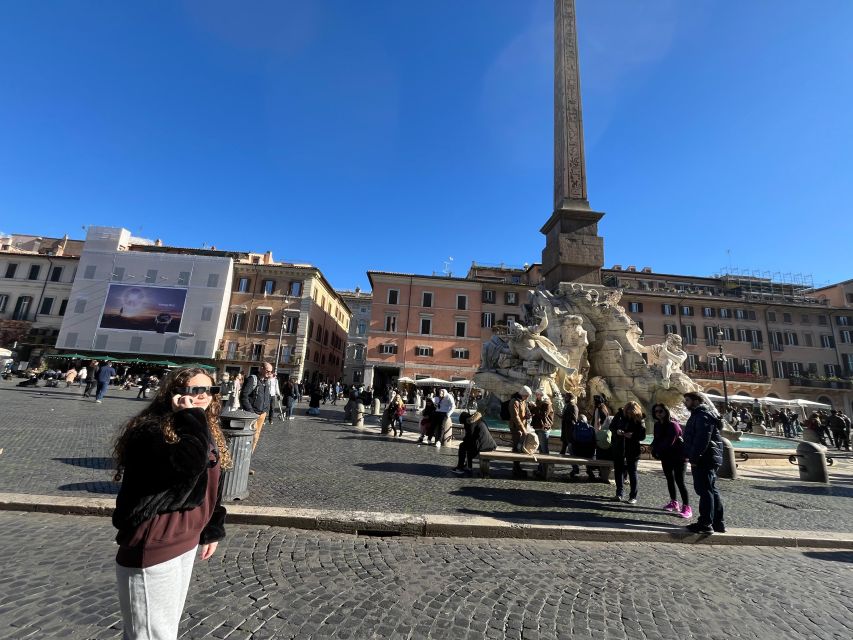
The first surprise is the change in level. Above you, Piazza Navona is filled with fountains, churches, restaurants, and passing foot traffic. Below it, the remains of the Stadium of Domitian sit in a quieter archaeological setting, though street sounds can still filter down from above.
The stadium was not a circus for chariot races. It was designed for athletic contests and public spectacles. The audio guide explains the development of Roman sport, the role of the rulers, and how people were divided around the arena.
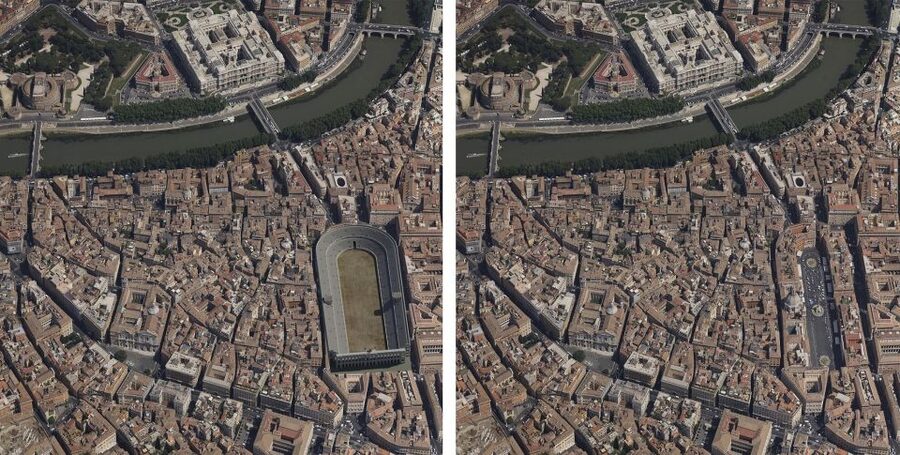
The original structure could hold up to 30,000 spectators. That number is hard to grasp when you see only the surviving lower sections, so the reconstructions are important. They give you a sense of the stadium’s full scale and show how the arena once related to the surrounding buildings.
The underground remains are not huge. You will not walk through a vast series of halls, and much of the original stadium has disappeared. Still, the compact size makes the visit easy to fit into a day of sightseeing. You can take your time without committing half a day to another major archaeological complex.
Reading the Stonework and Stadium Design
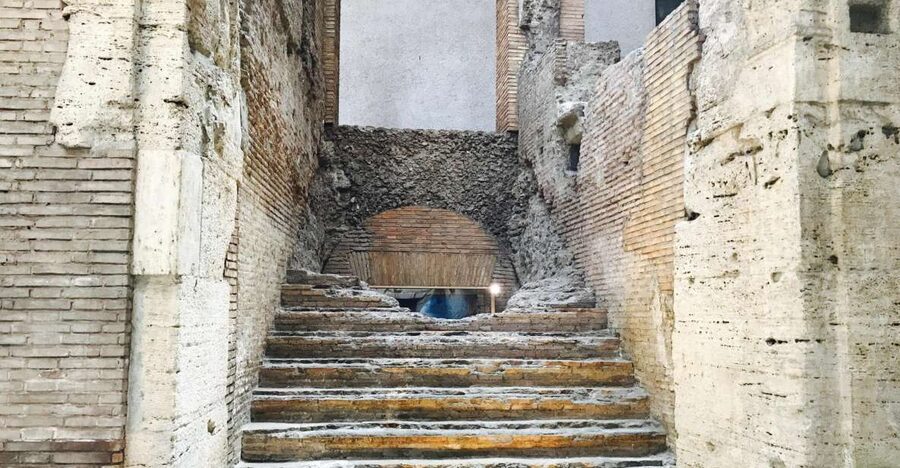
The most valuable part of the visit is looking closely at the building materials. The displays explain the travertine blocks, brickwork, and marble columns that formed the entrances and structure of the stadium.
These details help turn broken walls into evidence. Travertine shows the strength and public importance of the building. Brickwork reveals how Roman construction handled large architectural forms. Marble columns point to the decoration and status of the entrances.
The main entrances are especially useful to study because they help you understand how thousands of people could reach their places. The audio guide explains the arrangement of spectators, rather than leaving you with a collection of disconnected stones.
You may find the numbered stations slightly awkward. Some people have found that the sequence is not always obvious, and the audio can occasionally feel out of step with the nearby pictures. I would match each number carefully before starting a recording and pause when you need to compare the sound with the display.
Using the Audio Guide and Visual Displays
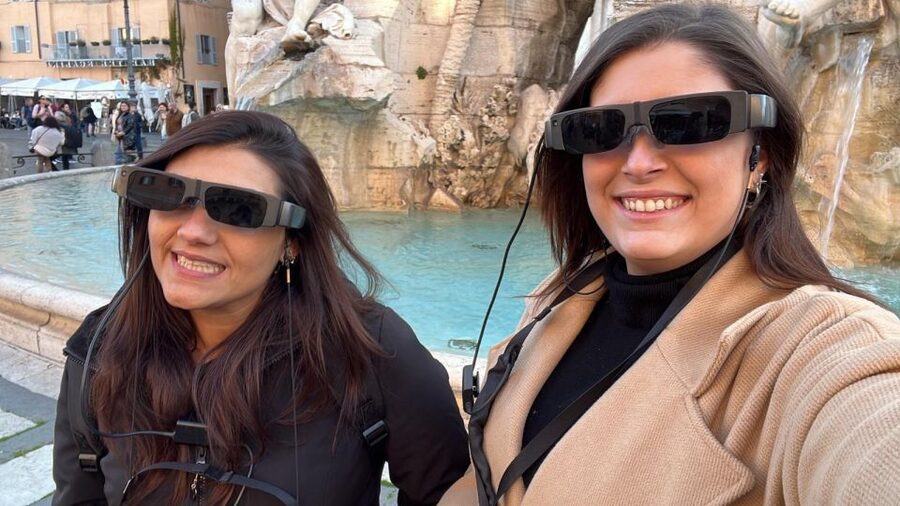
The audio guide is available in Spanish, English, French, German, Italian, Russian, and Portuguese. English speakers should have no trouble finding a suitable option, and the language choice makes this a practical stop for an international group.
The commentary covers the stadium, ancient athletics, Roman rulers, and the later development of Piazza Navona. That last part is essential. The modern piazza did not appear by accident, and understanding its earlier form changes the way you look at the fountains and buildings above.
The visual material is one of the strongest features. You see a selection of unpublished photographs, information panels, a video presentation, and 3D renderings of the ancient stadium. These tools do more work than a bare ruin could do on its own.
The audio is informative and generally easy to follow. Still, this is not the same as having a person beside you to answer questions or point out a detail at exactly the right moment. If you prefer a conversation and a clear spoken route, the self-guided format may feel a little impersonal.
Families can benefit from the child-friendly audio option mentioned in the available details. One young child enjoyed using the audio pen and map independently. The site is small enough that a parent may find it easier to keep track of a child than in a large open archaeological area.
Same place, a different route to walk:
- Colosseum, Roman Forum & Palatine Hill with Audioguide App
★ 4.4 · 6,291 reviews - Vatican & Sistine Chapel Ticket with Optional Audio Guide
★ 4.1 · 5,405 reviews - Rome: Castel Sant’Angelo Entry Ticket & Digital Audioguide
★ 4.7 · 5,347 reviews - Rome: Pantheon Priority Entry Ticket & Interactive App
★ 4.1 · 5,114 reviews
How Long the Visit Takes
Plan on about an hour if you listen to the audio and look at the displays carefully. A faster visit may take around 45 minutes, while someone interested in every panel and reconstruction can stay longer.
That timing is a strength. You can visit the Stadium of Domitian between the Pantheon, the Trevi Fountain, Campo de’ Fiori, and other central Rome sights. It does not require the same time commitment as the Colosseum or Roman Forum.
The short length is also the main limitation. If you expect a large underground city or a long sequence of chambers, you may feel that the visit ends too soon. The site works best as a focused historical stop, not as the main archaeological experience of your Rome trip.
The setting can affect your sense of atmosphere. Street noise from the piazza may be audible, so this is not always a silent retreat from Rome above. Even so, the change from the crowded square to the ancient foundations creates a clear shift in perspective.
Is the $18 Price Good Value?
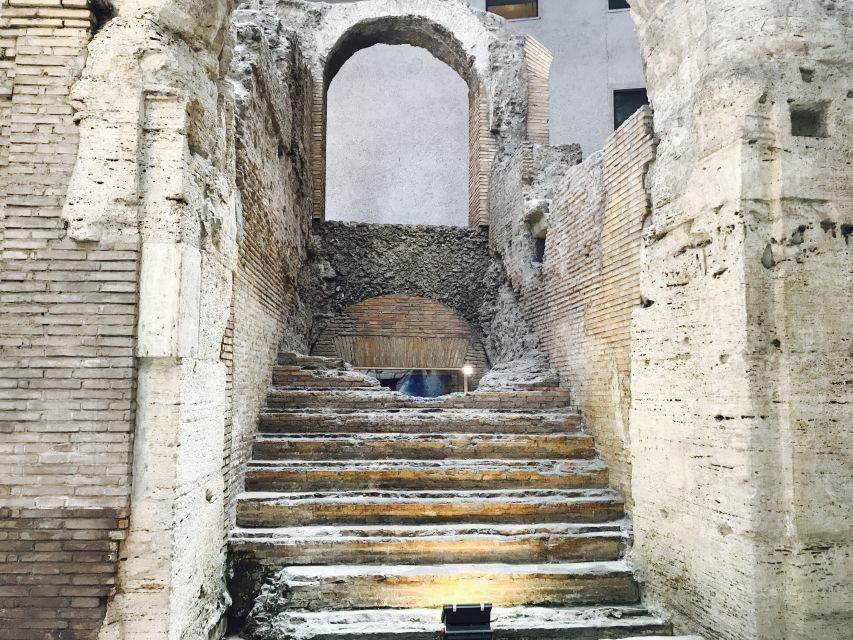
At $18 per person, the ticket is reasonably priced for a central Rome attraction that includes admission and an audio guide. I see the best value in the explanation: you are not simply looking at foundations, you are given tools to understand the stadium’s shape, construction, purpose, and later connection with Piazza Navona.
The value depends on your sightseeing priorities. If this is your first visit to Rome and your budget is tight, you may prefer to spend your money on the Colosseum, Roman Forum, Pantheon, Vatican Museums, or another major landmark. Those sites offer more scale and take longer to explore.
If you have already seen Rome’s biggest monuments, this underground stop becomes a stronger choice. It gives you a different angle on a place you may already have crossed several times. The fact that the stadium lies directly below Piazza Navona makes the experience feel connected to the city rather than isolated in a museum district.
The optional food and drink packages change the value. You can add an aperitif with one cocktail and snacks at a viewpoint in central Rome. A wine tasting includes two wines and a traditional appetizer board. The staff reserve a table for the selected option at the meeting point.
I would treat the aperitif or wine tasting as a separate extra, not the reason to book the archaeology visit. It can be a handy way to finish your time at Piazza Navona, but the core value comes from the ruins and the audio presentation.
Wheelchair Access and Practical Comfort
The activity is listed as wheelchair accessible. That makes it possible for more people to include the site in a Rome itinerary, though the information provided does not describe every surface, lift, or restroom arrangement in detail.
One family found the site unsuitable for a pram, so parents with a stroller should ask staff about the current route before committing. Wheelchair access and stroller access are not always identical.
The site is described as clean, and toilets and a gift shop are available. Those small conveniences matter when you are building a full day around Piazza Navona.
Because the visit is indoors and below street level, it can also provide a change from Rome’s outdoor sightseeing. The available information does not give a specific temperature, so I would not book it solely as a weather escape, but it is a sensible stop when you want an hour away from the piazza.
Who Will Enjoy This Underground Rome Experience?
I would recommend it most to people who enjoy archaeology, Roman engineering, and the less obvious layers of a famous city. It is particularly good if you have already visited Rome’s major monuments and want something more focused.
Families can also make good use of it, especially with the child-oriented audio option. The compact layout makes it easier to manage than a large archaeological park, although the pram issue deserves attention.
This is less suitable for someone who wants a full guided tour. There is no live guide, and the audio stations occasionally lack a perfect connection between sound and image. You need to be comfortable setting your own route and taking responsibility for following the numbered stops.
It is also not ideal if you expect dramatic ruins on a huge scale. The stadium remains are fascinating because of their location and context, not because you will see a complete arena rising around you.
Helpful Tips Before You Book
Arrive with enough time to redeem your voucher, especially if you are using a phone confirmation. The ticket office and entrance may not be in the exact same spot, so do not schedule the visit with only a few spare minutes before a restaurant booking.
Listen to the audio in order as much as possible, but do not worry if the numbered sequence feels imperfect. Check the station number before pressing play, and use the pictures and 3D models to fill in anything the recording leaves unclear.
Give yourself time to look upward and imagine the stadium in use. The surviving stonework is only part of the story. The displays are most useful when you compare the small remains in front of you with the full reconstruction.
If you choose the aperitif or wine option, confirm that the booking includes your selected package. The basic admission includes the archaeological site and audio guide, while the food and drink are available only with the relevant option.
Free cancellation is available up to 24 hours before the activity for a full refund. You can also reserve now and pay later, which helps if your Rome schedule is still changing. The ticket is valid for one day, with available starting times shown during booking.
Should You Book the Stadium of Domitian?

Book it if you want a one-hour historical stop beneath a place you may already plan to visit. The audio guide, visual reconstructions, and close look at Roman building materials make the ancient stadium easier to understand than the surviving walls would be on their own.
Skip it if your Rome budget is very limited and you have not yet visited the city’s major monuments. The underground area is small, and some visitors may feel that the ticket is better saved for a larger site.
For most people with an extra hour and an interest in Roman life, the $18 price is fair. The Stadium of Domitian will not replace the Colosseum, but it adds a useful second layer to Piazza Navona and shows how much of Rome remains beneath the modern city.
FAQ
Where is the Stadium of Domitian entrance?
Redeem your voucher at the tourist point in front of the main fountain at Piazza Navona, 25. You may then be directed to a nearby ticket office before entering the archaeological site.
How far underground is the Stadium of Domitian?
The ruins are located about 5 meters below street level at Piazza Navona.
Is a live guide included?
No. Admission includes an audio guide, but not a live guided tour.
Which languages are available for the audio guide?
The audio guide is available in Spanish, English, French, German, Italian, Russian, and Portuguese.
How long should I allow for the visit?
Plan for about 45 minutes to an hour, depending on how carefully you listen to the audio and study the displays.
Is the site wheelchair accessible?
The activity is listed as wheelchair accessible. The available information does not provide detailed specifications for every part of the route.
Can I add food or drinks?
Yes. Selected options include an aperitif with one cocktail and snacks, or a wine tasting with two wines and a traditional appetizer board.
Just added around Rome
- Rome: St. Peter’s Basilica and Dome Entry + Audio Guide★ 4.5 · 13 reviews
- St. Peter’s Basilica: Hosted Entrance & Digital Audioguide★ 4.1 · 35 reviews
- Sorrento & Pompeii Day Trip from Rome Audio Guide Tour★ 4.2 · 50 reviews
- Rome:Ostia Antica Skip-the-line Ticket & Audioguide★ 4.3 · 11 reviews
- Rome+Jubilee Audioguide – TravelMate app for your smartphone★ 4.2 · 38 reviews
- Rome:St. Peter’s Basilica Hosted Entry + Official Audioguide★ 3.4 · 10 reviews
- Colosseum, Roman Forum, Palatine Hill access and AudioGuide★ 4.7 · 12 reviews
- Rome: St. Peter’s Basilica Entry Ticket and AudioGuide★ 4.4 · 57 reviews
Rome Audio Tours, compared.
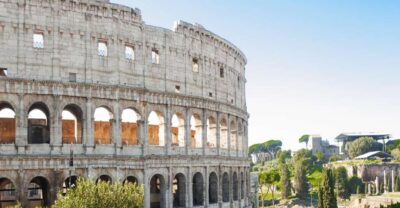
Rome: Colosseum & Forum with Audio Guide App -Optional Arena
Read our review →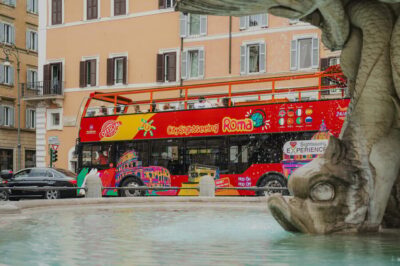
Rome: City Sightseeing Hop-on Hop-off Bus with Audioguide
Read our review →
Rome: St. Peter’s Basilica & Dome Entry Ticket & Audio Tour
Read our review →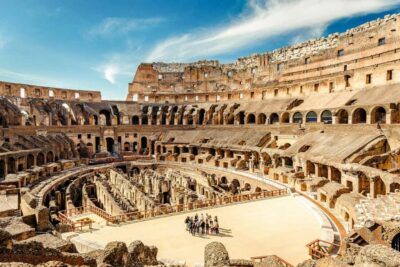
Colosseum, Roman Forum & Palatine Hill with Audioguide App
Read our review →
Vatican & Sistine Chapel Ticket with Optional Audio Guide
Read our review →
Rome: Castel Sant’Angelo Entry Ticket & Digital Audioguide
Read our review →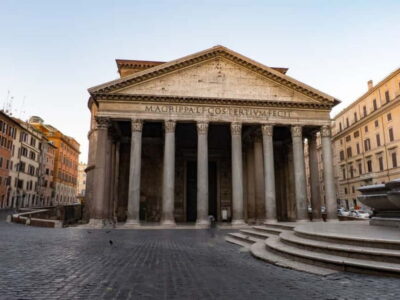
Rome: Pantheon Priority Entry Ticket & Interactive App
Read our review →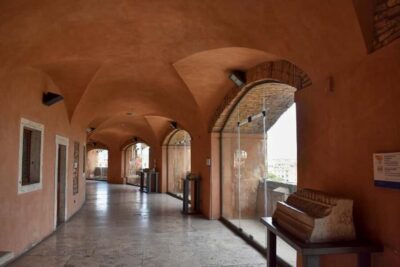
Rome: Castel Sant’Angelo Entry Ticket & Audio App
Read our review →Browse the lists this tour appears in