
REVIEW · ROME AUDIO TOURS
Rome: National Etruscan Museum Ticket & App Audioguide
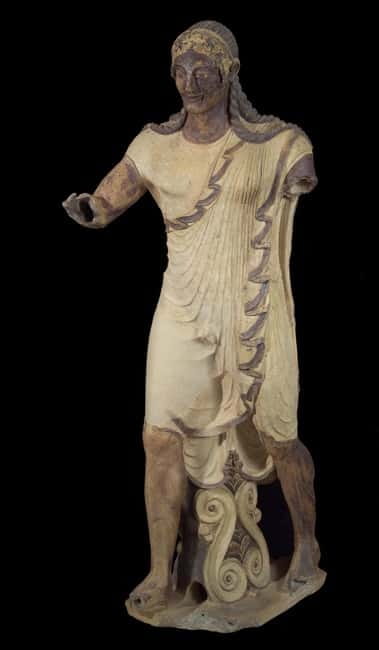
The most striking part of this experience is the setting: Villa Giulia, a Renaissance country villa built for Pope Julius III between 1550 and 1555. You come for Etruscan art, but you also get courtyards, fountains, gardens, frescoes, and a grand old Roman retreat.
I like the clear focus on southern Etruria, especially the Sarcophagus of the Spouses and the Pyrgi Tablets. I also like that the ticket leaves you free to explore at your own pace, with an app audioguide rather than a fixed group tour.
The main drawback is the audio setup. The guide is available in English and Italian, and it may come without earphones, which can make listening awkward. Bring your own headphones if the app supports them, and arrive 15 minutes early to exchange your voucher for the official ticket.
Key points to know before you go
- Villa Giulia is part museum, part Renaissance palace: Courtyards, frescoes, a nymphaeum, and gardens give the collection a memorable setting.
- The Sarcophagus of the Spouses is the star object: This famous terracotta work from Cerveteri gives you a direct look at Etruscan ideas about marriage and the afterlife.
- The collection is organized by place and object type: Displays from Vulci, Veio, Cerveteri, and other areas help you connect artifacts to their original locations.
- The digital guide lets you set your own pace: You can spend more time with major works and move quickly through less familiar sections.
- The underground areas add a special layer: The nymphaeum and Virgin aqueduct offer a look at the villa beyond its formal galleries.
- The gardens finish the visit well: A life-size reproduction of the Temple of Alatri gives the outdoor area a clear archaeological focus.
Why Villa Giulia makes the museum visit special
Rome has no shortage of ancient sites, but the National Etruscan Museum offers something different. Instead of focusing on imperial Rome, it introduces you to the Etruscans, a culture that flourished across central Italy before Rome became the dominant power.
The museum occupies Villa Giulia, built during the Renaissance as a country residence for Pope Julius III. The villa was not designed as a museum, so the visit feels less like walking through a standard gallery and more like moving through a historic estate.
Look closely at the architecture as you enter. The building includes courtyards, a nymphaeum, and frescoes connected with the Seven Hills of Rome. These details matter because the setting gives the ancient objects a sense of place. You are not simply passing glass cases in a modern hall. You are seeing Etruscan works inside a later Italian building created for ceremony, leisure, and display.
The museum was founded in 1889 and holds a major collection from southern Etruria. That region includes the ancient centers represented by Vulci, Veio, and Cerveteri. The geographical focus helps you understand that Etruscan culture was not one small settlement. It covered a broad area, with local styles, burial customs, religious practices, and skilled workshops.
More Museum Audio Guides in Italy
- Rome: Borghese Gallery Skip-the-Line Ticket & Audioguide
★ 4.3 · 4,318 reviews - Rome: Borghese Gallery Ticket + Audioguide or Guided Tour
★ 4.6 · 3,219 reviews - Rome: Borghese Gallery Skip-the-Line Tickets with Audioguide
★ 4.6 · 2,562 reviews
What the two-hour visit looks like
Plan on about two hours for the core visit. That is enough time to see the major objects and enjoy the villa without turning the afternoon into a marathon.
Your first practical task is at the entrance on Piazzale di Villa Giulia 9. The voucher must be exchanged at the ticket office for an official entry ticket. Arrive 15 minutes early so this step does not cut into your museum time.
Once inside, you can use the digital audio guide app as you move through the displays. The format gives you control. You can pause, repeat information, or leave the guide aside when you want to study an object quietly.
The displays follow topographical and typological groupings. In plain language, that means you may encounter objects arranged by the place they came from and by what they are, such as bronzes, terracotta pieces, jewelry, funerary works, or inscriptions.
This approach is useful if Etruscan culture is new to you. You can see how objects from one ancient city differ from those found elsewhere. You also get a clearer sense of how archaeologists organize a large collection.
The audio guide is not a personal tour. Nobody will adjust the explanation to your questions or point out a detail you missed. If you prefer a social, guided experience, this ticket may feel quiet and self-directed. If you like stopping when you want, it is a better fit.
The Sarcophagus of the Spouses deserves extra time
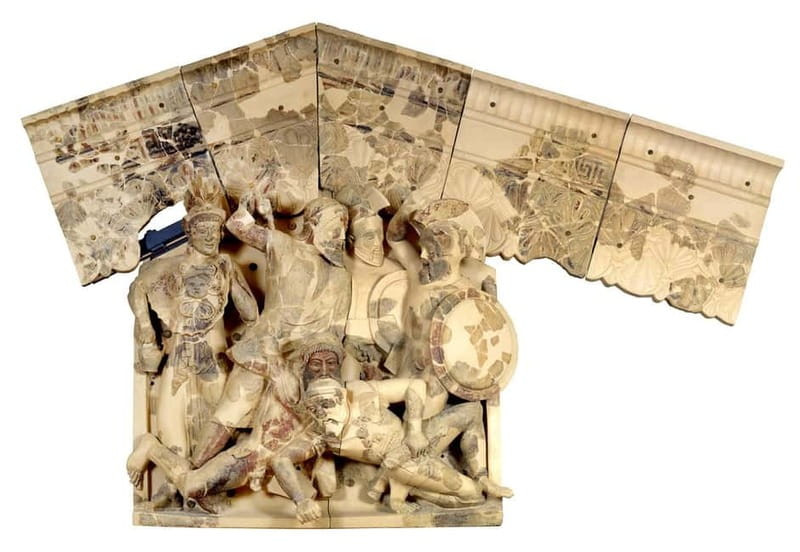
The museum’s best-known work is the Sarcophagus of the Spouses, found at Cerveteri. It shows a reclining couple in terracotta, placed together on a funerary container.
Give this object time. Its power comes from the human scale and the relaxed pose. The couple faces outward, appearing engaged with the world rather than locked in a grim scene of death. Their presence gives you a rare sense of Etruscan social values and the importance of partnership in burial art.
The work also challenges old assumptions about women in the ancient Mediterranean. The paired figures are presented together, not as an isolated male owner with a secondary female figure. The object cannot answer every question about Etruscan society, but it gives you a more complex picture than the usual Roman and Greek comparisons.
The museum has other important material from Cerveteri, but this sarcophagus is the piece many people will remember most. If your time is limited, make it one of your first stops rather than leaving it for the final few minutes.
Vulci bronzes and Veio terracotta
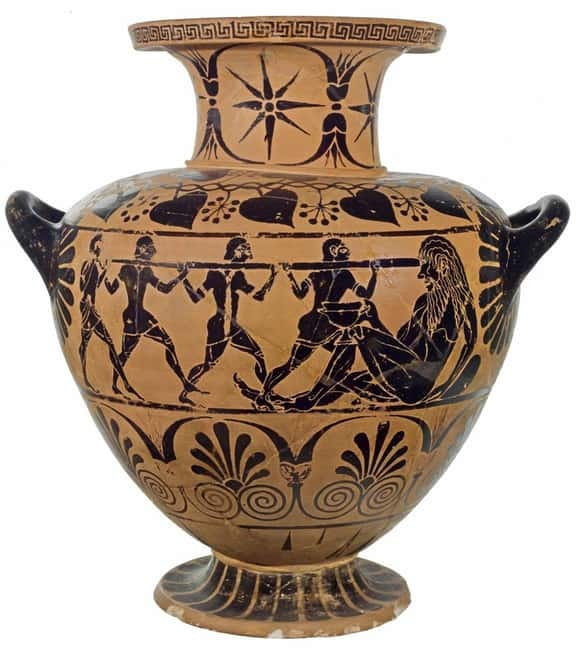
The museum’s topographical sections let you compare works from different Etruscan centers. Vulci is represented by bronzes, while Veio is known here for terracotta decorations.
Bronze objects from Vulci show the technical skill of Etruscan metalworkers. Look for the way the pieces were shaped, finished, and used. The collection gives you a chance to consider bronzes as more than decorative objects. They could serve religious, household, ceremonial, or funerary purposes.
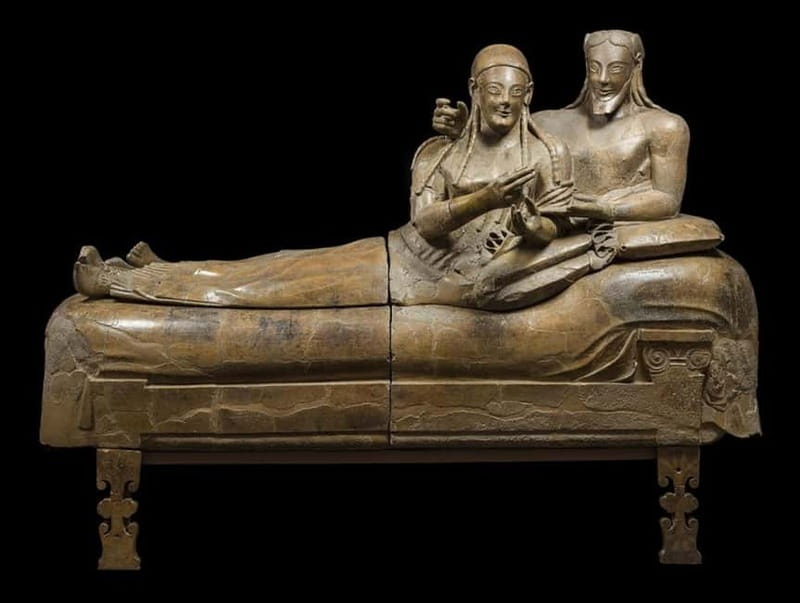
The Veio material adds another texture to the visit. Terracotta decorations show how Etruscans used fired clay in architecture and sculpture. These pieces help you imagine buildings that may otherwise survive only as foundations or fragments.
This is where the app guide can be especially useful. A single object may be beautiful on its own, but information about its original city and purpose gives it greater meaning. Use the guide to connect the object with its archaeological setting, then pause the audio and look carefully at the workmanship.
More Museum Audio Guides in Rome
- Rome: Borghese Gallery Skip the line ticket and Audioguide
★ 4.3 · 1,535 reviews - Rome: Borghese Gallery Ticket and Optional Audio Guide
★ 4.3 · 902 reviews - Borghese Gallery, Home to Canova’s Art – Entry with Audioguide
★ 4.0 · 884 reviews - Rome: Borghese Gallery Skip-the-Line Ticket & Audioguide
★ 4.0 · 768 reviews
The Pyrgi Tablets connect Etruscan and Phoenician worlds
The Pyrgi Tablets are among the museum’s most unusual objects. Their inscriptions appear in Etruscan and Phoenician, providing evidence of contact between cultures in the ancient Mediterranean.
You do not need to read either language to appreciate why these tablets matter. They show that Etruscan communities were involved in networks of trade, religion, and political contact. The paired inscriptions also help scholars compare languages and understand how different communities recorded official or sacred information.
This is a good place to use the audio guide rather than relying only on a label. Written inscriptions can feel distant when you cannot read them. An explanation of their languages and setting makes the tablets easier to grasp.
The tablets also add balance to the collection. The museum is not only about sculpture and burial objects. It includes evidence of writing, diplomacy, religious practice, and cultural exchange.
Jewelry from the Castellani collection
The Castellani collection brings a different mood to the visit. Its jewelry shows the appeal of Etruscan and Italian antiquities to later collectors.
Take a close look at the craftsmanship. Jewelry can seem small compared with large sarcophagi or architectural fragments, but tiny pieces often reveal a great deal about taste, technique, and status. The objects invite you to slow down and study details that are easy to miss in a quick walk through the museum.
The collection also raises a useful question about museums: you are seeing ancient objects through both their original use and their later collecting history. The Castellani pieces are part of the museum’s story, not simply isolated ornaments.
If you enjoy metalwork, decorative arts, or historical fashion, allow extra time here. The audio guide may help explain why particular pieces matter, but the visual pleasure comes from looking closely.
The nymphaeum and underground areas
Villa Giulia is more than its main galleries. Special itineraries lead into underground areas, including the nymphaeum and the Virgin aqueduct.
The nymphaeum is one of the villa’s defining architectural features. In Renaissance villas, these water-related spaces offered shade, sound, and decoration. Here, the nymphaeum links the building to the older Roman tradition of using water as part of architecture and leisure.
The Virgin aqueduct adds another layer. It connects the property to Rome’s long relationship with water engineering. The underground route may feel less polished than the main rooms, but that is part of its appeal. You get a sense of the systems and spaces that helped make the villa function.
Check what is open during your visit, since access to special areas can depend on the museum’s arrangements. Do not assume every underground route will be available at every moment. Still, if you can enter these areas, they are worth choosing over a quick repeat look at a gallery you already understand.
The gardens and Temple of Alatri reproduction
Finish outside in the gardens. The green space gives you a welcome pause after the galleries and helps you see the villa as a complete estate rather than a container for art.
The main outdoor feature is a life-size reproduction of the Temple of Alatri. It gives you a visual sense of Etruscan temple design that small fragments cannot provide. Ancient temples often survive only through foundations, scattered architectural pieces, or later descriptions. A full-scale reproduction helps you imagine the size and form of the original type of building.
The garden is also a good place to review what you have seen. The collection covers funerary sculpture, bronzes, terracotta, inscriptions, jewelry, and architecture. Outside, the pieces connect more easily to the built world they once belonged to.
Do not rush through the garden simply because it comes at the end. It is one of the quietest parts of the experience and a fitting place to finish.
Is the $20 price fair?
At $20 per person, the ticket offers reasonable value if you want a focused museum visit with a digital guide. The cost covers entry and the app audioguide, so you are paying for both access to the collection and added interpretation.
The value depends on how much time you give the museum. A quick 45-minute walk would make the price feel less convincing. A full two-hour visit, with time for the major galleries, villa architecture, underground areas, and gardens, makes the cost easier to justify.
It is also worth remembering what the ticket does not include. Meals, drinks, and a personal guide are not part of the price. You are paying for a self-guided museum experience, not a private explanation or a hosted walking tour.
The audio guide has one practical weakness. It is supplied as an app, and feedback specifically warns that earphones may not be included. Without proper earbuds, the sound can be difficult to hear, especially if other people are moving through the same spaces. Bring your own headphones and make sure your phone is ready before you begin.
The available audio language is another point to check carefully. English and Italian are identified, while other languages are not. If you need a guide in another language, this may not be the right ticket.
Access, photography, and useful planning details
The museum is listed as wheelchair accessible, with accessible services and facilities available. If accessibility is important for your visit, ask the museum directly about the particular underground areas, since the general accessibility statement does not describe every route.
Photography is allowed, but flash photography is not permitted. Turn off your flash before entering the galleries. This protects the objects and keeps the atmosphere calmer for everyone.
The experience has free cancellation up to 24 hours before the scheduled visit, and you can reserve now and pay later. Those terms help if your Rome plans are still shifting, but they do not change the basic need to exchange the voucher at the ticket office.
There is no meal or beverage service included. Plan your food separately and treat this as a compact cultural stop rather than a half-day package.
Who will enjoy this museum most?
I would recommend this experience to you if you enjoy archaeology, ancient art, inscriptions, jewelry, or historic buildings. It also suits anyone who has already seen Rome’s major imperial sites and wants a different view of central Italy before Rome’s dominance.
Families with older children may find the sarcophagus, tablets, and underground areas more engaging than a room full of small fragments. The app guide can help give the objects a narrative, though younger children may need your help to stay interested through the quieter galleries.
Art and architecture lovers will appreciate the combination of Renaissance design and Etruscan material. The setting gives you plenty to see even when an object’s historical context feels hard to follow.
This is less suitable if you want a lively guide, a tightly managed itinerary, or an attraction centered on dramatic ruins. The visit asks you to read, listen, compare, and look closely. That is its strength, but it requires a little patience.
Should you book the Villa Giulia ticket?
Book it if you want a calm, focused museum visit with one of Rome’s most distinctive ancient collections. The Sarcophagus of the Spouses, Pyrgi Tablets, Vulci bronzes, Veio terracotta, Castellani jewelry, and Temple of Alatri reproduction give the two-hour visit real variety.
The strongest reason to go is the combination of serious Etruscan material and a beautiful Renaissance setting. The main caution is the digital guide. Plan for English or Italian, bring your own earphones, and do not expect a personal guide to lead you.
At $20, it is a sensible choice for anyone who values independent museum time and wants to see a side of Italy that most Rome itineraries skip.
FAQ
Where is the National Etruscan Museum of Villa Giulia?
The museum is at Piazzale di Villa Giulia 9, 00196 Rome, Italy.
What does the ticket include?
It includes entry to the National Etruscan Museum of Villa Giulia and a digital audio guide app.
How long does the visit take?
The stated duration is two hours.
Do I need to exchange my voucher?
Yes. You must exchange the voucher at the ticket office for an official entry ticket.
How early should I arrive?
Arrive 15 minutes before your scheduled check-in time.
What languages are available for the audio guide?
The available information identifies English and Italian for the audio guide. No other languages are specified.
Are earphones included?
Earphones are not specified as included. Plan to bring your own, since listening without them may be difficult.
Is the museum wheelchair accessible?
Yes. Accessible services and facilities are available.
Can I take photographs inside?
Yes, photography is allowed, but flash photography is not permitted.
Can I cancel the booking?
Yes. You can cancel up to 24 hours in advance for a full refund. The reservation can also be made with payment later.
More Smartphone App Tours in Rome
- Rome: Colosseum & Forum with Audio Guide App -Optional Arena
★ 4.2 · 24,770 reviews - Colosseum, Roman Forum & Palatine Hill with Audioguide App
★ 4.4 · 6,291 reviews - Rome: Pantheon Priority Entry Ticket & Interactive App
★ 4.1 · 5,114 reviews - Rome: Castel Sant’Angelo Entry Ticket & Audio App
★ 4.3 · 4,952 reviews
Just added around Rome
- Rome: St. Peter’s Basilica and Dome Entry + Audio Guide★ 4.5 · 13 reviews
- St. Peter’s Basilica: Hosted Entrance & Digital Audioguide★ 4.1 · 35 reviews
- Sorrento & Pompeii Day Trip from Rome Audio Guide Tour★ 4.2 · 50 reviews
- Rome:Ostia Antica Skip-the-line Ticket & Audioguide★ 4.3 · 11 reviews
- Rome+Jubilee Audioguide – TravelMate app for your smartphone★ 4.2 · 38 reviews
- Rome:St. Peter’s Basilica Hosted Entry + Official Audioguide★ 3.4 · 10 reviews
- Rome: St. Peter’s Basilica Entry Ticket and AudioGuide★ 4.4 · 57 reviews
- Colosseum, Roman Forum, Palatine Hill access and AudioGuide★ 4.7 · 12 reviews
Rome Audio Tours, compared.

Rome: Colosseum & Forum with Audio Guide App -Optional Arena
Read our review →
Rome: City Sightseeing Hop-on Hop-off Bus with Audioguide
Read our review →
Rome: St. Peter’s Basilica & Dome Entry Ticket & Audio Tour
Read our review →
Colosseum, Roman Forum & Palatine Hill with Audioguide App
Read our review →
Vatican & Sistine Chapel Ticket with Optional Audio Guide
Read our review →
Rome: Castel Sant’Angelo Entry Ticket & Digital Audioguide
Read our review →
Rome: Pantheon Priority Entry Ticket & Interactive App
Read our review →
Rome: Castel Sant’Angelo Entry Ticket & Audio App
Read our review →Browse the lists this tour appears in