
REVIEW · ROME AUDIO TOURS
Rome: Castel Sant’Angelo Ticket & Audio Guide
Castel Sant’Angelo began as Emperor Hadrian’s mausoleum nearly 2,000 years ago, then became a fortress, papal refuge, prison, and museum. That unusual chain of lives makes it one of Rome’s most rewarding buildings to explore without a guide standing over your shoulder.
I like the 18 audio stops, which give you a clear route through a complicated building, and the chance to listen in your own language. I also like that the package adds a Vatican-area audio walk, so your visit includes the Bridge of Sant’Angelo and the approach to Saint Peter’s Basilica.
The main caution is technical. You must download the audio guide through a QR code, use your own phone and headphones, and some customers have had trouble with the Vox App or Pop Guide App. Allow time to sort out the ticket before you reach the entrance.
Key points to know before you book

- A mausoleum turned fortress: See the remains of Hadrian’s tomb and follow the building’s change into a papal stronghold, prison, and museum.
- Eighteen stops keep you oriented: The audio commentary gives structure to rooms, courtyards, passages, and viewpoints that can otherwise feel disconnected.
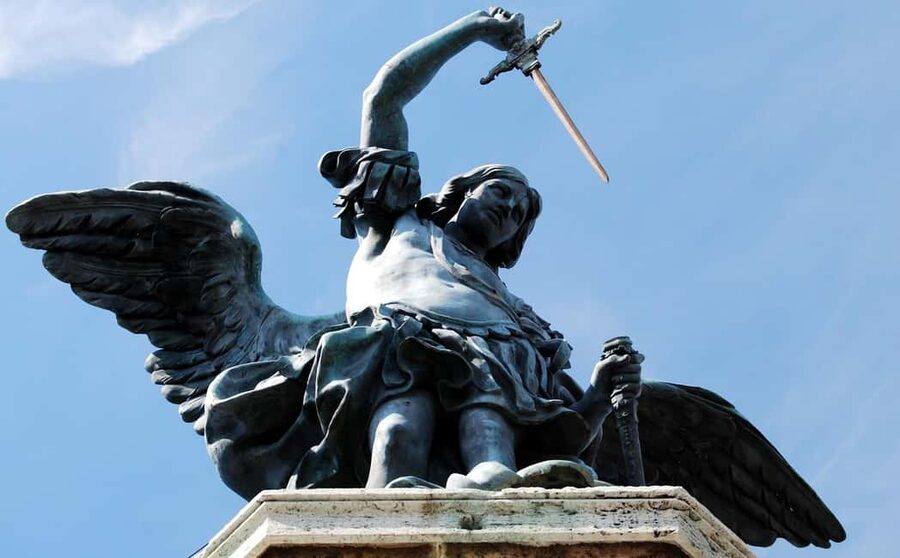
- The angel statue has a dramatic story: The legend of Archangel Michael ending the plague of 590 explains the castle’s name and its famous rooftop figure.
- The rooftop is the prize: You get broad views of Rome and elegant angel statues, although rain or special events can close the terrace.
- Your phone is part of the tour: Bring headphones and download the audio guide before entry. No headset or mobile device is supplied.
- The Vatican walk is self-guided: The extra audio tour covers the nearby bridge, Saint Peter’s Basilica, and other sights, but it is not a live guided tour.
Why Castel Sant’Angelo feels different from other Roman museums
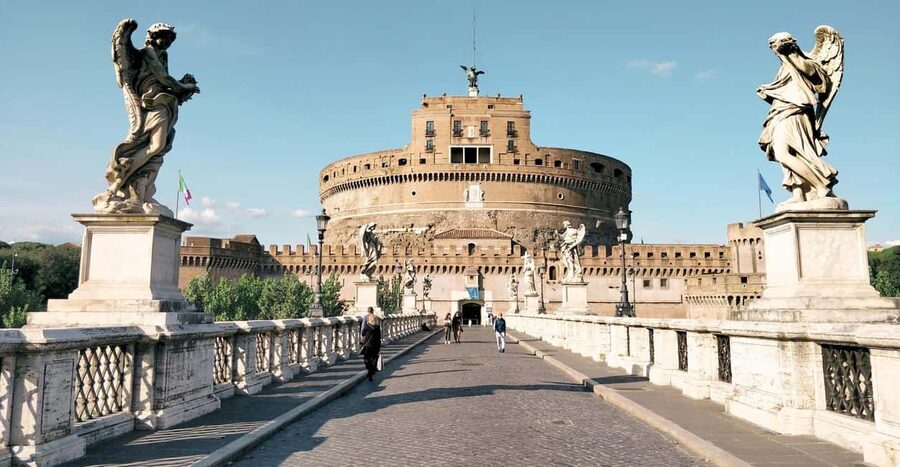
Many Roman monuments tell one main story. Castel Sant’Angelo keeps changing roles as you move upward and inward. It is first a grand imperial tomb, then a military building, then a place where popes could shelter, prisoners could be held, and executions could take place.
That mix is the real appeal. You are not simply looking at carved marble or a line of paintings. You are moving through a building shaped by fear, power, religion, and defense.
The starting point is the Mausoleum of Hadrian, built almost 2,000 years ago. The original imperial purpose matters because the fortress was not designed as a castle in the first place. Its massive form began as a monument for the dead, later adapted for survival and control.
I find that the audio format suits this building well. Castel Sant’Angelo can feel like a maze, with spaces from different periods connected under one roof. Eighteen points of interest give you enough explanation to understand the major changes without forcing you to follow a long live tour at someone else’s pace.
The audio guide is available in English, Italian, French, German, Portuguese, Polish, Spanish, and Chinese. That is useful if you want the facts in your strongest language, especially in rooms where a small plaque cannot explain the whole story.
More Audio Tours in Rome:
- Rome: Colosseum & Forum with Audio Guide App -Optional Arena
★ 4.2 · 24,770 reviews - Rome: City Sightseeing Hop-on Hop-off Bus with Audioguide
★ 4.0 · 16,045 reviews - Rome: St. Peter’s Basilica & Dome Entry Ticket & Audio Tour
★ 4.2 · 7,537 reviews
Entering at Lungotevere Castello, 50
You go directly to Castel Sant’Angelo at Lungotevere Castello, 50. This is not a tour with a guide waiting to gather you at a hotel, piazza, or transport stop. Have the downloaded ticket open before you arrive.
The ticket is nominative, so your name and personal details are tied to the booking. Bring a valid identity document along with the ticket. This is an easy detail to overlook, and a phone screen alone may not be enough if staff ask you to confirm your identity.
The package is advertised with priority entry, but the practical instruction is simply to proceed to the monument and show the ticket. I would not read this as a guarantee of walking past every queue or security check. Your advantage is having an arranged e-ticket rather than needing to buy the basic admission at the last minute.
The ticket is sent through WhatsApp and is available to download within 24 hours of your travel date. Before your visit, scan the QR code on the voucher to download the audio guide. Do this before you are standing at the entrance with a weak signal, a crowded pavement, and a phone battery that has seen too much of Rome.
Following Hadrian’s mausoleum into the papal fortress

The first part of the visit gives you the building’s Roman beginning. Hadrian’s mausoleum was an imperial tomb, and the audio commentary helps explain why such a large and sturdy structure was built for burial.
The building’s later life is more dramatic. It became a castle and eventually sheltered popes and noble families. That change tells you something important about Rome: old imperial buildings were rarely left alone. They were reused, strengthened, and given new jobs as the city’s political needs changed.
The audio commentary traces that move from Roman monument to defensive stronghold. You may find the experience more satisfying if you listen in order rather than skipping at random. The building makes better sense when you understand the sequence of changes.
The famous angel legend adds a memorable point of reference. In 590, Rome was suffering from plague, and the story says Archangel Michael appeared above the mausoleum. The plague ended, according to the legend, and the angel became tied to the monument’s identity.
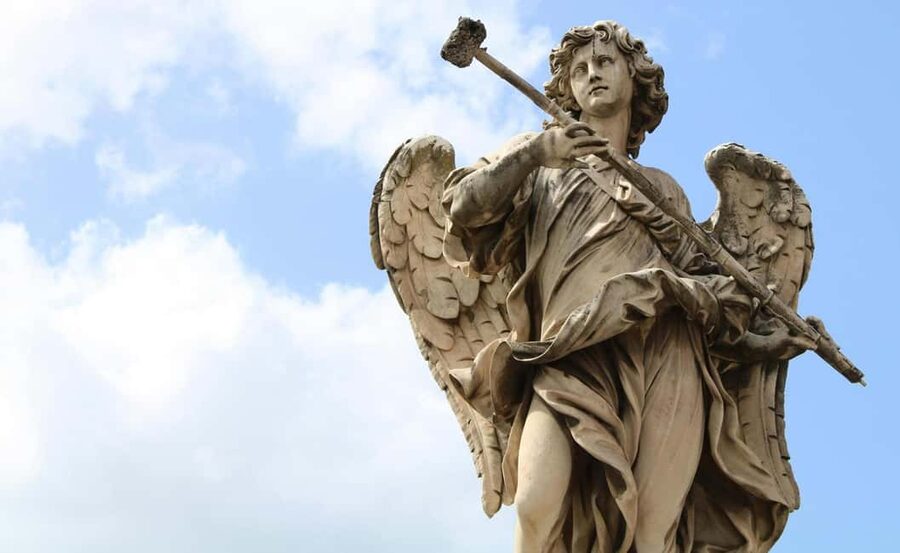
You will see elegant angel statues as you explore, with the best-known association reaching toward the top of the fortress. This is a good place to pause for photographs, though the weather and any special event can affect access to the terrace.
The courtyard, prison stories, and Tosca connection
Castel Sant’Angelo is not all grand views and papal power. Its darker side appears in the prison areas and the courtyard used for executions.
The audio guide connects the building with the world of Puccini’s Tosca. Characters from the opera were imprisoned here, which gives the fortress a strong link to Rome’s musical life. If you know the opera, this detail adds extra drama. If you do not, it still helps you see the castle as a working prison rather than a polished palace.
The execution courtyard is a sober reminder that this was a place of punishment as well as protection. I appreciate that the experience does not reduce the monument to scenic photographs. The building’s beauty sits beside stories of confinement and death.
You will not have a live guide to answer questions or adjust the pace around these subjects. That is the tradeoff. The audio commentary gives you privacy and flexibility, but you need to stay alert and decide when to pause, repeat, or move on.
Same place, a different route to walk:
- Colosseum, Roman Forum & Palatine Hill with Audioguide App
★ 4.4 · 6,291 reviews - Vatican & Sistine Chapel Ticket with Optional Audio Guide
★ 4.1 · 5,405 reviews - Rome: Castel Sant’Angelo Entry Ticket & Digital Audioguide
★ 4.7 · 5,347 reviews - Rome: Pantheon Priority Entry Ticket & Interactive App
★ 4.1 · 5,114 reviews
Reaching the terrace for Rome’s broadest views

The upper levels are the reward for working your way through the fortress. From the top, you can take in panoramic views of Rome and photograph the angel statues from close range.
This is where the ticket feels most worthwhile for many people. The view changes the way you understand Castel Sant’Angelo. From street level, it is a powerful cylindrical fortress near the river. From above, you see its place in the wider city and its connection with the Vatican area.
Do not build your whole plan around the terrace without a backup. Access may not be possible during rain or special events at Castel Sant’Angelo. The supplied information does not promise an alternative viewing area, so check conditions on the day and keep your expectations flexible.
The monument is not suitable for wheelchair users. Its historic structure, multiple levels, and internal route make this an important consideration before booking. If someone in your party needs step-free access, this is not the right experience.
The Vatican-area audio walk after the castle
The package also includes a digital audio tour around the Vatican area. It covers the Bridge of Sant’Angelo, Saint Peter’s Basilica, and other nearby sights.
This is not an escorted Vatican tour. You are using a self-guided audio route, which means you can listen at your own speed and stop when you want. It works best as an orientation walk after the castle, helping you connect the fortress with the streets and monuments around it.
The Bridge of Sant’Angelo is especially relevant because it links the castle with the Vatican side of the river. The angel statues along the bridge echo the monument’s identity and make the walk feel connected rather than tacked on.
Saint Peter’s Basilica is included as part of the audio commentary, but the information provided does not include entry to the basilica itself. Do not assume that this ticket lets you enter every Vatican attraction. Think of the extra audio tour as a walking supplement, not a Vatican Museums or basilica admission.
You may want to save this section for after Castel Sant’Angelo, when the bridge and Vatican approach have more context. The castle’s military and papal story makes the surrounding area easier to understand.
What the $30 price really buys you
The listed price is $30 per person. That is more than the stated standard Castel Sant’Angelo entry of €16, but the package also includes a €5 castle audio guide and a €4 Vatican stroll audio guide. Currency exchange rates vary, so the exact comparison depends on your booking date and payment method.
The value rests on convenience. You receive one arranged admission, commentary in eight languages, and an additional self-guided route. If you want a live historian, private attention, or a detailed discussion of art and architecture, this is not the product for you.
There is also a practical cost to the digital format: you supply the mobile device and headphones. The price does not include a headset or phone. Bring headphones you know work, and download the required audio before entering.
The weak point is not the idea of a digital tour. It is the risk of a failed download or an app that does not recognize the voucher. Some bookings connected to the Vox App or Pop Guide App have not worked correctly, and some people ended up paying again at the castle for audio guides.
That possibility makes preparation essential. Save the ticket to your phone, scan the QR code in advance, and check that the audio actually opens before you leave your accommodation. If something goes wrong, keep the booking confirmation and contact the provider promptly rather than assuming the castle staff can fix a third-party app.
Making the two-hour visit work well
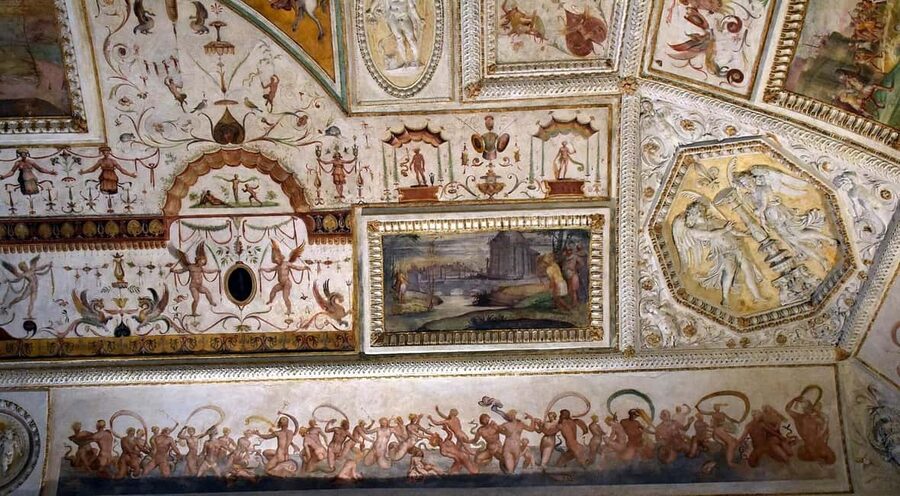
The stated duration is two hours. That is a reasonable amount of time for the castle and some of the audio content, but your pace will depend on how long you stop for photographs and views.
I would begin with the castle rather than treating it as a quick ticket pickup. Listen to the Roman section, follow the building’s transformation, pause at the prison and execution courtyard, and save enough time for the upper levels.
The Vatican-area audio tour may fit into the same outing, but the exact timing depends on how much of the walking commentary you use. You do not need to rush through the fortress just to hear every second of the extra route.
A phone battery matters here. You will use the phone for the ticket and audio, so charge it fully before leaving. Keep the ticket downloaded, not only stored inside a messaging thread. This is basic Rome insurance.
There is free cancellation up to 24 hours before the scheduled visit for a full refund. Check availability for the starting times that suit your plans, since this is a timed activity rather than a completely open ticket.
Who should choose this experience
I would recommend it to independent visitors who want clear historical context but do not want to join a group. It suits you if you like to pause for photographs, skip sections that interest you less, and listen in your own language.
It also works well for a first visit to the Vatican area because the castle, bridge, and Vatican approach are connected in one plan. The audio format gives you enough background to see how the monuments relate to one another.
Families with older children may appreciate the fortress, prison stories, and angel legend more than a room-by-room art museum. The rooftop view is a useful reward when attention begins to fade.
I would hesitate if you want a personal guide, if your phone setup is unreliable, or if a wheelchair user is part of your group. I would also think twice if you are booking mainly for the terrace and your visit falls during unsettled weather.
Should you book Castel Sant’Angelo with the audio guide?
Book it if you want an independent visit with a clear route, multilingual commentary, and a useful add-on around the Vatican. The building’s many identities give you more to think about than a standard museum visit, and the rooftop views are a strong finish.
Skip it if you need guaranteed terrace access, a live guide, or fully managed technology. The digital ticket and audio guide require preparation, and the lack of supplied headphones means the experience is only as smooth as your phone and download.
For most independent visitors, the best approach is simple: download everything early, bring headphones and ID, and allow the full two hours. You will then be ready to enjoy the ancient tomb, papal fortress, grim prison, angel legend, and Roman skyline without spending your visit troubleshooting the app.
FAQ
Where do I meet for the experience?
Go directly to Castel Sant’Angelo at Lungotevere Castello, 50. There is no stated meeting with a live guide.
How long does the visit last?
The stated duration is two hours. Starting times depend on availability.
What languages are available for the audio guide?
Audio commentary is available in English, Italian, French, German, Portuguese, Polish, Spanish, and Chinese.
Is a live guide included?
No. This is a self-guided experience with a digital audio guide.
Do I need to bring headphones?
Yes. Headphones are required, and neither a headset nor a mobile device is included.
Does the ticket include entry to Saint Peter’s Basilica?
The package includes a self-guided audio tour of the Vatican area, including Saint Peter’s Basilica and the Bridge of Sant’Angelo. The provided information does not state that entry to the basilica is included.
Can wheelchair users join this experience?
No. The experience is not suitable for wheelchair users.
Just added around Rome
- Rome: St. Peter’s Basilica and Dome Entry + Audio Guide★ 4.5 · 13 reviews
- St. Peter’s Basilica: Hosted Entrance & Digital Audioguide★ 4.1 · 35 reviews
- Sorrento & Pompeii Day Trip from Rome Audio Guide Tour★ 4.2 · 50 reviews
- Rome:Ostia Antica Skip-the-line Ticket & Audioguide★ 4.3 · 11 reviews
- Rome+Jubilee Audioguide – TravelMate app for your smartphone★ 4.2 · 38 reviews
- Rome:St. Peter’s Basilica Hosted Entry + Official Audioguide★ 3.4 · 10 reviews
- Rome: St. Peter’s Basilica Entry Ticket and AudioGuide★ 4.4 · 57 reviews
- Colosseum, Roman Forum, Palatine Hill access and AudioGuide★ 4.7 · 12 reviews
Rome Audio Tours, compared.

Rome: Colosseum & Forum with Audio Guide App -Optional Arena
Read our review →
Rome: City Sightseeing Hop-on Hop-off Bus with Audioguide
Read our review →
Rome: St. Peter’s Basilica & Dome Entry Ticket & Audio Tour
Read our review →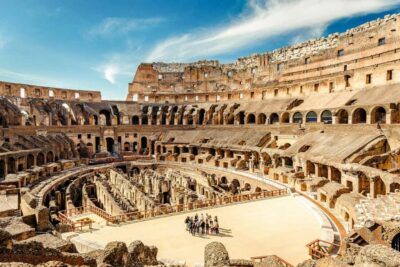
Colosseum, Roman Forum & Palatine Hill with Audioguide App
Read our review →
Vatican & Sistine Chapel Ticket with Optional Audio Guide
Read our review →
Rome: Castel Sant’Angelo Entry Ticket & Digital Audioguide
Read our review →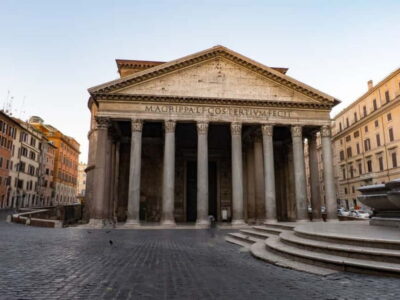
Rome: Pantheon Priority Entry Ticket & Interactive App
Read our review →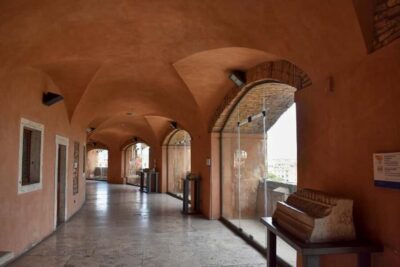
Rome: Castel Sant’Angelo Entry Ticket & Audio App
Read our review →Browse the lists this tour appears in