
REVIEW · ROME AUDIO TOURS
National Gallery of Modern Art Ticket & Rome App Audioguide
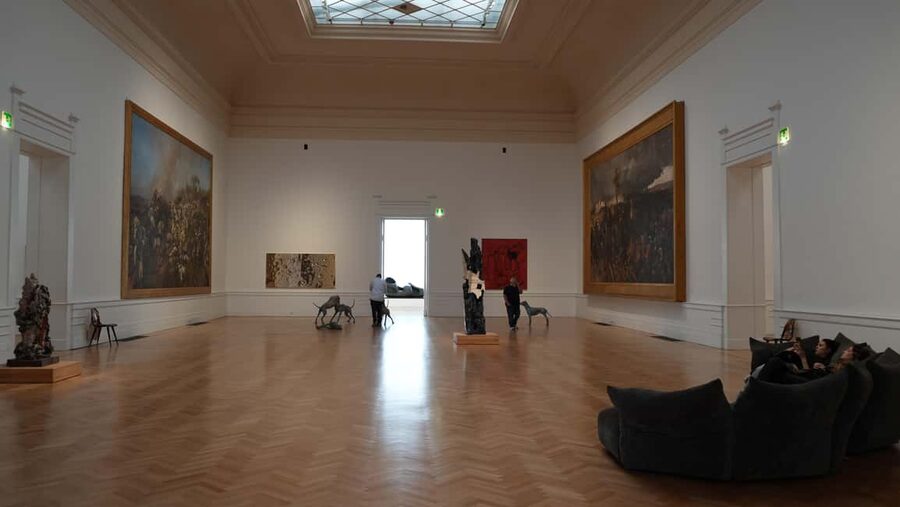
Rome’s National Gallery of Modern Art gives you a break from ancient ruins and Baroque churches. Inside, you’ll find nearly 20,000 paintings, sculptures, drawings, and installations, including works linked with Monet, Van Gogh, Antonio Canova, and Joseph Kosuth. I like the broad sweep from Neoclassicism and Impressionism to Futurism and Surrealism, and I like that skip-the-line entry saves you one small but useful bit of Rome friction.
I also like the freedom to take the museum at your own speed for one day, without being tied to a group. The main drawback is that this is not a guided museum tour, and the gallery’s signs can make the route and artwork labels hard to follow. Bring patience, and use the Rome app audioguide as an extra city resource rather than expecting a room-by-room art explanation.
Key points to know before you go
- Nearly 20,000 works: The collection covers Italian and foreign art across several major movements.
- Two-floor art journey: The ground floor focuses on 19th-century art, while the top floor presents 20th-century works.
- Monet and Van Gogh: These familiar names give first-time modern-art visitors an easy starting point.
- Skip-the-line museum entry: Your official ticket lets you enter without waiting in the ticket line.
- No live guide included: The package includes a digital Rome audioguide, not a guided tour of the gallery.
- Plan for cloakroom rules: Food, drinks, luggage, and large backpacks are not allowed in the galleries.
Why this museum is worth your Rome time
Rome is famous for ancient sculpture and Renaissance painting, so modern art can get pushed aside. That is a mistake if you want to see how Italian art changed after the age of grand religious commissions and classical models.
The National Gallery of Modern Art gives you a broad view of that change. You can move from 19th-century painting to 20th-century experiments, then compare traditional sculpture with installations that ask you to think about the museum itself.
I like this kind of collection because you do not need to be an art specialist to find a way in. Start with the artists you recognize, then allow the less familiar work to surprise you. Monet and Van Gogh provide an approachable entry point. Futurist and Surrealist pieces may take more time, but they help show how quickly artists began testing old ideas about color, form, movement, and reality.
The museum is also useful on a rainy day or during the hottest part of a Roman afternoon. A one-day ticket gives you room to take breaks, look carefully at a few works, and leave before the collection turns into a blur of frames and pedestals.
More Museum Audio Guides in Italy
- Rome: Borghese Gallery Skip-the-Line Ticket & Audioguide
★ 4.3 · 4,318 reviews - Rome: Borghese Gallery Ticket + Audioguide or Guided Tour
★ 4.6 · 3,219 reviews - Rome: Borghese Gallery Skip-the-Line Tickets with Audioguide
★ 4.6 · 2,562 reviews
Entering with the skip-the-line ticket
Your ticket provides access to the museum and lets you bypass the ticket line. You still need to enter through the museum and follow its security and cloakroom rules, so skip-the-line does not mean walking straight past every check.
That small distinction matters in Rome. You are paying for an easier arrival, not a private entrance or personal escort. Once inside, you can explore independently and choose your own pace.
The ticket is valid for one day. The activity has starting times based on availability, so check the time offered when you book and avoid treating the ticket as an open-ended pass for any date or hour.
The museum is closed on Mondays. Plan another day if Monday is your only free museum day, and check the selected date carefully because this activity is non-refundable.
The ground floor: 19th-century painting and sculpture
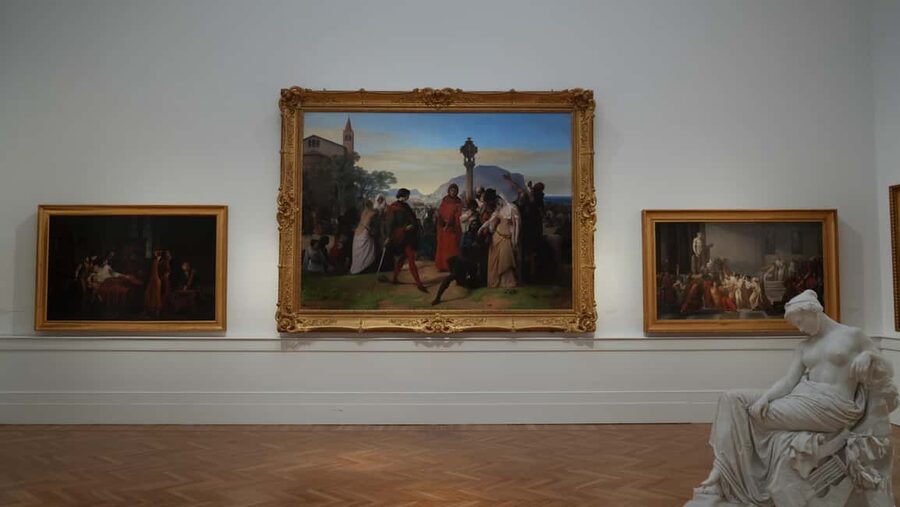
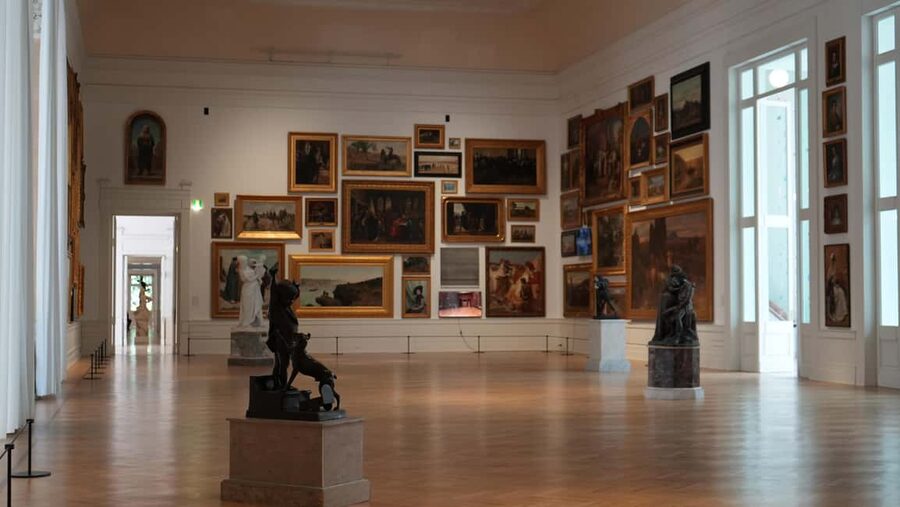
Begin on the ground floor, where the focus is 19th-century art. This is the most natural place to start if you want to see the move from academic painting toward Impressionism and other newer approaches.
Monet and Van Gogh are among the names highlighted in this section. Their presence gives you a useful point of comparison. Look at how light, color, brushwork, and the treatment of ordinary subjects can differ from the polished academic style associated with earlier European art.
The ground floor is not limited to one national school. You will see Italian and foreign paintings, along with sculpture and other forms. That variety makes the collection feel less like a single story and more like a series of conversations between artists working in different places.
You may also find large-scale works that need room around them. One practical strength of the museum is its spacious setting, which suits very large paintings and sculptures. The tradeoff is that a large building can be tiring, especially if you try to see every room in one push.
I suggest choosing a few artists or movements before arrival, then letting the rest unfold. If you try to absorb all 19,000-plus works, you will remember only sore feet and a parade of frames.
The top floor: 20th-century experiments
The top floor turns toward 20th-century art. Here, the collection moves through Futurism, Surrealism, and later forms that may look very different from the paintings downstairs.
Works associated with Joseph Kosuth point toward conceptual art, where the idea behind a piece can matter as much as its materials. This is a useful contrast with the visual pleasure of Impressionist painting. You may not respond to every installation, but the change in approach is part of the museum’s value.
The supplied description also places works by Antonio Canova among the top-floor highlights. Canova is best known as a Neoclassical sculptor, so his presence gives you another chance to compare classical ideals with later experiments in modern art.
The collection’s range is the main attraction here. You might move from sculpture to installation, then from a familiar painted scene to an abstract or conceptual work. Instead of expecting one steady style, prepare for changes in scale, material, and mood.
This floor may suit you best if you enjoy making your own connections. It is less about following a single historical line and more about seeing how artists challenged accepted ideas. If you prefer a clear chronological route, the museum may require extra patience.
More Museum Audio Guides in Rome
- Rome: Borghese Gallery Skip the line ticket and Audioguide
★ 4.3 · 1,535 reviews - Rome: Borghese Gallery Ticket and Optional Audio Guide
★ 4.3 · 902 reviews - Borghese Gallery, Home to Canova’s Art – Entry with Audioguide
★ 4.0 · 884 reviews - Rome: Borghese Gallery Skip-the-Line Ticket & Audioguide
★ 4.0 · 768 reviews
A large collection without a clear route
One practical weakness is the signage. The museum is large, and finding a natural order of rooms or a clear sense of direction can be difficult.
You may not always know which way to go next, and the names of artists and works are not consistently easy to locate. That matters because modern art often needs context. A painting can look entirely different once you know its date, movement, or purpose.
I recommend taking a moment at the entrance to get your bearings, then using the floor layout and visible gallery signs as best you can. If you have a short visit, do not wander without a plan. Choose the ground floor, top floor, or a few named artists and accept that you will not see everything.
The lack of a strict route does have one benefit. You are free to skip work that does not interest you and linger where it does. This is not a guided march from masterpiece to masterpiece. You control the visit, for better and for worse.
What the Rome app audioguide actually adds
The booking includes a digital app audioguide of Rome. It does not include a live guide, and the information provided does not identify a museum audio tour or a named art historian.
That distinction is important when comparing this ticket with a proper guided visit. If you want a person to explain the collection, answer questions, and lead you from room to room, this is not that product.
The city audioguide can still be useful during your wider Rome visit. You can treat it as a separate digital companion for exploring Rome rather than as the main reason to buy the museum ticket.
For the gallery itself, you should expect to read the available labels and make your own route. That independent style suits you if you like quiet museum time and already know a little about modern art. It is less suitable if you want a structured lesson on Monet, Van Gogh, or Italian modernism.
Is the $20 price good value?
The listed price is $20 per person. The museum ticket itself costs 15 EUR, while the remaining amount covers the digital app audioguide and GetYourGuide services.
That makes the value fairly clear. You are paying more than the face value of the museum ticket for advance booking, skip-the-line access, the app, and the convenience of arranging the entry in advance.
I think the price can make sense during a busy Rome itinerary, especially when you value a confirmed entry and do not want to spend time sorting out tickets at the museum. The benefit is practical rather than luxurious.
The value is weaker if you are mainly buying the audioguide. The included app is for the city of Rome, not a dedicated live explanation of the gallery. If you already have a Rome audio app or prefer to read labels, you may view the extra cost as a booking fee for convenience.
A high rating of 4.8 from 20 verified bookings suggests that the basic ticket arrangement works well for many people. Still, your satisfaction will depend on knowing what you are buying: independent museum access, not a personal tour.
Practical rules inside the museum
Food and drinks are not allowed in the galleries. Eat before entering or wait until you leave, since this is not the place to carry a snack from one room to the next.
Large bags, backpacks, and luggage must be left at the cloakroom. Pack lightly if possible. A small bag is easier than arriving with suitcases or a full day pack, though the specific size limit is not provided.
Photography is allowed, but flash photography is forbidden. Your phone or camera can help you remember a work, but use it without flash and stay mindful of other people in the galleries.
The museum is wheelchair accessible. That makes the visit a practical option for visitors who need step-free access, although the available information does not provide a detailed route or list of lifts and facilities.
Pets are not allowed, with assistance dogs permitted. Keep your ticket ready when entering, and remember that skip-the-line access does not remove the museum’s normal entry procedures.
Who should book this experience?
I would choose this ticket if you want a flexible visit and already feel comfortable exploring museums on your own. It works especially well for art lovers who want a wide collection rather than a short list of famous works.
It also suits a Rome itinerary that needs a dependable indoor stop. You can spend part of the day with 19th-century painting, continue upstairs into 20th-century art, and leave when your attention begins to fade.
Families and mixed-interest groups may appreciate the freedom to split up or move at different speeds, though the lack of a clear route can make the visit harder to manage. If you are bringing children, keep the plan simple and focus on a few striking works rather than trying to cover the whole building.
I would be more cautious if you need detailed explanations or want a guided art lesson. The Rome app audioguide does not replace a museum guide, and the signage may not always give you the context you want.
Should you book the National Gallery of Modern Art ticket?
Book it if you want skip-the-line entry, a large collection, and the freedom to explore Monet, Van Gogh, Canova, Kosuth, and many other artists at your own pace. The $20 price is reasonable when advance access and convenience matter to you.
Skip it if you are looking for a live guide, a tightly organized route, or a dedicated museum audioguide. Go in with a simple plan, travel light, and remember that the museum’s size is both its pleasure and its main challenge.
FAQ
How much does the experience cost?
The listed price is $20 per person. The museum ticket costs 15 EUR, with the remaining amount covering the digital Rome app audioguide and GetYourGuide services.
How long is the ticket valid?
The ticket is valid for one day. Starting times depend on availability, so check the available time when booking.
Does the ticket include a guided tour?
No. The package includes museum access and a digital app audioguide for the city of Rome. It does not include a live guided tour.
Which artists can I see?
The highlighted artists include Claude Monet, Vincent Van Gogh, Antonio Canova, and Joseph Kosuth. The collection also includes many other Italian and foreign artists.
What kind of art is on display?
You can see drawings, paintings, sculptures, installations, and other works. The museum covers movements including Neoclassicism, Impressionism, Futurism, and Surrealism.
Is the museum wheelchair accessible?
Yes. The museum is wheelchair accessible.
Can I take photographs inside?
Yes, photography is allowed. Flash photography is not permitted.
Is the museum open on Mondays?
No. The museum is closed on Mondays. Food and drinks are also not allowed in the galleries, and large bags or backpacks must be left at the cloakroom.
More Smartphone App Tours in Rome
- Rome: Colosseum & Forum with Audio Guide App -Optional Arena
★ 4.2 · 24,770 reviews - Colosseum, Roman Forum & Palatine Hill with Audioguide App
★ 4.4 · 6,291 reviews - Rome: Pantheon Priority Entry Ticket & Interactive App
★ 4.1 · 5,114 reviews - Rome: Castel Sant’Angelo Entry Ticket & Audio App
★ 4.3 · 4,952 reviews
Just added around Rome
- Rome: St. Peter’s Basilica and Dome Entry + Audio Guide★ 4.5 · 13 reviews
- St. Peter’s Basilica: Hosted Entrance & Digital Audioguide★ 4.1 · 35 reviews
- Sorrento & Pompeii Day Trip from Rome Audio Guide Tour★ 4.2 · 50 reviews
- Rome:Ostia Antica Skip-the-line Ticket & Audioguide★ 4.3 · 11 reviews
- Rome+Jubilee Audioguide – TravelMate app for your smartphone★ 4.2 · 38 reviews
- Rome:St. Peter’s Basilica Hosted Entry + Official Audioguide★ 3.4 · 10 reviews
- Rome: St. Peter’s Basilica Entry Ticket and AudioGuide★ 4.4 · 57 reviews
- Colosseum, Roman Forum, Palatine Hill access and AudioGuide★ 4.7 · 12 reviews
Rome Audio Tours, compared.

Rome: Colosseum & Forum with Audio Guide App -Optional Arena
Read our review →
Rome: City Sightseeing Hop-on Hop-off Bus with Audioguide
Read our review →
Rome: St. Peter’s Basilica & Dome Entry Ticket & Audio Tour
Read our review →
Colosseum, Roman Forum & Palatine Hill with Audioguide App
Read our review →
Vatican & Sistine Chapel Ticket with Optional Audio Guide
Read our review →
Rome: Castel Sant’Angelo Entry Ticket & Digital Audioguide
Read our review →
Rome: Pantheon Priority Entry Ticket & Interactive App
Read our review →
Rome: Castel Sant’Angelo Entry Ticket & Audio App
Read our review →Browse the lists this tour appears in