
REVIEW · GREECE AUDIO TOURS
Katakolo Port: Transfer to Ancient Olympia and VR Audio Tour
Ancient Olympia is one of Greece’s great shore excursions because the setting tells the story without needing much imagination. You walk past the Temple of Hera, the remains of the Temple of Zeus, and the original stadium where athletes competed from 776 BC to AD 393. A phone-based VR audio guide adds reconstructions and commentary as you move around the site.
I like the short, simple transfer from Katakolo Port and the generous free time in Olympia. The modern, air-conditioned bus takes the worry out of finding a taxi, and the schedule is built around cruise calls. I also like having the choice to explore alone rather than follow a guide in a tight group.
The catch is that the VR system is not a headset. It runs on your own charged phone or tablet, and its map can be confusing until you learn how it works. Check carefully whether your chosen price includes entry tickets, since some options cover transport and the app but leave monument admission to you.
Key points to know before booking
- The port meeting point is close: The check-in shop has been described as about 150 meters from the cruise terminal exit, though your exact meeting point depends on the option booked.
- The bus ride takes about 30 to 40 minutes each way: You get a comfortable, air-conditioned ride through the Peloponnese countryside.
- You receive about three hours at Olympia: That is enough time for the archaeological site, the Archaeological Museum, the Museum of the Olympic Games, and a short visit to the modern village.
- The VR tour uses your own device: Bring an Android or Apple phone or tablet with plenty of battery. Headphones are not supplied, so personal earbuds are useful.
- The experience is transport and self-guided sightseeing: An English-speaking escort helps on the bus, but there is no professional guide walking you through the ruins.
- Entry costs need checking: The basic arrangements list monument admission as extra, while another booking option includes tickets.
Why Ancient Olympia makes a strong port stop
Olympia was not simply an old sports ground. It was a major sanctuary dedicated to Zeus, where athletic contests formed part of a much larger religious festival. That setting helps explain why the site feels different from a modern stadium or a simple collection of ruins.
The Olympic Games took place here for more than a thousand years, beginning in 776 BC and ending in AD 393. Athletes competed for honor, while city-states used the festival to show wealth, skill, and political importance. You can still see the spaces connected with that world: temples, training areas, meeting buildings, and the stadium.
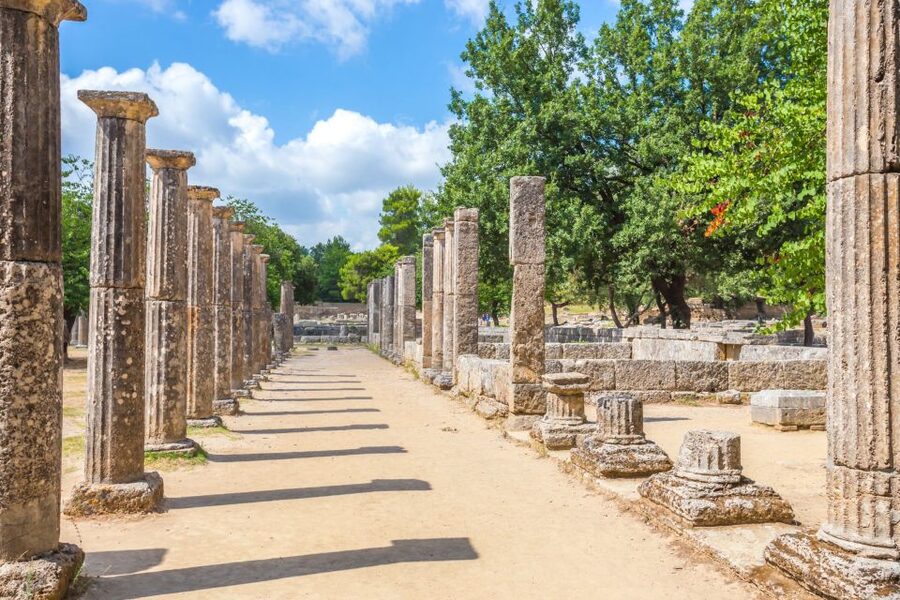
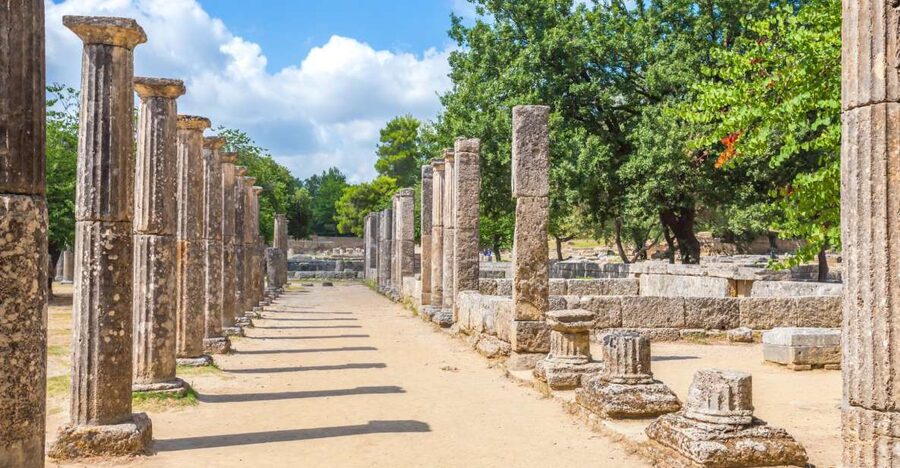
The most famous modern connection is the Temple of Hera. The Olympic Flame is lit in front of it for the modern Olympic Games, linking the ceremonies you see on television with this ancient sanctuary. The surviving columns and stones are incomplete, but the setting gives you enough clues to picture the original scale.
The Temple of Zeus is another major stop. It once held a gold and ivory statue of Zeus, counted among the Seven Wonders of the Ancient World. The statue is gone, but the temple’s remains help you understand why Olympia was such an important religious center.
More Private Drivers in Greece:
- Mykonos: Delos Boat Transfer with Cell Phone Audioguide
★ 4.0 · 94 reviews - Shore Excursion: Athens Half Day Self-Guided Tour with Private Driver
★ 4.5 · 8 reviews - From Kos: Kalymnos Self-Guided Day Trip with Hotel Transfer
★ 4.6 · 7 reviews
From Katakolo Port to the Olympia countryside
After leaving your cruise ship, you meet the local partner near the terminal exit. The meeting point is reported to be a short walk from the ship, around 150 meters in one commonly used arrangement. Look for the Greka Land shop or the precise location shown with your booking, since the starting point can vary.
The bus is one of the strongest parts of this outing. It is modern, clean, and air-conditioned, which matters in the heat of a Greek summer. The drive takes roughly 30 to 40 minutes each way, depending on the exact route and traffic.
You travel through quiet countryside rather than spending the whole ride on a large coach transfer. The English-speaking driver or escort gives basic information and helps with the practical details. Staff members have included Chrisy, George, Ethmet, Mehmet, and Tanya on different departures, but you should not expect one particular person to be assigned to your bus.
This is not a formal narrated sightseeing drive. The escort’s main job is to keep the group organized, explain where to go, and make sure you return on time. That arrangement suits you if you prefer to set your own pace, but it will feel limited if you want a detailed archaeological lecture during the drive.
Getting the VR audio tour working
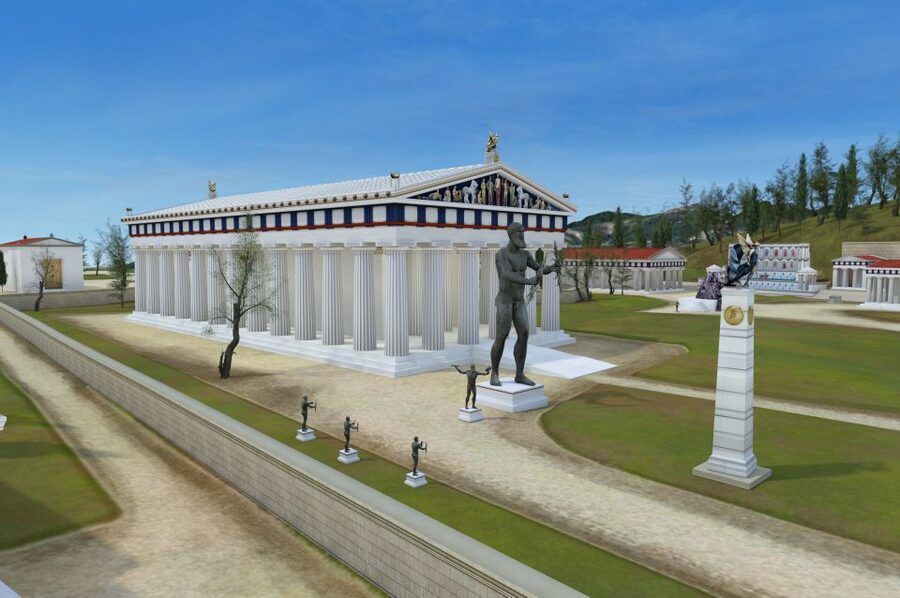
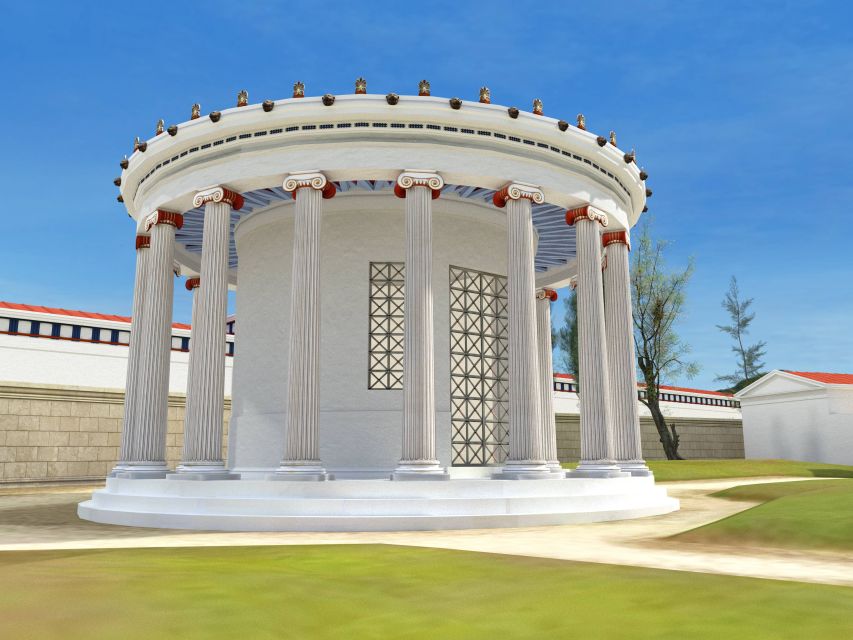
The app is the most unusual part of the excursion. Before reaching the site, staff help you download or activate the virtual reality application on your phone. You then use it at selected points around Olympia to hear explanations and view reconstructions of what the buildings may have looked like.
The word VR can create the wrong picture. You do not receive special glasses or a separate device. The experience uses your own Android or Apple phone or tablet, and some sections show reconstructed views on the screen while an audio track explains the location.
Bring a fully charged device. A portable battery would be sensible, although it is not listed as required. Personal headphones are also useful because none are provided. If you want to listen quietly while walking, wired or wireless earbuds will make the experience easier.
Give yourself time to learn the app before setting off. The map does not always make it clear which building you are beside, and the points are not necessarily arranged in the order you encounter them. Some users have found the audio easy to follow once activated, while the map and site navigation take more effort.
The app covers around 10 main points, while the archaeological grounds contain more remains than that. You can still read the signs and inspect the site independently, but the app should be treated as an added layer, not your only source of information.
Walking through the archaeological site
You enter the Archaeological Site of Olympia for about three hours of free time. That sounds generous, and it is, but the area includes several museums and a broad open-air site. Wear comfortable shoes and prepare for sun, since much of your visit takes place outdoors.
Start with the overall layout before focusing on individual ruins. A printed map would help, and the existing signs may not always make the sequence obvious. If the app leaves you unsure of your position, pause and use the site markers rather than trying to force the audio tour into a strict route.
The Temple of Hera is an essential stop. Its remains are closely tied to the modern Olympic Flame ceremony, so it offers one of the clearest links between ancient and modern sports. The Temple of Zeus is larger in historical importance, even though only parts of the structure survive.
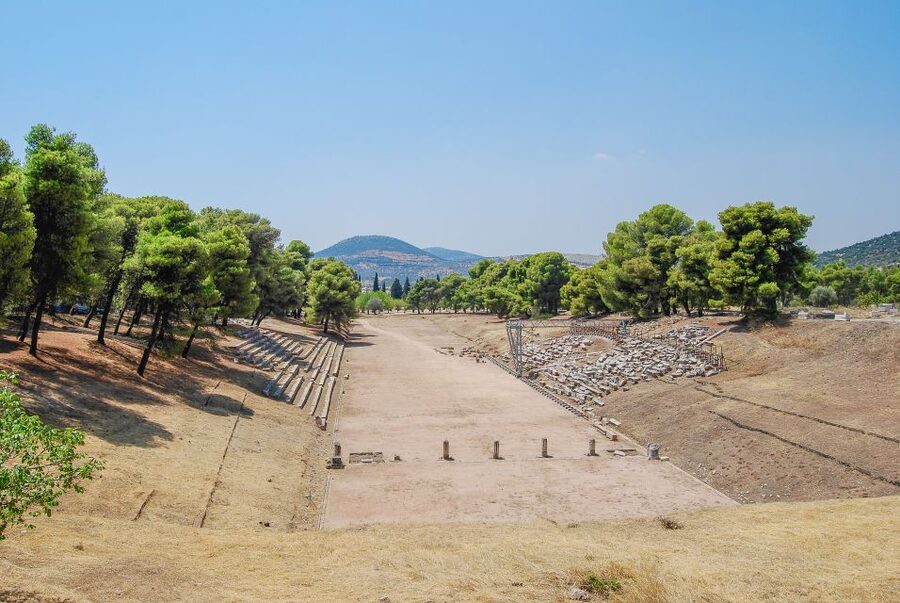
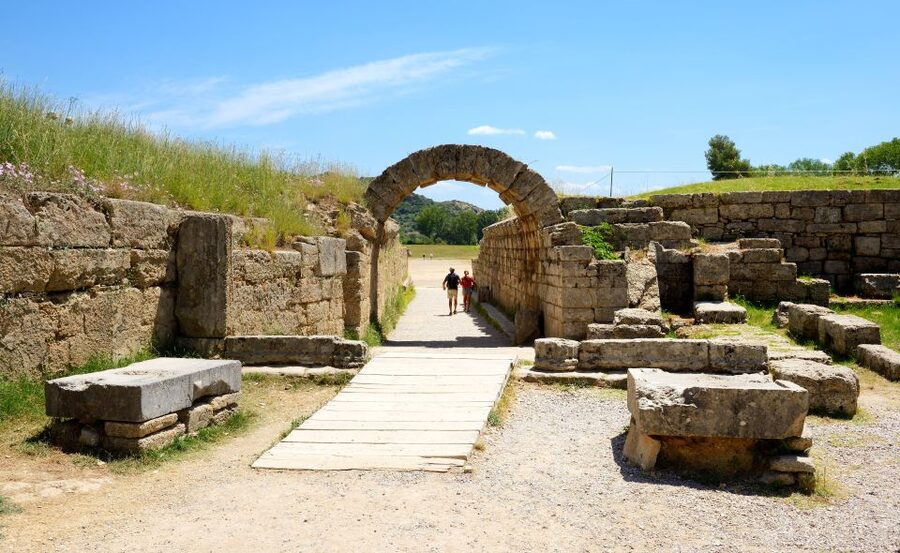
You also see the original stadium and the Bouleuterion. The stadium is where athletic contests took place, while the Bouleuterion was connected with the organization and rules of the Games. Competitors swore an oath to follow the rules, a useful reminder that the ancient event had a formal civic and religious structure.
The ruins reward patience more than speed. You will not find every building intact, and some stones can look difficult to interpret without the audio or signs. Take time to look at the whole site, then use the app for selected monuments rather than trying to listen constantly.
More Audio Tours in Greece:
- Athens: Acropolis Ticket with Optional Audio or Live Guide
★ 4.2 · 11,055 reviews - Athens: Cape Sounio & Poseidon Temple Trip with Audio Guide
★ 4.4 · 4,521 reviews - Athens: Acropolis Ticket with Audio Guide
★ 4.0 · 3,575 reviews - From Athens: Delphi Full Day V.R. Audio Guided Tour
★ 4.6 · 3,028 reviews
The Archaeological Museum and Olympic Games Museum
The Archaeological Museum of Olympia is a major part of the visit, not an optional filler for a hot afternoon. It holds important finds from the sanctuary and gives you a clearer sense of the sculpture, decoration, and religious art connected with the ruins outside.
Several people consider this museum one of the strongest parts of the stop. It is indoors, well suited to the middle of a sunny day, and helps fill in details that the broken buildings cannot show. If you have limited energy, do not skip it in favor of spending every minute among the ruins.
The Museum of the Olympic Games is smaller and has fewer objects. Its value is mainly in explaining how the ancient contests worked and how the festival developed. You can see it as a concise history lesson rather than a large collection.
If admission is not included in your selected option, you may need to buy tickets on arrival. One arrangement provides printed tickets for the paid attractions, while another leaves entry outside the basic inclusions. Read the exact option details before paying, because this difference affects both cost and time.
Free time in modern Olympia
The modern village of Olympia is close to the archaeological site. After visiting the ruins and museums, you can walk into town for lunch, coffee, snacks, souvenirs, or a little shopping.
This extra time is useful on a cruise day. You are not confined to an archaeological site until the bus departs, and you can choose a slower finish with a drink or quick meal. The available time depends on how long you spend inside the museums and whether you encounter a ticket line.
Do keep an eye on the meeting instructions. The escort gives a clear return time and location, but you are responsible for getting back to the bus. The excursion is designed to return to Katakolo Port after the Olympia visit, so late returns are best avoided.
Back in Katakolo, you can return to your ship or spend a little time in the seaside village if your cruise schedule allows. The port transfer is the practical heart of the tour, while the village offers a softer ending after several hours of ruins and museum displays.
How the $13.55 price compares
At $13.55 per person, this is an unusually low-cost way to connect Katakolo with Ancient Olympia. The value comes mainly from the round-trip bus, the port-friendly timing, and the freedom to explore without paying for a full private guide.
The price is especially appealing compared with cruise-line excursions, which can cost much more for the same basic route. You get air conditioning, an organized departure, an escort on the bus, and help with the app. For a short port call, those practical details are worth more than fancy extras.
The low price also explains what is not included. Food and drinks are extra, a professional guide in the monuments is not provided, and entrance tickets may depend on the option you select. If you want a fully guided visit with every admission handled, this is not the right format.
Think of it as a reliable transfer with a self-guided archaeological visit, not a traditional guided tour. That distinction makes the price look fair rather than surprisingly cheap.
Who will enjoy this excursion most
I would choose this for you if you want to see Olympia independently but do not want to arrange a taxi or worry about returning to the ship. Families, couples, and independent sightseers can spread out, take photographs, and choose their own order.
It also suits anyone who wants information in a language other than English. The audio guide is offered in English, German, Spanish, Italian, Portuguese, Russian, Polish, French, Chinese, Japanese, and Greek. The host or greeter languages include English, French, German, Spanish, Italian, Polish, Russian, Japanese, Chinese, and Portuguese.
You may prefer a different option if you rely on a guide to explain every ruin in person. The escort is helpful, but the monument visit is not led step by step. The app can also frustrate you if you dislike phone navigation or have trouble keeping your device charged.
Hot weather is another consideration. Comfortable shoes, a camera, and water for your own use are sensible choices, though food and drinks are not included. The indoor museum provides a break, but the archaeological grounds remain the main event.
Should you book the Katakolo to Olympia transfer?
Book it if your priority is easy port transport, flexible sightseeing, and strong value. The bus is punctual and comfortable, the meeting point is close to the ship in the commonly used arrangement, and three hours gives you time for the ruins, museums, and village.
Before booking, confirm two details: the exact meeting point and whether entrance tickets are included. Bring a charged phone, personal headphones, and comfortable shoes. Treat the VR app as a useful extra rather than a replacement for signs and your own careful look around.
I would not choose it if you want a full archaeological lecture from a professional guide. For everyone else, it is a practical way to reach one of Greece’s most important ancient sites without spending cruise-excursion money.
FAQ
How long does the Katakolo to Ancient Olympia experience last?
The activity lasts four hours. The bus ride takes roughly 30 to 40 minutes each way, with about three hours available at Olympia.
Where do I meet the bus?
The meeting point can vary according to the option booked. One commonly used location is near the cruise terminal exit, around 150 meters from the ship, at the Greka Land shop area.
Is transportation included?
Yes. The experience includes round-trip transportation in an air-conditioned bus or coach.
Are entrance tickets to Olympia included?
It depends on the option you choose. One option includes entry tickets, while the basic inclusions list monument admission as extra. Check the selected booking option carefully.
Is a professional guide included inside the monuments?
No. An English-speaking driver and escort accompany the bus, but a professional guide in the archaeological site is not included.
What languages are available for the audio guide?
The optional audio guide is available in English, German, Spanish, Italian, Portuguese, Russian, Polish, French, Chinese, Japanese, and Greek.
Do I need a phone or tablet for the VR tour?
Yes. An Android or Apple phone or tablet is required to activate the Virtual Reality Audiotour application.
Are VR glasses provided?
No. The VR experience runs through your own phone or tablet. Personal headphones are useful because headphones are not provided.
What should I bring?
Bring a camera, a charged smartphone or tablet, and comfortable shoes. Food and drinks are not included.
Just added around Greece
- Jeep exploration 4X4 self drive★ 5.0 · 3 reviews
- Knossos Palace & Archeological Museum: E-Tickets with Audio Tours★ 4.0 · 18 reviews
- E-Ticket to Heraklion Archaeological Museum with Audio Guide★ 4.5 · 26 reviews
- Full-Day 4×4 Self-Drive Safari in East Crete with Lunch★ 5.0 · 8 reviews
- Kasos Audio-Tour from Karpathos by Art and Walk★ 4.5 · 4 reviews
- Delphi: Self-guided Audiovisual Tour with 3D Representations★ 5.0 · 5 reviews
- Delphi Self-guided Audio Tour on Your Phone (no ticket)★ 3.5 · 10 reviews
- Delphi: Archaeological Site & Museum Ticket with Audio★ 3.5 · 24 reviews
Greece Audio Tours, compared.
Athens: Acropolis Ticket with Optional Audio or Live Guide
Read our review →
Athens: Cape Sounio & Poseidon Temple Trip with Audio Guide
Read our review →
From Athens: Delphi Full Day V.R. Audio Guided Tour
Read our review →
Athens: Acropolis Museum Ticket with optional Audio Guide
Read our review →
Athens: Acropolis Ticket & Optional Self-Guided Audio Tours
Read our review →
From Athens: Small-Group Delphi, Museum & Arachova Day Trip
Read our review →
Parthenon & Acropolis Museum with Audio or Live Tour Option
Read our review →Browse the lists this tour appears in