
REVIEW · USA AUDIO TOURS
Hawaii Volcanoes National Park Self-Guided Driving Audio Tour
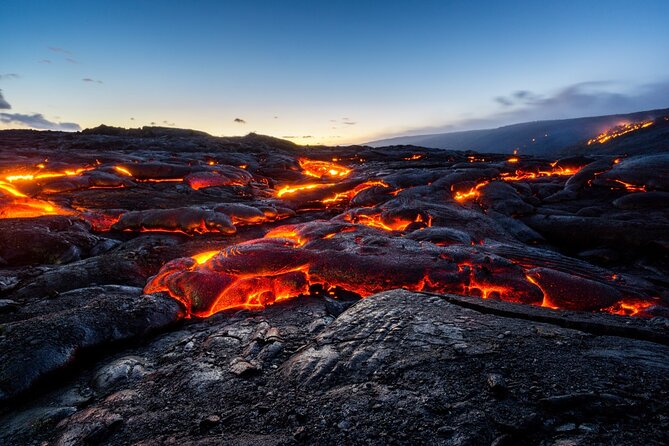
Hawaiʻi Volcanoes National Park is best understood from the driver’s seat, where one bend can shift the view from steaming vents and a giant crater to black lava fields and the Pacific coast. This self-guided tour turns that long drive into a story-filled route with more than 43 audio stops over 24.5 miles.
I like the GPS-triggered narration, which starts as you reach each point, and the freedom to stop for a trail, snack, or photo without waiting for a group. I also like the price: $16.99 covers up to four people in one car. The main drawback is setup. You must download the separate app and tour while you have strong service, and one person should handle the phone before driving.
Key points at a glance
- More than 43 audio stories guide you from the park entrance to Hōlei Sea Arch.
- Kīlauea Iki, Thurston Lava Tube, and Puʻu Loa bring the geology and culture to life.
- GPS-triggered audio works offline after you download the tour.
- The $16.99 price is per car, not per person, for a group of up to four.
- You set the pace, but the route works best when started at the Entrance Station and followed in the recommended direction.
- Extra hikes take time, so the advertised two to three hours covers the drive and main stops, not every trail.
How this Hawaiʻi Volcanoes driving tour works

This is not a bus tour, walking tour, or scheduled excursion. Nobody meets you at the Entrance Station. You arrive in your own vehicle, open the Action Tour Guide app, and let the audio begin when you reach the first GPS point.
Before you go, search your email and text messages for the setup instructions and password. Download the separate Action Tour Guide app, enter the password, and download the tour over strong Wi-Fi or cellular service. Once the route is stored on your phone, the audio and maps work offline, a major help in a park where service can be weak.
Connect your phone to the car stereo by Bluetooth, USB, or AUX. Apple CarPlay is supported for audio playback, while Android Auto support is noted as forthcoming. An iPhone with iOS 15 or later, an Android device with version 9 or later, or a GPS-equipped tablet with cellular service is recommended.
I strongly suggest setting everything up before you reach the park. One person who tried to sort out access after arrival spent 40 minutes searching through messages and the app, then gave up because the cell signal was poor. That is an avoidable annoyance. Download first, open the tour once, and check that the narration plays.
The route is designed to begin at the Entrance Station in Volcano and finish at Hōlei Sea Arch on Chain of Craters Road. It is most reliable when you follow that direction and obey the posted speed limit. The app can keep track of your location if you take a short side trip or visit stops out of order, but it is not built around reversing the entire route.
More Self-Guided Driving Tours in the USA
- Gettysburg Battlefield Self-Guided Driving Audio Tour
★ 4.5 · 910 reviews - Joshua Tree National Park Self-Guided Driving Audio Tour
★ 4.5 · 762 reviews - Ultimate Acadia National Park Self-Guided Driving Audio Tour
★ 4.0 · 521 reviews
Entrance Station and Kīlauea Military Camp
Your first stories begin after you pass through the park entrance and approach the visitor center area. This opening section helps you get oriented before the road carries you toward the volcanic features.
Kīlauea Military Camp is an early stop with an unexpectedly serious past. Today it is a recreation facility for service members, but during World War II it was also used as an internment camp for prisoners of war and Japanese civilians. That detail gives the park a human history beyond lava, craters, and scenic overlooks.
Allow about 10 minutes for the stop if you are mainly listening and looking around. The audio is useful here because the site’s present-day appearance does not reveal much about its wartime role.
Steam Vents and the Sulphur Banks Trail
At the Steam Vents, heat from Kīlauea warms groundwater trapped below the surface. The water turns to steam and rises through cracks, giving you a visible sign of the heat still working underground.
This is a short stop, but it explains a basic point about volcanoes: the ground does not need to be erupting in front of you to be active. The steam is part of the park’s ongoing volcanic story.
Nearby, the Sulphur Banks Trail offers a short walk. The name is honest. The smell can be strong because volcanic gases and sulfur deposits are part of the scene. I would not plan this as a leisurely picnic stop, but it is worth a brief walk if you want to see and smell the volcanic activity up close.
Kīlauea Overlook and the great crater view

Kīlauea Overlook is one of the route’s essential stops. The crater may not look like the classic cone-shaped volcano you picture, but Kīlauea is one of the world’s most active volcanoes.
The value of the audio here is context. A broad crater can look like a simple depression until you understand how repeated eruptions, collapses, and lava movement shaped it. Allow about 10 minutes for the overlook, longer if you want photographs or extra time at the visitor center area.
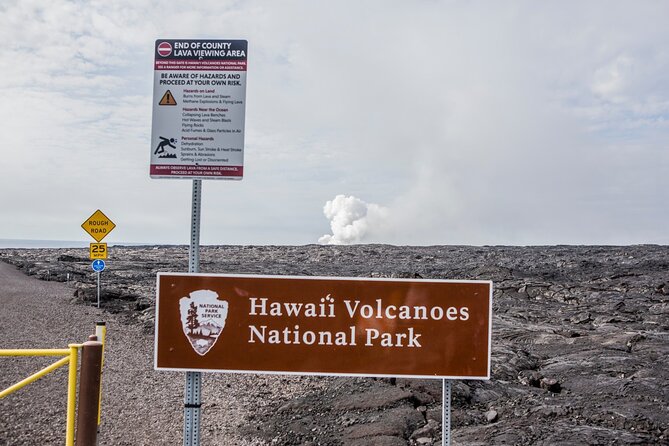
The route does not replace checking current park conditions. Volcanic areas can close, roads can change, and government shutdowns can affect access. Before setting out, check the official Hawaiʻi Volcanoes National Park website for closures and current conditions.
More National Park Audio Tours in the USA:
- Self-Guided Ebike Tours of Acadia National Park Carriage Roads
★ 5.0 · 427 reviews - Great Smoky Mountains National Park Self-Guided Driving Tour
★ 4.0 · 292 reviews - Arches National Park Self-Guided Driving Audio Tour
★ 4.5 · 288 reviews - Yellowstone National Park Self-Guided Driving Audio Tour
★ 4.5 · 249 reviews
Kīlauea Iki Trail and Thurston Lava Tube
The Kīlauea Iki Trailhead is one of the places where the stated two to three hours can become much longer. The trail descends into Kīlauea Iki Crater and forms a 3.3-mile loop. The full walk takes about three hours and includes elevation changes that can feel strenuous.
If you are driving the route in one afternoon, treat this as a choice rather than a quick stop. You can listen to the story, look around the trailhead, and continue, or set aside a large part of your day for the hike. The audio tour gives you that flexibility, but it cannot make a demanding trail short.
Next comes Nāhuku, also called Thurston Lava Tube. This cave formed when molten lava flowed through the area. The outside cooled and hardened while hotter lava continued moving inside, leaving a tunnel that you can explore.
The lava tube is a fine contrast to the open crater. At the overlook, you see a huge volcanic space. Inside the tube, you see how lava can create a hollow passage beneath the surface. Plan around 10 minutes for the standard stop, but allow extra time if you walk through slowly.
Luamanu, Puhimau, and Pauahi craters

The route continues through a series of volcanic features that reward careful listening more than long sightseeing stops.
Luamanu Crater was once covered by dense forest, until a single day changed it. That sharp before-and-after story helps you picture how quickly volcanic activity can alter a place that took years to grow.
Puhimau Crater shows another form of volcanic change. You will see geological formations created by past activity, with the narration explaining why these craters matter as part of the wider volcanic system.
Pauahi Crater is a steep-sided pit crater about 330 feet deep and 1,000 feet across. Look for lava spatter deposits and fumaroles, the openings that release steam and gases. This is a good stop for understanding that volcanic features are not all alike. Some are broad and open, while others drop sharply into the ground.
Each stop is listed as roughly 10 minutes, making them easy to add without losing the whole afternoon. Still, the road has many stops, and frequent pulls off the road can stretch the schedule. If you want a relaxed pace, plan closer to three hours before adding a longer hike.
Puʻu Huluhulu and Kipuka Puaulu
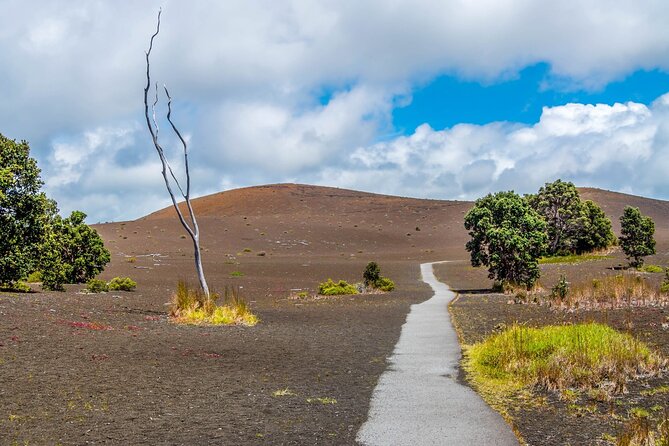
Puʻu Huluhulu is a cinder cone, similar to Puʻupuaʻi. Its name means hairy hill, a reference to the low shrubs that cover it and give it a fuzzy look from a distance.
That small name lesson is the kind of detail that makes a passing hill easier to remember. You are not just driving past a mound of volcanic rock. You are learning how its form and vegetation shaped its Hawaiian name.
Kipuka Puaulu offers a different lesson. A kipuka forms when a lava flow surrounds an older patch of vegetation. The plants remain as an island of life inside a newer lava field, often with different moisture, soil, and growing conditions from the ground around it.
This stop is especially useful if your idea of a volcano is nothing but black rock. The park’s story includes survival and regrowth as well as destruction. A short walk here can show you how sharply the plant life changes from one area to the next.
Mauna Ulu Lookout and the Puʻu Loa petroglyphs
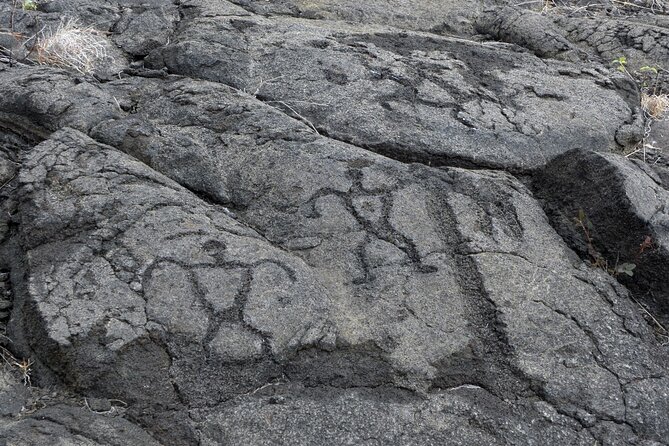
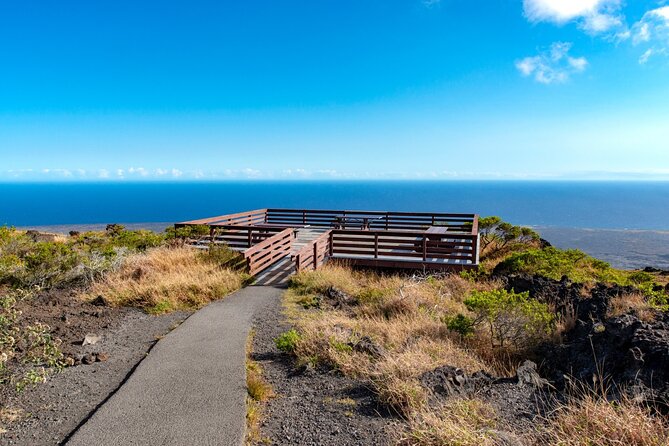
At Mauna Ulu Lookout, a raised platform provides broad views of the Mauna Ulu lava flow. Much of the flow looks flat and gray, but keep an eye out for the toadstool-shaped formations described along the route.
This is a place where the audio can help you slow down and notice forms that might otherwise look like random lumps of rock. The view is not a polished scenic overlook. Its appeal comes from seeing how lava cooled into strange, uneven shapes.
Puʻu Loa Petroglyphs adds a human layer to the volcanic story. More than 23,000 ancient petroglyphs are etched into hardened lava rock here. The site deserves care and patience. You are looking at marks made long before modern roads crossed the park, not just another roadside attraction.
Allow more time than the basic 10-minute audio stop if you walk to the petroglyph area. The tour points you there and explains its importance, but the value comes from being quiet and attentive rather than rushing through.
Hōlei Sea Arch and the end of Chain of Craters Road
The route ends at the famous Hōlei Sea Arch, a natural opening in the sea cliff. It is one of the strongest reasons to follow the drive all the way to the coast instead of turning around near the upper park stops.
The sea arch gives you a final change of scenery. The route begins with steam, craters, and high volcanic ground, then carries you toward the ocean. The drive takes time, but the payoff is a dramatic coastal finish and a good final photo stop.
The tour’s narration also includes Hawaiian mythology, which adds a cultural thread to the geology. If your schedule is tight, you can visit only the early stops and still get useful context. If you have the afternoon, make the effort to reach the arch. The road trip is part of the experience, not just a way to connect attractions.
How much time should you allow?
The tour itself is advertised at about two to three hours, covering 24.5 miles and the main audio points. That estimate makes sense for a steady drive with short stops, but it does not include completing Kīlauea Iki Trail, spending a long time at the lava tube, or taking every side walk at a slow pace.
Use these rough plans:
- Short visit: Visit the entrance area, Steam Vents, Sulphur Banks, and Kīlauea Overlook.
- Standard half-day: Follow the route to Hōlei Sea Arch and make short stops along the way.
- Longer park day: Add Kīlauea Iki Trail, Thurston Lava Tube, Kipuka Puaulu, and the Puʻu Loa petroglyph walk.
The app lets you pause, repeat a story, skip a stop, or take a side excursion. One practical tip is to preview the route and content before driving. The narration may move on if you travel faster than expected, and it is easier to understand the map when you are not trying to navigate and listen at the same time.
Is $16.99 good value?
At $16.99 per group of up to four, the price is low compared with a conventional guided tour charged per person. A family or group of friends can share one purchase, which makes the cost especially attractive.
You are paying for interpretation and route guidance, not admission. Hawaiʻi Volcanoes National Park entry is separate, and the tour does not include attraction tickets, reservations, or other park fees.
The strongest value comes when you have only one afternoon and do not want to research every crater and viewpoint in advance. The narration gives you background while you drive, and offline maps remove the need for a constant signal.
The free National Park app is another useful tool, but it is described as a reading-based resource rather than a GPS-triggered audio guide. If you prefer to read every fact yourself, the free option may be enough. If you want hands-free stories that begin near each stop, this paid tour earns its modest price.
Who should choose this self-guided tour?
I would choose it for a first visit, a family group, or anyone who wants structure without a fixed schedule. It is also a smart backup if a planned guided excursion falls through. You get a route, commentary, and the freedom to stop when a trail or viewpoint catches your interest.
It suits people who enjoy driving and want to reach the coast at their own speed. It is less suitable if you want a live guide who can answer questions, adjust the route in real time, or provide a reverse version of the tour.
The tour is offered in English. Most people can take part, but some walks and crater trails require more effort than the driving portions. Keep the audio volume at a level that lets the driver stay focused, and pull over before handling the phone.
Your purchase includes lifetime access with no expiry, so you can use it on another trip or pause and return to the route later. The activity is private to your group, but the park itself is public and may be busy or subject to closures.
Cancellation is free if you cancel at least 24 hours before the scheduled start time. Changes or cancellations inside that window are not refundable.
Should you book the Hawaiʻi Volcanoes audio tour?
Book it if you want affordable structure and personal freedom. The best parts are the clear GPS narration, the useful volcanic and cultural context, the offline function, and the ability to cover the park without joining a group. The sea arch, Thurston Lava Tube, petroglyphs, and Kīlauea Overlook give the route plenty of variety.
Skip it if you dislike setting up apps, expect a live guide, or plan to spend most of the day on long hikes rather than driving between stops. For everyone else, download the tour before arrival, start at the Entrance Station, follow the route toward Hōlei Sea Arch, and treat the audio as a helpful companion rather than a substitute for checking park conditions.
FAQ
How long does the Hawaiʻi Volcanoes National Park audio tour take?
The driving route takes about two to three hours. Longer hikes, including the 3.3-mile Kīlauea Iki loop and walks to other stops, require extra time.
Where does the tour begin and end?
It begins at the Entrance Station in Volcano, Hawaiʻi, and ends at Hōlei Sea Arch on Chain of Craters Road.
Does the tour include park admission?
No. Hawaiʻi Volcanoes National Park entry fees are separate and are not included in the tour price.
How much does the self-guided tour cost?
The tour costs $16.99 per group of up to four people. The purchase is per car, not per person.
Does the audio tour work without cell service?
Yes. You must download the app and tour while you have strong Wi-Fi or cellular service. After downloading, the audio and maps work offline.
Can I pause the tour or take side trips?
Yes. You can pause the tour, stop for photos or food, take side excursions, repeat stories, skip stops, and return to the route. GPS can keep track of your position if you go slightly out of order.
What device do I need to use the tour?
The recommended devices are an iPhone running iOS 15 or later, an Android device running version 9 or later, or an iPad or tablet with GPS and cellular connectivity. Audio can connect to your car by Bluetooth, USB, or AUX.
More National Park Trips in the USA
- Self-Guided GPS Audio E-Bike Tour Hawaii Volcanoes National Park
★ 4.5 · 131 reviews - Shenandoah National Park Self-Guided Driving Audio Tour
★ 4.5 · 109 reviews - Self-Guided Audio Driving Tour in Glacier National Park
★ 4.5 · 101 reviews - Rocky Mountain National Park Self-Guided Driving Audio Tour
★ 4.5 · 92 reviews
Just added around the USA
- Springfield Self-Guided Walking Audio Tour★ 4.0 · 5 reviews
- Smartphone Guided Indianapolis Downtown Sites Audio Walking Tour★ 4.5 · 7 reviews
- Smartphone-Guided Walking Tour of Downtown Indianapolis Sights & Stories★ 4.0 · 25 reviews
- Indiana Dunes National Park Self-Guided Audio Tour★ 3.5 · 4 reviews
- Self-Guided Audio Driving Tour in Kancamagus Highway★ 4.5 · 6 reviews
- An Epic Scavenger Hunt: Bloomington Scenic Southern Indiana★ 3.5 · 6 reviews
- Huntsville Rocket City Smart Phone Self Guided Audio (GPS/APP) Walking Tour★ 4.5 · 5 reviews
- Sights of Downtown Houston Smartphone Audio Walking Tour★ 4.0 · 7 reviews
USA Audio Tours, compared.

Fort Sumter Admission and Self-Guided Tour with Roundtrip Ferry
Read our review →
San Francisco: Alcatraz Ticket, Ferry, & Self-Guided App
Read our review →
Los Angeles: Hop-On Hop-Off Bus Tour with Audio Guide
Read our review →
City Sightseeing Hop-On Hop-Off Bus Tour with Audio Guide
Read our review →
Medieval Torture Museum Ticket with Audio Guide and Ghost Hunting
Read our review →

Ryman Auditorium Self-Guided Tour with Souvenir Photo Onstage
Read our review →
Red Rock Canyon Self-Guided Electric Bike Tour
Read our review →Browse the lists this tour appears in