
REVIEW · USA AUDIO TOURS
Grand Teton and Yellowstone Self-Guided Driving Tours Bundle
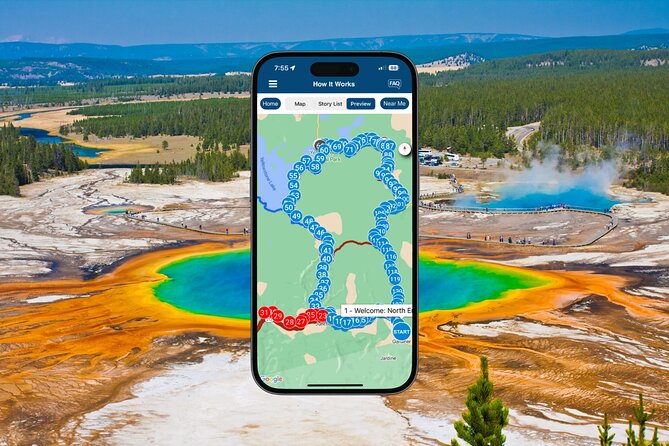
The most useful thing about this self-guided driving bundle is its flexibility. You get two long park routes, each with more than 50 audio stories, and you decide when to stop for photos, trails, food, or wildlife. There is no guide waiting at a meeting point and no bus schedule to chase.
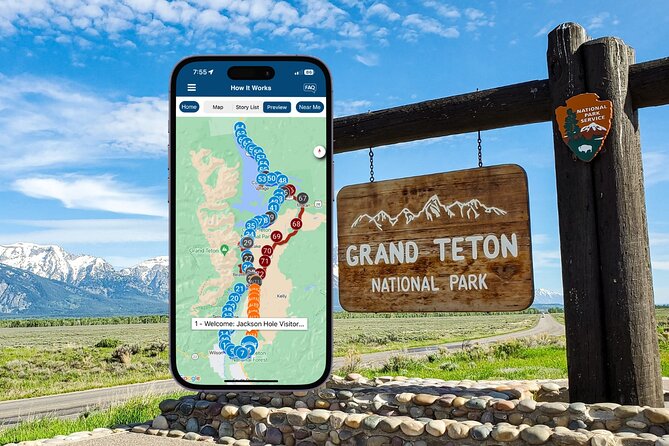
I like the price, since one purchase covers everyone in a car of up to four people. I also like the location-triggered narration, which turns on as you approach places such as Jenny Lake, Old Faithful, Grand Prismatic Spring, and Lamar Valley. The main caution is the app: download everything on strong Wi-Fi, test it before entering the parks, and follow the suggested route and speed.
Key points to know before you book
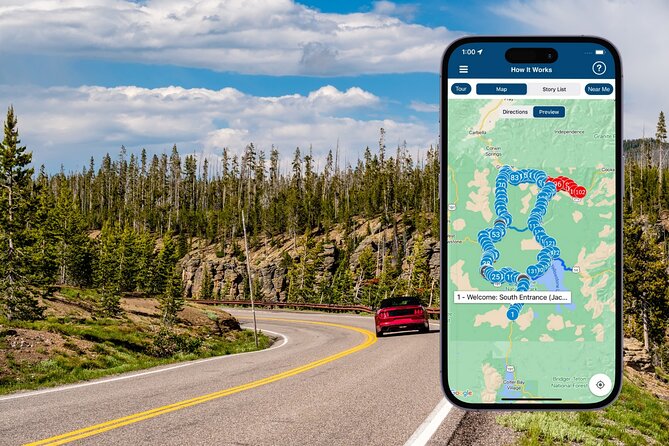
- More than 50 stories per park route: The narration covers geology, wildlife, Indigenous history, park development, and practical sightseeing tips.
- A true car-based tour: No in-person guide joins you. The Action Tour Guide app provides the narration and GPS prompts.
- Strong value for families: At $34.99 per group of up to four, the cost is far below most private or bus tours.
- Built for more than one day: You can pause, take side trips, and continue later. The purchase information describes both one-year access and newer lifetime access, so check the terms shown when booking.
- Offline use matters: Cell service is unreliable in both parks. Download the tour and connect your phone to the car stereo before you arrive.
- One day is not enough for Yellowstone: The route covers a huge area, but you will need extra days if you want more than a fast pass through the major sights.
A useful audio companion for two enormous parks
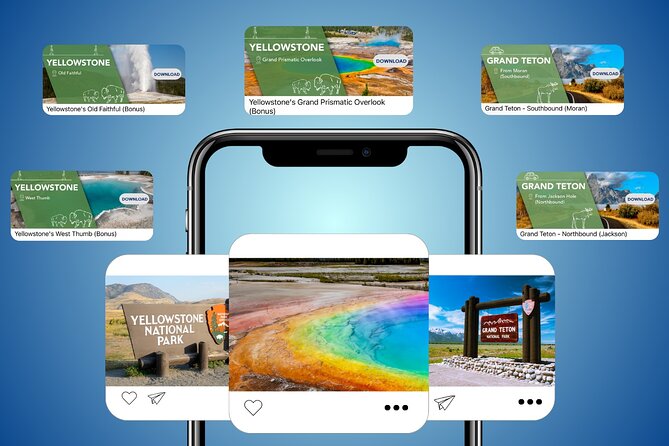
Grand Teton and Yellowstone are too large for a simple list of stops. Driving between the famous sights takes time, and without some context, a mountain view can become just another mountain view. This audio tour fills in the gaps while you drive, explaining what you are seeing without forcing you into a fixed group.
The bundle costs $34.99 per car, not per person. That is a very good deal for a couple or family of four. A family of four pays less than $9 each if the group uses the full bundle, and the tour remains useful when you split the route over several days.
The app is designed to play stories automatically when you reach certain points. You can still stop the narration, skip sections, or take a side trip. If you leave the route, the app can pick up again when you return, although you should not expect perfect results if you repeatedly shut the program down or reverse direction.
This is not a replacement for a park map, road-status information, or a ranger talk. Think of it as a well-informed passenger in the car. You still need to plan fuel, food, restrooms, trail time, weather, and road conditions.
More Self-Guided Driving Tours in the USA
- Gettysburg Battlefield Self-Guided Driving Audio Tour
★ 4.5 · 910 reviews - Joshua Tree National Park Self-Guided Driving Audio Tour
★ 4.5 · 762 reviews - Ultimate Acadia National Park Self-Guided Driving Audio Tour
★ 4.0 · 521 reviews
Grand Teton begins with ski country and glacial views
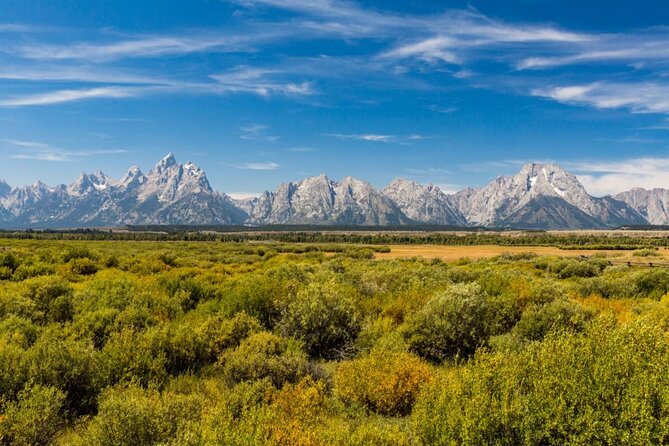
The Grand Teton portion starts around Teton Village, the ski center below some of the most dramatic peaks in the area. The audio gives the drive a sense of place before you reach the lakes and turnouts. Teton Village itself is free to pass through, and the tour does not require you to buy an attraction ticket there.
From here, the route moves through the Laurence S. Rockefeller Preserve, where elk and other mountain wildlife may appear. The preserve is a good reminder that Grand Teton is not simply a chain of viewpoints. It is also habitat, and you should keep your eyes on the road while watching for animals.
You will hear about a small log building that serves as an Episcopal church. It is worth parking for the view if you have time. These brief stops give the tour some personality, since they connect the grand peaks with the human stories scattered around the park.
The Taggart Lake Trail comes next. The listed route is a six-mile loop toward Taggart Lake and Bradley Lake, so this is not a quick hop-out photo stop if you plan to walk the full trail. The audio can tell you where the trail fits into the route, but you must decide how much hiking your day allows.
Jenny Lake, Cascade Canyon, and Mount Moran
Jenny Lake is one of Grand Teton’s essential stops. The shoreline and trails make it a good place to slow down after a stretch of driving. The ten-minute audio segment introduces the area, but the real value comes from pausing the tour and spending time beside the water.
The route then points you toward Cascade Canyon, carved by a huge glacier thousands of years ago. That explanation helps you read the valley instead of simply photographing it. The story also gives you a reason to connect the broad mountain forms with the ice that shaped them.
Mount Moran rises above Jackson Lake at 12,610 feet. The mountain is an especially strong subject for photos, but the route does not require a strenuous hike to appreciate it. You can get the story from the car and stop at an overlook when the view opens up.
At Jackson Lake Dam, you get a wide view of the lake and the Teton range. Colter Bay follows, with camping facilities and ranching history. The route then includes several optional scenic diversions, including Cattleman’s Bridge, Oxbow Bend, Snake River Overlook, Teton Point Turnout, and Glacier View Turnout.
These detours are where the bundle’s flexible design helps. You can stay on the main road if your day is tight, or spend more time at Oxbow Bend and the Snake River viewpoints. Snake River Overlook is linked with one of Ansel Adams’s famous Teton photographs, which gives the stop added meaning for anyone interested in photography.
The route can also take you toward the National Elk Refuge. Wildlife is often easier to spot in the morning or around dusk, according to the tour information, but wildlife sightings are never guaranteed. Keep a safe distance and do not stop in a way that blocks traffic.
Yellowstone’s southern entrance and the first geyser basins
The Yellowstone section is much larger than the Grand Teton route. It provides multiple starting directions, including the south, west, north, northeast, and east entrances. That is useful if your lodging or road trip begins in different towns, but it also means you must choose the correct version in the app.
From the South Entrance, the route passes Grant Village and heads toward West Thumb Geyser Basin. West Thumb places geothermal features beside Yellowstone Lake, giving you two very different natural forces in one area: hot volcanic water and a cold, high-elevation lake.
You then pass Shoshone Lake and Isa Lake. Isa Lake sits on the Continental Divide, a detail that gives the drive a nice geographic anchor. These stops are less famous than Old Faithful, but the narration helps make them worthwhile instead of treating them as filler between major attractions.
Old Faithful is the headline stop. The tour explains why its reliable eruptions made it famous, but you will need to check the park’s current eruption information if you want to time your arrival. The audio can make the waiting period more interesting, but it cannot guarantee that the geyser will erupt while you are there.
Morning Glory Pool comes next. Its colors remain striking, although the site has been damaged by objects thrown into the spring. That is a useful environmental lesson, not just a photo opportunity. At Firehole River, the route explains how geothermal heat affects the water.
Grand Prismatic Spring is another essential stop. Its rings of color are among Yellowstone’s most memorable sights, and the audio gives you context before you walk out to see it. Allow extra time here if you want more than a quick look from the parking area.
Fountain Paint Pot adds bubbling mud to the geothermal show. The route then moves through the west side of the park, with the Gibbon River, Gibbon Falls, Artist’s Paint Pots, and Norris Geyser Basin.
Gibbon Falls is convenient because you can see it from the road without committing to a long hike. Artist’s Paint Pots has a boardwalk with mud pots and small geysers. Norris is described as Yellowstone’s oldest and hottest geyser basin, with extreme temperatures below the surface. These details make the stop more than a collection of steaming pools.
Same place, a different route to walk:
- Fort Sumter Admission and Self-Guided Tour with Roundtrip Ferry
★ 4.5 · 3,343 reviews - San Francisco: Alcatraz Ticket, Ferry, & Self-Guided App
★ 4.5 · 2,460 reviews - Los Angeles: Hop-On Hop-Off Bus Tour with Audio Guide
★ 3.7 · 2,030 reviews - City Sightseeing Hop-On Hop-Off Bus Tour with Audio Guide
★ 3.0 · 1,083 reviews
Mammoth, Lamar Valley, and Yellowstone wildlife
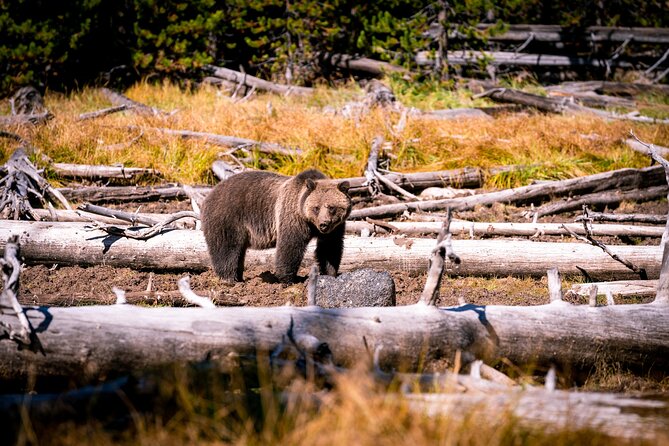
The northern route includes Swan Lake Flats and Mammoth Hot Springs. Swan Lake Flats is a wildlife area and is connected with the origin of one of Yellowstone’s wolf packs. Mammoth Hot Springs is known for its pale terraces and is also a favored area for elk.
If you enter from the north, the tour includes Boiling River, a naturally heated river with a much gentler temperature than its name suggests. The Albright Visitor Center offers a practical place to stop for snacks or a restroom break. These small pauses matter in Yellowstone, where distances between services can be long.
Undine Falls and Wraith Falls add two waterfall stops. Undine Falls is visible from the road, while Wraith Falls requires using the nearby trailhead. Tower Junction comes next, along with Roosevelt Lodge. The narration also explains that Theodore Roosevelt never camped at the lodge despite its name.
The Roosevelt Arch at Gardiner is a memorable northern entrance feature. Its cornerstone was laid by Theodore Roosevelt in 1903, and the arch was built under the supervision of the U.S. Army at Fort Yellowstone. This is one of the tour’s better examples of how architecture and park history meet.
Lamar Valley is the strongest wildlife section. Bison are common enough that you have a good chance of seeing them, while wolves are possible but far less certain. Early morning and evening are generally the better times for wildlife viewing, but the tour data specifically highlights the valley’s importance rather than promising sightings.
The route continues through Cooke City for northeast arrivals, then crosses Dunraven Pass and reaches Mount Washburn. Dunraven Pass rises to about 9,000 feet, while Mount Washburn reaches 10,243 feet. High-elevation roads can be affected by weather, so do not treat the recorded route as a guarantee that every road will be open.
Yellowstone’s canyon, valley, and lake country
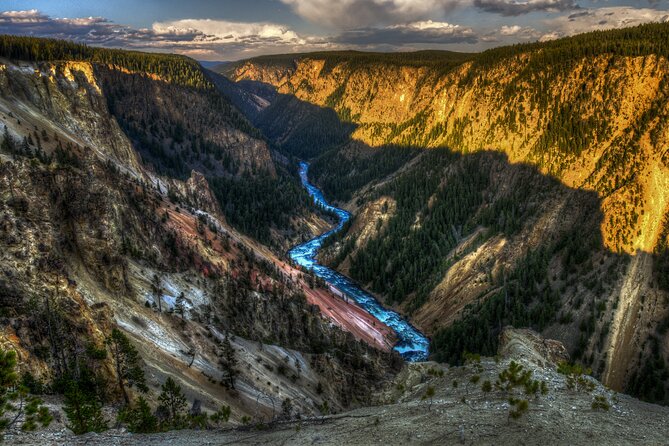
The Grand Loop continues through Canyon Village, where many park workers live during the season. That gives you a glimpse of the working side of Yellowstone, not just its famous scenery.
Inspiration Point provides a major view over the Grand Canyon of the Yellowstone. Hayden Valley follows, with a geological past that includes a time when the area was covered by a lake. The narration is especially helpful here because the valley can look like a broad meadow unless you understand how it was formed.
For east-side arrivals, the route includes Cody, Fishing Bridge, and Yellowstone Lake. Fishing Bridge is tied to early park-management efforts involving introduced trout, a reminder that conservation policy has changed over time.
Yellowstone Lake is the final major stop in the listed route. It is the largest high-elevation lake in North America, but the water is too cold for swimming. A picnic or boat ride makes better use of the shoreline, assuming conditions and current park rules allow it.
What the app does well, and where it can frustrate you

The best feature is the way the narration matches the road. You hear about a waterfall, turnoff, mountain, or geothermal feature close to the point where you can see it. The stories also include side information, such as aspen trees, wildlife, geology, and local history, so the drive does not feel like a string of announcements.
The app is also useful for mixed-age groups. One family used it with people ranging from age eight to 73, and the material held attention across that wide range. Parents can pause for walks and snacks, while children get short stories and clear points of interest.
The weak point is setup. You need to download the separate Action Tour Guide app, enter the password sent by email and text, and download the route while you have a strong connection. Yellowstone and Grand Teton have unreliable cellular service, so waiting until you reach the park is a poor plan.
A few technical problems have also been reported in the supplied feedback. The app sometimes stopped, replayed its introduction, or failed to open one of the park tours. Another user found the Moose area directions unclear and ended up driving the Grand Teton loop backward. The audio still worked, but stories played after the relevant stops.
To reduce the risk, connect the phone to your car by Bluetooth, USB, or AUX before you begin. Keep the app open, follow the indicated speed, and avoid shutting it down unless necessary. If you take a side road, keep driving until you return to the route, since the app may resume once it finds you again.
The tour supports Apple CarPlay, while Android Auto support was listed as forthcoming. The recommended devices are an iPhone with iOS 15 or later, an Android device running version 9 or later, or an iPad or tablet with GPS and cellular capability.
Is $34.99 good value for this route?
Yes, particularly for a couple or family sharing one car. The price covers up to four people, and you can use the tour across multiple days instead of rushing through seven or eight hours in one shot.
The value is strongest if you enjoy learning while driving but do not want to join a scheduled tour. You also avoid paying per person, which quickly makes traditional guided transport more expensive. The bundle gives you narration for both parks, rather than forcing you to buy two separate products.
The value is weaker if you already have a detailed park guide, prefer silence, or expect a live ranger to answer questions. It also cannot solve Yellowstone’s biggest problem: there is simply too much to see in a short visit.
The booking terms include free cancellation up to 24 hours before the start time. Poor weather may lead to a different date or a full refund. The access information says both one-year use and newer lifetime access, so confirm the current policy at checkout.
Who should book this self-guided bundle?
I recommend it for families, couples, first-time park visitors, and anyone driving Grand Teton and Yellowstone without a private guide. It is especially useful when your group wants to stop often, change plans, or divide the route over two or more days.
I would be more cautious if you dislike phone apps or have no reliable way to download the route before entering the parks. I would also avoid treating the advertised seven to eight hours as enough time for both parks. That is driving and listening time, not a relaxed visit with hikes and long wildlife stops.
Book it if you want a low-cost audio companion that adds context to a self-planned road trip. Skip it if you need a live person, guaranteed technical support on the road, or a tightly managed sightseeing schedule. Set it up before you leave town, and it can make two very large parks easier to understand and much more rewarding to drive.
FAQ
Is this a guided tour with a person?
No. This is a private, self-guided audio tour. No in-person guide meets you at the starting point.
How much does the bundle cost?
The listed price is $34.99 per group of up to four people.
How long does the tour take?
The overall experience is listed at about seven to eight hours. Each park route covers more than 50 miles and includes more than 50 audio stories, with an estimated three to five hours per tour.
Does the tour work without cell service?
Yes, after you download the app and tour content in advance. You must use strong Wi-Fi or cellular service during setup because service inside the parks can be unreliable.
How do I start the tour?
Download the Action Tour Guide app, enter the password sent by email and text, choose the correct tour version and direction, and drive to the first story point. The audio should begin automatically based on your location.
Can I pause the tour and continue later?
Yes. You can pause for food, photos, hikes, and side trips, then continue later. The tour information also says you can use it across multiple days.
Does the price include park entry?
No. Park admission, attraction tickets, reservations, and other entry costs are not included.
Can I cancel for a refund?
You can cancel for a full refund at least 24 hours before the scheduled start time. Cancellations or changes made within 24 hours are not refunded, except when the experience is canceled because of poor weather.
Just added around the USA
- Smartphone-Guided Walking Tour of Downtown Indianapolis Sights & Stories★ 4.0 · 25 reviews
- Springfield Self-Guided Walking Audio Tour★ 4.0 · 5 reviews
- Smartphone Guided Indianapolis Downtown Sites Audio Walking Tour★ 4.5 · 7 reviews
- Indiana Dunes National Park Self-Guided Audio Tour★ 3.5 · 4 reviews
- Self-Guided Audio Driving Tour in Kancamagus Highway★ 4.5 · 6 reviews
- An Epic Scavenger Hunt: Bloomington Scenic Southern Indiana★ 3.5 · 6 reviews
- Huntsville Rocket City Smart Phone Self Guided Audio (GPS/APP) Walking Tour★ 4.5 · 5 reviews
- Sights of Downtown Houston Smartphone Audio Walking Tour★ 4.0 · 7 reviews
USA Audio Tours, compared.
Fort Sumter Admission and Self-Guided Tour with Roundtrip Ferry
Read our review →
San Francisco: Alcatraz Ticket, Ferry, & Self-Guided App
Read our review →
Los Angeles: Hop-On Hop-Off Bus Tour with Audio Guide
Read our review →
City Sightseeing Hop-On Hop-Off Bus Tour with Audio Guide
Read our review →
Medieval Torture Museum Ticket with Audio Guide and Ghost Hunting
Read our review →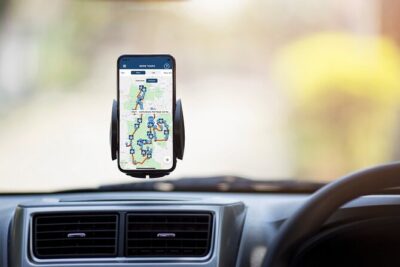

Ryman Auditorium Self-Guided Tour with Souvenir Photo Onstage
Read our review →
Red Rock Canyon Self-Guided Electric Bike Tour
Read our review →Browse the lists this tour appears in