

REVIEW · USA AUDIO TOURS
Gettysburg’s Seminary Ridge: Self-Guided Walking Audio Tour
Gettysburg’s Seminary Ridge audio tour takes you to the ground where the first day of the battle unfolded, but it begins with a quieter story: a Lutheran school founded in 1826. I like the contrast between the seminary’s peaceful purpose and the fighting that later swept across its grounds. I also like the offline audio and the fact that you can return to the tour long after your first visit. The main catch is that this is not a museum ticket or a guided walk with a person.
At $9.99, the tour offers a low-cost way to put the site in context, especially if you want to walk alone or with your own group. Plan on roughly 20 to 30 minutes for the shortest version, though the route is more than a mile and the full set of 20-plus stories may take 30 minutes to an hour. Bring earbuds, download everything before you arrive, and do not expect the nearby museum admission to be included.
Key points to know before you go

- The walk begins at Schmucker Hall: Start at 111 Seminary Ridge and follow the audio toward the historic campus and battlefield ground.
- More than 20 audio stories: GPS-triggered narration plays as you reach each point, so you can keep your phone in your pocket.
- The route works without service: Download the tour on strong Wi-Fi or cellular service before arriving.
- The seminary is more than a battle site: You’ll hear about Samuel Simon Schmucker, the school he founded, and buildings that came after the battle.
- Museum entry costs extra: The Seminary Ridge Museum and Education Center is an optional stop, not part of the $9.99 tour price.
- Lifetime access adds value: You can pause, restart, or repeat the walk on later trips without an expiration date.
Starting at Gettysburg’s Lutheran seminary
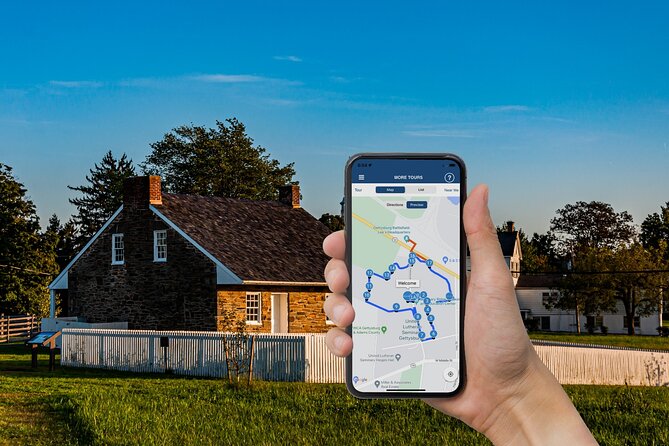
Your walk starts at Schmucker Hall, at 111 Seminary Ridge in Gettysburg. No guide meets you there. You open the Action Tour Guide app, choose the correct tour if more than one appears, and move to the first GPS point. The opening story begins automatically when you reach it.
The first stop introduces the Lutheran Theological Seminary. Samuel Simon Schmucker founded it in 1826, making it the oldest Lutheran seminary in the country. That date gives the site a useful identity before the battle enters the picture. You are not simply walking through a military position. You are walking through an active educational campus with roots that reach back well before July 1863.
That change in focus is one of the tour’s best features. Gettysburg can become a blur of regiments, officers, and troop movements. Here, the first story gives you a building, a founder, and a working institution to picture. The seminary’s earlier life helps explain why the battle damaged a place that had nothing to do with war.
The opening stop is short, listed at about two minutes. Think of it as your orientation rather than a full lecture. If you want a quick start, you can move along almost immediately. If you prefer to stop for photographs or read signs on site, the app lets you pause.
More Self-Guided Walking Tours in the USA
- Self Guided Classic Freedom Trail Location Aware (GPS) Walking Audio Tour
★ 4.5 · 258 reviews - Self-Guided Smartphone Ghost Walking Tour in Salem
★ 4.5 · 225 reviews - Cape Cod & Provincetown Self-Guided Driving & Walking Audio Tour
★ 4.0 · 207 reviews
Samuel Simon Schmucker’s brick house
The next stop brings you to the large brick home associated with Samuel Simon Schmucker. It sits on a corner and is described by its gray roof and white trim, details that help you identify it without a guide pointing the way.
This stop gives the founder a physical presence. You move from the institution he created to the house connected with him, which makes the story easier to follow. The audio stop lasts about five minutes, long enough to add background without turning the walk into a long classroom talk.
I appreciate stops like this because they keep the tour grounded in what you can see. You are not asked to imagine an abstract founder from a date on a plaque. You are looking at a real building and hearing why it matters.
The house is not presented as a separate ticketed attraction. The walking tour points it out from the route, and admission is listed as free. If you are expecting to go inside every building, adjust your expectations. The experience is primarily an outdoor audio walk.
Valentine Hall and the seminary after 1863
Valentine Hall offers one of the tour’s most useful corrections to a common assumption. Gettysburg’s battle did not end the seminary’s story. Valentine Hall was built 25 years after the battle, so its presence shows that the institution continued and developed after the fighting ended.
The stop lasts about five minutes. That gives the audio room to explain why a postwar building belongs in a first-day battlefield walk. It also prevents the seminary from feeling like a frozen Civil War set.
You may find this part especially useful if you are visiting Gettysburg with children or with people who do not already know the battle. The story makes a clear point: historic sites change. A building can be connected to the battlefield without dating from the battle itself.
This is also where the tour’s limits become clear. The experience is built around audio prompts and outdoor landmarks, not an extensive interior visit. If your main goal is architecture, exhibits, or preserved rooms, you will want to add the museum separately.
The Seminary Ridge Museum and cupola option
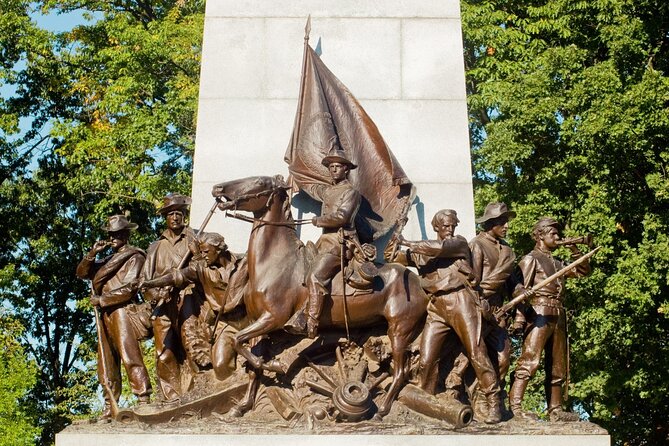
The route continues to the Seminary Ridge Museum and Education Center, an impressive brick building with Civil War exhibits, wartime accounts, and access to the cupola on top. The audio tour allows about two minutes for this stop because the building is more of a key point along the walk than the complete experience itself.
Museum admission is not included in the $9.99 price. This distinction matters. One poor experience can happen when a person assumes the audio tour purchase also covers the museum, then reaches the admissions desk and learns that a separate payment is required. Treat the walking tour and museum as two different products from the start.
The museum may make sense if you want more indoor material after the outdoor walk. The cupola is another reason to consider it, since it offers a higher viewpoint over the area. The available information does not specify the museum’s admission price or operating details beyond the stated general tour hours, so check directly before planning your day around entry.
If you skip the museum, you still have the outdoor audio route. You simply will not receive the exhibits or cupola visit connected with the building.
Same place, a different route to walk:
- Fort Sumter Admission and Self-Guided Tour with Roundtrip Ferry
★ 4.5 · 3,343 reviews - San Francisco: Alcatraz Ticket, Ferry, & Self-Guided App
★ 4.5 · 2,460 reviews - Los Angeles: Hop-On Hop-Off Bus Tour with Audio Guide
★ 3.7 · 2,030 reviews - City Sightseeing Hop-On Hop-Off Bus Tour with Audio Guide
★ 3.0 · 1,083 reviews
How the audio guide works on the ground

The Action Tour Guide app uses your phone’s GPS to trigger narration near each point. You follow the route and audio cues from one story to the next. Once the download is complete, the tour does not require cell service or Wi-Fi, which is important for a battlefield site where coverage may not be dependable.
Download the separate app before you go, while you have strong Wi-Fi or cellular service. You receive setup instructions and a password by email and text after booking. Search your messages for audio tour if the instructions do not appear quickly.
The password works on the same number of devices as the number of people booked. That makes it practical for a small group that wants separate phones. Couples can also share one tour by splitting headphones, which keeps the cost down.
Use an iPhone running iOS 15 or later, an Android phone running version 9 or later, or an iPad or tablet with GPS and cellular capability. Headphones or earbuds are strongly recommended. The hands-free format lets you listen while looking at the buildings and route instead of staring at your screen.
The app is designed to let you pause for photos, snacks, or a side stop. You can skip a story, replay one, or return later. Since access does not expire, the same purchase can work on another Gettysburg trip.
Timing, distance, and the meaning of the two time estimates

The tour is described as taking about 20 to 30 minutes, while the route notes also give a range of 30 minutes to one hour. These figures are not necessarily in conflict. A quick walk with limited pauses can fit the shorter estimate. Listening to all 20-plus stories, stopping for photos, and taking time around the buildings will push you toward the longer one.
The route covers more than one mile. That is an easy distance for most people who can participate in a normal walking tour, but it is not a tiny stroll between two buildings. Wear comfortable shoes and allow extra time if you want to stop at the museum.
The published operating window is 6:00 AM to 9:00 PM, every day, for the stated availability period. The tour is self-guided, so you are not tied to a departure time or a group. You can start when it suits your schedule, provided you are able to access the route.
Because there is no guide managing the pace, you need to pay attention to the route and local conditions. Keep the phone charged, stay aware of your surroundings, and follow the app’s directions. If the audio fails to trigger, support is available through the provider.
What $9.99 really buys you

The price is modest for a private walking experience, particularly because it covers lifetime access rather than one fixed date. You are paying for the narrated route, app access, offline maps, and location-triggered stories. You are not paying for museum admission, reservations, or a person leading the group.
The value is strongest if you like flexibility. You can begin early, stop halfway, return later, or repeat the route on another visit. That makes the purchase more useful than a one-time audio file, especially if you are spending several days in Gettysburg.
The value is weaker if you want a live historian who can answer questions or adjust the route to your interests. An app can tell a story at the right location, but it cannot respond to a child’s question or explain a detail you notice in the moment.
For a couple, sharing one set of headphones can make the cost especially low. For a family, separate devices are possible as long as the number of devices matches the number of booked participants.
What works well, and what may not

I like the route’s focus on the first day of the Battle of Gettysburg, but I also like that it does not treat the battlefield as a collection of military facts alone. The seminary, Schmucker’s home, and Valentine Hall give you civilian and institutional context.
The automatic audio is another strong point. Once everything is downloaded, you can keep your hands free and listen as you walk. You are not constantly checking a map or searching for the next paragraph.
The weaknesses are just as practical. The experience can feel quiet and limited if you expect a full museum visit, a large number of preserved interiors, or a live guide. One family found the presentation boring and stopped before finishing, particularly with younger people in the group. That is a fair warning: audio tours work best when you enjoy self-directed history and are willing to look closely at the places being described.
The museum confusion is avoidable, but only if you read the inclusions carefully. The museum ticket is separate. The walking tour does not function as admission to the Seminary Ridge Museum and Education Center.
Who should book this Seminary Ridge walk?
I would choose this tour if you want a low-cost introduction to Seminary Ridge, prefer setting your own pace, or need a flexible activity that can fit around other Gettysburg plans. It also suits repeat visitors who want to hear the route again without buying another ticket.
It is a good match for people who enjoy short audio stories, outdoor walking, and historical buildings. The lifetime access is useful if you live nearby or expect to return to Gettysburg.
I would be more cautious if your main interest is a guided discussion, detailed military analysis, or a full indoor museum visit. In that case, plan to add the museum separately and consider whether an app-based format gives you enough interaction.
The tour is offered in English only. Most people who can take part in a normal walking activity should be able to use it, and it is near public transportation. The route is private to your group, so you do not have to keep pace with strangers.
Booking and cancellation details
You receive confirmation when you book, along with setup instructions and the password by email and text. Cancel at least 24 hours before the local start time for a full refund. Cancellations or changes made within 24 hours are not refunded or accepted.
The important preparation step is downloading the tour before you arrive. Once the app and route are stored on your phone, you can use the tour offline and start whenever you are ready.
Should you book the Gettysburg Seminary Ridge audio tour?
Book it if you want a simple, inexpensive way to walk through the seminary grounds and connect the first day of Gettysburg’s battle with the site’s longer institutional story. The lifetime access and offline operation give the $9.99 price real value.
Skip it if you want a live guide, a museum ticket, or a highly interactive presentation. For the best version of this experience, download the app at home, bring earbuds, allow up to an hour, and treat the museum as a separate choice rather than part of the walking tour.
FAQ
How long does the Seminary Ridge audio tour take?
The walk is described as about 20 to 30 minutes, but the route is more than one mile with over 20 audio stories. If you listen to everything and stop for photos or other visits, plan on 30 minutes to one hour.
Where does the tour begin?
The starting point is Schmucker Hall at 111 Seminary Ridge, Gettysburg, Pennsylvania 17325.
Where does the tour end?
The stated ending point is 568 Elm Street, Gettysburg, Pennsylvania 17325.
Is museum admission included?
No. Admission to the Seminary Ridge Museum and Education Center, along with other attraction tickets or reservations, must be purchased separately.
Does the tour require cell service or Wi-Fi?
You need strong Wi-Fi or cellular service to download the tour before arriving. After the download, the stories and maps work offline without cell service or Wi-Fi.
Can I use the tour more than once?
Yes. The tour has lifetime access with no expiration date. You can start, pause, repeat, or use it again on a later trip.
Is the tour guided by a person?
No. This is a private, self-guided activity. You follow the app from the starting point, and GPS-triggered audio stories play as you reach each location.
Just added around the USA
- Smartphone-Guided Walking Tour of Downtown Indianapolis Sights & Stories★ 4.0 · 25 reviews
- Springfield Self-Guided Walking Audio Tour★ 4.0 · 5 reviews
- Smartphone Guided Indianapolis Downtown Sites Audio Walking Tour★ 4.5 · 7 reviews
- Indiana Dunes National Park Self-Guided Audio Tour★ 3.5 · 4 reviews
- Self-Guided Audio Driving Tour in Kancamagus Highway★ 4.5 · 6 reviews
- An Epic Scavenger Hunt: Bloomington Scenic Southern Indiana★ 3.5 · 6 reviews
- Huntsville Rocket City Smart Phone Self Guided Audio (GPS/APP) Walking Tour★ 4.5 · 5 reviews
- Sights of Downtown Houston Smartphone Audio Walking Tour★ 4.0 · 7 reviews
USA Audio Tours, compared.

Fort Sumter Admission and Self-Guided Tour with Roundtrip Ferry
Read our review →
San Francisco: Alcatraz Ticket, Ferry, & Self-Guided App
Read our review →
Los Angeles: Hop-On Hop-Off Bus Tour with Audio Guide
Read our review →
City Sightseeing Hop-On Hop-Off Bus Tour with Audio Guide
Read our review →
Medieval Torture Museum Ticket with Audio Guide and Ghost Hunting
Read our review →

Ryman Auditorium Self-Guided Tour with Souvenir Photo Onstage
Read our review →
Red Rock Canyon Self-Guided Electric Bike Tour
Read our review →Browse the lists this tour appears in