
REVIEW · AUSTRALIA AUDIO TOURS
Explore Delightful Darwin: Self-Guided Audio Tour
Darwin’s story is written in layers: Chinese settlement, Aboriginal art, wartime destruction, cyclones, and a tropical city rebuilt beside the harbour. This self-guided walking tour links those pieces in roughly two to three hours, letting you stop for a meal or browse shops when the mood strikes.
I like the flexible pace and the low price of $15.90, especially if you want a quick introduction without joining a group. I also like that the route includes smaller cultural stops, such as the Chinese Temple and Museum Chung Wah and Mason Gallery, rather than focusing only on postcard views.
The weak spot is the technology. One customer reported that the audio cut out and restarted from the beginning, and that it did not detect location automatically. Download every file before you leave, and be ready to use the map and audio manually if the app misbehaves.
Key points to know before you go
- Chinese settlement comes first: The Chinese Temple and Museum Chung Wah gives the walk a clear human story, not just a series of city sights.
- Aboriginal art is part of the route: Mason Gallery displays paintings by artists from nearby regions.
- Darwin’s war story is outdoors: Bicentennial Park includes both the Cenotaph War Memorial and the Civilian Memorial.
- Government House is the finish: The Northern Territory’s oldest European building closes the route on the Esplanade.
- You set the rhythm: Pause the audio for food, shopping, photographs, or a rest.
- Prepare the audio before walking: The tour is English-only and does not include a physical guide or audio device.
A short walk through Darwin’s long story
This tour works best as an introduction to Darwin rather than a full sightseeing program. In about two hours, you move from the city’s Chinese heritage to Aboriginal painting, wartime remembrance, and colonial administration.
The route also gives you room to make the day your own. The audio can be paused, so you are not forced to stand in one place while a recording continues. You can stop for a bite to eat or some shopping, then return to the next section when ready.
That freedom matters in Darwin. The city’s tropical outdoor setting can make a strict schedule feel silly, particularly if you want time in the open air. You will need to keep track of your place, though. This is not a live guide who notices when you get distracted or tells you where to go next.
The supplied map and GPS files are the heart of the experience. Download them in advance, make sure the audio is ready on your phone, and bring headphones. Since the files are not designed to play automatically according to your location, you should expect to choose and start sections yourself.
More Audio Tours in Australia:
- From Cairns: Self-Guided Kuranda Trip with Train and Skyrail
★ 4.6 · 3,392 reviews - Manly Self-Guided Bike Tour
★ 4.5 · 573 reviews - Bundaberg: Brew Tasting and Self-Guided Gallery Tour
★ 4.8 · 256 reviews
Starting at Survivors Lookout
The stated starting point is Survivors Lookout in Darwin City, with the end at Government House on the Esplanade. The tour is listed with a 9:00 am start, but the self-guided format means you choose your actual starting and finishing point around your own schedule.
That arrangement is useful if you are staying nearby or already have plans in central Darwin. You do not need to wait for a guide or gather with a group. The activity can fit around another morning plan, provided you allow enough time to reach the first point and download the files before setting off.
The route is intended for walking, and a moderate level of physical fitness is recommended. No transport is included. You should also remember that the end point is not the same as the start, so plan how you will return to your accommodation or continue with your day.
The tour allows up to 50 people, but because it is self-paced, you are not moving as one large group. That gives you more control than a standard city walk. It also means you are responsible for navigation and timing.
Chinese Temple and Museum Chung Wah: Darwin’s Chinese connection
The first featured stop is the Chinese Temple and Museum Chung Wah. You get about 15 minutes here, with the focus on Chinese settlement in the Top End.
This is a useful opening because it shows Darwin as a meeting point for different communities. The city is often introduced through its wartime story or tropical climate, but Chinese settlement adds another important strand. The small museum format should suit you if you prefer a concentrated stop rather than a large institution that takes half a day.
The 15-minute allocation is enough for a quick look and some listening, but it is not a long museum visit. If the site requires admission, that cost is not included in the tour price. The same rule applies to admission costs at the listed stops, so carry a little extra budget if you want to enter rather than simply follow the route.
I would treat this as a scene setter. The audio should help explain why Chinese residents became part of Darwin’s development, while the museum gives you something physical to see. If the recording fails, you may lose much of the context, so having the files downloaded and easy to restart is important.
Mason Gallery and the art of the nearby regions
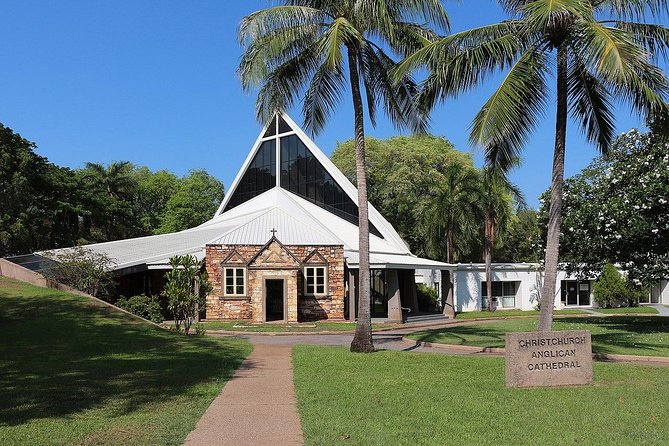
The next stop is Mason Gallery, which displays paintings by popular Aboriginal artists from neighboring regions. The suggested visit lasts 15 minutes.
This stop gives the walk a different tone. You move from settlement history to contemporary and traditional Aboriginal art, placing the Top End in a wider regional setting. For a short city tour, that is a worthwhile inclusion because it connects Darwin with the communities around it rather than presenting the city as an isolated urban center.
You should not expect a long gallery visit based on the planned timing. The stop is more of a focused introduction. If a particular painting catches your attention, you may need to choose between spending longer there and keeping to the suggested two-hour route.
Admission is not included. The $15.90 fee covers the audio files and GPS map, not entry to sights, food, or drinks. That is still a reasonable arrangement if you want the freedom to decide which places deserve extra time, but the total cost can rise if you enter several stops.
I like the balance here. The tour is not only about buildings and public memorials. It includes art as a way to understand the wider Northern Territory, though the quality of your experience depends on how well the audio works on your phone.
Same place, a different route to walk:
- Self-Guided Ngilgi Cave Ancient Lands Experience
★ 4.5 · 154 reviews - Self-Guided Noosa Everglades Kayak Tour
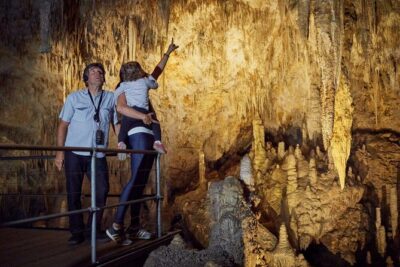
★ 5.0 · 132 reviews - Mammoth Cave Self-guided Audio Tour (Located in Western Australia)
★ 4.5 · 128 reviews - E-bike (electric) – Blue Mountains – Hanging Rock – SELF-GUIDED Hire Service
★ 5.0 · 101 reviews
Bicentennial Park and Darwin’s wartime memory
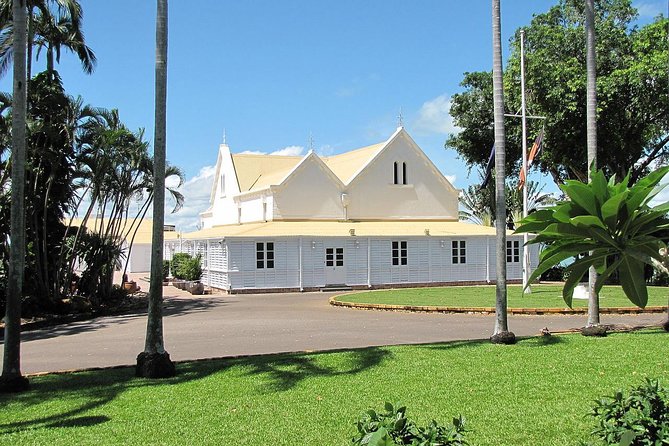
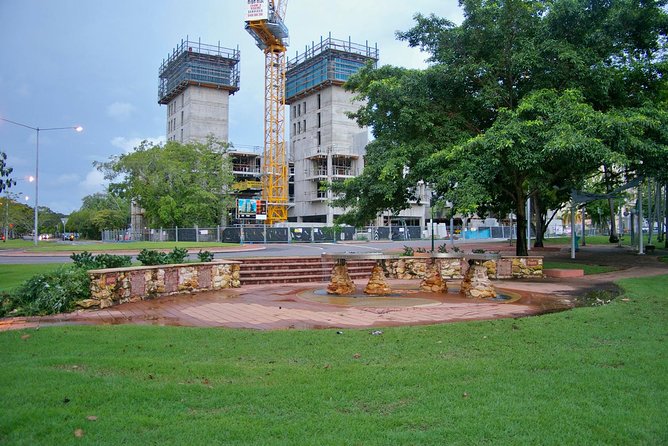
Bicentennial Park brings the route outdoors and focuses on remembrance. The park includes the Cenotaph War Memorial and the Civilian Memorial at its southwestern end, with about 15 minutes set aside.
This part of the walk is especially important because Darwin’s modern identity is tied to war and recovery. The audio introduces the damage caused by wars and cyclones, then connects those events to the city’s redevelopment. You are not just looking at a memorial. You are following the story of a place repeatedly forced to rebuild.
The two memorials also broaden the way you think about conflict. The Cenotaph recognizes military service, while the Civilian Memorial points to the effect on people away from the battlefield. That pairing makes the stop more useful than a quick photograph at a single monument.
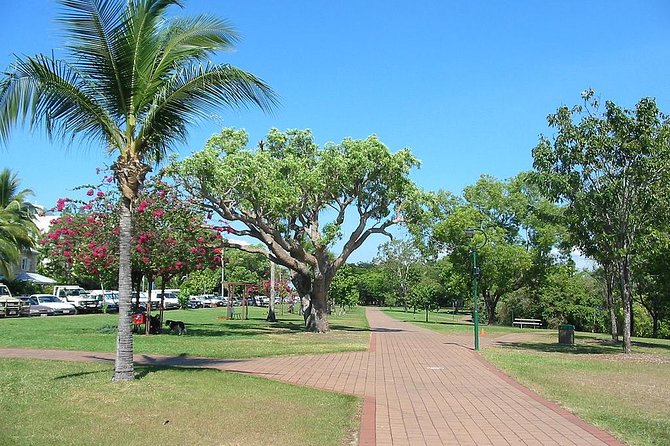
Bicentennial Park should also give you a pause from indoor stops. You can take in the harbor setting and listen at your own speed. The tour description highlights Darwin’s sparkling harbor and outdoor lifestyle, and this is where those two themes meet.
There is a practical catch. Outdoor audio can be harder to follow if you are stopping for photographs, dealing with heat, or crossing areas where phone reception changes. The route does not include food, water, transport, or an audio device, so plan those basics yourself.
Government House, the final stop on the Esplanade
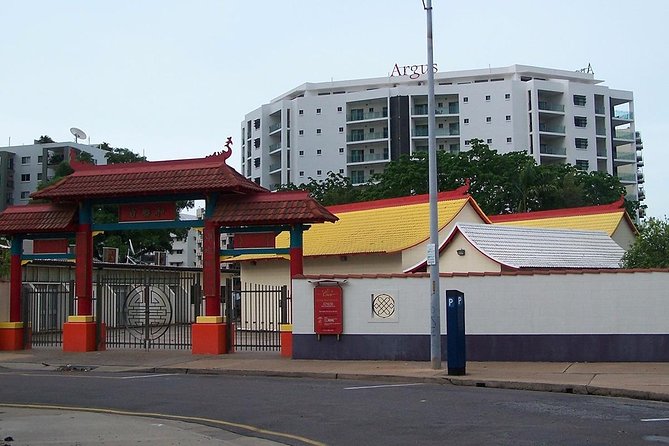
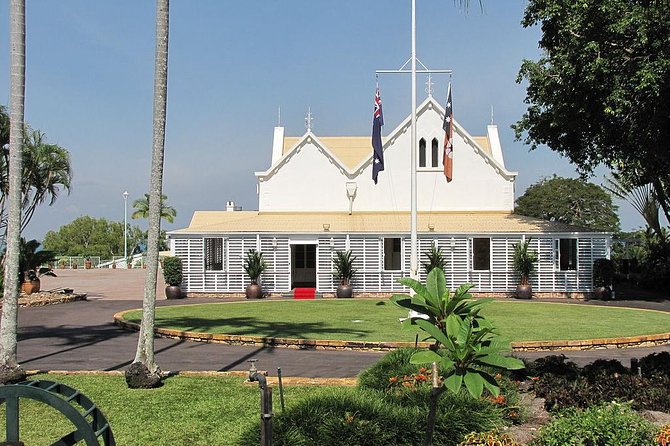
Government House is the final listed stop and the end point at 29 Esplanade. It is described as the oldest European building in the Northern Territory and has been home to successive government residents and administrators since 1871.
That makes it a strong finish. After hearing about settlement, art, war, and rebuilding, you arrive at a building linked to the territory’s colonial administration. The setting also lets the tour finish near the harbor rather than ending in the middle of a shopping street.
The suggested stop lasts 15 minutes. You should check the entry arrangements for the day if you hope to go inside, since admission fees are not included. The tour gives you the historical setting, but it does not promise a private visit or a live explanation on site.
Ending here also underlines the tour’s one-way nature. You begin at Survivors Lookout and finish at Government House, so you need to decide what comes next. The self-guided format lets you stop early or extend the route, but you will need to make your own way back or continue on foot.
What $15.90 really buys you
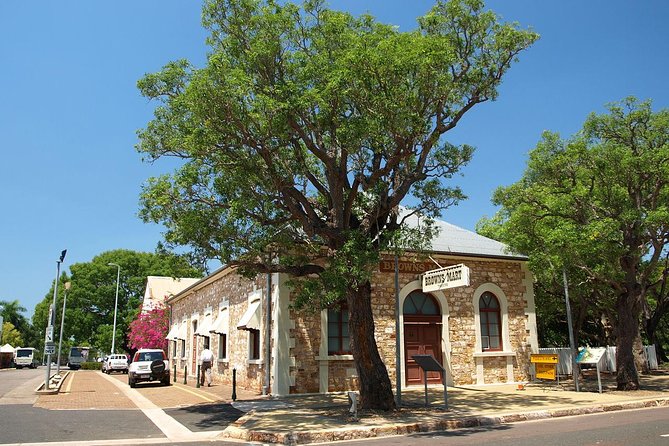
At $15.90 per person, this is an inexpensive way to put structure around a walk through central Darwin. You are paying for downloadable audio files, a GPS map, and the freedom to start and stop without a guide.
The value is strongest if you already want to walk and need context along the way. A live tour normally adds a fixed meeting time and group pace. Here, you can pause for lunch, shopping, or photographs without holding anyone up.
The value is weaker if you expect an interactive guide, automatic location prompts, or admission to museums and galleries. The price does not cover food, drinks, transport, entry fees, or the phone and headphones needed to use the material.
I would compare the cost with your plans for the day. If you want a compact introduction to Darwin and are comfortable managing files on your phone, the fee is modest. If you want a polished app that recognizes your location and resumes exactly where you stopped, this may not meet your expectations.
The audio problem you should prepare for
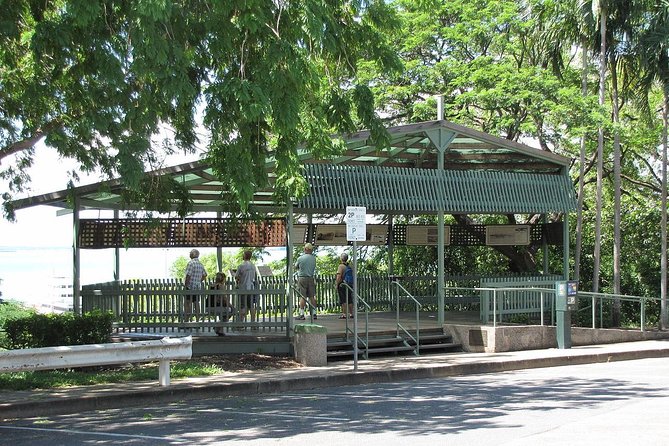
The most important caution comes from the technology. A customer had trouble with audio cutting out and reported that losing their place sent the recording back to the beginning. They also found that the tour did not detect their location and play the correct section automatically.
That does not prove every phone will have the same problem, but it is enough to change how I would prepare. Download everything before leaving. Open the files, check that they play, and keep the map available. If possible, note the order of the stops so you can restart without guessing.
This is a manual audio tour, not a guide walking beside you. You may need to pause the file, select the next track, and use the map to work out where you are. That is manageable for many people, but it is worth knowing before you pay.
The provider responded to the reported problem by issuing a refund and saying the tour would be examined for improvement. That is a positive response to the individual case, but you should still treat the technical issue as a real consideration.
Who will enjoy this Darwin walk?
I would suggest it to independent visitors who like to set their own timetable. It suits you if you want a short city introduction, prefer walking to riding in a vehicle, and enjoy combining public spaces with small cultural sites.
It also works for anyone who wants the choice to linger. You can spend more time at the Chinese Temple and Museum Chung Wah, move quickly through a stop that interests you less, or pause the tour for food and shopping.
It is less suitable if you want a local guide who can answer questions, adapt the route, or explain what you are looking at in real time. It may also frustrate you if you are not comfortable downloading files or manually finding your place in an audio track.
The tour is available only in English. Service animals are allowed, and the route is near public transportation, but no transport is provided as part of the activity. Keep your own mobility and comfort in mind when planning a two to three hour walk.
Booking, cancellations, and practical details
You receive confirmation at booking, along with instructions in the Before You Go section for downloading the tour. Read those instructions early rather than waiting until you reach Survivors Lookout.
The activity has free cancellation if you cancel at least 24 hours before the local start time. Changes or cancellations made later are not accepted for a refund. The experience is offered by Citywalksz Ltd.
I would also check your phone battery before leaving. The supplied information does not promise charging points or offline technical support, so your phone is doing several jobs at once: it holds the audio, displays the map, and may help with navigation.
Should you book this self-guided Darwin tour?
Book it if you want an affordable, flexible walk that introduces Darwin through Chinese settlement, Aboriginal art, wartime memorials, and Government House. The route has a sensible range of subjects, and the ability to pause for food or shopping is genuinely useful.
Skip it if dependable automatic navigation is essential or if you want a personal guide. The reported audio failure and lack of location detection are the main risks, not minor details.
My practical verdict: this is a good-value walking framework, provided you prepare the files yourself and accept a hands-on audio experience. Download everything in advance, keep the map open, and think of the $15.90 as payment for a flexible city history walk, not an all-inclusive sightseeing package.
FAQ
Where does the tour start?
The stated starting point is Survivors Lookout in Darwin City, Northern Territory 0800, Australia.
Where does the tour end?
The stated end point is Government House at 29 Esplanade, Darwin City, Northern Territory 0800, Australia.
How long does the tour take?
The walk takes about two to three hours. The audio portion is described as taking approximately two hours, and you can pause it when needed.
What is the price?
The price is $15.90 per person.
What does the price include?
It includes audio files, a GPS map, and a self-paced experience.
Are admission fees included?
No. Admission fees are not included.
Are food and drinks included?
No. Food and drinks are not included.
Do I need to bring an audio device?
Yes. An audio device is not included, so you need to use your own phone or another suitable device.
Is the tour available in languages other than English?
No. The tour is available only in English.
Can I cancel for a full refund?
Yes, if you cancel at least 24 hours before the experience start time. Cancellations made less than 24 hours in advance are not refunded.
Just added around Australia
- Self-Guided Audio Driving Tour of the Great Ocean Road, Australia★ 4.5 · 6 reviews
- Gold Coast Boat Hire Self-Drive with No License Required★ 5.0 · 58 reviews
- Greater Geelong & The Bellarine Self-Guided Bike Tour Wine Region★ 5.0 · 6 reviews
- Trinity Inlet Self-Drive Pontoon Boat Hire in Cairns★ 4.5 · 13 reviews
- Brisbane Murder Mystery: Self-Guided City Detective Game★ 5.0 · 4 reviews
- Self Guided Agnes to 1770 Scooter Hire★ 5.0 · 25 reviews
- Adelaide Hills Nature Highlights Self-Guided e-Bike Tour★ 5.0 · 7 reviews
- Explore Amazing Adelaide: Self-Guided Audio Tour★ 3.5 · 3 reviews
Australia Audio Tours, compared.
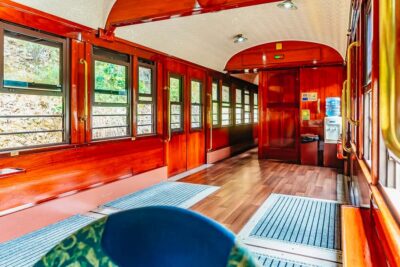
From Cairns: Self-Guided Kuranda Trip with Train and Skyrail
Read our review →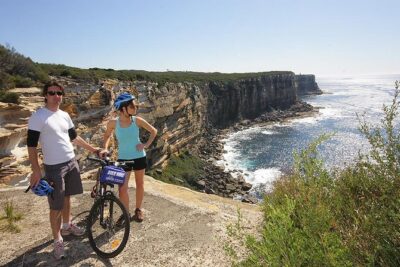

Bundaberg: Brew Tasting and Self-Guided Gallery Tour
Read our review →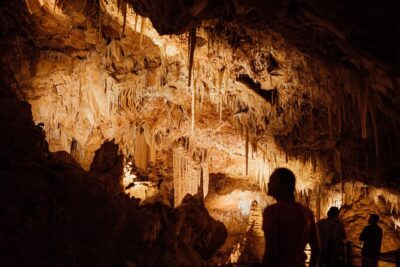
Self-Guided Ngilgi Cave Ancient Lands Experience
Read our review →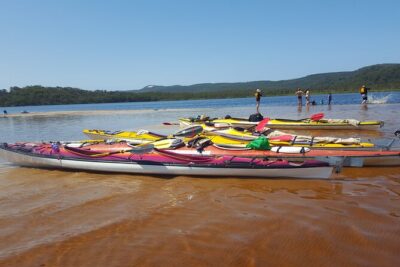
Mammoth Cave Self-guided Audio Tour (Located in Western Australia)
Read our review →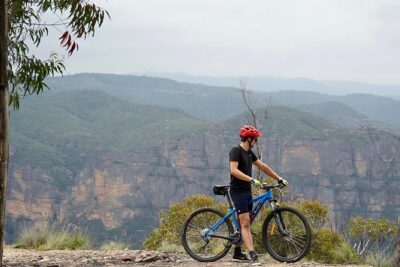
E-bike (electric) – Blue Mountains – Hanging Rock – SELF-GUIDED Hire Service
Read our review →
Premium E Bike Hire at the Northern Rivers Rail Trail
Read our review →Browse the lists this tour appears in