
REVIEW · USA AUDIO TOURS
Chicago Self-Guided Audio Tour
Chicago’s best feature is its freedom. For $6, you get audio links and an interactive map covering 15 major sights, then choose your own route, pace, and stopping points. You can begin at Union Station, Navy Pier, the Art Institute, or anywhere else that suits your day.
I like the low price and the wide spread of places, from the Great Hall at Union Station to the Griffin Museum of Science and Industry. I also like that you can split the experience over several days, with links valid for up to six days. The main caution is content length: the audio is short, and some segments may last only a minute or so.
Key points to know before booking

- Fifteen stops across Chicago: Cover museums, parks, architecture, waterfront sights, and observation points in one flexible plan.
- Short English audio segments: The recordings offer background and stories without tying you to a long spoken lecture.
- Self-guided, not GPS-guided: You must choose your route and open the correct stop manually.
- Excellent value at $6: The price works best if you want a simple introduction and plan to explore each attraction on your own.
- Museum entry is separate: Field Museum, Art Institute, Driehaus Museum, 360 Chicago, Chicago History Museum, and Griffin Museum of Science and Industry require their own admission.
- Bring your own setup: You need headphones or earphones, a charged smartphone, and internet access.
How this Chicago audio tour works
This is not a walking group with a guide holding up a flag. It is a private audio experience for your own party. Before your selected date and start time, you receive two access links through the booking platform’s messaging system.
The first link opens a SoundCloud playlist with the attraction recordings. No SoundCloud account is required. The second opens a Google My Maps itinerary, which marks the 15 stops with headphone icons and links each place to its matching audio guide.
There is one practical wrinkle: the map should be opened in your web browser, such as Safari or Chrome, rather than directly in the Google Maps app. That matters because Google My Maps and the regular Google Maps app do not always behave the same way.
You can listen to the playlist before setting out, use it while standing at each sight, or skip places that do not interest you. The suggested order is only a suggestion. You control the route, and you can take breaks or spread the stops across several days.
The audio content is in English. The recordings are designed as short introductions, not hours of narration. That format will suit you if you want quick context before looking around. If you expect a full museum lecture or a detailed substitute for a live guide, you may find the material too brief.
More Audio Tours in the USA:
- Fort Sumter Admission and Self-Guided Tour with Roundtrip Ferry
★ 4.5 · 3,343 reviews - San Francisco: Alcatraz Ticket, Ferry, & Self-Guided App
★ 4.5 · 2,460 reviews - Los Angeles: Hop-On Hop-Off Bus Tour with Audio Guide
★ 3.7 · 2,030 reviews
Union Station begins with grand Chicago architecture
Union Station gives you a strong first stop, especially if you enjoy buildings as much as museums. Its Beaux-Arts design, marble corridors, and soaring Great Hall make the station feel like a civic palace rather than a place where people simply catch trains.
The audio focuses on the station’s film appearances, including The Untouchables and Public Enemies. It also covers the building’s wartime role, famous passengers, and the tunnels below the public spaces.
Your visit here is free, and the suggested listening time is about 20 minutes. I would treat that as the time for the audio and a quick look around, not as a limit on your visit. Since Union Station is an active transportation hub, you can combine this stop with a downtown walking route.
Field Museum puts the famous T-Rex in context

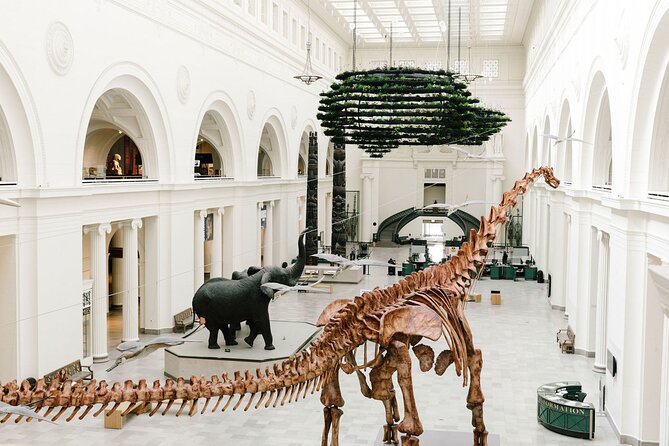
The Field Museum offers much more than its best-known dinosaur. The audio points you toward the museum’s beginnings after the 1893 World’s Columbian Exposition and introduces collections tied to Ancient America, Egypt, anthropology, evolution, and natural science.
This is one of the stops where the audio can help you decide what deserves your time. The museum contains millions of specimens and artifacts, so a short introduction may be useful before you enter. You will need to buy admission separately, and the $6 tour price does not cover it.
Allow much more than 20 minutes if you plan to see the museum properly. The listed time refers to the audio stop, not the full museum visit. If you have limited time, listen first, then choose the galleries that fit your interests.
Buckingham Fountain links beauty with engineering

Clarence F. Buckingham Fountain is an easy outdoor stop in Grant Park. Its large scale makes it hard to miss, but the audio gives you reasons to look closer. You learn about the family legacy behind its creation, the engineering that powers the display, and the symbolism tied to the Great Lakes.
The recording also covers restoration work, seasonal operation, and the fountain’s nighttime light show. Those details help turn a quick photograph into a short lesson in Chicago design and civic pride.
There is no separate admission fee. I like this as a flexible stop because you can listen, watch the water, and move on without planning around opening hours. The fountain’s operation is seasonal, so the audio may discuss features you cannot see at every time of year.
Same place, a different route to walk:
- City Sightseeing Hop-On Hop-Off Bus Tour with Audio Guide
★ 3.0 · 1,083 reviews - Medieval Torture Museum Ticket with Audio Guide and Ghost Hunting
★ 5.0 · 962 reviews - Gettysburg Battlefield Self-Guided Driving Audio Tour
★ 4.5 · 910 reviews - Ryman Auditorium Self-Guided Tour with Souvenir Photo Onstage
★ 4.5 · 903 reviews
The Art Institute rewards a slower visit
The Art Institute of Chicago is one of the major stops, but 20 minutes is only enough for the audio introduction. The collection is far too large for a quick pass, and you need a separate admission ticket.
The recording focuses on how the museum acquired major works, how Chicago’s industrial wealth supported its art collections, and why paintings such as Grant Wood’s American Gothic became part of popular culture. It also points to the competition between Chicago patrons and European collectors.
I like the social history here. You are not only looking at famous paintings. You are also learning how money, ambition, philanthropy, and the city’s growth shaped the museum. Use the audio as a preview, then give yourself time to explore the galleries that interest you most.
Millennium Park and Cloud Gate tell Chicago’s modern story
Millennium Park is an outdoor stop with plenty to see before you even reach Cloud Gate. The audio explains how an industrial site became a major public space, then moves into the politics, construction challenges, and underground engineering that made the park possible.
You also hear about Crown Fountain, Lurie Garden, and the international artists involved in the park. This is useful context because the park’s polished appearance hides a complicated building project beneath it.
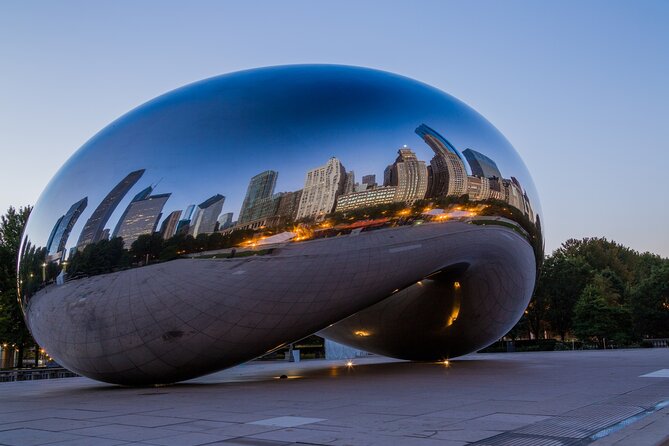
Cloud Gate, better known as the Bean, receives its own recording. The audio covers the sculpture’s design, the challenge of making its surface appear seamless, and the mathematical ideas behind its reflective form. It also explains why the piece works so well as a shared meeting place: you see the skyline, other people, and yourself in one changing image.
Both stops are free. Crowds can affect how long you want to linger at Cloud Gate, but the self-guided format lets you return later if you split the tour across several days.
The Chicago Cultural Center is a free indoor pause
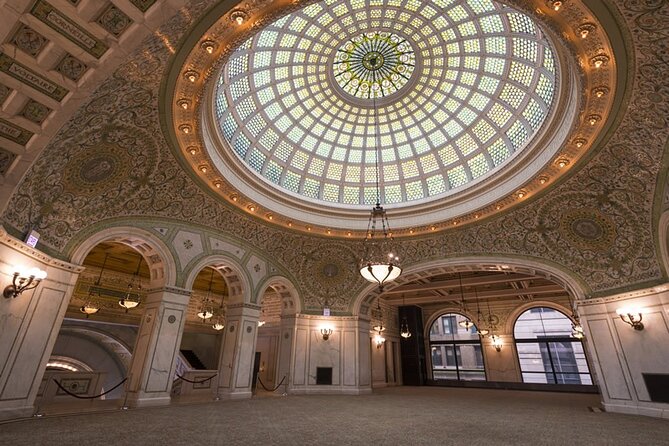
The Chicago Cultural Center is a smart addition to a downtown route because it gives you a grand interior without an admission charge. Its Tiffany glass domes are the main draw, but the building’s earlier life as Chicago’s first central library adds another layer.
The audio covers the building’s transformation into a public cultural center, the craftsmen behind its mosaics, and the political effort that saved it from demolition. You can also learn about its galleries, performances, and public role.
This stop works well when you need shelter or a quieter change of pace. The recording is short, so look up and around after it ends. The building itself carries much of the experience.
The Riverwalk explains how Chicago changed its river
The Chicago Riverwalk is more than a pleasant waterfront path. Its story reaches back to the city’s founding, industrial growth, and the remarkable decision to reverse the river’s flow.
The audio connects that engineering project with the newer public walkway. It also points out architecture visible from water level, urban ecosystems, and the economic importance of the river.
There is no entry fee, and you can join the Riverwalk at a convenient point rather than treating it as a fixed start. I like this stop because it links old engineering with current public space. Keep in mind that the tour does not provide transport, so you must get between attractions yourself.
Navy Pier mixes military history with lakefront entertainment
Navy Pier can feel like an entertainment district, but its earlier purpose was more serious. The audio covers its military training role, its near-demolition, and the efforts that turned it into one of Chicago’s best-known public attractions.
You also hear about engineering beneath the boardwalk, the pier’s cultural and economic role, and environmental work connected with the site. That background gives you a better way to read the pier beyond its rides, shops, and views.
Admission to the pier itself is free, but individual attractions may require their own fees. The audio does not include those costs. This is a good place to choose selectively, since you can spend a short time on the public areas or stay longer if the attractions appeal to you.
The Driehaus Museum shows Gilded Age Chicago indoors
The Richard H. Driehaus Museum offers a very different experience from the parks and public buildings. It occupies a restored Gilded Age mansion filled with decorative arts, Tiffany windows, hand-painted ceilings, and period furnishings.
The audio introduces the original family, the restoration process, the craftsmen behind the interiors, and the social habits of Chicago’s wealthy residents. It also explains how a private home became a public museum.
Admission is separate. This is a stop for you if rooms, furniture, glass, and craftsmanship interest you more than broad city views. The short audio can orient you, but the house deserves time to inspect the details.
360 Chicago turns the skyline into a lesson
At 360 Chicago, the view is the main event, but the audio helps you understand what you are seeing. From the observation deck, it discusses Chicago’s architectural development, neighborhood patterns, famous towers, and the forces that shaped the city’s growth.
You need a separate admission ticket. The recording’s suggested 20 minutes gives you a useful overview, but you may want longer to take in the panorama. Weather and visibility will affect how much you get from this stop, and the self-guided format lets you decide how long to stay.
I like the way this stop connects individual buildings to the wider city. Instead of seeing a wall of towers, you get a sense of how Chicago developed as an urban center.
Lincoln Park Zoo adds science to a free attraction
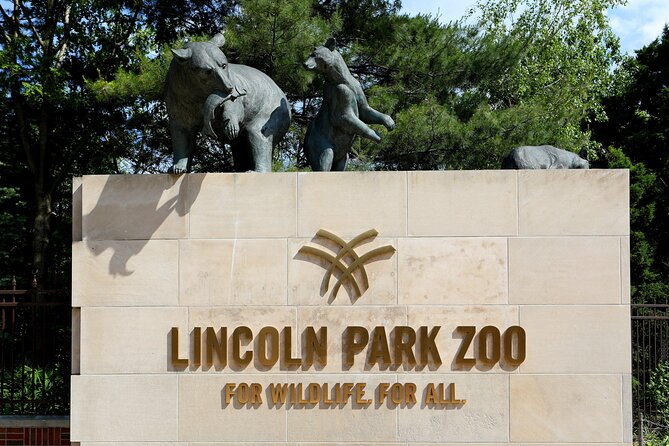
Lincoln Park Zoo is another free stop, and it suits families as well as anyone interested in animal care and conservation. The audio covers the zoo’s growth from a small menagerie into a major conservation institution.
You learn about breeding programs, habitat design, research, endangered species, and the individual animals that became part of Chicago’s public life. The recording also addresses the balance between education, research, and animal welfare.
The suggested audio time is short, while the zoo itself can take much longer. I would use the recording as an introduction, then follow your own interests through the habitats.
Chicago History Museum fills in the city’s human stories
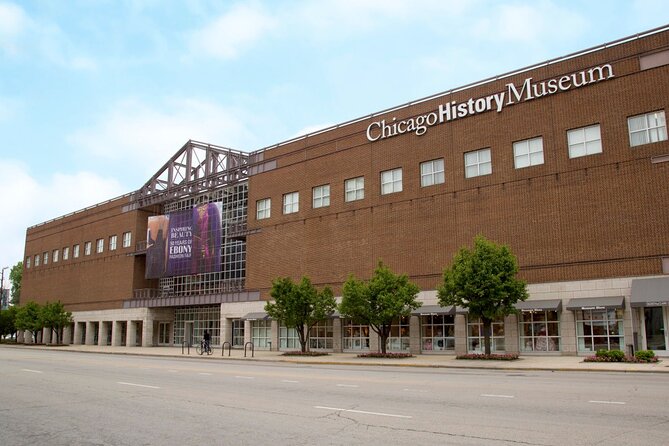
The Chicago History Museum provides the citywide context that the other stops only touch. Its exhibits cover the Great Fire, the World’s Fair, immigration, cultural movements, and the transformation from frontier trading post to major metropolis.
The audio also brings attention to ordinary people who lived through major events. That focus matters because Chicago’s story is not only about architects, industrialists, and politicians. It is also about residents adapting to fire, migration, growth, and change.
Admission is separate. Give yourself more than the listed 20 minutes if you want to read exhibit material. The audio is best used to decide where to focus.
Newberry Library offers a quieter intellectual stop
The Newberry Library is free to visit and provides a calmer counterpoint to the larger museums. Its collections include rare manuscripts, historic maps, and literary material, while its architecture and reading rooms give the building a serious scholarly character.
The audio explains the library’s founding, its role in Chicago’s intellectual life, and the researchers and writers connected with it. It also covers public programs that make the institution more accessible beyond academic research.
This is a good stop for readers, history enthusiasts, and anyone who enjoys old books and maps. Access to particular research collections may follow rules not covered by the tour, so treat the recording as an introduction to the institution rather than a guarantee of access to every item.
Griffin Museum of Science and Industry closes with big ideas
The Griffin Museum of Science and Industry occupies the last remaining building from the 1893 World’s Columbian Exposition. That fact alone makes the building worth attention, before you even reach its displays.
The audio introduces the museum’s origins and highlights major exhibits such as the captured German U-boat and the Pioneer Zephyr train. It also points toward technology, medicine, innovation, and Chicago’s role in industrial development.
Admission is separate, and 20 minutes will not cover a museum of this size. The recording works best as a planning tool. Pick a few subjects you care about, then give those exhibits the time they deserve.
Price, timing, and practical value
At $6 per person, the tour is inexpensive by Chicago sightseeing standards. The value comes from the breadth of the route and the freedom to use only the stops that fit your plans. If you visit several free locations, the cost per stop becomes very low.
The price does not include museum admission, transport, food, drinks, headphones, or internet access. That is important. A day built around the Field Museum, Art Institute, Driehaus Museum, 360 Chicago, Chicago History Museum, and Griffin Museum of Science and Industry will cost much more than $6 once entry tickets are added.
The total experience is described as roughly three to nine hours, but that range reflects your choices. The audio itself is short. One detailed assessment found that many recordings lasted about a minute, with the full audio adding up to less than 30 minutes. I would therefore buy this for orientation and storytelling, not for hours of spoken instruction.
You can use the links for up to six days, so the best value may come from spreading the stops across several days. That also prevents you from rushing through major museums simply to complete a checklist.
Should you book this Chicago audio tour?
Book it if you want a cheap, flexible introduction to Chicago and prefer to explore independently. It is especially useful for mixing free sights with paid museums, planning your own route, and avoiding a fixed group schedule.
Skip it if you want a local guide beside you, detailed museum commentary, transport between stops, or long audio programs at every attraction. The recordings are concise, and you will need to do the actual exploring yourself.
For the right buyer, this is a handy city primer at a very small price. Just bring realistic expectations: you are purchasing a map and a set of short English audio introductions, not a full day of guided narration.
FAQ
How much does the Chicago Self-Guided Audio Tour cost?
The tour costs $6 per person.
How many attractions are included?
The experience includes 15 Chicago attractions, including Union Station, the Field Museum, Millennium Park, Navy Pier, Lincoln Park Zoo, and the Griffin Museum of Science and Industry.
How long does the tour take?
The experience is listed as approximately three to nine hours. Your actual time depends on which stops you visit, how long you remain at each attraction, and whether you split the tour across several days.
Is this a GPS-guided tour?
No. It is not GPS-guided. You receive an interactive Google My Maps itinerary and choose your own route between the attractions.
What language is the audio guide in?
The audio guide is offered in English.
Are admission tickets included?
No. Admission fees are not included for attractions that charge entry, including the Field Museum, Art Institute of Chicago, Richard H. Driehaus Museum, 360 Chicago, Chicago History Museum, and Griffin Museum of Science and Industry.
What do I need to use the audio guide?
Bring headphones or earphones, a fully charged smartphone, and internet access. The audio is accessed through a SoundCloud link, and the map is accessed through Google My Maps in a web browser.
How long are the access links valid?
The private access links remain valid until the tour is complete, for a maximum of six days.
Can I choose my own starting and ending points?
Yes. Since this is self-guided, you can begin and finish wherever you like and visit the attractions in any order.
Just added around the USA
- Smartphone-Guided Walking Tour of Downtown Indianapolis Sights & Stories★ 4.0 · 25 reviews
- Springfield Self-Guided Walking Audio Tour★ 4.0 · 5 reviews
- Smartphone Guided Indianapolis Downtown Sites Audio Walking Tour★ 4.5 · 7 reviews
- Indiana Dunes National Park Self-Guided Audio Tour★ 3.5 · 4 reviews
- Self-Guided Audio Driving Tour in Kancamagus Highway★ 4.5 · 6 reviews
- An Epic Scavenger Hunt: Bloomington Scenic Southern Indiana★ 3.5 · 6 reviews
- Huntsville Rocket City Smart Phone Self Guided Audio (GPS/APP) Walking Tour★ 4.5 · 5 reviews
- Sights of Downtown Houston Smartphone Audio Walking Tour★ 4.0 · 7 reviews
USA Audio Tours, compared.
Fort Sumter Admission and Self-Guided Tour with Roundtrip Ferry
Read our review →
San Francisco: Alcatraz Ticket, Ferry, & Self-Guided App
Read our review →
Los Angeles: Hop-On Hop-Off Bus Tour with Audio Guide
Read our review →
City Sightseeing Hop-On Hop-Off Bus Tour with Audio Guide
Read our review →
Medieval Torture Museum Ticket with Audio Guide and Ghost Hunting
Read our review →
Ryman Auditorium Self-Guided Tour with Souvenir Photo Onstage
Read our review →