
REVIEW · BERLIN AUDIO TOURS
Berlin World War II and Cold War Self Guided Tour via Mobile App
Berlin’s past comes into sharp focus on this three-hour self-guided walk, which links Nazi-era sites, Cold War borders, memorials, and places where ordinary people resisted oppression. You move from Friedrichstraße toward Checkpoint Charlie, stopping at landmarks such as the Führerbunker site, the Holocaust Memorial, and the former Gestapo headquarters.
I like the freedom to pause and replay the material, and I like the low price of $6.80, which makes this an easy way to add historical context to a day in central Berlin. The main consideration is that the narration and written content are AI generated, so you will need to manage your own pace, navigation, and questions.
Key points to know
- Thirteen major stops: The route covers Checkpoint Charlie, Brandenburg Gate, Reichstag, the Holocaust Memorial, Topography of Terror, and several lesser-known memorials.
- Flexible audio walking: Start, pause, stop for food, and replay sections whenever you like.
- Offline access: Download the tour before walking so you can listen without an internet connection.
- A useful central route: The walk begins near Friedrichstraße and finishes at Checkpoint Charlie.
- Strong value at $6.80: You receive one year of access on iOS and Android, with both audio and written material.
- No guide or equipment included: Bring your own phone and headphones, and expect to navigate independently.
A low-cost walk through Berlin’s hardest stories
This experience is less about sightseeing in the usual sense and more about reading the city as evidence. Berlin’s streets carry traces of the Nazi dictatorship, the destruction of World War II, postwar occupation, and the Cold War division that split families and neighborhoods.
The route brings those layers together in a sensible central-city walk. You begin at Friedrichstraße 141A-142 and finish at Checkpoint Charlie on Friedrichstraße. The advertised duration is about three hours, including walking between stops and time spent at them.
That timing matters. You are not being hurried from one site to the next by a group leader. You can pause the audio beside a memorial, sit down for a break, or stop at a nearby restaurant or bar before continuing. If you prefer to listen carefully, three hours may feel brisk. If you mainly want an introduction to the key locations, the schedule should be manageable.
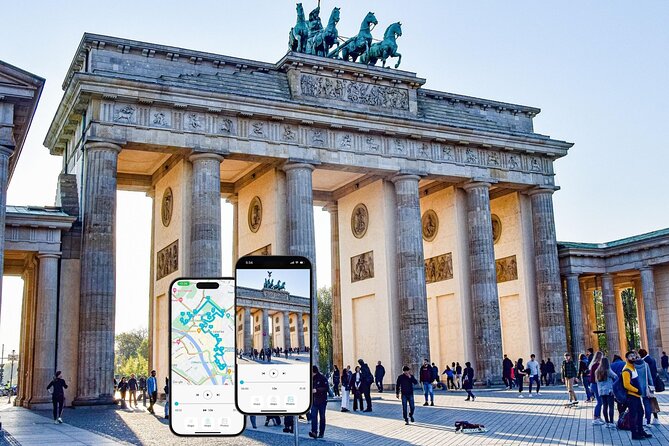
The app supplies an interactive map, stop images, audio, and written text. You can listen again later, which is especially useful because Berlin’s memorials often reward a second look. The one-year access period also means you can return to sections of the tour after the walk.
More Smartphone App Tours in Berlin:
- Berlin Walking Tour with Audioguide on Your Smartphone
★ 4.0 · 11 reviews - Rome: Colosseum & Forum with Audio Guide App -Optional Arena
★ 4.2 · 24,770 reviews - Venice: Grand Canal Gondola Ride with App Commentary
★ 4.1 · 23,020 reviews
Friedrichstraße and the first signs of divided Berlin
The starting point at Friedrichstraße places you in one of central Berlin’s most important corridors. The first stop is the Admiralspalast, a major cultural building with a connection to the city’s Cold War story.
You will not get only a list of dates and buildings. The tour uses this area to introduce Berlin as a city shaped by changing political powers, public culture, and division. Admiralspalast is a useful opening because it shows that Cold War history was not limited to checkpoints and walls. It also affected daily life, entertainment, and the way Berliners moved through their city.
A later stop focuses on the emotional cost of the Berlin Wall. You will learn about tearful farewells and the way families and friends were separated by a political border. This is one of the more personal parts of the walk, since it shifts attention away from government decisions and toward the people who had to live with them.
The route is at its best when it connects a physical place to a human story. Keep your phone charged and have your headphones ready before you begin, since the walk relies on your own device rather than a guide carrying the explanation for you.
Checkpoint Charlie and the pressure of the Cold War
Checkpoint Charlie is the best-known Cold War stop on the route and the finishing point of the tour. It was a major border crossing between East and West Berlin, and the tour explains why this location became a symbol of a divided world.
You will also learn about the confrontation between American and Soviet tanks, when military forces faced one another during a period of severe tension. The event did not become a shooting war, but the image of tanks facing tanks captures how quickly the Cold War could turn dangerous.
Checkpoint Charlie is a powerful place to finish because it gathers many of the tour’s themes in one location: military power, border control, propaganda, fear, and the desire for freedom. At the same time, the area is one of Berlin’s most commercial historical sites. You will need to separate the actual historical meaning from the surrounding shops, displays, and busy streets.
Ending here gives you an easy point from which to continue exploring central Berlin. It also means you can save some time after the final audio section rather than having to return to the starting point.
The Führerbunker site and the final days of Nazi rule
One stop takes you to the location associated with Hitler’s final refuge beneath Berlin. The Führerbunker no longer offers an underground interior to visit, and the site is intentionally understated. That absence is part of the point.
The audio helps explain what happened in the final days of the Third Reich and why this place became so important in the closing stage of the war. You are not visiting a preserved room or dramatic museum set. Instead, you are using the information in the app to understand an ordinary-looking location connected to extraordinary events.
This stop suits you if you want context rather than spectacle. It may feel less visually satisfying than a formal museum, but the lack of a grand monument encourages a more sober response. The site also fits the broader purpose of the tour: Berlin’s history is often found beneath normal streets and behind unremarkable façades.
More Audio Tours in Berlin:
- Berlin: Solar Powered Sunset Catamaran Cruise & Audio Guide
★ 4.6 · 1,043 reviews - Berlin: Boat Sightseeing Cruise with Audioguide
★ 4.6 · 947 reviews - Berlin: Self-Drive Boat Tour
★ 4.9 · 430 reviews - Berlin Self-Drive Trabi Tour with Guide
★ 4.5 · 410 reviews
Memorials to resistance and personal courage
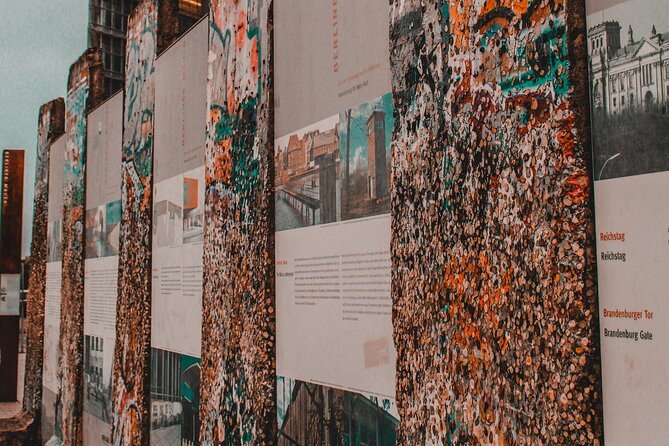
The walk includes a memorial to 96 parliamentarians who opposed the Nazi regime and lost their lives defending democracy. This stop brings political resistance into the story and reminds you that opposition existed, even under a dictatorship built on fear and control.
Another memorial honors Johann Georg Elser, the carpenter who attempted to assassinate Hitler and nearly changed the course of history. His story adds a different angle. He was not a famous general or senior politician. He was an individual who acted on his own conviction and accepted enormous personal risk.
I like these stops because they prevent the tour from becoming only a survey of state crimes and military events. They ask you to consider the choices made by people who resisted, often without knowing if their actions would succeed.
The audio format works well here. A short explanation can give meaning to a memorial that might otherwise be easy to pass without understanding. Since you can replay each section, you can take a few minutes to look closely at the memorial before moving on.
The Holocaust Memorial and the weight of absence
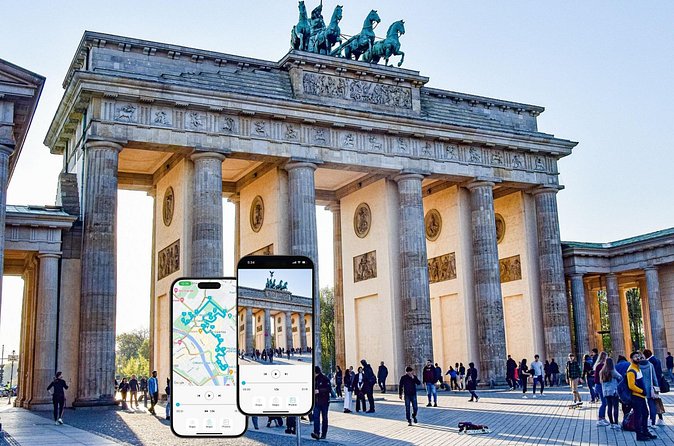
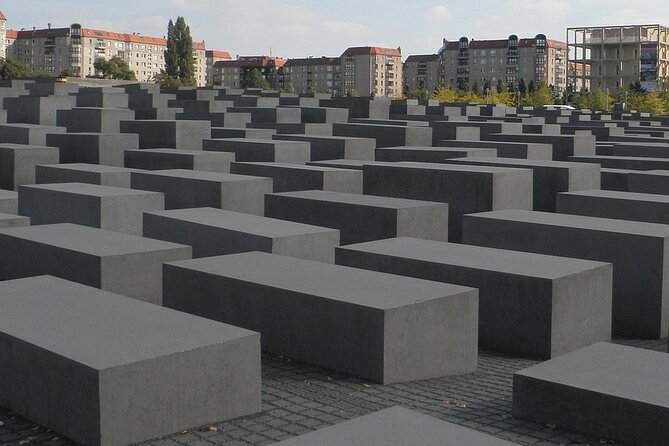
The Memorial to the Murdered Jews of Europe contains 2,700 concrete blocks arranged across a large open site. The changing height and uneven ground create a strong physical experience, but the meaning is not delivered through one simple message.
The tour explains the memorial’s purpose and connects it to the millions of Jewish people murdered during the Holocaust. You should give yourself time here. Even if the audio section is short, the site itself deserves quiet attention.
This stop is also a reminder that memorials are not museums. The outdoor setting does not provide a full account of the Holocaust, and it cannot replace a longer visit to a dedicated museum or documentation center. What it can do is establish a place for memory in the middle of Berlin, surrounded by the city’s government buildings and busy streets.
If you are walking with children, the blocks and narrow paths can prompt questions. The app gives you a starting point for discussion, but the material is serious and should be approached with care.
The Soviet Memorial in Tiergarten
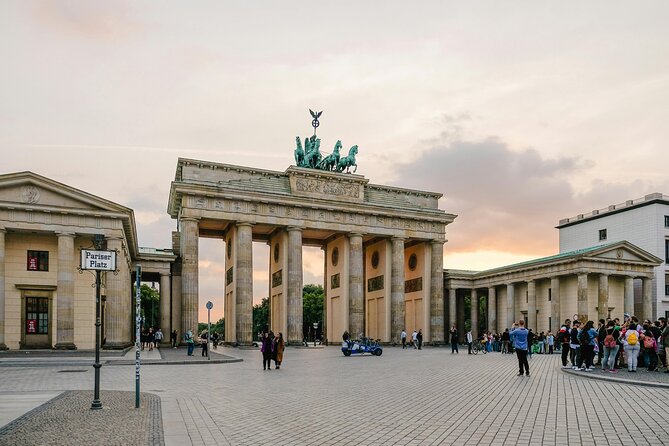
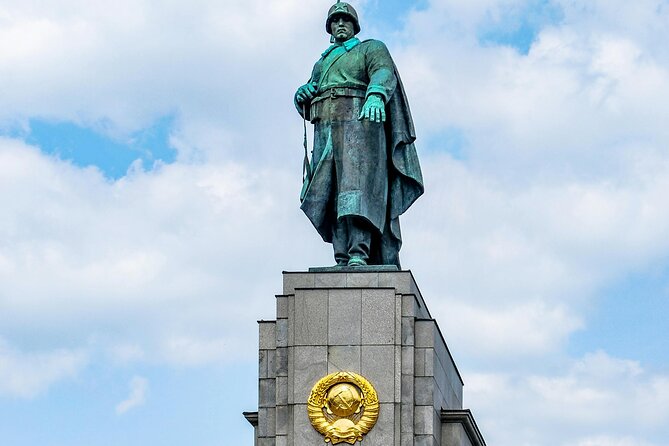
The Soviet Memorial in Tiergarten honors the 80,000 Soviet soldiers who died during the liberation of Berlin. Its location gives the tour another perspective on the war’s final stage and on the military force that defeated Nazi Germany in the city.
This stop matters because Berlin’s World War II story cannot be told only through German sites. The memorial points to the huge human cost paid by Soviet forces and to the complicated postwar political order that followed victory.
The route’s inclusion of this memorial broadens the walk beyond the most familiar central landmarks. It also shows how Berlin’s memorial culture reflects different national memories. You may find the stop particularly useful if you want to understand how the city’s postwar symbols were shaped by the Soviet presence.
Jewish children saved during the Holocaust
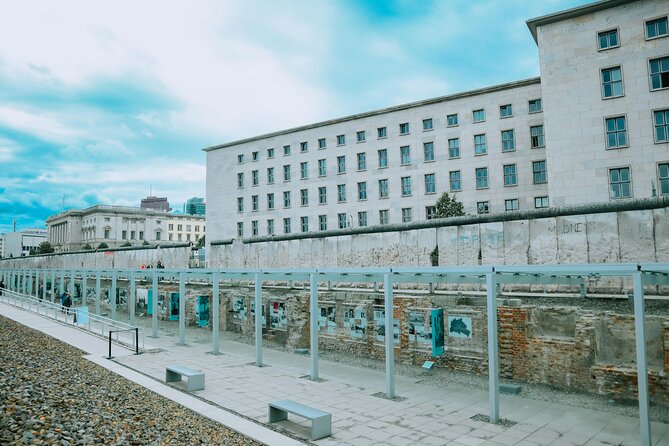
Another memorial honors the 10,000 Jewish children who were saved, while also remembering the many others who were killed. It offers a more personal entry into the Holocaust story by focusing on children and the families affected by rescue, separation, and loss.
This stop adds an important contrast to the larger Holocaust Memorial. Instead of presenting mass murder through a vast field of concrete blocks, it directs your attention to individual lives and the difficult reality of children being separated from their families in the hope of survival.
The subject is painful, but it helps show that the Holocaust involved both organized murder and the desperate efforts of people trying to save others. The app’s written option is helpful if you prefer to read quietly rather than listen while standing at the memorial.
Brandenburg Gate and the Reichstag
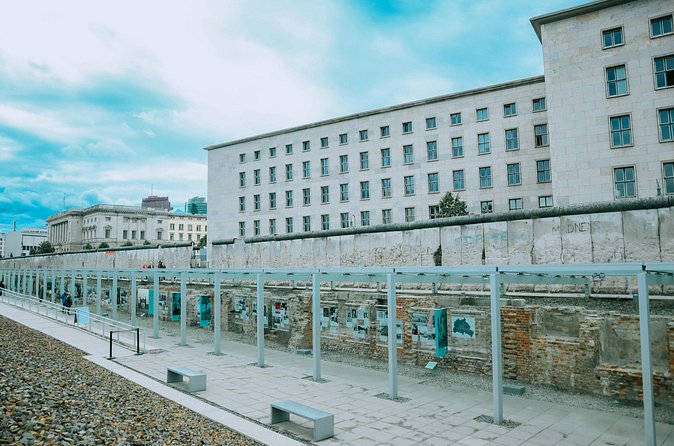
Brandenburg Gate is one of Berlin’s most recognizable landmarks, yet its meaning has changed repeatedly. The tour connects the gate to Napoleon’s marches, Cold War protests, and the later idea of German unity.
This is a good example of why a guided explanation helps. Without context, you see a handsome neoclassical gate. With context, you see a structure used by different political powers and later adopted as a symbol of a reunited city and country.
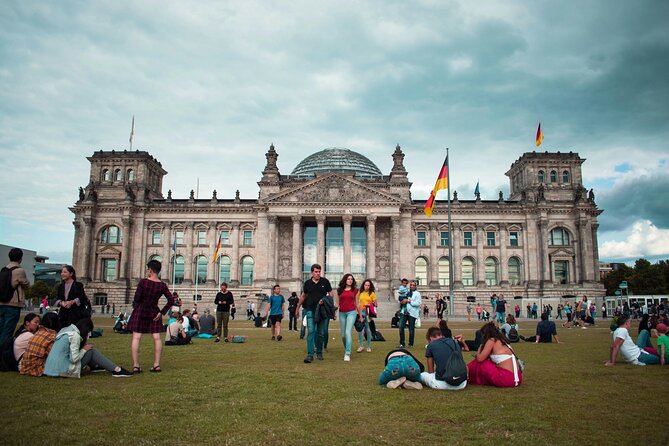
Nearby, the Reichstag introduces Germany’s parliamentary story. The tour explains how the mysterious Reichstag fire changed the course of history and helped the Nazi regime tighten its control. The building now houses the Bundestag, Germany’s federal parliament, so the stop links the collapse of democracy with the country’s present political system.
You will view the Reichstag from outside as part of the walking route. The information is useful, but this experience does not include entry to the building, a dome visit, or a scheduled parliamentary tour.
Detlev-Rohwedder-Haus and the machinery of power
The Detlev-Rohwedder-Haus is one of the more unusual stops. Its story crosses several periods: it began as a Nazi prestige project and later became a Soviet headquarters.
That change in use shows how buildings can outlast the governments that created them. A structure may be designed to project authority, then be taken over by a new power and given a different political purpose.
You might not recognize the building’s importance simply by walking past it. This is exactly where the app’s images and explanations earn their place. The route asks you to look again at architecture that could otherwise fade into the city background.
Topography of Terror and the machinery of repression
The Topography of Terror occupies the former site of institutions that helped organize Nazi oppression, including the Gestapo and SS. It is one of the most direct stops on the walk because it focuses on the agencies that enforced dictatorship through surveillance, imprisonment, and terror.
The site is a strong counterpart to the resistance memorials. One shows people trying to oppose the regime. The other shows the administrative machinery used to control and punish people.
The app can prepare you for the location, but you should know that this tour does not replace a full visit to the Topography of Terror documentation center. If you want detailed exhibitions, photographs, and extended historical material, plan extra time there after the walking tour.
What the app does well, and where it asks more of you
The main strength is flexibility. You can begin when convenient, pause whenever you need, and listen again later. The audio and written guide are available for one year on both iOS and Android, so the purchase is not limited to one afternoon.
Offline access is especially practical. Download the tour before you set out, then rely on the stored route and content rather than using mobile data at every stop. The interactive map and stop images also make it easier to confirm that you are in the right place.
The trade-off is the absence of a human guide. Nobody will answer a follow-up question, adjust the route for your interests, or notice when the group needs a break. The audio and written material are AI generated, so I would treat the experience as a convenient introduction rather than the final word on Berlin’s past.
You also need your own phone and headphones. Neither is provided, and there is no transport included. Most people can participate, service animals are allowed, and the route is near public transportation, but the information does not specify a fully step-free route.
Is $6.80 good value?
At $6.80 per person, this is inexpensive for a three-hour historical route covering 13 stops. The value becomes even better if you use the one-year access to revisit sections or repeat the walk with a companion.
You are paying for a flexible digital guide, not a traditional guided tour. That means the price is attractive if you like exploring independently and already have a phone. It is less suitable if you want lively conversation, expert answers, or a carefully managed group experience.
The free cancellation policy allows a full refund when you cancel at least 24 hours before the start time. Cancellations inside that window are not refunded, so keep the cutoff in mind when making plans.
Who should book this Berlin walk?
I would recommend it to first-time visitors who want a clear introduction to Berlin’s Nazi and Cold War landmarks without committing to a formal group tour. It also suits history-minded visitors who prefer to stop often, read at their own speed, and revisit information later.
It works well for a solo explorer, a couple, or a private group because only your group participates. Families may appreciate the ability to pause and discuss difficult subjects, though the material is serious and not designed as a child-focused activity.
I would look elsewhere if your priority is an in-depth museum experience, a local historian, or a route with guaranteed live assistance. This tour gives you structure and context, but you supply the attention, navigation, and follow-up questions.
Final recommendation
Book this experience if you want a low-cost way to connect Berlin’s major World War II and Cold War sites into one walk. The strongest features are the flexible pacing, replayable content, offline map, and range of stops, especially the resistance memorials, Holocaust Memorial, Topography of Terror, and Checkpoint Charlie.
Bring headphones, download the tour before leaving, and allow extra time at the memorials. If you approach it as a well-organized introduction rather than a substitute for every museum in Berlin, it offers solid value and a useful way to understand what you are seeing.
FAQ
How long does the self-guided tour take?
The tour takes approximately three hours, including time spent at the stops and walking between them.
Where does the tour start?
It starts at Friedrichstraße 141A-142, 10117 Berlin, Germany.
Where does the tour end?
The tour ends at Checkpoint Charlie, at Friedrichstraße 43-45, 10117 Berlin, Germany.
Is a human guide included?
No. This is a self-guided mobile tour, so no human guide is provided at the locations.
What is included with the mobile ticket?
You receive one year of access on iOS and Android, audio and written guide content, images to identify stops, an interactive map, and offline access after downloading the tour.
Do I need internet access during the walk?
No. You can use the tour offline once it has been downloaded.
Do I need to bring my own headphones?
Yes. Physical devices and headphones are not included.
Can I cancel for a full refund?
Yes. You can receive a full refund if you cancel at least 24 hours before the experience start time. Cancellations made less than 24 hours before the start time are not refunded.
Just added around Berlin
- Love and War in Berlin: Self-Guided Story Puzzle Walk★ 5.0 · 7 reviews
- Self-Guided Audio Tour-The Fall of the wall: A light for humanity★ 4.5 · 8 reviews
- Berlin Highlights Self guided scavenger hunt and Walking Tour★ 4.5 · 4 reviews
- First Profiler Berlin: Private Self-guided Outdoor Escape Game★ 3.5 · 3 reviews
- Berlin Walking Tour with Audioguide on Your Smartphone★ 4.0 · 11 reviews
- Kreuzberg’s Secret Society: Exploration Game and Tour★ 4.5 · 3 reviews
- Berlin Scavenger Hunt and Highlights Self-Guided Tour★ 4.0 · 7 reviews
- Berlin Wall: Greatest Escapes Self-Guided Walking Adventure★ 4.5 · 27 reviews
Berlin Audio Tours, compared.

Berlin: Solar Powered Sunset Catamaran Cruise & Audio Guide
Read our review →
Berlin: Boat Sightseeing Cruise with Audioguide
Read our review →


Berlin: Panoramic Boat Tour with Bilingual Audio Guide
Read our review →

Berlin: Self-Drive City Sightseeing Tour in a Mini Hot Rod
Read our review →
Browse the lists this tour appears in