
REVIEW · AMSTERDAM AUDIO TOURS
Amsterdam: Self-Guided Food Tour in De Pijp Neighbourhood
Amsterdam’s De Pijp is best understood one bite at a time. This self-guided route leads you from FEBO on Ferdinand Bolstraat to family-run food counters near the Albert Cuyp Market, with Dutch staples mixed with Surinamese, Israeli, and Japanese specialties.
I like the freedom to set your own pace, and I like that the route points you toward local food heroes rather than polished tourist restaurants. The PDF also adds useful neighborhood stories, directions, restaurant suggestions, and a free three-day Amsterdam itinerary.
The catch is that the food is not included in the $15 booking price, and opening hours can change. You should budget about €20 per person for tastings, check the schedule carefully, and expect that some stops may be closed even though at least six are intended to be available.
Key points at a glance
- Seven days of validity: Use the route anytime during the seven-day validity period rather than rushing through one fixed tour slot.
- Eight possible food stops: The route includes croquettes, pom, Israeli deli foods, herring, kibbeling, poffertjes, stroopwafels, takoyaki, and fries.
- Albert Cuyp Market setting: You explore Europe’s largest outdoor day market while moving between food stops in De Pijp.
- Discounts at seven locations: Each person needs their own PDF guide on their phone to receive the special tastings and discounts.
- Vegetarian choices: Vegetarian food is available at seven stops, but the experience is not suitable for vegans or people with gluten intolerance.
- Plan for changing hours: One stop has already been unavailable on some visits, and an early start does not guarantee every stop will still be open later.
Why De Pijp makes a good food-tour setting
De Pijp gives you a useful snapshot of Amsterdam’s everyday food culture. The area is closely tied to the Albert Cuyp Market, where market stalls, snack counters, specialty shops, and small eateries sit within an easy walking route.
The point is not simply to collect samples. The PDF explains the people and businesses behind them, so you get some context with your lunch. That matters in a neighborhood where the food reflects Amsterdam’s connections with Indonesia, Suriname, Israel, Japan, and traditional Dutch cooking.
You are also free from the pace of a group. If you want to linger at the market, take a photograph, or sit down between savory stops, you can. If a shop is busy, you can move on and return later, subject to opening hours.
This flexibility is the main reason I would choose this experience over a standard guided tasting for some visitors. It works well for independent travelers who like to follow a plan but do not want a guide setting every minute.
More Food and Drink Tours in Amsterdam:
- Amsterdam Self-Guided Food Tour in De Pijp Neighbourhood
★ 4.0 · 31 reviews - Amsterdam: Self-Guided Food Tour in De Jordaan Neighbourhood
★ 3.4 · 10 reviews - Food Tour Amsterdam’s Jordaan District Self-Guided
★ 3.5 · 4 reviews
Start at FEBO with a Dutch croquette
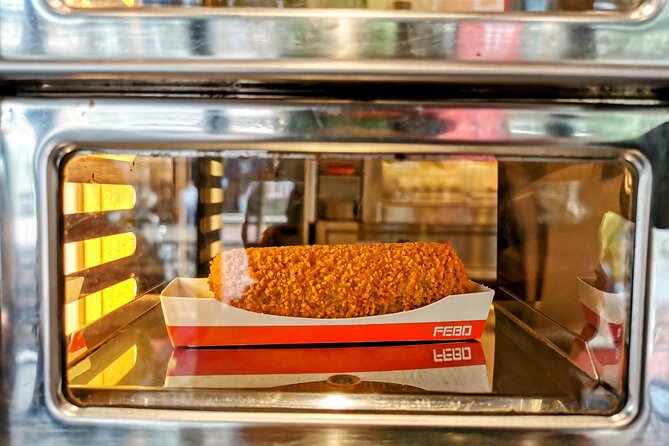
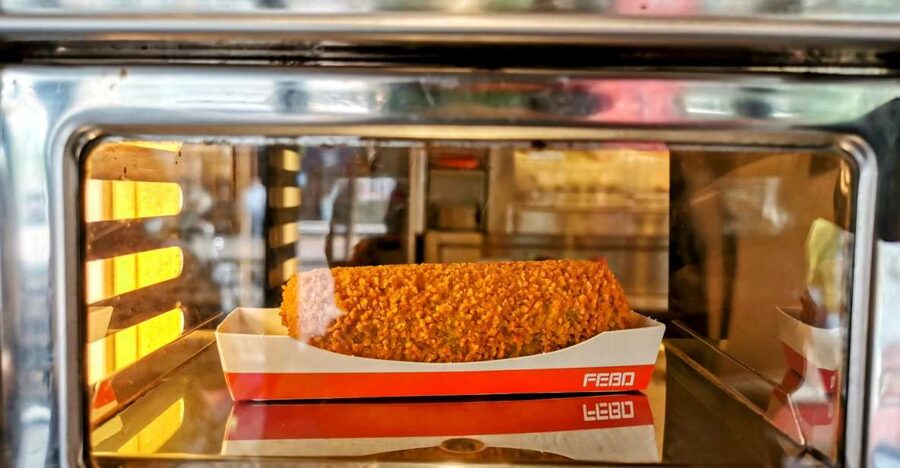
The route begins at FEBO on Ferdinand Bolstraat, a fitting place to start with a traditional Dutch croquette. FEBO is known for its wall of heated snack compartments, where you select food from small windows after paying.
Here, the croquette gives you a fast introduction to the Dutch snack-bar tradition. It is savory, crisp, and designed to be eaten without ceremony. The stop also sets the tone for the rest of the route: small portions, familiar local foods, and plenty of chances to compare Amsterdam’s classic snacks with newer international flavors.
Keep in mind that the route is designed as a tasting walk, not a series of full meals. The food adds up quickly. Sharing larger portions, when possible, is sensible, especially if you are traveling with someone and want to reach the sweet stops at the end.
Taste Suriname through pom and rice
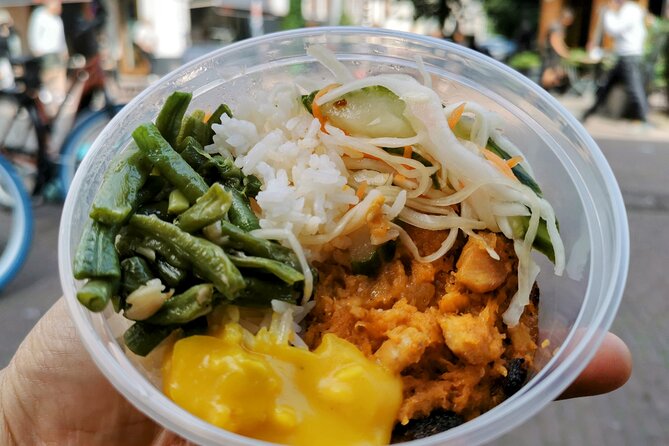
The Surinamese stop is one of the more substantial tastings. You receive pom, an oven-baked root-plant dish with chicken, along with long beans, rice, homemade pickles, and hot sauce.
Pom is associated with Suriname’s national cuisine, and this stop gives you a clearer sense of how varied Amsterdam’s food culture can be. The mix of soft root vegetable, chicken, rice, sour pickles, and heat offers more than a quick fried snack.
The portion may also be one of the reasons you should pace yourself. If you eat every stop in full, you can feel full well before the poffertjes and stroopwafel. I would treat this as a small meal to share if you want to experience the entire route.
Vegetarian food is available at seven stops, but you should confirm what is offered at this particular business. The overall route is not suitable for vegans, and the food includes bread and other gluten-containing items.
An Israeli deli stop with brisket and chicken roulade
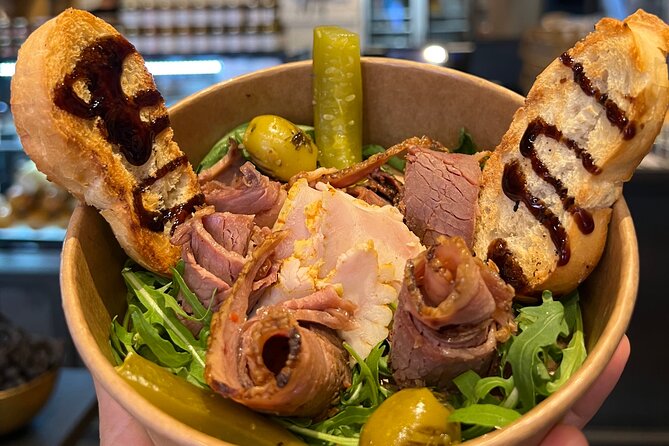
The route then shifts to an Israeli-style boutique deli. The tasting includes smoked beef brisket and chicken roulade, served with an Israeli pickle, olives, and bread with balsamic vinaigrette.
This is a useful contrast with the earlier Dutch and Surinamese foods. Instead of one single national dish, you get a small plate built around deli meats, sharp pickles, olives, and bread. It is the sort of stop that helps explain why De Pijp works so well for this type of walk: several food traditions appear within a compact neighborhood.
There is a practical issue here. The route description calls these exclusive tastings and discounts, but the exact amount served can vary with the business and its opening conditions. Think of the food as a chance to sample a specialty, not a guaranteed full deli lunch.
More Food Tours in Amsterdam:
- Bologna: Self-Guided Food Tasting Tour with Vouchers
★ 4.0 · 140 reviews - Bologna: Audio-Guided Archiginnasio Visit with Food Tasting
★ 3.3 · 79 reviews - Bologna: Clock Tower Audio Guide and Food Tasting
★ 4.4 · 58 reviews - Mornington Peninsula Self-Guided Bike Tour | Food & Wine Region
★ 5.0 · 44 reviews
Fresh herring and fried cod at the fish stall
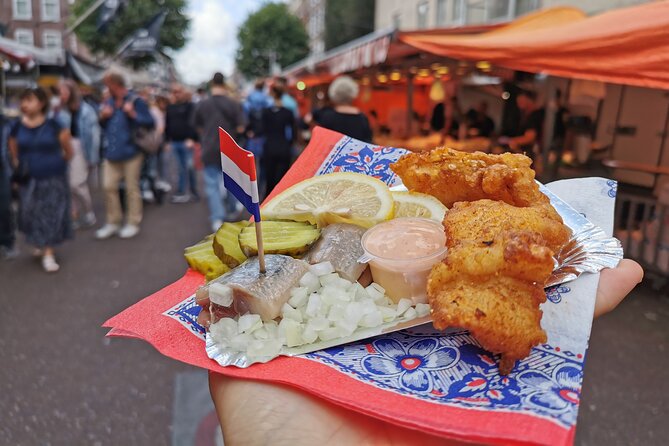
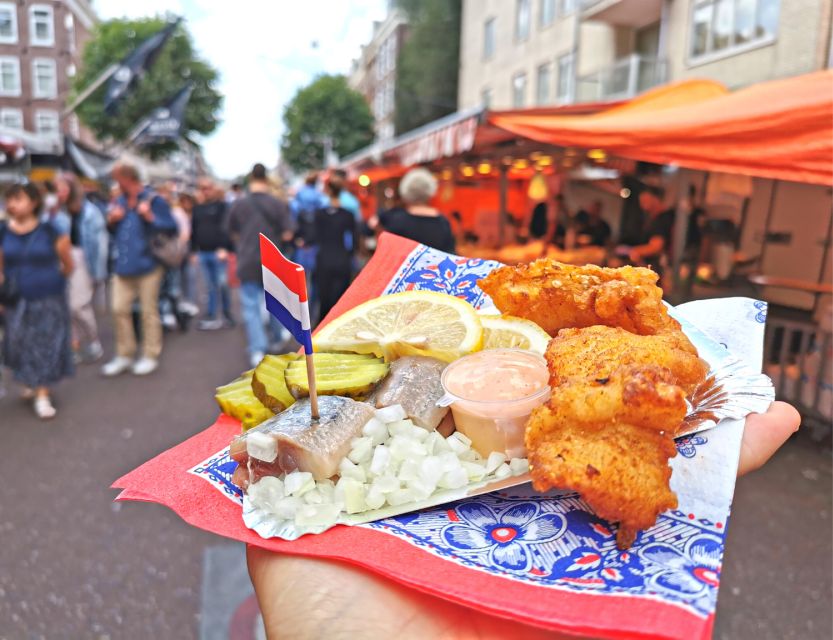
The fish stop brings you back to classic Dutch flavors. You can try fresh herring and kibbeling, which is fried cod.
Herring is one of the foods many visitors associate with the Netherlands, but it is different from the sweet pastries and fried snacks elsewhere on this route. Kibbeling is easier for many first-time tasters, with pieces of cod in a crisp coating. Having both gives you a better comparison between a traditional raw fish preparation and a familiar fried one.
This stop is also a reminder that market food is affected by supply, service, and opening hours. The route may include a fish stall, but the exact availability can change. Since the experience runs rain or shine, weather can also affect how pleasant it is to wait or eat outdoors.
Poffertjes cooked in front of you
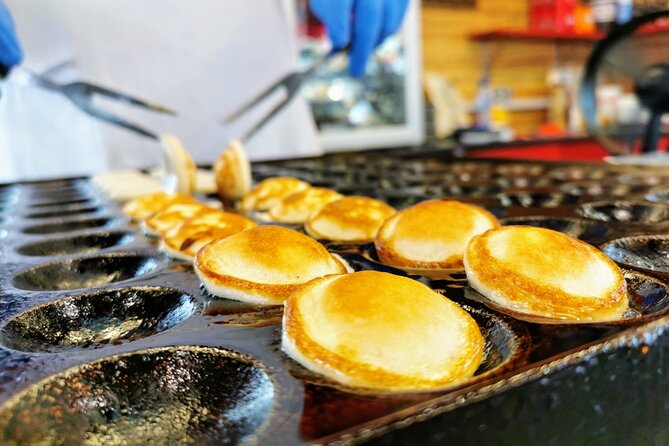
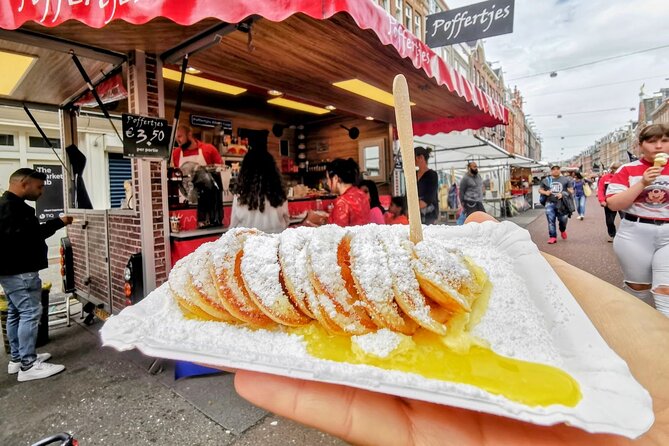
The sweet course starts with poffertjes, the tiny Dutch pancakes cooked until they bubble. Watching them being made is part of the appeal. You get a warm snack with a bit of theater, rather than a pastry simply handed over from a display case.
Poffertjes are small, but do not let their size fool you. After the croquette, pom, deli food, and fish, even a modest serving can feel like a lot. If you are visiting with a companion, splitting portions is the best way to keep room for the final stops.
This is one of the route’s most family-friendly moments, though the tour itself is not presented as a children’s activity. The food is straightforward, easy to recognize, and served in a way that makes the preparation part of the experience.
Traditional stroopwafels from a long-running family business
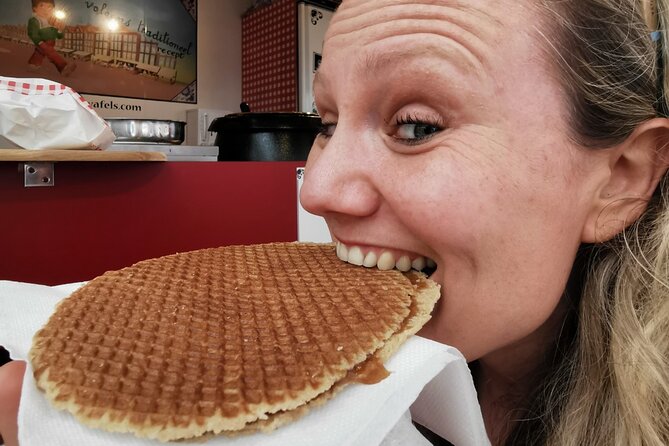
The stroopwafel stop focuses on a Dutch classic: two thin waffles joined with syrup. The business has been making Goudse stroopwafels for more than 45 years, giving this stop a stronger sense of continuity than a generic pastry counter.
You are not just checking off a famous Amsterdam snack. You are tasting a product associated with Gouda-style waffle making and a family business that has spent decades refining it. The warm, syrupy texture is a useful contrast to the crisp croquette and the savory foods earlier in the route.
One important detail comes from the practical experience of doing the route: a tasting label can sometimes promise more than the actual serving. At one stop, the special tasting was limited to peppernuts rather than a broad sample. I would read the PDF carefully and treat the discounts as a helpful extra, not the sole reason to book.
Osaka-style takoyaki in the middle of Amsterdam
The route then makes another sharp turn, this time to takoyaki. These are Japanese batter balls prepared by a chef from Osaka working with a ramen specialist from Tokyo.
Takoyaki is a welcome change after several Dutch and European foods. The balls are cooked in a special mold and served hot, giving you a different texture and flavor profile from the pastries, croquettes, and fries.
This stop also shows the route’s wider purpose. Amsterdam food culture is not limited to old Dutch recipes. The city absorbs cooking traditions from many places, and De Pijp provides a compact setting for seeing those influences side by side.
As with the other stops, the food portion is not included in the initial booking price. You pay for your own tastings, and prices can change. Bring both a card and some cash so you are not caught short at a small stall or family-run business.
Finish with award-winning fries and patatje oorlog
The final stop is hand-cut fries served with patatje oorlog, a Dutch combination of peanut sauce, mayonnaise, and onions. The name translates roughly as war fries, a reference to the crowded mix of sauces.
This is a filling way to finish. The fries are hand-cut and described as award-winning, but the main attraction for many visitors will be the sauce combination. Peanut sauce and mayonnaise create a creamy, salty base, while onions add bite.
If you have eaten every previous serving yourself, this may be too much at the end. I would share the fries if possible, or deliberately eat lightly at the first few stops. The route rewards restraint. You get more variety when you avoid treating every tasting as a full meal.
How the self-guided format affects the day
The experience is valid for seven days, which is different from saying it lasts seven hours or one full day. You should check the available starting information and use the guide during that validity period.
That time window is helpful because you can fit the food walk around museums, canal trips, or other Amsterdam plans. It also gives you a chance to return to De Pijp at a sensible time if one business is closed.
The trade-off is that nobody is there to adjust the plan for you. A guide would know which stop is open, how long to wait, and when to change course. Here, you use the PDF and your phone to manage the route yourself.
The directions include Google Map links, which should make the route easier to follow. You need a charged smartphone and internet access. Each person in your party also needs their own copy of the PDF on their phone to qualify for the discounts and special tastings.
Opening hours are the biggest practical concern. The route says at least six stops will always be open, but actual visits have produced mixed results. One person faced a long wait at the second stop and found another stop absent. Another reached only the first three locations before the rest had closed, despite following the suggested timing.
I would start early enough to protect your options, but I would not assume that early means perfect. Check current opening information, keep the PDF available, and stay flexible.
Is the $15 price good value?
The $15 price is for the self-guided tour booking for one group, with food and drinks extra. The listed food cost is around €20 per person, so a solo visitor should think of the total as the guide fee plus roughly €20 for tastings.
For two people, the value improves because the guide fee covers the group while you can share some of the food. Sharing is also practical because the route includes several filling items. If every person buys every serving separately, the total can rise quickly.
The guide’s value comes from research, navigation, business introductions, special deals, and neighborhood information. It is not a bargain meal. You are paying for a planned route that removes much of the work of finding suitable food stops yourself.
That value depends on how many locations you reach. If six to eight businesses are open, the cost looks reasonable for a full afternoon of varied tastings. If only three are available, the experience feels less worthwhile, particularly if you have paid for food at each stop.
The free three-day Amsterdam itinerary and restaurant recommendations add some value beyond the food walk. They may be useful if this is your first visit and you want help planning the rest of your stay.
Who should book this food walk?
I would recommend it to independent eaters who enjoy trying small portions and are comfortable navigating with a phone. It suits people who want Dutch classics but also want to try Surinamese, Israeli, and Japanese food in the same neighborhood.
It is also a good match for couples or small groups who can share portions. Sharing helps you stay hungry long enough to reach the later sweets and fries.
You should think twice if you need a fully guided experience, fixed opening times, or guaranteed access to every stop. The route is rain or shine, and the businesses are not all under the control of the tour provider.
Vegetarians have useful choices at seven stops. Vegans should skip this experience, and it is not suitable for people with gluten intolerance. Wheelchair accessibility is listed, but the food stalls and market setting may still vary in how easy they are to navigate.
Cancellation is flexible up to 24 hours before the experience for a full refund, and you can reserve now and pay later. You receive the booking confirmation and links to the PDF guide and free itinerary within 24 hours of booking.
My verdict: book it if you can stay flexible
This is a promising way to explore De Pijp without signing up for a fixed group tour. The best parts are the food variety, the family-owned businesses, the Albert Cuyp Market setting, and the chance to taste foods that go well beyond the usual Dutch menu.
I would book it for the route and local food suggestions, not because every advertised tasting is guaranteed. Go with another person, bring cash and a card, keep your phone charged, and plan to share. If you can accept changing hours and manage the route yourself, the experience offers a tasty, low-pressure introduction to Amsterdam’s food culture.
If you need certainty, a guide, or a fully included meal, choose something else. The current rating of 3.7 out of 5 reflects that split: the individual foods can be excellent, but the day depends heavily on timing and which businesses are open.
FAQ
Where does the self-guided food tour begin?
It begins at FEBO on Ferdinand Bolstraat in Amsterdam’s De Pijp neighborhood.
How long is the tour?
The booking is valid for seven days. It is not presented as a fixed-duration guided tour, so you follow the route at your own pace during that validity period.
How many food stops are included?
The route includes six to eight family-owned businesses. It advertises eight possible stops, with at least six intended to be open, but opening hours and prices can change.
Is food included in the $15 price?
No. The booking covers the self-guided tour, directions, discounts, and related information. Food tastings and drinks are extra, with total food costs estimated at around €20 per person.
Are vegetarian options available?
Yes. Vegetarian options are available at seven stops. The experience is not suitable for vegans.
Is the tour suitable for people with gluten intolerance?
No. The tour is listed as unsuitable for people with gluten intolerance.
What should I bring?
Bring a charged smartphone, internet access, a credit card, and cash. Each person joining must have their own copy of the PDF guide on their phone to receive the discounts and special tastings.
Just added around Amsterdam
- Van Gogh Museum Ticket with Audio Guide and Unlimited Access Time★ 5.0 · 25 reviews
- Amsterdam Ghost Hunt: Self-Guided Mystery Adventure★ 4.5 · 4 reviews
- Self Guided Tours Amsterdam With 100 Captivating Audio Stories★ 4.5 · 3 reviews
- Self-Guided Audio Tour of The Red Light District★ 5.0 · 5 reviews
- Food Tour Amsterdam’s Jordaan District Self-Guided★ 3.5 · 4 reviews
- Amsterdam Walking Tour with Audioguide on Your Smartphone★ 3.5 · 3 reviews
- Houseboat Museum Amsterdam Self Guided Audio Tour★ 5.0 · 3 reviews
- Romantic Amsterdam: Fairytale or Tragedy? Self-Guided PuzzleQuest★ 5.0 · 2 reviews
Amsterdam Audio Tours, compared.
Amsterdam: 75 Minute City Canal Cruise with Audio Guide
Read our review →
Amsterdam: City Centre Canal Cruise including Audioguide
Read our review →
Amsterdam: Royal Palace Entry Ticket + Audio guide
Read our review →
Amsterdam: Heated Canal Cruise Including Audioguide
Read our review →
Amsterdam: Canal Cruise with Live Commentary & Audio Guide
Read our review →
Amsterdam Sightseeing Canal Cruise with Audio Guide
Read our review →
Amsterdam City Centre Cruise on heated boat with Audioguide
Read our review →
Amsterdam Van Gogh Museum with Audio or Guided Tour
Read our review →Browse the lists this tour appears in