
REVIEW · ISTANBUL AUDIO TOURS
Istanbul: Chora Church (Kariye Camii) & Digital Audio Guide
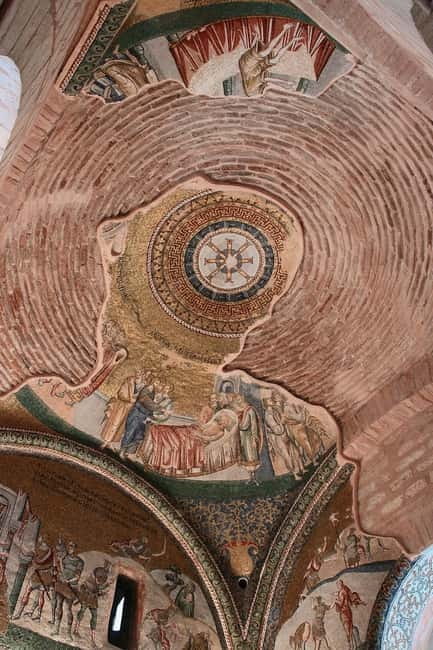
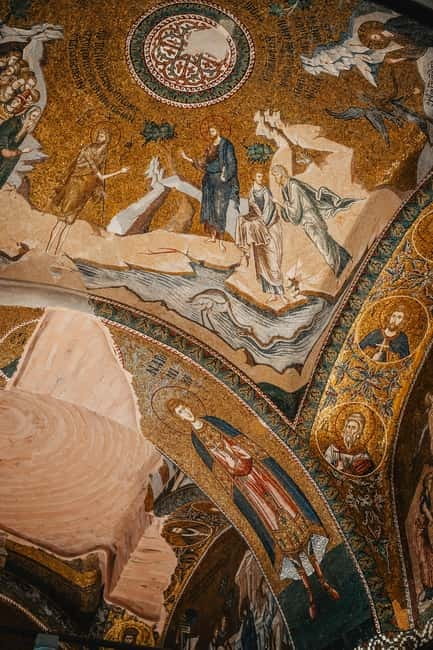
The real reason to visit Kariye Camii is inside: Byzantine mosaics and frescoes cover the walls with scenes from the lives of Christ and the Virgin Mary. Their fine detail and strong colors offer one of Istanbul’s clearest windows into Christian art from the Byzantine period.
I like the freedom of a self-guided visit, and I like the chance to study the church’s unusual Greek-cross and domed design at your own pace. The main drawback is the audio guide. It is included, but one published account found only about five minutes of content, and a free QR-code audio option inside the mosque may be more useful.
Key points at a glance
- The artwork is the main event: Look closely at the biblical scenes, not just the building’s exterior.
- You visit independently: There is no meeting point, live guide, or group itinerary.
- The audio guide may be limited: Download the separate app before you arrive, but consider using the free QR option on site too.
- Prayer times affect entry: The mosque closes 15 minutes before and during prayer between 9 a.m. and 6 p.m.
- Dress rules are strict: Women cover their heads and shoulders, and everyone covers their knees.
- The $35 price buys convenience, not a full tour: It may suit you if you value a prearranged ticket, but the short audio content weakens the deal.
Why Kariye Camii deserves time
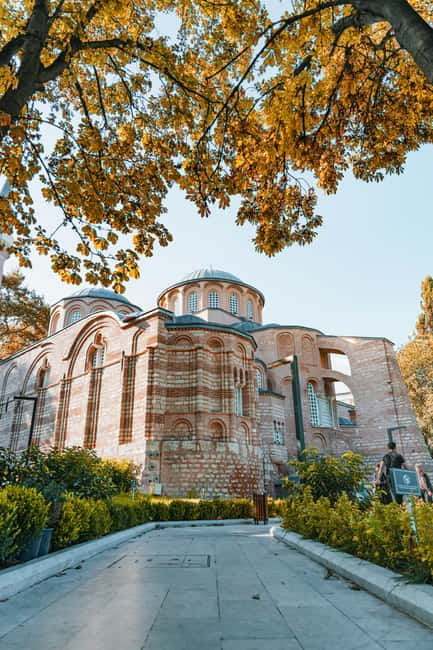
Kariye Camii began as a Byzantine church connected with the monastery of St. Saviour in Chora. The site served religious worship and theological study, and its decoration reflects the importance of Christian teaching through pictures.
The church was built in the 4th century and later converted into a mosque. It is now presented as a place where Byzantine and Ottoman layers meet, although the current visit is shaped by its use as Kariye Mosque. That combination makes the site more than a picture stop. You are looking at a building whose purpose and meaning changed across centuries.
The art is what makes the visit worthwhile. Biblical scenes show the life of Christ and the Virgin Mary in small, carefully arranged images. Look for the details in faces, clothing, gestures, and the use of color. You do not need to be an art scholar to see how much information the artists packed into each panel.
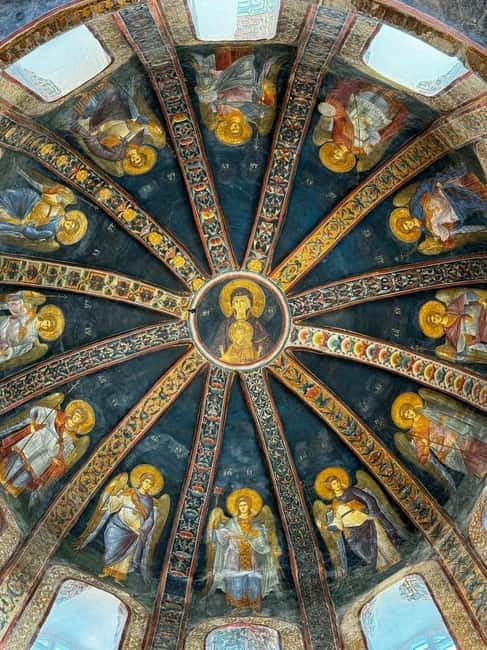
The setting also matters. The domes and cross-shaped plan give the interior a clear central focus, while the wall decoration leads your eye around the space. The architecture and artwork were designed to work together, so pause between rooms rather than rushing straight to the most decorated wall.
More Audio Tours in Istanbul:
- Istanbul: Daytime or Sunset Sightseeing Cruise & Audio Guide
★ 4.8 · 14,430 reviews - Istanbul: Basilica Cistern Fast-Track Entry and Audio Guide
★ 4.6 · 7,521 reviews - Topkapi Palace and Harem Skip-the-Line-Tickets & Audio Guide
★ 4.3 · 4,745 reviews
Arriving at the former Chora Church
You make your own way to Derviş Ali, Kariye Cami Sk. No:18, in Istanbul’s Fatih district. There is no meeting point, transfer, or staff-led walk from another part of the city. That keeps the experience simple, but you need to plan your route independently.
Your entry is handled through the activity provider. The ticket is sent by email, with the stated delivery coming a day before your tour date. Keep the voucher available on your phone, and check the access code before leaving for the site. A reported access-code problem shows why you should not wait until the entrance to discover that the ticket or app is missing.
The attraction is open from 9 a.m. to 6 p.m. every day except Friday, according to the supplied schedule. Prayer closures can interrupt those hours. The mosque closes 15 minutes before prayer and remains closed during prayer times between 9 a.m. and 6 p.m.
That rule affects how you plan the day. If your schedule is tight, arriving earlier gives you more room if a prayer closure begins. Do not treat the stated opening hours as a guarantee of uninterrupted access.
Entering under mosque dress rules
Kariye Camii remains a functioning mosque, so modest clothing is part of the visit. Women must cover their heads and shoulders. Both men and women must cover their knees.
Bring clothing that meets those rules rather than assuming you can enter as you are. The site also asks you to silence your phone and use it only in designated information areas. Food, drinks, umbrellas, large bags, luggage, weapons, and sharp objects are not allowed. Assistance dogs are allowed, while pets are not.
Flash photography is prohibited. That is especially important here because strong light and repeated camera use can be harmful to old decoration. You will get more from the visit by looking carefully than by trying to photograph every surface.
Children under eight enter free when accompanied by an adult and when they have a valid passport or ID card. The information provided does not give a separate child ticket process for older children, so check the booking conditions before paying.
Reading the mosaics and frescoes
Once inside, begin with the overall effect. The mosaics and frescoes are not isolated decorations. They form a visual account of Christian belief, using scenes from the lives of Christ and Mary to make religious stories understandable through images.
The mosaics use small pieces of colored material arranged into faces, garments, architectural details, and backgrounds. Their appeal comes from close inspection. Stand near enough to notice the individual elements, then step back to see how the image fits into the room.
The frescoes add another surface and mood. Their painted scenes help show the range of Byzantine decoration, while the mosaics catch attention through their pattern and color. The combination is one of the site’s strongest features.
You should allow yourself time to look without an audio explanation running constantly. Since the included digital guide may be only about five minutes long, it cannot explain every scene or provide a full account of the building. Treat it as a short introduction rather than a complete tour.
A free QR-code audio tour is reportedly available in the mosque and may offer more detail than the included recording. I would prepare the supplied app in advance, then compare it with the on-site option. That approach prevents the audio guide from becoming the only source of interpretation.
Same place, a different route to walk:
- Istanbul: Bosphorus Sightseeing Cruise Tour with Audio Guide
★ 4.6 · 4,704 reviews - Istanbul: Hagia Sophia Entry Ticket with Audio Guide
★ 4.3 · 2,854 reviews - Istanbul: Topkapi Palace and Harem Ticket with Audio Guide
★ 4.4 · 2,401 reviews - Hagia Sophia Skip-the-Line Ticket & Blue Mosque Audio Guide
★ 4.1 · 1,879 reviews
A building shaped by two traditions
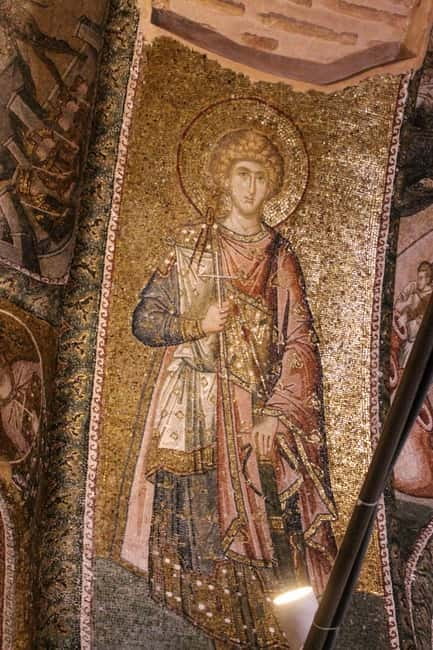
The church’s architectural plan is described as a blend of a Greek cross and a domed layout. That design gives the building a distinctive balance between arms extending outward and a central overhead focus.
Architecture here is not just a backdrop for the artwork. The shape of the rooms controls how you see the mosaics and frescoes. A dome draws your attention upward, while the cross-shaped arrangement helps divide the interior into areas with different visual emphasis.
The later mosque use adds another layer. You will see a Christian building adapted within an Ottoman and Islamic setting, with the site now known as Kariye Camii. The experience is strongest when you respect both parts of that story. It is not simply an old church, and it is not only a mosque visit. It is a place where Istanbul’s religious and artistic past has been repeatedly reinterpreted.
The supplied description calls the site a museum today, while the practical rules and prayer closures make clear that it also functions as a mosque. Plan for a religious site first. That means quiet behavior, modest clothing, and flexibility around worship.
What the digital audio guide adds
The multilingual digital audio guide comes through a separate downloadable app. The download link is also shown on your voucher, so check the email before you arrive. You need a charged smartphone, and the experience does not include a live guide.
The advantage is control. You can pause, replay, and move at your own pace instead of keeping up with a group. You can also spend longer with a scene that catches your eye, which is useful in a small historic interior.
The weakness is depth. A five-minute recording cannot explain the monastery, the conversion into a mosque, the structure of the church, and the iconography in any serious detail. One published evaluation found the guide too short and preferred the free QR audio information inside the mosque.
My practical advice is simple: use the included guide if it helps you get oriented, but do not pay extra for another audio service on site unless you know exactly what it offers. Bring your own background reading if Byzantine art is a main reason for visiting.
There is no named live guide because none is provided. You are responsible for your own route, timing, and interpretation. That suits independent visitors, but it may disappoint you if you expect a historian to point out the most important scenes.
Is $35 fair value?
At $35 per person, this is not the cheapest way to see a historic interior in Istanbul. The price includes admission and the multilingual digital app, but not transportation or a live tour.
The value depends on what you want. If you prefer a prearranged entry ticket, need a simple way to secure admission, and like visiting without a group, the fee may feel reasonable. The one-day validity also gives you a clear window for fitting the site into your plans.
The calculation changes if the audio guide is your main reason for booking. A guide of roughly five minutes offers limited value, especially when a more detailed free QR audio option may be available inside. In that case, you are paying mainly for the ticket and booking convenience.
The overall rating attached to the experience is 4.2 from 19 ratings, with reactions ranging from strong praise for the interior to clear criticism of the short audio. That split makes sense. The building and artwork are the attraction, while the digital commentary is the weaker part of the package.
The ticket conditions also need attention. The information says cancellation is free up to 24 hours in advance, while another note says the ticket is valid for the purchase date and cannot be refunded or exchanged. Because those statements do not sit perfectly together, read the exact conditions shown at checkout before relying on a later date change.
How long to spend inside
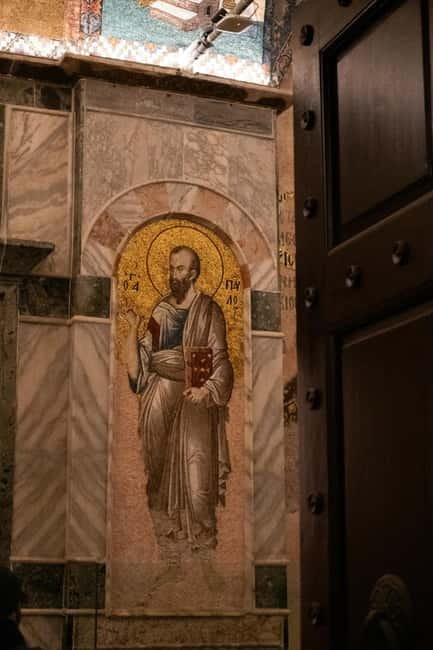
The activity is listed as lasting one day, but that refers to the ticket’s validity rather than a full-day guided program. You are not signing up for hours of scheduled commentary.
Your actual visit can be as brief or as careful as you choose. A quick look will show you the main decoration, but it will miss the details that justify coming here. Give yourself enough time to study several scenes, compare mosaic and fresco techniques, and notice how the dome and cross-shaped plan organize the interior.
Do not build your visit around a narrow arrival time if prayer closures could affect the schedule. The ticket gives you access on the purchase date, yet the site may close shortly before and during prayer. A flexible day plan is safer than a tightly timed connection.
Who should book Kariye Camii?
I would recommend this experience to you if you like historic art, religious architecture, and independent sightseeing. It is also a good choice if you want to see an important Byzantine site without joining a live group.
It works best for visitors who are comfortable using a phone app and doing some reading on their own. You should also be willing to follow mosque etiquette and accept that the visit may pause for prayer.
I would be more cautious if you expect a long, detailed audio tour or a guide who explains each image. The included recording is short, and there is no live guide. Families with young children can benefit from free entry for children under eight, but the dress rules and quiet setting may require extra planning.
Art lovers should give the site priority. The mosaic and fresco program is the main reason to come, and the interior is described as especially impressive. History enthusiasts will also appreciate the way the building connects Byzantine worship, Ottoman use, and modern Istanbul.
Practical tips before you go
- Charge your phone fully: You need it for the ticket and the separate audio-guide app.
- Download before arrival: Do not rely on a weak connection at the entrance.
- Check your access code: Confirm that the voucher displays correctly before you leave.
- Dress for mosque entry: Cover your head and shoulders if you are a woman, and cover knees for everyone.
- Plan around Friday: The stated opening schedule excludes Friday.
- Allow for prayer closures: Entry stops 15 minutes before prayer and during prayer times.
- Leave large bags behind: Luggage and large bags are not permitted.
- Skip flash photography: It is not allowed, and quiet phone use is requested.
- Check the free QR audio option: It may provide more detail than the included five-minute recording.
- Keep your expectations clear: This is an entry ticket with digital commentary, not a guided tour.
Should you book it?
Book Kariye Camii if the mosaics, frescoes, and Byzantine architecture are your priority and you want to visit independently. The ticket gives you a straightforward way to enter a remarkable historic site, but the $35 price is easier to justify for admission convenience than for the audio guide.
Skip this particular package if you mainly want expert explanation. You may prefer a longer live tour or a strong guidebook, while still visiting the church on your own. For everyone else, download the app, check the prayer schedule, dress correctly, and treat the audio as a brief aid rather than the main attraction.
FAQ
Where is Kariye Camii located?
Kariye Camii is at Derviş Ali, Kariye Cami Sk. No:18, 34087 Fatih, Istanbul, in Turkey’s Marmara Region.
Is transportation included?
No. You travel to the attraction independently, and there is no meeting point or included transportation.
Is this a live guided tour?
No. The ticket includes entry and a multilingual digital audio-guide app, but no live guide.
What must I bring?
Bring a charged smartphone. You should also have your ticket or voucher available on the phone.
What are the opening hours?
The church is listed as open from 9 a.m. to 6 p.m. every day except Friday. It closes 15 minutes before and during prayer times between 9 a.m. and 6 p.m.
What clothing is required?
Women must cover their heads and shoulders. Both men and women must cover their knees before entering.
Just added around Istanbul
- Dolmabahce Palace Skip the Ticket Line Entry with Audio Guide★ 4.0 · 6 reviews
- Istanbul Bosphorus Sightseeing Cruise with Audio Guide★ 5.0 · 67 reviews
- Basilica Cistern Skip-the-Ticket-Line Entry with Audio Guide★ 4.0 · 4 reviews
- Hagia Sophia Skip-the-Line Ticket with Audio Guide★ 5.0 · 4 reviews
- Cistern of Theodosius Entry Ticket & Audio Guide★ 3.5 · 6 reviews
- Topkapi Palace & Hagia Sophia Tickets + Audio Guide★ 3.8 · 8 reviews
- Topkapi Palace + Basilica Cistern Tickets & Audio Guide★ 4.5 · 30 reviews
- Skip-the-Line Hagia Sophia Digital Tickets w/Audio Guide★ 4.3 · 23 reviews
Istanbul Audio Tours, compared.
Istanbul: Daytime or Sunset Sightseeing Cruise & Audio Guide
Read our review →
Istanbul: Basilica Cistern Fast-Track Entry and Audio Guide
Read our review →
Topkapi Palace and Harem Skip-the-Line-Tickets & Audio Guide
Read our review →
Istanbul: Bosphorus Sightseeing Cruise Tour with Audio Guide
Read our review →
Istanbul: Hagia Sophia Entry Ticket with Audio Guide
Read our review →
Istanbul: Topkapi Palace and Harem Ticket with Audio Guide
Read our review →
Hagia Sophia Skip-the-Line Ticket & Blue Mosque Audio Guide
Read our review →
Istanbul: Dolmabahce Palace and Harem Fast-Track & Audio
Read our review →Browse the lists this tour appears in