
REVIEW · LISBON AUDIO TOURS
From Lisbon: Alcobaça & Óbidos Self-Guided Tour
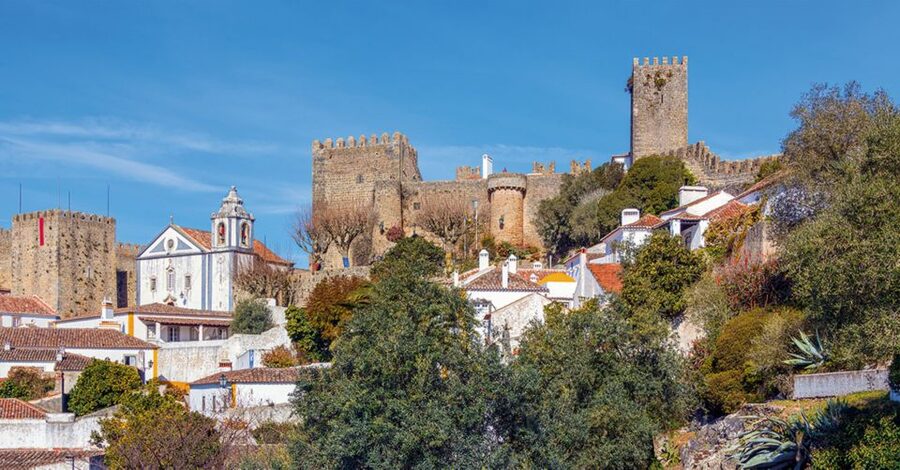
Alcobaça and Óbidos give you two very different pictures of Portugal in one day. Alcobaça brings grand Cistercian architecture and the tragic love story of Pedro and Inês, while Óbidos offers castle walls, white houses, churches, and narrow lanes made for wandering.
I like the freedom of a self-guided format, especially in Óbidos, where you can choose between the walls, churches, shops, and cafés. I also like the practical six-hour schedule and the multilingual audio guide, available in eight languages. The tradeoff is time: both stops are brief, and a late arrival in Óbidos may leave some churches closed.
Key points to know before booking
- Alcobaça’s monastery is the main historical prize, with UNESCO status and the tombs of Pedro and Inês.
- Óbidos is explored independently, with an audio guide and map rather than a live guide leading the group.
- The day includes about three hours of transport, so expect a useful overview rather than a slow, thorough visit.
- You get about one hour in Alcobaça and two hours in Óbidos.
- The meeting point is in Lisbon’s Marques de Pombal area, with no hotel pickup or drop-off.
- The $50 price makes sense for a quick two-town visit, but less so if you prefer long stays at each sight.
Two historic towns, one tightly timed day
This outing is built for you if you want to see more of central Portugal without arranging trains, buses, tickets, and directions yourself. You meet at the Cityrama Gray Line terminal at Marques de Pombal Square, at the bottom of Park Eduardo VII, then travel by coach toward Alcobaça.
The transport takes about 75 minutes on the way to the first stop. After Alcobaça, the ride to Óbidos takes about 45 minutes, followed by about an hour on the return to Lisbon. Add the two visits, and the full day is listed as six hours, though the actual duration can vary.
That timing matters. You are not getting a leisurely day in either town. You are getting a neatly packaged introduction to two important places, with enough time to see the main sights if you keep moving.
The self-guided design also changes the mood. Nobody is shepherding you from one room to the next. You use the supplied map and interactive audio guide, choosing how much attention to give each church, wall, street, and monument. The audio guide is available in Spanish, Chinese, English, French, German, Italian, and Portuguese.
More Audio Tours in Lisbon:
- Lisbon: São Jorge Castle E-Ticket and Audio Guide
★ 4.3 · 2,182 reviews - Lisbon: Tram 28 Entry Ticket & Audio Guide with 24-Hour Pass
★ 4.0 · 930 reviews - Lisbon: Jerónimos Monastery E-Ticket and Audio Guide
★ 3.7 · 660 reviews
Alcobaça and the great Cistercian monastery
Alcobaça is the serious historical stop. Its Royal Monastery of Santa Maria de Alcobaça was designated a UNESCO World Heritage site in 1989, and its scale gives you a strong sense of the power once held by the Cistercian order.
Construction began in 1178 by order of King Afonso Henriques. Cistercian monks occupied the complex in 1223. The monastery became one of the largest and best-preserved Cistercian complexes in Portugal, and its church remains the center of the visit.
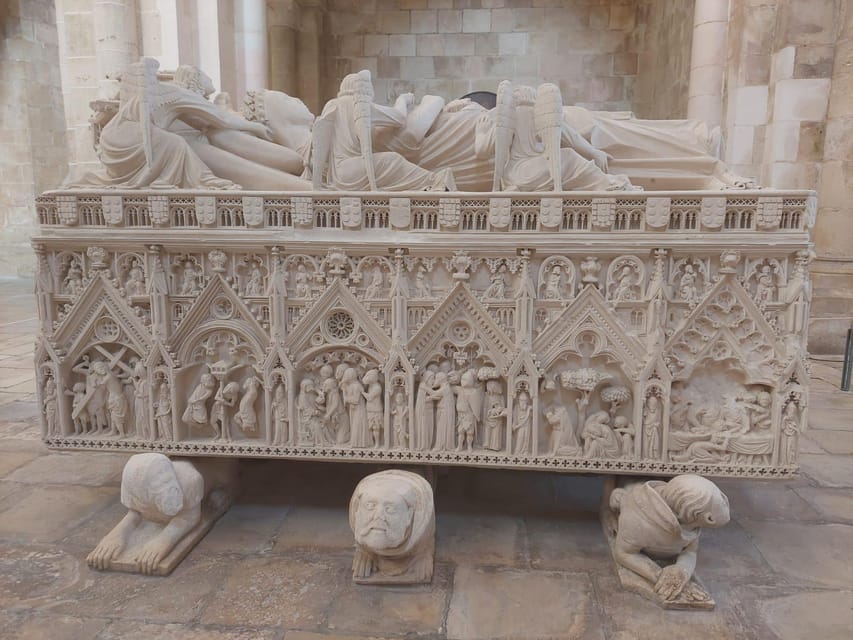
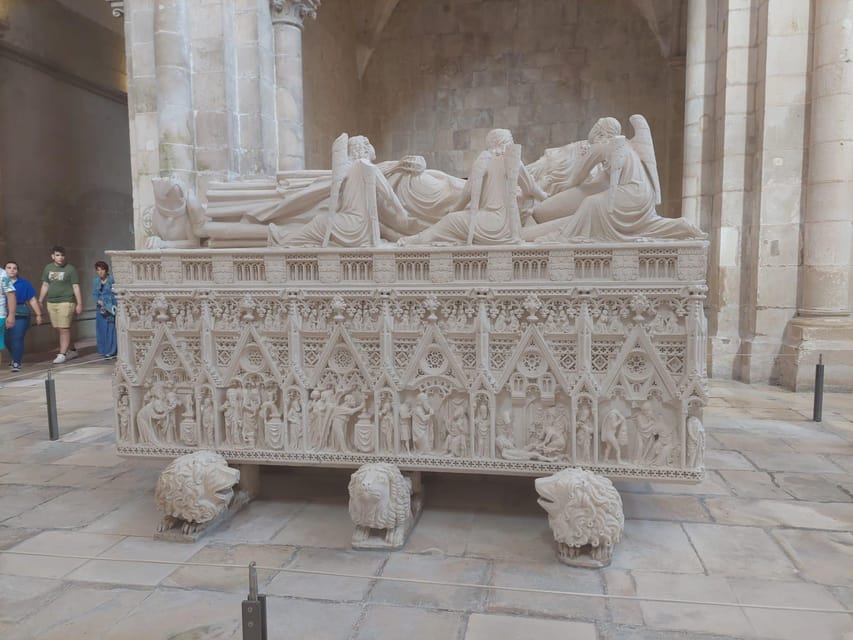
Your most memorable sight here is likely to be the tombs of King Pedro and Inês de Castro. Pedro chose the monastery church as the burial place for himself and Inês, his beloved. Their story is often presented as Portugal’s version of Romeo and Juliet, though the political setting was very real and far less tidy than a fairy tale.
The tombs are especially important because they connect the grand building to a human story. You are not simply looking at stone, arches, and religious decoration. You are seeing the place Pedro selected for the couple’s final rest, surrounded by the power and ceremony of a royal church.
You have about one hour in Alcobaça. That is enough to visit the monastery and leave a little time for the town, but it is not enough for a slow architectural study. If you read every audio segment and pause often, you will need to choose between extended time inside the monastery and a relaxed break outdoors.
The stop also includes free time to taste Alcobaça’s heaven sweets. The tour information does not specify a particular shop or pastry, so treat this as a chance to sample local confectionery rather than a promised tasting menu. Keep an eye on the clock, since a long café stop can reduce your time at the monastery.
The short transfer to Óbidos

The journey from Alcobaça to Óbidos takes about 45 minutes. This gives you a useful pause after the monastery, but it also highlights the main limitation of the day: a sizable part of your six hours is spent on the road.
The payoff is a completely different setting. Alcobaça is defined by its monastery and royal associations. Óbidos is a compact medieval town, best enjoyed on foot, where walls, lanes, churches, painted houses, and flowers create a more casual walking experience.
Óbidos has a long and layered past. It may have begun as a Celtic settlement around 308 BC, and later evidence links it with the Roman city of Eburobrittium. The village was occupied by barbarian groups and then by the Moors before Afonso Henriques, Portugal’s first king, conquered it.
The town kept its noble status for centuries. In the 18th century, it remained a royal summer destination. King John V stayed there for eight years on doctors’ advice, visiting nearby Caldas da Rainha for bathing treatments intended to help with arthritis and obesity.
You do not need to memorize all of this to enjoy Óbidos. The audio guide helps turn the town into more than a pretty collection of streets. It explains why the gates, churches, walls, and former royal buildings matter.
Walking the walls and lanes of Óbidos
You get about two hours in Óbidos, the longer of the two visits. Start by orienting yourself near the Town Gate, also called Our Lady of Sorrows, the patron saint of Óbidos.
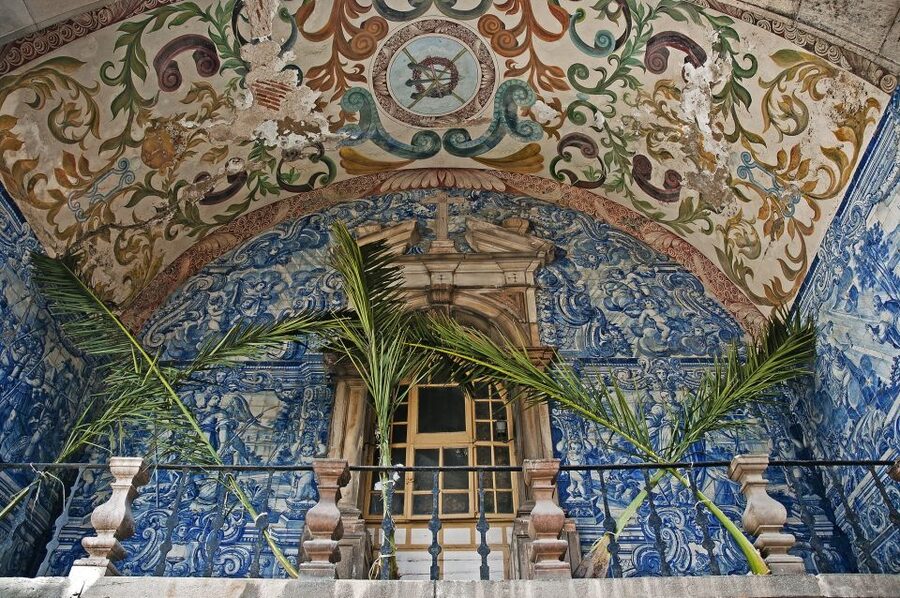
The gate carries a 17th-century inscription connected with the reign of King John IV, declaring the Virgin’s conception without original sin. Inside, look for the 18th-century tiles showing scenes from the Passion of Christ. This is an easy sight to miss if you rush straight into the main lane.
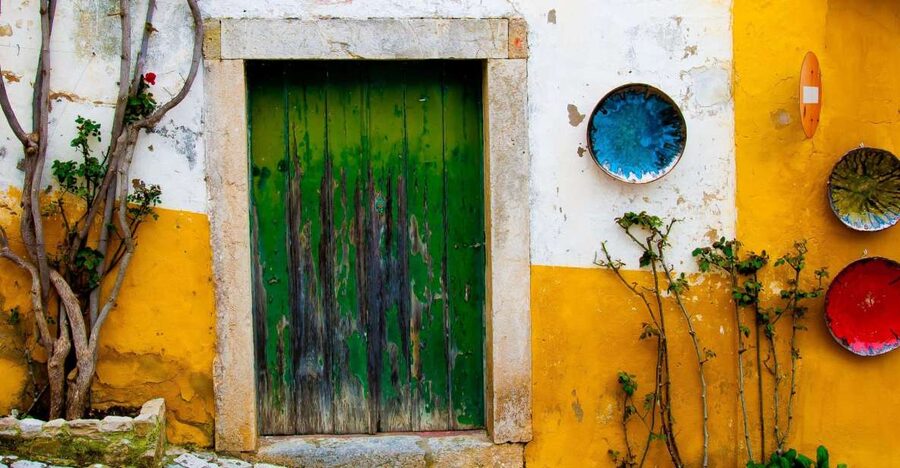
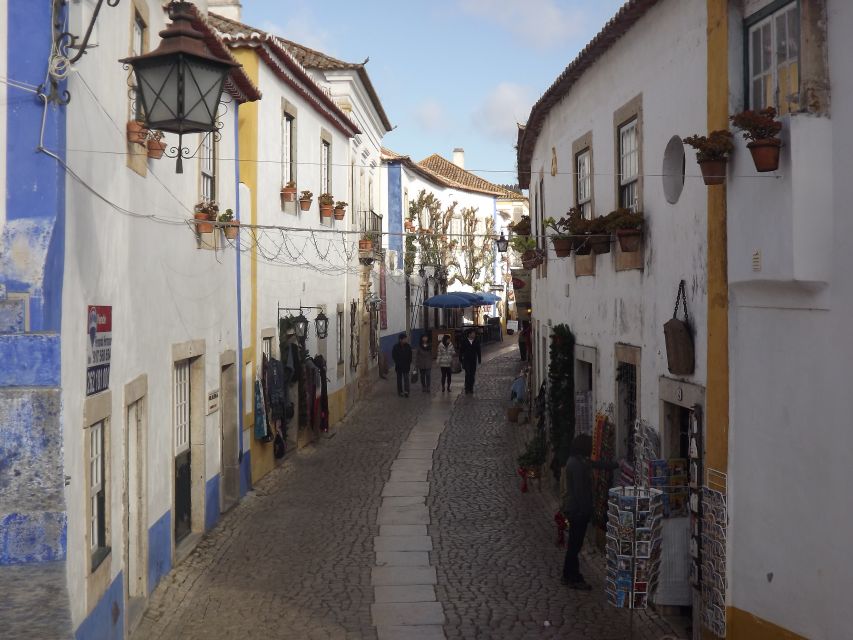
From there, you can follow the audio guide through the old center or make your own route. The streets are lined with colorful houses, many decorated with flowers. You will find churches, small shops, places to eat, and views from the medieval walls.
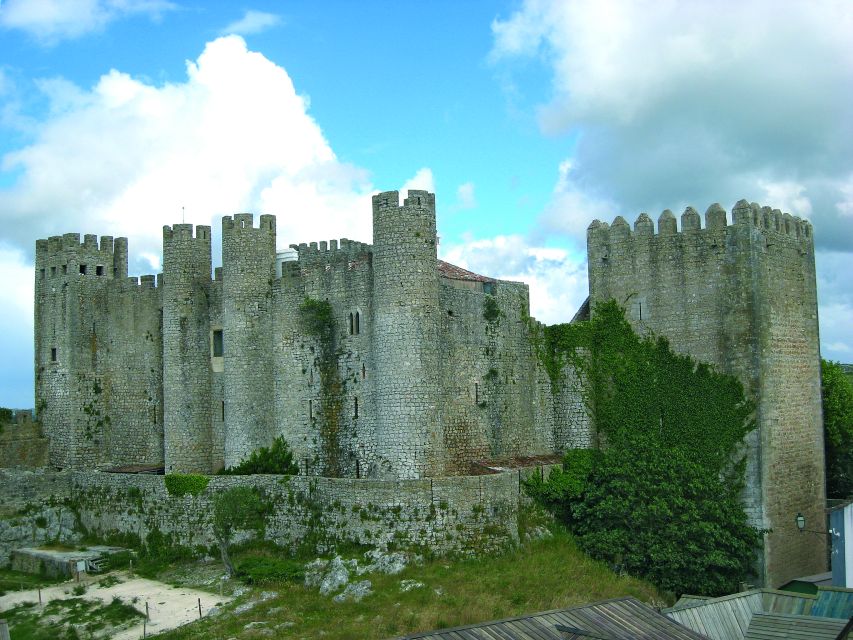
Walking the walls is one of the best ways to understand the town’s shape. The walls and castle give Óbidos its defensive character, while the houses below make it feel intimate and lived in. Take care with your footing and allow time to stop, since the wall walk is more about seeing the town from above than racing from one point to another.
The self-guided format works well here. You can spend more time on the wall if that appeals to you, or give extra attention to the churches. You can also simply wander the lanes and let the audio guide fill in the details when a building catches your eye.
Same place, a different route to walk:
- Lisbon Self-Drive Sightseeing Tour in an Electric Car
★ 4.6 · 454 reviews - Lisbon Self-Drive Sightseeing Tour in an Electric Car
★ 4.5 · 201 reviews - Lisbon: National Tile Museum E-Ticket & Audio Guide
★ 4.3 · 121 reviews - From/To Lisbon: Sintra Hop-on Hop-off Tickets + Audio Guide
★ 3.7 · 119 reviews
The churches worth seeking out
St. Peter’s Church has medieval foundations and retains its original portal. It was renovated in the second half of the 16th century and has a single nave with a Baroque wood altarpiece from the period of King John V.
The church is a good example of why the audio guide helps. From the outside, it may appear to be one more historic building in a town full of them. Inside, the architectural changes and the later decoration tell a longer story.
The Pousada of Óbidos occupies what was once the Paço do Alcaide. It was the first pousada in Portugal created inside a historic building. Look for the Manueline windows and the doorway with its ornate lintel shaped like intertwined tree trunks.
St. James Church has royal connections too. The royal family attended it during stays in Óbidos, and King Sancho founded the church. It is another useful reminder that this small town once played a role in Portugal’s royal life.
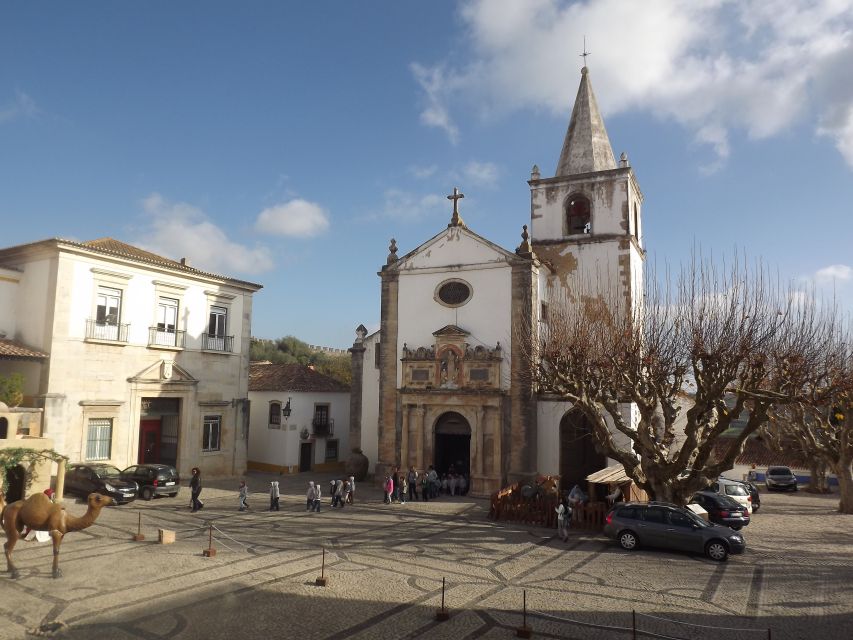
St. Mary’s Church occupies the site of an earlier Visigoth temple, later converted into a mosque. After Afonso I’s Christian conquest, it became a Catholic church. Inside, you can see the tiled walls and the tomb of D. João de Noronha, a 16th-century mayor of Óbidos. The tomb is attributed to Nicolau Chanterene and is described as a masterpiece by the sculptor.
Your two hours may not allow a long visit inside every church. This is where you need to make choices. If church interiors matter most to you, follow the audio guide closely and watch the time. If you mainly want the town’s atmosphere, give yourself room for the walls and lanes.
The biggest issue: timing and opening hours
The most important caution is not the history or the transport. It is the schedule. Óbidos has plenty to see from the outside, but some of its key churches may be closed by the time you arrive, depending on the departure time and the day’s operating hours.
That can change the feel of the stop. If interiors are open, you can build a satisfying route around St. Mary’s, St. Peter’s, and St. James. If they are closed, your visit becomes more about the walls, castle area, streets, houses, shops, and food.
This does not make Óbidos worthless. The town itself is the attraction, and two hours gives you enough time to walk through the center and see the main exterior sights. Still, you should not book this particular format expecting guaranteed access to every church.
The coach has also been described as uncomfortable by at least one assessment. That is worth weighing because you spend around three hours in transit. If you are sensitive to cramped or firm seating, a private day trip or independent train and bus plan may offer more control, though it would require more planning.
Is $50 a fair price?
At $50 per person, the tour is priced as a transport-and-orientation service rather than a full guided experience. You are paying for the coach connections, the route between two towns, the audio guide, and the convenience of returning to Lisbon at the same meeting point.
That is reasonable if your priority is efficiency. You do not need to work out how to connect Lisbon with Alcobaça, then Alcobaça with Óbidos, then return to the city. You also receive information in your chosen language, which adds value if you want context without joining a live group.
The price is less attractive if you only want a long visit to Óbidos. You would be spending money and time on a combined trip while accepting a short stay at each place. I would see it as good value for a first look at both towns, not as the best choice for serious monastery study or a slow day of photography in Óbidos.
The reserve-now-and-pay-later option gives you some planning flexibility. You can cancel up to 24 hours before departure for a full refund. The operator can also change or cancel a service for reasons beyond its control, and the stated conditions do not promise a refund in that situation.
Who should choose this day trip?

I would recommend it to you if you have limited time in Lisbon and want two major historic stops in one outing. It suits independent-minded visitors who like deciding their own route but do not want to arrange regional transport.
It is also a good match if you enjoy audio commentary, churches, royal stories, and old-town walking. The eight language options make it practical for international visitors, and the map helps you get your bearings quickly.
I would hesitate if you want a relaxed schedule, long meals, or detailed access to every interior. Families with young children may also find the walking and tight timing tiring, though the supplied information does not set a minimum age or describe child facilities.
Wear comfortable shoes. Bring sunglasses, a sun hat, and a camera. Pets are not allowed, and hotel pickup and drop-off are not included.
Should you book the Alcobaça and Óbidos tour?
Book it if you want an efficient introduction to two of Portugal’s most distinctive historic towns and you are comfortable exploring without a live guide. The monastery, Pedro and Inês tombs, medieval walls, tiled churches, and flower-lined streets give the day plenty of substance.
Skip it if your main goal is a slow, detailed visit to Óbidos or guaranteed time inside its churches. For most people, the decision comes down to pace: six hours buys you variety, not depth. At $50, that is a sensible trade if you value convenience and a broad first look.
FAQ
Where does the tour start?
It starts at the Cityrama Gray Line terminal at Marques de Pombal Square, at the bottom of Park Eduardo VII, in Lisbon.
Where does the tour end?
The activity ends back at the original meeting point in Lisbon.
How long does the tour last?
The stated duration is six hours, though the actual duration is approximate and can vary.
How much time do I get in Alcobaça?
You have about one hour in Alcobaça, including the visit and free time.
How much time do I get in Óbidos?
You have about two hours in Óbidos for the self-guided visit and free time.
Is a live guide included?
No live guide is specified. The experience includes an interactive audio guide and a destination map.
Which languages are available for the audio guide?
The audio guide is available in Spanish, Chinese, English, French, German, Italian, and Portuguese.
Is hotel pickup included?
No. Hotel pickup and drop-off are not included, so you need to reach the Marques de Pombal meeting point yourself.
Just added around Lisbon
- Lisbon: National Pantheon E-Ticket & Audio City Tour★ 4.0 · 49 reviews
- Lisbon: Saint George’s Castle Entry & City Self-Guided Tours★ 3.6 · 16 reviews
- Lisbon: National Coach Museum Entry Ticket and Audio Guide★ 4.5 · 49 reviews
- Lisbon: City Audio Guide with 24-Hour Transportation Pass★ 3.4 · 12 reviews
- Lisbon 6H Ride in an Electric Car & GPS Audio Guide★ 4.5 · 15 reviews
- Lisbon: Electric Car Discovery Tour & GPS Audio Guide★ 4.4 · 15 reviews
- Lisbon: Electric Car Moorish Tour with GPS Audio Guide★ 5.0 · 6 reviews
- Audio Guide City Walk Lisbon for Cruise Guests★ 4.9 · 4 reviews
Lisbon Audio Tours, compared.

Lisbon: São Jorge Castle E-Ticket and Audio Guide
Read our review →
Lisbon: Tram 28 Entry Ticket & Audio Guide with 24-Hour Pass
Read our review →
Lisbon: Jerónimos Monastery E-Ticket and Audio Guide
Read our review →
Lisbon Self-Drive Sightseeing Tour in an Electric Car
Read our review →Lisbon Self-Drive Sightseeing Tour in an Electric Car
Read our review →
Lisbon: National Tile Museum E-Ticket & Audio Guide
Read our review →
From/To Lisbon: Sintra Hop-on Hop-off Tickets + Audio Guide
Read our review →
Lisbon: National Palace of Ajuda E-Ticket & City Audio Guide
Read our review →Browse the lists this tour appears in