
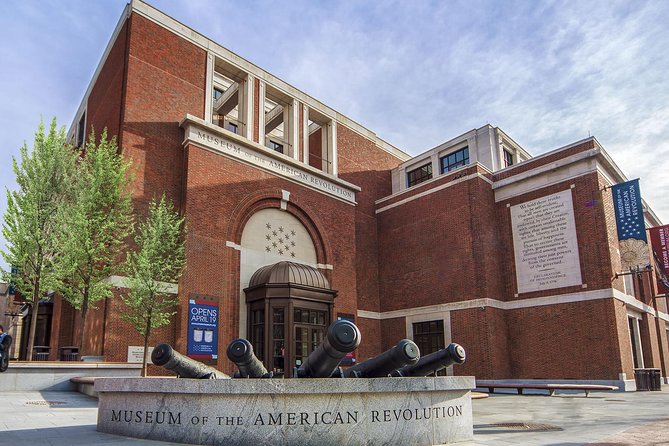
REVIEW · USA AUDIO TOURS
Museum of the American Revolution Admission Ticket with Audio Guided Option
George Washington’s original headquarters tent is the emotional center of this museum. You see the canvas shelter connected with the Continental Army commander, then follow the war through life-size scenes, films, artifacts, and hands-on displays. I like the way the museum makes a complicated period easy to follow, and I especially like that the ticket works for two consecutive days.
I also like the convenient location, a short walk from Independence Hall and the Liberty Bell, plus the choice of an audio guide in English, Spanish, or French. The main caution is time: this is not a quick 45-minute stop. Plan at least three hours, and expect school groups or other large parties at busy times.
Key points to know before you go
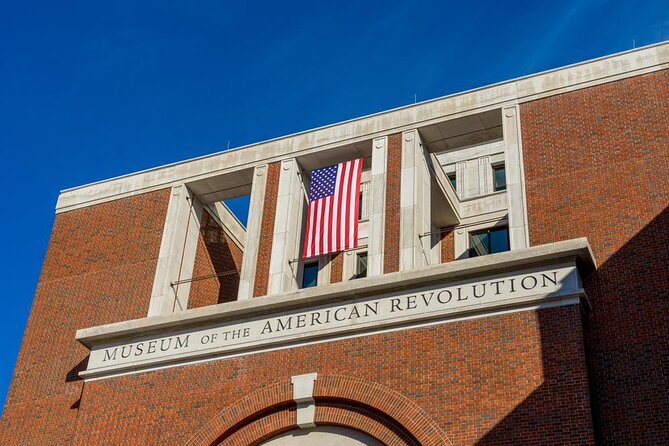
- Washington’s original headquarters tent gives the visit its most powerful moment.
- Two-day admission lets you return if the galleries take longer than planned.
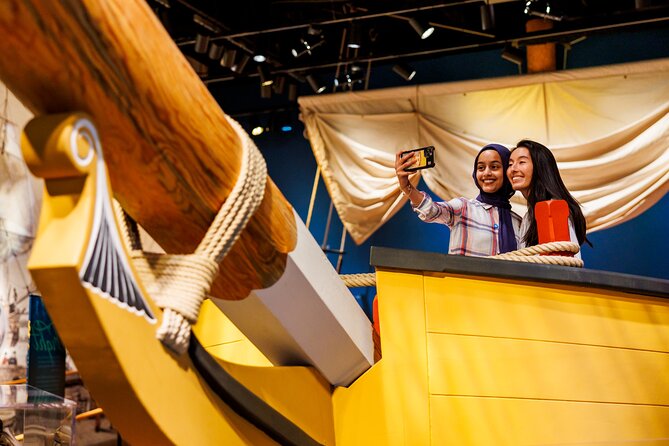
- Interactive scenes include the Boston Liberty Tree, the Battle of Brandywine, a privateer ship, and an Oneida council.
- Audio guides are available in English, Spanish, and French, and are worth considering for added context.
- The museum sits near Independence Hall and the Liberty Bell, making it easy to pair with Philadelphia’s other major historic sites.
- Three to four hours is a sensible visit length, though careful readers may want longer.
Why this museum works so well in Philadelphia
Philadelphia’s Historic District can feel like one long sequence of famous names: Independence Hall, the Liberty Bell, Carpenter’s Hall, and sites tied to the nation’s founding. The Museum of the American Revolution gives those places a wider frame. Instead of seeing only where decisions were made, you follow the human cost, uncertainty, and military struggle that followed.
I like the museum’s basic structure. It begins with the tensions that led to rebellion, follows the fighting and political arguments, and then considers what the new nation meant after the war. That order helps you connect the Declaration of Independence with the less polished reality of camp life, battle, shortages, and divided loyalties.
The museum also avoids treating the Revolution as a simple parade of famous men. Its displays include the Oneida Indian Nation, African American experiences, political conflict, ordinary soldiers, and the question of who was included in the new country. You get a broader view than the familiar schoolbook version, even though some visitors may wish certain people or battles received more attention.
More Museum Audio Guides in the USA:
- Medieval Torture Museum Ticket with Audio Guide and Ghost Hunting
★ 5.0 · 962 reviews - Hollywood Medieval Torture Museum Ticket with Ghost Hunting
★ 5.0 · 133 reviews - Denver: Molly Brown House Museum Self-Guided Tour & Entry
★ 4.8 · 108 reviews
Start with the film, then follow the galleries
The introductory film is a smart first stop. It gives you the main sequence of events before you begin reading labels and studying objects. If your knowledge of the Revolution is rusty, this short orientation can save you from feeling lost among dates, names, and changing alliances.
After the film, the museum’s route follows George Washington’s remarkable journey. The displays use artifacts, graphics, films, reconstructed scenes, and life-size figures to turn political arguments into something you can picture. A 10-year-old may see it as a film you walk through, while an adult can spend more time examining the documents and the choices behind each event.
That mix is one of the museum’s greatest strengths. You are not limited to glass cases and long panels. Several sections ask you to stop, watch, listen, or consider a decision from the period. The approach works well for families, especially when children have enough visual material to keep moving while adults read the more detailed explanations.
Still, the museum is not only for children. The displays provide enough substance for adults who want more than a quick introduction. The content covers events before and after July 4, 1776, so you get a clearer sense of how independence developed rather than treating the Declaration as the entire story.
George Washington’s tent is the emotional centerpiece
The original headquarters tent is the object I would plan around. Washington used this type of tent during the Revolutionary War, and seeing the actual canvas structure gives the conflict a physical scale that paintings and text cannot match.
The presentation is carefully arranged so you understand the tent’s importance before moving on. It is not just another military artifact in a case. The display connects the object with Washington’s role, the army he led, and the difficult conditions faced by the Continental forces.
Many people spend extra time here. I can understand why. The tent feels personal and vulnerable, especially when you compare it with the grand public image of Washington that developed later. For some visitors, this will be the most memorable part of the entire museum.
If this is your main reason for visiting, you can see it during a shorter visit. But the tent means more after you have followed the rest of the story, so I would not rush straight to it and leave.
Walk beneath the Boston Liberty Tree
A life-size reproduction of Boston’s Liberty Tree gives you a strong visual introduction to colonial protest. The tree represents the public meetings and acts of resistance that helped turn frustration with British rule into organized political action.
The display is useful because it shows how rebellion grew through public argument and shared symbols. The Revolution did not begin with a single battlefield moment. It developed through protests, printed words, local pressure, and disputes about authority.
This section also helps younger visitors. A large physical reconstruction is easier to remember than a paragraph about colonial resistance. It gives the galleries a sense of place without pretending that every part of the past can be recreated exactly.
More Skip-the-Line Audio Guide Tickets in the USA:
- Henry B. Plant Museum Entry Ticket with Audio Guide
★ 4.2 · 21 reviews - Galveston: Moody Mansion Entry Ticket and Self-Guided Tour
★ 4.5 · 16 reviews - Barcelona: Sagrada Familia Entry Ticket with Audio Guide
★ 4.6 · 105,312 reviews - Rome: Pantheon Fast-Track Ticket and Official Audioguide
★ 4.5 · 27,353 reviews
Read the grievances behind independence

The museum includes authentic printings of the Declaration of Independence. Seeing the actual words connected to the break with King George III changes the pace of the visit. Instead of treating July 4 as a holiday date alone, you can read the complaints that made independence a political claim.
The document section rewards patience. You may find yourself reading selected passages, then returning to earlier exhibits to understand what prompted them. The museum’s presentation makes the Declaration part of an argument, not just a framed symbol.
At the same time, the galleries remind you that declaring independence did not settle the conflict. The war still had to be fought, and the new country still had to decide what its ideals meant in practice.
Hear the Oneida debate and the divided loyalties of war
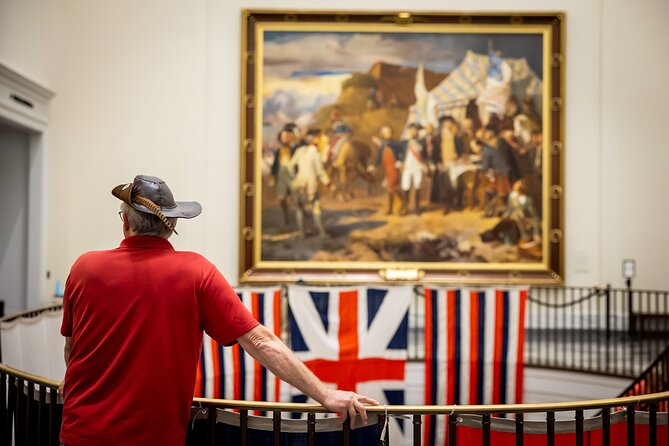
One of the more unusual displays presents life-size replicas of members of the Oneida Indian Nation. You hear the debate surrounding their decision to break with the Iroquois Confederacy and support the American cause.
This is an important addition because it shows that Indigenous communities faced their own political decisions during the war. The Revolution was not simply two uniform sides. Different nations, communities, and families weighed danger, alliances, trade, and survival in different ways.
I appreciate this kind of context because it complicates the familiar story without making the galleries hard to follow. You see that the conflict affected people who were not part of the colonial leadership, and that choosing a side could split existing relationships.
Feel the pressure of the Battle of Brandywine
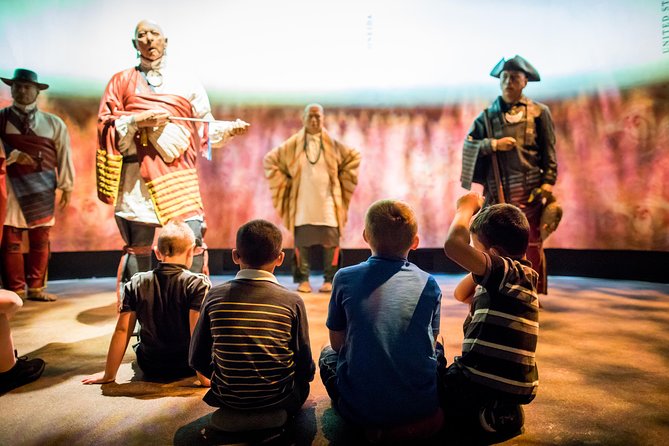
The Battle of Brandywine display puts you in front of a British infantry charge. It is one of the museum’s more dramatic scenes, using full-size figures and sound or visual effects to convey the fear and confusion of combat.
This section works because it changes the subject from political ideals to physical danger. A printed account can tell you that soldiers faced a disciplined British army. A staged charge lets you consider what that meant at close range.
If you are especially interested in military campaigns, you may want more detail about major battles, troop movements, and commanders. The museum gives you a clear general account, but it is not designed as a specialist battlefield study. One area some visitors may find thinner is its treatment of figures such as Casimir Pulaski and Tadeusz Kościuszko, whose roles in the war deserve more attention.
Board the privateer ship
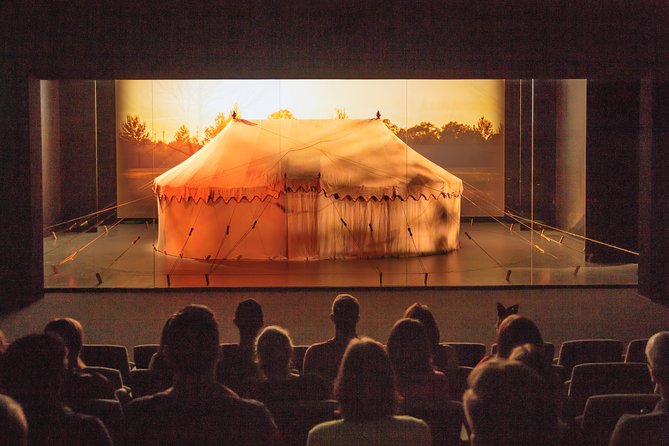
The replica privateer ship shifts the focus from land battles to the war at sea. You can climb aboard and consider how maritime attacks, trade, and naval pressure fit into the wider conflict.
This is another strong choice for families because it gives you something physical to explore. It also helps correct the idea that the Revolution was fought only in forests, towns, and open fields. The sea was part of the struggle, and privateers brought the war into a dangerous world of commerce and capture.
The ship is not a full sailing experience, of course. Think of it as a carefully designed stage within the museum, one that gives you a useful sense of scale and purpose.
Use the audio guide to add detail
The audio guide is an optional extra, but I would consider reserving one if you want a fuller visit. It lets you move at your own pace while adding commentary to the objects and scenes around you.
The audio option is available in English, Spanish, or French. Choose your language during checkout, since that choice is part of the booking process. It is particularly helpful in the larger galleries, where a display may contain more background than you want to read from a wall panel.
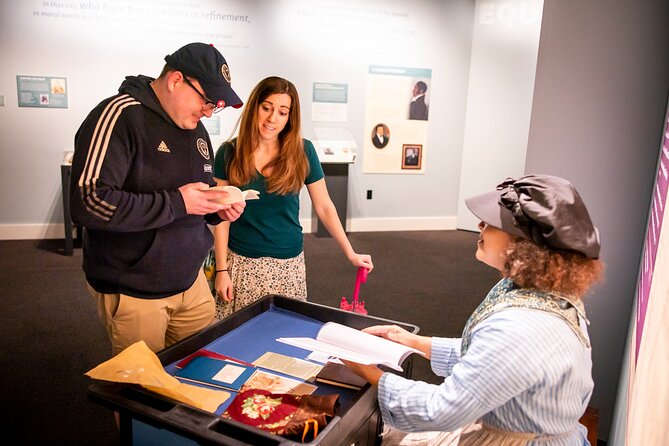
I would not use the audio guide as a reason to rush. Pause it when you want to study an artifact, watch a film, or talk with the staff at the tables on the second floor. The museum has friendly staff available to answer questions, and those conversations can add a human touch that a recorded guide cannot provide.
For children, the audio guide may work best in shorter sections. Let them choose a few objects to explore rather than expecting them to listen continuously for several hours.
Plan three to four hours, or return the next day
The advertised visit length of three to four hours is realistic. You can move faster if you focus on the major displays, but a careful visit takes time because the museum uses films, interactive sections, replicas, and written material.
The two-day ticket is a real advantage at $25 per person. You can make one visit before or after seeing Independence Hall, then return the next day to finish the galleries without forcing the entire museum into one block. That matters in Philadelphia, where the Historic District offers several major sites within walking distance.
A two-day ticket also helps families. Children may lose interest before adults are ready to leave, or the group may need a meal break. Food and drinks are not included, so plan your break outside the admission price and return when it suits your schedule.
The ticket is also useful if you want to revisit the Washington tent, reread the Declaration, or spend more time with the Oneida display. At $25, the option to return makes the price more reasonable than a single short museum stop.
How it fits with Independence Hall and the Liberty Bell
The museum is an easy walk from Independence Hall and the Liberty Bell. That makes it a practical part of a Historic District day, not a separate trip across the city.
I would avoid treating all three sites as one rushed sequence. Independence Hall and the Liberty Bell focus on specific places and symbols. The museum gives you the wider political and military story. Together, they work best when you leave enough time to think about what you have seen.
A useful plan is to visit the museum for the film and first galleries, walk to the other historic sites, then return for the remaining sections on the second ticket day. The exact order depends on your timed plans for other attractions, but the nearby location makes this flexible.
Crowds, families, and the overall pace
The museum is generally easy to navigate, but school groups and larger parties can make some areas busy. One visit became less quiet because of a large group, though the museum remained enjoyable. That is worth considering if you prefer a calm, uninterrupted read of every label.
The booking information lists a maximum of 14 travelers for the activity. That does not mean the entire museum will have only 14 people inside, especially since this is a public museum admission rather than a private guided tour. Expect a normal museum setting, with the possibility of groups in popular galleries.
Families are well served by the interactive displays and life-size scenes. Teenagers may appreciate the more dramatic battle presentation and the ability to move at their own pace. Adults interested in documents, military decisions, or the political arguments behind independence can spend longer with the text.
The museum also works for visitors who already know the basics. You may not agree with every choice about which person or battle receives attention, but the visual displays and added perspectives can give you a new way to organize familiar material.
What the museum leaves out or handles lightly
No museum can cover every person, battle, and political dispute in a few galleries. Here, the main story is clear, but some subjects receive less attention than specialists may want.
If you have a strong interest in battlefield history, you may wish for more detail on key campaigns. The Gaspee affair, an early act of colonial resistance involving the burning of a British ship, is not covered in the material described here. Figures such as Pulaski and Kościuszko also deserve fuller treatment for visitors focused on international support for the American cause.
These gaps do not make the museum poor. They simply tell you what kind of experience this is. It is a broad, visual account designed to make the Revolution understandable and human, not a complete reference work on every military action or political figure.
Practical details and cancellation terms
Your mobile ticket includes admission, the introductory film, special exhibitions when available, taxes, fees, and handling charges. Food and drinks are not included.
The museum is near public transportation, and most people can participate. Children must be accompanied by an adult, and service animals are allowed.
You can cancel for a full refund if you do so at least 24 hours before the experience start time. Changes or cancellations made within 24 hours are not refunded. The stated policy also says that if poor weather causes cancellation, you will be offered another date or a full refund.
Should you book this museum ticket?
I would book it if you want more than a quick look at Philadelphia’s founding sites. The Washington headquarters tent, the interactive battle scenes, the Oneida presentation, and the privateer ship give the Revolution a physical presence that a standard walking tour cannot match.
The ticket is especially good value if you plan to return for a second day or use the museum as the main anchor of your Historic District visit. Add the audio guide if you want extra explanation in English, Spanish, or French.
I would be more cautious if your only interest is famous documents or a detailed study of military campaigns. You may find parts of the museum too broad, and some important figures and incidents receive limited attention. For families, first-time visitors, and anyone seeking a clear, engaging account of the Revolution, however, this $25 admission is a strong choice.
FAQ
How long should I plan to spend at the museum?
Plan about three to four hours for a normal visit. You can return on the following day because the admission ticket is valid for two consecutive days.
Does the ticket include an audio guide?
An audio guide is available as an option during checkout. It is offered in English, Spanish, or French, and you should select your preferred language when booking.
What is the most important artifact in the museum?
George Washington’s original Revolutionary War headquarters tent is one of the museum’s central displays and a major reason to allow enough time for the visit.
Can I visit the museum more than once with this ticket?
Yes. The ticket is valid for two consecutive days, so you can split your visit across two dates within that period.
Is the museum close to Independence Hall and the Liberty Bell?
Yes. The museum is an easy walk from both Independence Hall and the Liberty Bell in Philadelphia’s Historic District.
What is the cancellation policy?
You can receive a full refund when you cancel at least 24 hours before the experience start time. Cancellations or changes made within 24 hours are not refunded. If poor weather causes cancellation, you will be offered another date or a full refund.
Just added around the USA
- Smartphone-Guided Walking Tour of Downtown Indianapolis Sights & Stories★ 4.0 · 25 reviews
- Springfield Self-Guided Walking Audio Tour★ 4.0 · 5 reviews
- Smartphone Guided Indianapolis Downtown Sites Audio Walking Tour★ 4.5 · 7 reviews
- Indiana Dunes National Park Self-Guided Audio Tour★ 3.5 · 4 reviews
- Self-Guided Audio Driving Tour in Kancamagus Highway★ 4.5 · 6 reviews
- An Epic Scavenger Hunt: Bloomington Scenic Southern Indiana★ 3.5 · 6 reviews
- Huntsville Rocket City Smart Phone Self Guided Audio (GPS/APP) Walking Tour★ 4.5 · 5 reviews
- Sights of Downtown Houston Smartphone Audio Walking Tour★ 4.0 · 7 reviews
USA Audio Tours, compared.
Fort Sumter Admission and Self-Guided Tour with Roundtrip Ferry
Read our review →
San Francisco: Alcatraz Ticket, Ferry, & Self-Guided App
Read our review →
Los Angeles: Hop-On Hop-Off Bus Tour with Audio Guide
Read our review →
City Sightseeing Hop-On Hop-Off Bus Tour with Audio Guide
Read our review →
Medieval Torture Museum Ticket with Audio Guide and Ghost Hunting
Read our review →
Ryman Auditorium Self-Guided Tour with Souvenir Photo Onstage
Read our review →
Red Rock Canyon Self-Guided Electric Bike Tour
Read our review →Browse the lists this tour appears in