

REVIEW · USA AUDIO TOURS
Montgomery Civil Rights Walk of Freedom Self Guided (GPS) Walking Tour
Montgomery’s civil rights story feels different when you follow it on foot, one downtown block at a time. This GPS-guided walk begins at the Rosa Parks Museum and ends on the Alabama State Capitol steps, where Martin Luther King Jr. delivered How Long, Not Long. Along the way, you connect the Montgomery Bus Boycott, the Freedom Rides, the Selma to Montgomery March, and the people who risked their lives to challenge segregation.
I like the freedom to pause for a museum, a meal, or a moment to think, then continue when you are ready. I also like the route’s strong sense of place, especially Court Square, Rosa Parks’ bus stop, Chris’ Famous Hotdogs, and Dexter Avenue King Memorial Baptist Church. The main drawback is the app setup: you need to download WalknTours, register, and use the correct email link to unlock the audio.
Key points to know before you go
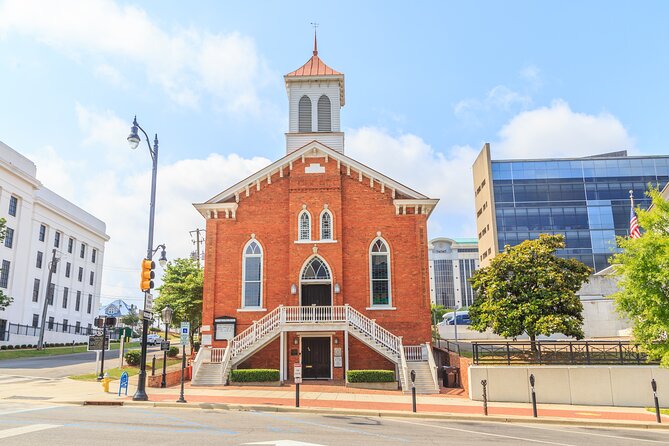
- Start at the Rosa Parks Museum: The tour begins at the site connected with Rosa Parks’ arrest and the Montgomery Bus Boycott.
- Follow a compact downtown route: The walk takes about 65 to 75 minutes without extended museum visits.
- Use the pause button freely: You can stop for the Rosa Parks Museum or Freedom Rides Museum, then resume the tour.
- Hear history where it happened: Court Square, Dexter Avenue, the church, and the Capitol each add a different chapter.
- Plan for extras: Museum admission, food, drinks, parking, and transportation are not included.
- Finish at MLK’s Capitol speech site: The final stop includes an audio clip from How Long, Not Long.
A short walk with a serious story
At $9.50 per person, this is an inexpensive way to orient yourself in Montgomery’s historic center. You are paying for location-triggered audio, directions, and a carefully arranged story, not a live guide or entry to the city’s museums.
That distinction matters. If you want a person answering questions beside you, choose a guided group tour instead. If you prefer to walk privately, set your own start time, and linger at important places, this format gives you much more control.
The route is listed as available from midnight to 11:30 p.m. daily, so you are not tied to a fixed departure. Still, daylight is the practical choice. You will get more from the buildings, signs, memorials, and streets when you can see them clearly.
The tour is private in the sense that only your group participates. It is not a live private guide. Your guide is the WalknTours app, with GPS directions and narrated audio.
More Self-Guided Walking Tours in the USA
- Self Guided Classic Freedom Trail Location Aware (GPS) Walking Audio Tour
★ 4.5 · 258 reviews - Self-Guided Smartphone Ghost Walking Tour in Salem
★ 4.5 · 225 reviews - Cape Cod & Provincetown Self-Guided Driving & Walking Audio Tour
★ 4.0 · 207 reviews
Getting the app ready before Court Square
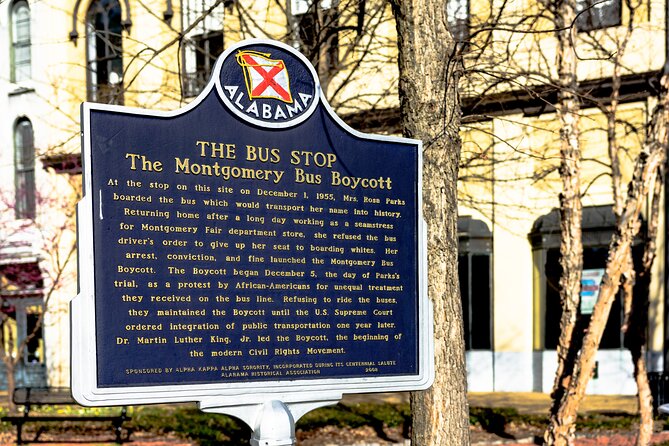
The most important practical step happens before you arrive. After booking, check your email for the link and instructions, download the WalknTours app, register, and unlock the tour. A few people have had trouble because they opened the wrong link, did not find the email, or were unsure if the tour had been paid for twice.
I suggest setting it up before you reach the starting point. Confirm that the audio plays, your phone has enough battery, and location services are enabled. This takes away the most common source of frustration.
The app is designed to begin the next narration as you approach each stop. It also gives directions between locations. Most of the route is simple to follow, but the timing is not a rigid guided schedule. If you stop for photographs, museum visits, lunch, or traffic, tap pause. The tour does not need to hurry you along.
The audio includes narration, music, and sound effects. One sound effect uses police sirens, so do not mistake that part of the recording for an emergency nearby. A few users have had problems with audio skipping or with images mentioned in the narration not displaying correctly. These issues do not affect everyone, but they are good reasons to test the app before starting.
Stop one: Rosa Parks Museum and the beginning of the boycott
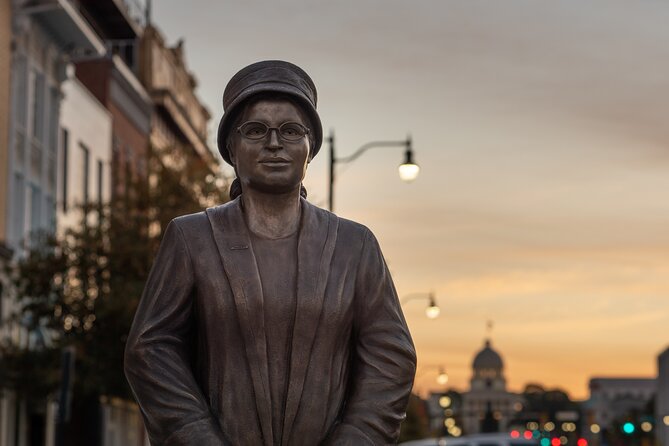
The walk starts outside the Rosa Parks Museum at 252 Montgomery Street. The opening narration places you at the spot connected with Rosa Parks’ arrest after she refused to give up her bus seat because of her race.
The story is presented as part of a larger struggle. Rosa Parks was not the first person arrested for resisting bus segregation, and she was not the last. Her arrest became a turning point because it helped bring national attention to Montgomery and to Martin Luther King Jr., who soon became a leading voice in the boycott.
The audio explains what happened that day and sets up the story that follows. This is a useful beginning because the route is not simply a list of monuments. It links individual choices to legal battles, organized protest, and changes in national policy.
The tour remains outside. Admission to the Rosa Parks Museum is not included, but you can pause the audio and buy a separate ticket. I strongly recommend treating the museum as an optional extension if you have time. The walk gives you the setting and the basic story, while the museum can add exhibits and material that a short outdoor narration cannot cover.
Allow extra time if you plan to go inside. The advertised walking time does not include museum visits.
The courthouse and Judge Johnson’s legal challenge
After the opening stop, the route passes the courthouse and explains the role of Judge Frank M. Johnson Jr. His ruling in favor of Rosa Parks helped challenge the legal structure supporting bus segregation.
This stop is important because the movement was not won through marches alone. Court cases, federal decisions, local organizing, and personal courage all worked together. The narration uses the courthouse to show how protest reached the legal system.
You will not enter the building as part of the tour, and no admission is included. That keeps the stop brief, but it also means the audio carries most of the explanation. Pause if you want to study the building or gather your bearings before moving on.
Same place, a different route to walk:
- Fort Sumter Admission and Self-Guided Tour with Roundtrip Ferry
★ 4.5 · 3,343 reviews - San Francisco: Alcatraz Ticket, Ferry, & Self-Guided App
★ 4.5 · 2,460 reviews - Los Angeles: Hop-On Hop-Off Bus Tour with Audio Guide
★ 3.7 · 2,030 reviews - City Sightseeing Hop-On Hop-Off Bus Tour with Audio Guide
★ 3.0 · 1,083 reviews
Stop two: The Freedom Rides Museum
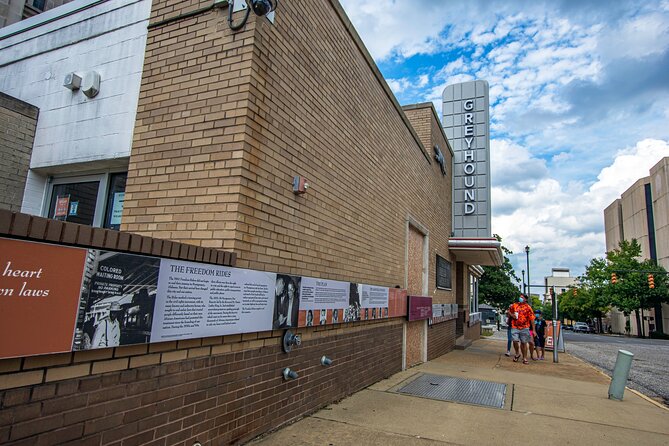
The next major stop is the Freedom Rides Museum. Here, the focus shifts from the Montgomery Bus Boycott to the young people who challenged segregation on interstate buses.
The Freedom Riders traveled through Alabama despite the danger. They were attacked for testing rulings that said interstate bus segregation was illegal. The story adds urgency to the route because it shows how violence and intimidation were used to preserve the existing system.
The outdoor audio stop takes about five minutes, and admission to the museum is not included. As with the Rosa Parks Museum, you can pause the tour and go inside separately. That flexibility is one of the strongest features of this experience. You can keep the basic walk close to an hour, or turn it into a longer history outing with museum visits.
The Freedom Rides Museum is particularly useful if you want the route to move beyond the best-known names. The walk discusses Rosa Parks and Martin Luther King Jr., but this stop brings attention to the wider group of people who took direct risks.
Stop three: Court Square, where several chapters meet
Court Square is one of the most layered places on the route. The narration connects it with the history of slavery, Rosa Parks’ bus stop, and the beginning of the Civil War.
It is also where the practical scale of the city becomes clearer. You are not being taken to isolated monuments. The bus routes, courthouse, streets, and public spaces are close together, which helps you understand how an ordinary downtown setting became a stage for major events.
Rosa Parks waited for her bus at Court Square. Standing there after hearing the opening story gives the bus boycott a more physical setting. You can picture the distance between daily routines and the public confrontation that followed.
This stop is free, and the audio allows about ten minutes. Take advantage of that time. Court Square is a good place to pause, look around, and let the different periods of Montgomery’s past sit together. The tour moves quickly enough that you should not expect a long lecture at each stop, but the pause function lets you set your own pace.
Stop four: Dexter Avenue and the march route
The walk continues along Dexter Avenue, following part of the route used during the Selma to Montgomery March. The narration explains the avenue’s role in local history and connects it with the larger fight for voting rights.
This section works best when you pay attention to the route itself. The point is not only to hear that marchers reached Montgomery, but to walk along some of the same downtown streets. You get a sense of the final approach to the center of state power.
The route is generally described as manageable for anyone in reasonable shape, but Montgomery heat can change the experience. One person used the tour by driving from stop to stop on a very hot day. That is not the intended walking format, but it shows how the GPS structure can be adapted if you need a break.
For most people, the better plan is to walk in the cooler part of the day and use the museums as air-conditioned pauses. Wear comfortable shoes, carry water, and remember that the $9.50 price does not include food or drinks.
Stop five: Chris’ Famous Hotdogs
Chris’ Famous Hotdogs adds a welcome everyday stop to a serious historical route. The restaurant is associated with Martin Luther King Jr., Elvis, and several U.S. presidents, and the audio presents it as a long-running gathering place for people in Montgomery.
Food is not included, but you can stop for a hot dog, a drink, or a break. This is one of the most enjoyable features of the route because it connects famous figures with an ordinary local institution. History does not happen only in courthouses and churches. Sometimes it is also tied to a counter where people eat, talk, and meet.
The planned stop is about five minutes, though your actual visit will depend on whether you order food. If you are trying to finish in just over an hour, keep it brief. If you have built in lunch, this is a natural place to make the tour longer.
The stop also helps break up the route. The subject matter is heavy, and a short food break can give you time to process what you have heard before continuing to Dexter Avenue King Memorial Baptist Church.
Stop six: Dexter Avenue King Memorial Baptist Church
The church is one of the central places in Martin Luther King Jr.’s Montgomery story. He began his ministry here, preached here, and helped unite local people during the bus boycott.
The narration focuses on his early work in Montgomery rather than treating him as a distant national figure. That is valuable because the city was where his public leadership developed through local organizing, sermons, and resistance.
The tour stops outside, and admission to the church is not included. If you want to enter, you will need to arrange that separately and pause the audio. The outdoor visit still gives the building a clear role in the route, especially after the earlier stops have explained the boycott and the legal fight.
This is also a good point to slow down. The route does not require you to keep moving at the exact pace of the narration. The strongest parts of the experience come when you connect the sound in your headphones with the actual street and building in front of you.
Stop seven: The Alabama State Capitol and the final speech
The tour ends at the Alabama State Capitol at 11 South Union Street. This is the endpoint of the Selma to Montgomery March and the place where Martin Luther King Jr. delivered How Long, Not Long.
The final narration includes a clip from the speech and explains how the march helped change the country. Ending here gives the walk a clear arc: you begin with Rosa Parks’ arrest and finish at the seat of state government, after passing through the boycott, court challenges, Freedom Rides, church leadership, and voting rights march.
There is no return loop to the Rosa Parks Museum. That matters if you park near the starting point. You will need to walk back, arrange another ride, or plan for a car service. Some people appreciate finishing at the Capitol, while others would prefer a circular route.
The Capitol stop is free, and the tour takes about five minutes here. Give yourself a little extra time if you want to listen to the speech clip again or look across the grounds before leaving.
What the $9.50 price really buys you
At $9.50, the tour is good value for a self-guided introduction to Montgomery’s civil rights sites. You get the audio, GPS directions, app access, and the ability to replay the tour later. The tour does not expire, so you can take it again or split it across two days.
That last point changes the value. You do not need to force every stop into one hour. You can walk the first section one day, visit a museum, and finish the next day. You can also listen again from home after seeing the sites.
The price does not cover museum tickets, food, drinks, or entry to any building. If you visit both the Rosa Parks Museum and Freedom Rides Museum, your total cost will be higher. Still, the base price is low compared with a live private tour, and you are not paying for a guide during time you spend inside a museum or eating lunch.
The experience is best for independent visitors, couples, families, solo explorers, and anyone who wants a private schedule. It is less suitable if you dislike smartphone apps, want constant personal commentary, or do not feel comfortable downloading and activating digital content.
Timing, weather, and practical planning
Plan on 65 to 75 minutes for the walking portion. Add time for photographs, museum visits, food, and pauses. The route is available daily, and you can choose the start time, but early morning or late afternoon may be more comfortable during hot weather.
The walk is not described as difficult, and most participants can take part. Service animals are allowed, and the route is near public transportation. The tour is outdoors, so weather matters. If a storm arrives, you can delay the walk, though changes made within 24 hours of the scheduled start are not accepted under the cancellation policy.
Free cancellation is available up to 24 hours before the start time. Canceling inside that window does not qualify for a refund.
Before you begin, charge your phone, open the correct email, and test the audio. If the narration does not start at a stop, check that you are in the correct location and use pause or forward controls rather than assuming the tour has failed. A little preparation makes the experience much smoother.
Should you book the Montgomery Walk of Freedom?
I would book this tour if you want a low-cost, flexible introduction to Montgomery’s civil rights landmarks and are comfortable using a smartphone. The strongest parts are the clear route, the location-based storytelling, the ability to pause for museums, and the way the walk ends at the Capitol with King’s speech.
I would not choose it as your only option if you want a live guide, detailed discussion at every site, or included admission. The app can take a little patience to set up, and a few phones may have trouble with audio or images.
For the best version of the experience, set up WalknTours before arriving, begin at the Rosa Parks Museum, leave time for at least one museum, stop at Chris’ Famous Hotdogs if it fits your schedule, and do not rush the final Capitol stop. At $9.50, it is a practical way to put Montgomery’s most important civil rights places into a connected story.
FAQ
How long does the Montgomery Civil Rights Walk of Freedom take?
The walking portion takes approximately 1 hour and 5 minutes to 1 hour and 15 minutes. Museum visits, food stops, photographs, and extended pauses take additional time.
Where does the tour begin?
It begins outside the Rosa Parks Museum at 252 Montgomery Street, Montgomery, Alabama 36104.
Where does the tour end?
It ends at the Alabama State Capitol, 11 South Union Street, Montgomery, Alabama 36130, on the stairs connected with the end of the Selma to Montgomery March and Martin Luther King Jr.’s How Long, Not Long speech.
Is this a guided tour with a person?
No. It is a self-guided GPS audio tour in the WalknTours smartphone app. There is no in-person guide.
Are museum admissions included?
No. Admission to the Rosa Parks Museum, Freedom Rides Museum, and Dexter Avenue King Memorial Baptist Church is not included. The tour takes place outside.
Can I pause the tour?
Yes. You can pause the audio for museums, food, weather, or extra time at a stop, then continue later.
Is food included at Chris’ Famous Hotdogs?
No. Chris’ Famous Hotdogs is a stop on the route, but food and drinks must be purchased separately.
Does the tour expire?
No. The tour does not expire, and you can take it again as often as you like. You may also listen again virtually after completing it on location.
Can I cancel for a refund?
Yes, if you cancel at least 24 hours before the scheduled start time. Cancellations made less than 24 hours before the start time are not refunded.
Just added around the USA
- Smartphone-Guided Walking Tour of Downtown Indianapolis Sights & Stories★ 4.0 · 25 reviews
- Springfield Self-Guided Walking Audio Tour★ 4.0 · 5 reviews
- Smartphone Guided Indianapolis Downtown Sites Audio Walking Tour★ 4.5 · 7 reviews
- Indiana Dunes National Park Self-Guided Audio Tour★ 3.5 · 4 reviews
- Self-Guided Audio Driving Tour in Kancamagus Highway★ 4.5 · 6 reviews
- An Epic Scavenger Hunt: Bloomington Scenic Southern Indiana★ 3.5 · 6 reviews
- Huntsville Rocket City Smart Phone Self Guided Audio (GPS/APP) Walking Tour★ 4.5 · 5 reviews
- Sights of Downtown Houston Smartphone Audio Walking Tour★ 4.0 · 7 reviews
USA Audio Tours, compared.
Fort Sumter Admission and Self-Guided Tour with Roundtrip Ferry
Read our review →
San Francisco: Alcatraz Ticket, Ferry, & Self-Guided App
Read our review →
Los Angeles: Hop-On Hop-Off Bus Tour with Audio Guide
Read our review →
City Sightseeing Hop-On Hop-Off Bus Tour with Audio Guide
Read our review →
Medieval Torture Museum Ticket with Audio Guide and Ghost Hunting
Read our review →

Ryman Auditorium Self-Guided Tour with Souvenir Photo Onstage
Read our review →
Red Rock Canyon Self-Guided Electric Bike Tour
Read our review →Browse the lists this tour appears in