

REVIEW · MAUI AUDIO TOURS
Self-Guided Audio Driving Tour in Road To Hana
The best thing about this Road to Hana audio tour is that it turns a demanding drive into a flexible day out. Your phone plays stories, directions, and stop advice as you approach each point, even when cell service disappears. I especially like the freedom to skip crowded stops and the way the narration adds Hawaiian history to stretches of road that might otherwise blur together.
The $19.99 price covers everyone in your vehicle, up to eight people, so it is a strong deal compared with a private vehicle tour. I also like the practical timing advice, including the need to start early and reserve Waiʻānapanapa State Park. The main drawback is setup: you must redeem a voucher, download the GuideAlong app, and download the tour before leaving reliable Wi-Fi.
Key points to know before driving
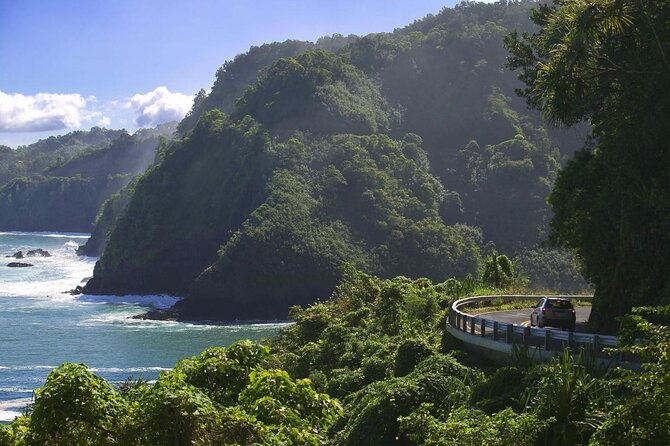
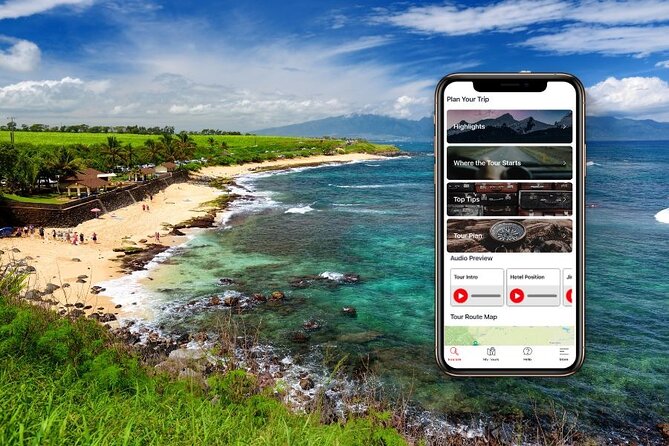
- GPS-triggered narration: Commentary starts automatically as you approach sights, with no cell service needed after downloading the tour.
- One purchase covers the car: The $19.99 fee applies to a group of up to eight people, not each passenger.
- Uncle George in the front seat: The friendly narrator is often nicknamed Uncle George, though the official materials do not give his actual name.
- Reservations matter: Waiʻānapanapa State Park requires timed entry, and that reservation is not included.
- Plan a full day: Eight hours is a rough minimum, while stopping often and hiking can push the outing toward 16 hours.
- You control the route: Start, pause, resume, skip stops, or use the suggested half-day, full-day, and multi-day plans.
Why this self-guided drive works so well
The Road to Hana is not just a route from one town to another. It is a narrow, winding highway lined with waterfalls, tropical plants, sea cliffs, old taro terraces, beaches, and small communities. The hard part is deciding where to stop without spending the whole day staring at a map.
This tour handles that job from the passenger seat. As your phone’s GPS tracks your position, the narration points out upcoming sights and tells you what deserves a stop, what can be viewed quickly, and what may not fit your schedule. It feels more useful than a simple recorded history lesson because the advice arrives when you need it.
The warm voice, often called Uncle George by people using the tour, adds a little personality without taking over the drive. You get history, cultural context, jokes, food suggestions, and practical warnings. On the return trip, the commentary can provide different stories, so the drive back does not have to feel like a repeat performance.
I would not treat the audio as a substitute for paying attention. The road has many curves and one-lane bridges, and you need to pull over for local traffic. Let the passenger handle the app and keep the driver focused on the road.
More Self-Guided Driving Tours in the USA
- Gettysburg Battlefield Self-Guided Driving Audio Tour
★ 4.5 · 910 reviews - Joshua Tree National Park Self-Guided Driving Audio Tour
★ 4.5 · 762 reviews - Ultimate Acadia National Park Self-Guided Driving Audio Tour
★ 4.0 · 521 reviews
The $19.99 price and what you actually receive
At $19.99 per group, this is one of the more economical ways to organize a Road to Hana day. A family of four or a full car pays the same amount, and the purchase never expires. You can use it on a later day if weather, reservations, or your schedule changes.
The package includes about 140 location-based points, suggested routes, trip planners, and access through the GuideAlong app. You can also use the planners on the web or in PDF form before setting out. That matters because the Road to Hana offers more stops than most people can fit into one day.
The value comes from helping you make decisions. You are not paying for transport, admission, or a human guide. You are paying for route planning, timely commentary, and the chance to hear useful information without joining a large coach group.
Extra costs remain your responsibility. The Hana Lava Tube, Twin Falls, Upper Waikani Falls, and other stops may have admission or parking costs, and entry to Haleakalā National Park is not included. Waiʻānapanapa State Park also requires advance reservations and timed entry.
Start early, then let the GPS guide the morning
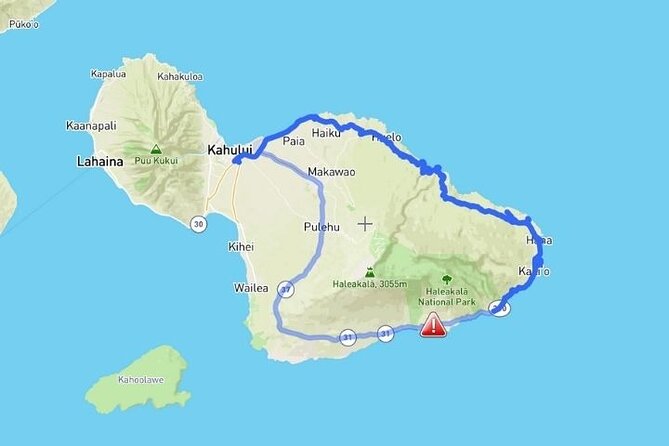
A start around 8 a.m. or earlier gives you more room for stops and helps you avoid driving the road in darkness. The tour can begin anywhere along the route, but starting near the western end of the Hana Highway gives you the full sequence of commentary and sights.
Before leaving, redeem the voucher from the email or text message, sign in with your Apple or Google account, download the free GuideAlong app, and download the Road to Hana tour under My Tours. Bring a USB car charger, since GPS use and audio can drain a phone battery.
The tour works offline once downloaded. That is a major advantage here, since parts of the drive have weak or nonexistent cell service. The GPS can still trigger the commentary because the tour relies on your phone’s location chip, not a live internet connection.
Ho‘okipa is your first big coastal stop
Ho‘okipa is a good early pause, especially if you want to see world-class windsurfers. The beach is exposed to steady wind and strong currents, so it is not recommended for swimming. You may also see sea turtles resting near the far right side of the beach.
Give the turtles plenty of room and never touch them. Restrooms, showers, and picnic areas make Ho‘okipa a practical first break, even if you only stay for half an hour.
The audio guidance is useful here because it helps you decide whether to stop for the full view or continue toward the more time-consuming inland sights. If you leave late, do not feel obliged to linger at every early viewpoint.
Same place, a different route to walk:
- Fort Sumter Admission and Self-Guided Tour with Roundtrip Ferry
★ 4.5 · 3,343 reviews - San Francisco: Alcatraz Ticket, Ferry, & Self-Guided App
★ 4.5 · 2,460 reviews - Los Angeles: Hop-On Hop-Off Bus Tour with Audio Guide
★ 3.7 · 2,030 reviews - City Sightseeing Hop-On Hop-Off Bus Tour with Audio Guide
★ 3.0 · 1,083 reviews
Twin Falls brings the first worthwhile walk
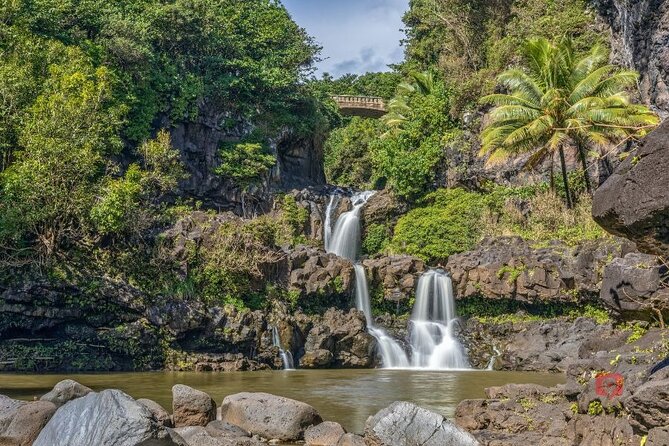
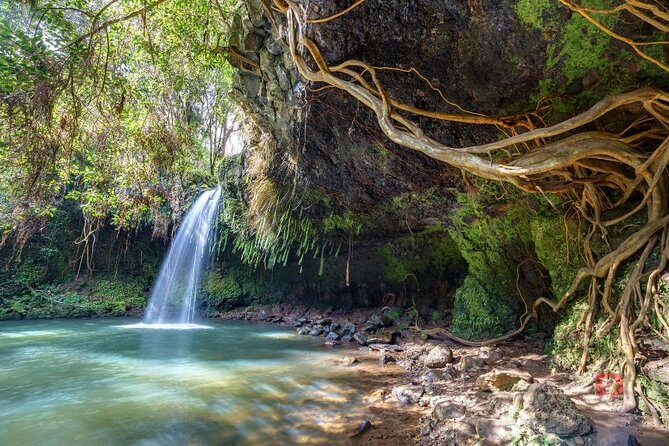
Twin Falls is often the first place where you will want to leave the car and stretch your legs. The trail offers streams, bamboo, and waterfall views, with choices about how far you go. The full route can be about 1.5 miles, but you do not need to walk every section.
Expect mud, especially after rain, and wear shoes that can handle wet ground. A farmstand offers tropical fruit smoothies, which makes this a pleasant morning stop. Admission is not included, so check current access conditions before counting on it.
I like this stop for families and casual walkers because it offers a taste of the rainforest without demanding a major hike. It can also eat up time quickly, so use the audio planner to decide if you have enough daylight for the later stops.
Ke‘anae Arboretum shows Maui’s tropical side
The Ke‘anae Arboretum is free and easy to visit. In less than 30 minutes, you can see golden-stemmed bamboo, ginger, papaya, hibiscus, and the famous rainbow eucalyptus trees.
The eucalyptus bark has stripes of green, red, orange, and purple that look almost painted. Follow the trail along Piʻinaʻau Stream for views of terraces once used by ancient Hawaiians to grow taro.
This is a smart choice if you want a short, low-cost stop with something different from waterfalls and ocean views. The trail is not a major hike, but the route’s plant life and old agricultural terraces give you a clearer sense of how people used this valley.
Ke‘anae Point adds history to the sea view
Ke‘anae Point sits on a flat peninsula formed by lava flowing from Haleakalā. The result is a dramatic rocky shoreline and a small area that supported taro farming.
Look for the old church made from coral and lava rock. Waves strike the sharp coastal formations, and the point is a fine place to pause for photographs or a quiet look at the ocean.
The stop can be brief, around 20 minutes, but it rewards a slower pace if the sea is active. Take care near the shore, since the rocks and waves are the main attraction and there is no reason to get close to the water’s edge.
Hana Lava Tube offers a short underground adventure

The Hana Lava Tube is Maui’s most accessible lava tube. You can enter only as far as you feel comfortable, which makes it workable for people who are curious about caves but dislike tight spaces.
A visit can take about 30 minutes, although the attraction charges admission. The audio guide helps you fit it into the day rather than treating every stop as mandatory.
This is a good swap for a waterfall stop if you want variety. It also gives you an indoor option if rain makes the roadside trails less appealing.
Upper Waikani Falls depends on recent rain
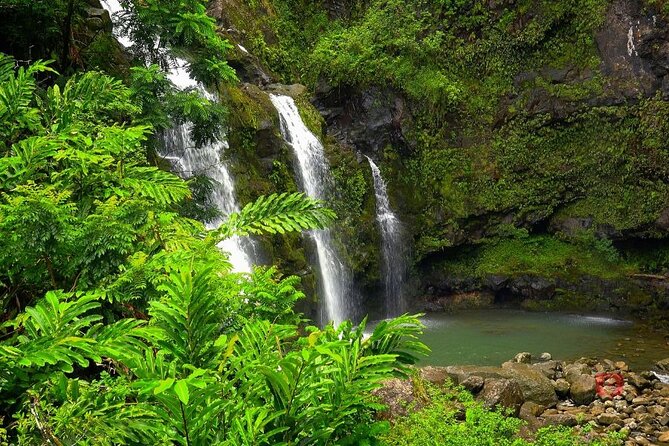
Upper Waikani Falls is also known as Three Bears Falls. After heavy rain, the water may appear as one thick cascade. With less flow, three separate falls become easier to see: one large, one medium, and one small.
The viewpoint is brief, often about 20 minutes, and conditions can change quickly. Do not judge the stop only by photographs you have seen. The amount of water makes a real difference.
The audio commentary is helpful because it gives you the story behind the nickname while you approach the viewpoint. You can decide on the spot if it deserves a longer pause.
Koki Beach and Hamoa Beach make a useful pair
The turnoff near Koki Beach also gives you a view of Alau Island, an offshore cinder cone. The area connects to old Hawaiian legends involving Pele, the goddess of volcanoes, and the demigod Maui.
Koki is more about the view and cultural stories than a long beach stay. Hamoa Beach, by contrast, is a pleasant place to stretch out on sand, cool off, or rest under a tree. Restrooms and showers are available, but there are no lifeguards.
Swimming depends on conditions, so keep children close and do not assume the water is safe simply because the beach looks calm. A 30-minute pause at Hamoa can refresh you before the longer drive toward Waiʻānapanapa.
Waiʻānapanapa needs advance planning
Waiʻānapanapa State Park is one of the biggest reasons to drive this route. Its black sand beach and volcanic shoreline offer sea arches, a blowhole, and rough coastal rock shaped by lava.
Plan on about two hours if you want to explore beyond the beach. The park also carries important Hawaiian legends, which gives the audio commentary a useful role. You are not just stopping for a photograph, you are getting context for the place.
Most important, reserve entry ahead of time. Timed reservations are required, and the tour price does not include admission. Without a reservation, you may not be able to enter even after driving a long way to reach the park.
Pipiwai Trail is the day’s major hike
At the far end of the route, Pipiwai Trail in the Kīpahulu area of Haleakalā National Park is the strongest choice for serious walking. The full route is a four-mile loop with about 650 feet of elevation gain.
The hike is rated moderate, but heat can make it feel strenuous. You pass through bamboo forest and reach views of Makahiku Falls. If the climb is wearing you down, that viewpoint is a sensible place to turn around.
The reward for continuing is Waimoku Falls, the trail’s farthest point and main attraction. Allow at least two hours, depending on your pace, and try to reach the trail by 2 p.m. if you plan to return the same day.
You need a Haleakalā National Park pass or must purchase one on arrival. The tour does not include it. Also note that the drive back can be tiring after the hike, so this stop is best for an early start and a group comfortable with a long day.
What the drive feels like in practice
The tour is built for independent driving, not for a fixed group schedule. You can pause the narration at a viewpoint, skip a stop, or resume later. The app adjusts to your location and driving direction, which means you do not have to follow a rigid list in perfect order.
That flexibility is valuable because the Road to Hana changes with weather, traffic, parking, and your own energy. A waterfall may be worth a stop after rain, while a muddy trail may be less appealing later in the day.
The main technical weakness is the setup process. Most people should have no trouble if they redeem the code and download everything in advance, but it is not simply a pay-and-click experience. If you are not comfortable with apps, ask a member of your group to handle installation before the morning of the drive.
GuideAlong offers phone, chat, and email support daily. Still, do not wait until you are on a remote stretch of road to solve the problem.
Who should book this Road to Hana tour?
I would choose this tour if you want to drive yourself, keep the cost low, and decide how long to spend at each stop. It suits couples, families, friends, and solo drivers with a passenger available to manage the phone.
It is especially useful for first-time visitors who want more than directions. The stories explain Hawaiian culture and local history, while the stop-by-stop advice helps you avoid missing small turnoffs and optional sights.
I would think twice if you want a human guide, hotel pickup, or someone else to handle the driving. The audio tour cannot replace a driver, provide live judgment about road conditions, or guarantee entry to reserved parks.
Should you book it?
For $19.99 per vehicle, I think this is a smart buy for a self-guided Road to Hana day. The strongest reasons are the offline GPS commentary, the flexible pacing, the practical stop advice, and the fact that one purchase covers up to eight people.
Book it before your drive, download the route on Wi-Fi, reserve Waiʻānapanapa, and start early. If you do those things, the tour gives you a helpful voice in the car without locking you into somebody else’s schedule.
FAQ
How much does the Road to Hana audio tour cost?
The tour costs $19.99 per group, covering up to eight people in one vehicle.
How long should I allow for the tour?
The suggested duration is about eight to 16 hours. The actual time depends on how many stops you make, whether you hike Pipiwai Trail, and how long you spend at places such as Waiʻānapanapa State Park.
Does the audio tour work without cell service?
Yes. Download the tour before departure, and the location-based audio can play offline using your phone’s GPS.
Do I need a reservation for Waiʻānapanapa State Park?
Yes. Timed entry reservations are required. The reservation and park admission are not included in the audio tour price.
Is the Haleakalā National Park pass included?
No. You need to show an existing National Park Service pass or purchase one when you arrive at the Pipiwai Trail area.
Can I cancel the tour for a refund?
You can cancel at least 24 hours before the experience start time for a full refund. Cancellations or changes made within 24 hours are not refunded or accepted.
Just added around the USA
- Smartphone-Guided Walking Tour of Downtown Indianapolis Sights & Stories★ 4.0 · 25 reviews
- Springfield Self-Guided Walking Audio Tour★ 4.0 · 5 reviews
- Smartphone Guided Indianapolis Downtown Sites Audio Walking Tour★ 4.5 · 7 reviews
- Indiana Dunes National Park Self-Guided Audio Tour★ 3.5 · 4 reviews
- Self-Guided Audio Driving Tour in Kancamagus Highway★ 4.5 · 6 reviews
- An Epic Scavenger Hunt: Bloomington Scenic Southern Indiana★ 3.5 · 6 reviews
- Huntsville Rocket City Smart Phone Self Guided Audio (GPS/APP) Walking Tour★ 4.5 · 5 reviews
- Sights of Downtown Houston Smartphone Audio Walking Tour★ 4.0 · 7 reviews
Maui Audio Tours, compared.


Best Haleakala Downhill Self-Guided Bike Tour with Maui Sunriders
Read our review →
Haleakala Express Self-Guided Bike Tour with Bike Maui
Read our review →
Shaka Guide Maui “Classic” Road to Hana Audio Driving Tour
Read our review →

Haleakala Summit Best Self-Guided Bike Tour with Bike Maui
Read our review →
Maui Adventure Bundle: 6 Epic Audio Driving Tours, Including Road to Hana
Read our review →
Browse the lists this tour appears in