
REVIEW · USA AUDIO TOURS
Indiana Dunes National Park Self-Guided Audio Tour
Mount Baldy can move about 10 feet a year, and the dunes here preserve 13,000 years of Lake Michigan’s changing shoreline. This self-guided drive connects those natural stories with beaches, birding trails, immigrant history, Indigenous culture, and odd little surprises such as a cemetery in the woods and a homemade maple syrup operation. The park is far more than sand and swimming.
I like the freedom to skip stops or spread the route over several days, and I like the automatic GPS narration, which lets you keep your eyes on the road. At $15.99 per group of up to 15 people, it is also a strong deal for a full carload. The main drawback is that the route is large, and one person who tried it was sent an hour out of the way before giving up. Download everything on Wi-Fi and check the directions before setting off.
Key points at a glance
- One price for the whole car: Up to 15 people can use the tour for $15.99, with no per-person audio fee.
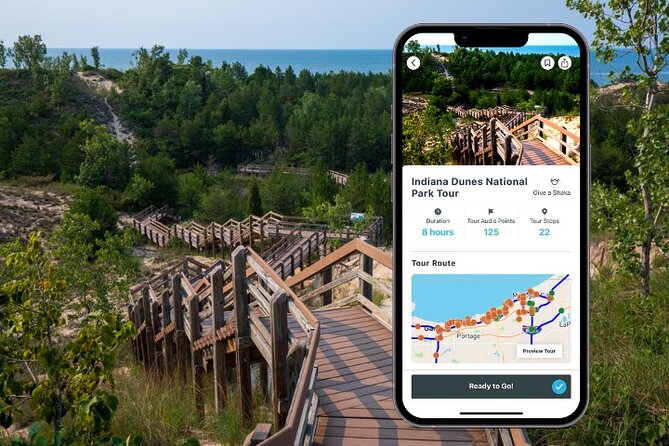
- Twenty-two stops across a wide area: Beaches, wetlands, dunes, historic buildings, prairie, and visitor centers are all included.
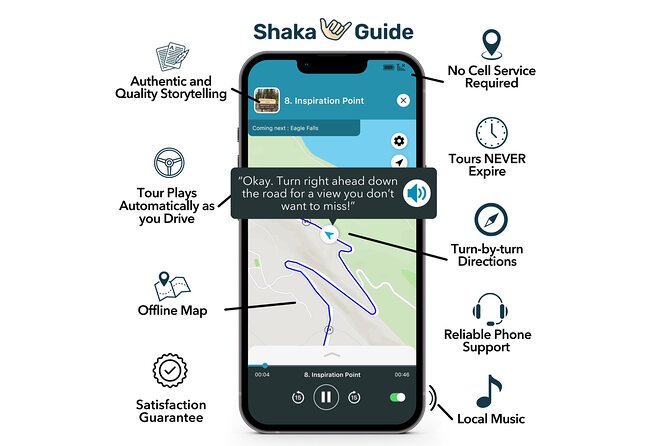
- GPS-triggered narration: Stories, music, directions, and tips play as you drive, with an offline map for areas with weak service.
- The best stops are varied: Look for spring flowers at Heron Rookery, historic homes at Bailly, maple syrup at Chellberg Farm, and birdlife at Great Marsh.
- Plan for park fees and parking: Indiana Dunes State Park charges a separate entrance fee, and parking fees are not included.
- Allow more than one day if possible: The full route is designed for about 12 hours, but the tour never expires.
What this Indiana Dunes audio tour actually does
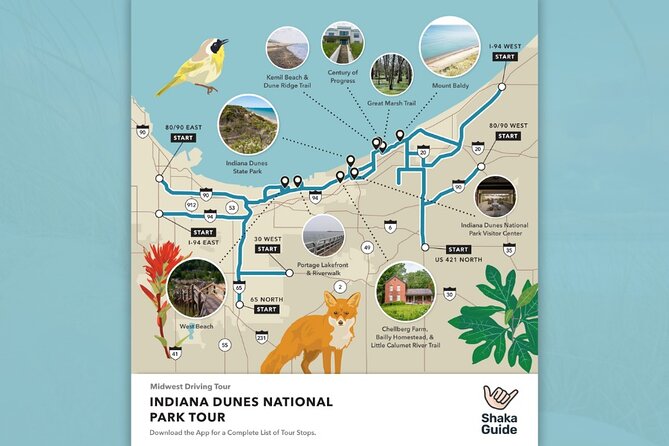
This is a private, self-guided driving tour made for your own vehicle. You start at 5648 US-6 in Westville and finish near the Paul H. Douglas Center for Environmental Education in Gary. Additional starting points are listed at New Buffalo and Sherwood Forest Paintball.
After booking, you receive instructions and a redeem code for the Shaka Guide app. Download the tour over strong Wi-Fi, open it from the My Stuff tab, choose the starting point, and follow the GPS route. The audio should trigger as you drive, so you do not need to keep touching your phone.
The narration is in English. It includes park background, turn-by-turn directions, music, food and activity suggestions, and short stories tied to individual stops. The narrator’s name is not provided, but the tone is relaxed and conversational. One useful feature is the offline map, since you do not need a constant data connection once the tour has been downloaded.
The route takes about 12 hours if you attempt the whole thing. That is a lot for one day, especially if you plan to walk several trails or swim. I would treat the route as a menu, not a race. Pick a cluster of stops, pause the tour, and continue another day if needed. The tour does not expire.
More National Park Audio Tours in the USA:
- Joshua Tree National Park Self-Guided Driving Audio Tour
★ 4.5 · 762 reviews - Ultimate Acadia National Park Self-Guided Driving Audio Tour
★ 4.0 · 521 reviews - Self-Guided Ebike Tours of Acadia National Park Carriage Roads
★ 5.0 · 427 reviews
Start with Heron Rookery, then meet a wandering dune
The Heron Rookery Trail Auxiliary West Lot is a calm opening stop. The trail is an easy 3.3-mile walk through a bird sanctuary. The Great Blue Herons that once nested here have moved elsewhere, but the site still offers chances to see kingfishers, warblers, red-headed woodpeckers, and yellow-bellied sapsuckers.
Spring brings small wildflowers. Look for Harbinger of Spring, with white petals and dark purple stamens, and yellow trout lilies, whose blossoms resemble little banana peels. The audio story helps you notice details you might otherwise pass on a simple drive.
At Mount Baldy, the subject changes from woodland to moving sand. The dune rises about as high as a 12-story building and can shift up to 10 feet each year. Earlier foot traffic damaged the grass that once held it in place, so wind now pushes the sand toward the parking lot.
Getting to the beach takes a half-mile round trip around the dune, with stairs. This is a short stop in the suggested timing, but it can take longer if you want beach time. Stay on the approved route and follow current park guidance, since the direct slopes are not meant for casual climbing.
Beaches, birds, and the hazards of Lake Michigan
Central Avenue Beach has seasonal restrooms, drinking water, and two picnic tables at the west end of the parking lot, up the stairs. The restrooms are wheelchair accessible, but the beach and picnic tables are not. There are no lifeguards, and rip currents and waves can make swimming unsafe.
In spring and summer, watch for bank swallows moving in and out of their dune nests. This is a good example of the tour’s value: instead of seeing only a beach, you get a reason to look up at the sandy banks and pay attention to seasonal wildlife.
The Great Marsh Trail offers an easier birding walk beside the largest wetland complex in the Lake Michigan watershed. A separate paved path leads to an observation deck, making this one of the more accessible stops. Ducks, geese, herons, egrets, warblers, and red-winged blackbirds are among the species you might find.
Lake View Beach is a smaller stop with a local food note. In spring, smelt may be caught here. The tour suggests the traditional preparation: flour, a shallow fry, and eating the small fish whole. That sort of practical, place-specific detail gives the drive more character than a list of generic viewpoints.
Dunbar Beach has seasonal restrooms and drinking water. The paved lot can fill quickly on summer weekends, and there are no lifeguards. Kemil Beach has year-round restrooms and drinking water, but its lot can also fill during busy summer periods.
Kemil is worth extra time if you enjoy night skies or nocturnal animals. The nearby Dune Ridge Trail is one of the park’s most varied short walks, crossing wooded dunes and black oak savannas with views toward the Great Marsh and Lake Michigan.
Century of Progress homes and the story of Beverly Shores
The five Century of Progress homes are among the route’s most unusual sights. They first appeared at the 1933 Chicago World’s Fair as part of the futuristic Homes of Tomorrow display. After the fair, a developer moved five houses to this area and named his new community Beverly Shores after his daughter.
The homes are now owned by the National Park but leased to private residents who maintain them. You cannot normally enter because people live there. An annual tour takes place each September, but tickets usually sell out within an hour, so do not build your trip around getting inside.
This stop works best for architecture fans and anyone interested in how an exhibition can be moved into a working community. It is a quick roadside look rather than a museum visit.
More National Park Trips in the USA:
- Great Smoky Mountains National Park Self-Guided Driving Tour
★ 4.0 · 292 reviews - Arches National Park Self-Guided Driving Audio Tour
★ 4.5 · 288 reviews - Yellowstone National Park Self-Guided Driving Audio Tour
★ 4.5 · 249 reviews - Self-Guided GPS Audio E-Bike Tour Hawaii Volcanoes National Park
★ 4.5 · 131 reviews
Indiana Dunes State Park is separate, busy, and worth knowing about

The route includes Indiana Dunes State Park, but this is separate from Indiana Dunes National Park. That distinction matters. The state park requires its own entrance fee, and on busy days you may wait in line while staff direct traffic.
The park offers the 3-Dune hiking challenge, a beach pavilion with a general store and restaurants, and a bird observatory west of the pavilion. In winter, the 100-foot Devil’s Slide provides a sledding hill. A historical marker near the pavilion identifies the site of the 1780 Battle of Petit Fort.
Porter Beach sits beside the state park beach but has none of the same amenities. You can park there and walk about a quarter mile along the beach to the state park. Seasonal restrooms are available at the parking lot, but there are no lifeguards.
The audio tour is especially helpful here because it prevents a common mix-up: you are moving between two different park systems. Check fees and parking conditions before you go, since neither is covered by the $15.99 audio purchase.
Ancient shorelines and serious hiking at Cowles Bog
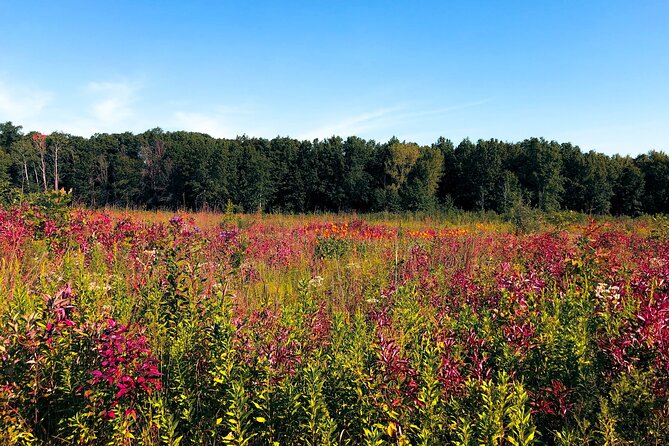
The Little Calumet River Trail is popular for summer birding and winter cross-country skiing. The narration adds a useful time scale: the Calumet Dunes Ridge was once the shoreline of Lake Michigan, and the water has receded about one and a half miles over the past 12,000 years.
Glenwood Dunes offers a larger trail system for hikers, runners, horseback riders, and cross-country skiers. Routes range from less than a mile to 6.8 miles, with extensions reaching more than 15 miles. There are 13 trail junctions, so bring a trail map. These are the park’s oldest dunes, at about 13,000 years old.
Cowles Bog is a different kind of walk. The trail covers 4.7 miles with 202 feet of elevation gain and includes steep climbs in loose sand. It is moderate and rugged, not a casual stroll. The site honors ecologist Henry Cowles, whose work on how plants respond to environmental change helped give Indiana Dunes its reputation as the birthplace of ecology.
If you want short walks and scenic stops, skip Cowles Bog. If you enjoy natural science and do not mind sandy climbs, it is one of the most meaningful hikes on the route.
Bailly Cemetery, Bailly Homestead, and Chellberg Farm
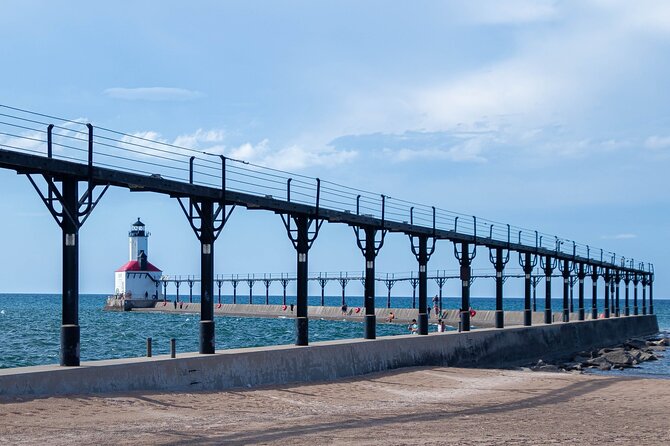
The shortcut to Bailly Cemetery is less than half a mile round trip. It leads to an old cemetery tucked into the woods and tells the strange story of how one family took control of the burial ground and made it their own. This is a quick stop with a slightly eerie feel, especially for history fans.
Nearby, Bailly Homestead is a National Historic Landmark tied to Joseph and Marie Bailly. Joseph established a trading post here in 1822, and for a time the homestead was the only stopping point between Chicago and Detroit.
The site includes five buildings, from log cabins and brick structures to the large late 19th-century main house. The suggested visit is longer than at most beach stops, so allow time to read and look closely.
Chellberg Farm brings the story into the 20th century. Swedish immigrants bought the land in 1869. Their first wooden farmhouse burned in 1884, and the brick replacement you see today went up the following year.
The family began making maple syrup in the 1930s. Walk past the syrup shack on the way to the farm, and check the park calendar for ranger programs that may let you tour the farmhouse or feed cows, chickens, and goats. Each March, the park holds a maple syrup festival. It is also the only national park in the country that makes its own maple syrup.
Prairie, riverfront, and 5,000-year-old dunes
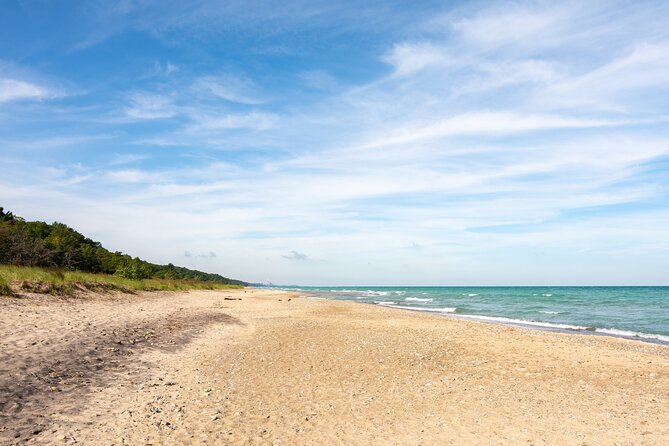
Mnoké Prairie is a restored tallgrass prairie that shows what this area looked like before European-American settlement. The open habitat can be good for spotting double-breasted cormorants, rock pigeons, and Cooper’s hawks.
Portage Lakefront and Riverwalk combines an easy trail of just under a mile with a beach and river views. The pavilion has snacks, gifts, restrooms, and ranger programs. Spring and summer are good seasons for bird observation, while winter may bring shelf ice along Lake Michigan.
Tolleston Dunes Trail is about three miles and moderately difficult because it rises and falls over the dunes. It can become soggy after rain, though the trees provide plenty of shade. Watch for prickly pear cactus, sassafras, and wild blue lupine. At nearly 5,000 years old, these dunes offer another reminder that the park’s natural story is measured in thousands of years, not just in a weekend visit.
West Beach and Marquette Park near Gary
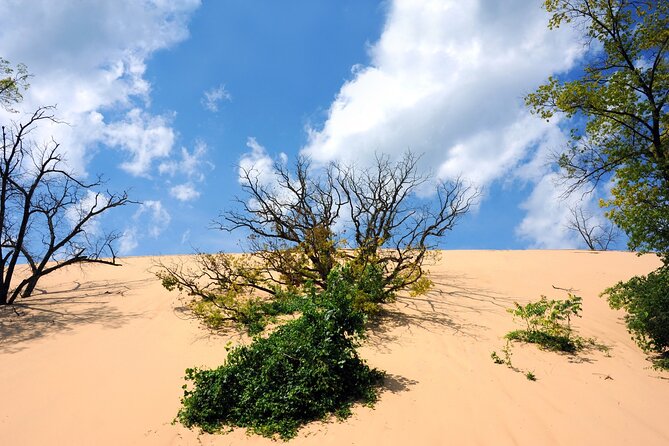
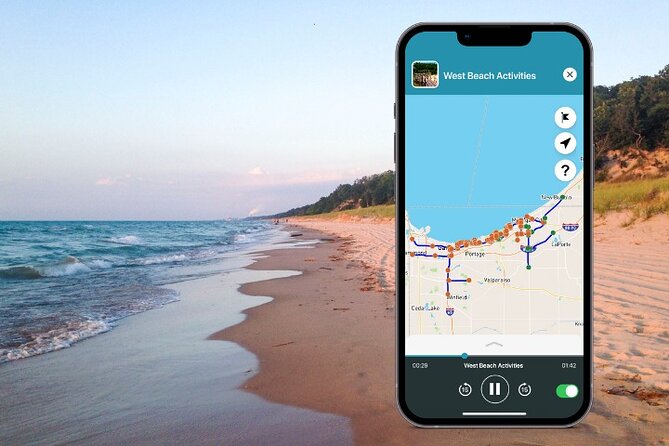
West Beach is the largest and busiest beach in the national park. You can swim, sunbathe, search the sand, watch birds, or use the picnic area near the parking lot. There is also a marked area for dune climbing.
For a stronger physical challenge, try the one-mile Dune Succession Trail. It includes 270 steps to the top of Diana’s Dune. The Long Lake Loop offers a gentler mix of forest, wetlands, and rolling dunes.
Marquette Park is owned by the city of Gary and lies outside the national park. It has a playground, concession stand, hiking trails, disc golf, and a beach. The Gary Bathing Beach Aquatorium, built in 1921, is the architectural highlight.
The Paul H. Douglas Center for Environmental Education sits near Miller Woods, just outside Gary. Its exhibits cover park wildlife, and the center provides access to trails. The Miller Woods Loop is less than a mile and passes through several habitats, with lake views along the way.
Is $15.99 good value?
For one person, the price is reasonable. For a couple or family, it becomes a very good deal because one purchase covers the entire vehicle, up to 15 people. You are paying for the narration and navigation, not admission to the attractions.
That distinction matters. Entrance fees, parking, transportation, meals, and refreshments are extra. The Indiana Dunes State Park fee is the clearest additional cost. The national park stops listed here do not require an admission ticket, but parking rules and conditions can still vary.
The value is strongest if you want context. Without narration, it is easy to drive between a few beaches and miss the ecological links, old shorelines, immigrant farms, historic homes, and Indigenous cultural information. The weaker value comes if you only have an hour or two and want one beach. In that case, a full route purchase may be more than you need.
The tour has free cancellation up to 24 hours before the start time. Within 24 hours, the price is not refunded. Customer support is available by phone, chat, or email, but one technical problem took time to resolve even though a refund was eventually issued.
Who should book this driving tour?
I would recommend it for families, couples, small groups, and independent visitors who like controlling the pace. It is especially useful if you have a car, want to combine nature and history, and prefer not to join a fixed group.
It also suits repeat visits. Since the tour never expires, you can use one day for beaches and wetlands, then return for the historic sites, farms, and longer trails. Most people can participate, and service animals are allowed, but several trails include sand, stairs, or steep dune climbs.
I would be cautious if you rely completely on app navigation or have only a tight schedule. The route is broad, parking can fill on summer weekends, and one reported malfunction sent the car an hour off course. Download in advance, start with a short section, and keep a paper or saved map as a backup.
Should you book the Indiana Dunes audio tour?
Book it if you want the park to make sense as a whole, not just as a string of beach stops. The strongest parts are the automatic storytelling, the huge range of stops, and the low group price. Heron Rookery, Great Marsh, Chellberg Farm, Bailly Homestead, and the dune trails give you plenty to do beyond swimming.
Skip it if you want a simple beach day, dislike phone-based navigation, or cannot spare several hours. For most independent drivers with at least half a day, though, $15.99 buys useful direction, local context, and the freedom to explore at your own speed.
FAQ
How much does the Indiana Dunes audio tour cost?
The tour costs $15.99 per group of up to 15 people. It is priced per vehicle group rather than per person.
How long does the tour take?
The suggested driving experience takes about 12 hours if you follow the full route. You can pause and resume it, and the tour does not expire.
What language is the narration in?
The audio narration is offered in English.
Does the tour work without Wi-Fi?
Yes. Download the tour using strong Wi-Fi before starting. An offline map is included, so continuous Wi-Fi or mobile data is not required.
Are entrance and parking fees included?
No. Entrance fees and parking fees are separate. Indiana Dunes State Park also charges its own entrance fee.
Where does the tour start and finish?
The listed start is 5648 US-6, Westville, Indiana 46391. The listed finish is near the Paul H. Douglas Trailhead and Paul H. Douglas Center for Environmental Education in Gary, on North Lake Street.
Can I choose only some of the stops?
Yes. The tour is private, and you can skip stops or customize the route. You can also pause and resume it on your own schedule.
What happens if I need to cancel?
You can receive a full refund if you cancel at least 24 hours before the experience start time. Cancellations within 24 hours are not refunded.
Just added around the USA
- Smartphone-Guided Walking Tour of Downtown Indianapolis Sights & Stories★ 4.0 · 25 reviews
- Springfield Self-Guided Walking Audio Tour★ 4.0 · 5 reviews
- Smartphone Guided Indianapolis Downtown Sites Audio Walking Tour★ 4.5 · 7 reviews
- Self-Guided Audio Driving Tour in Kancamagus Highway★ 4.5 · 6 reviews
- An Epic Scavenger Hunt: Bloomington Scenic Southern Indiana★ 3.5 · 6 reviews
- Huntsville Rocket City Smart Phone Self Guided Audio (GPS/APP) Walking Tour★ 4.5 · 5 reviews
- Sights of Downtown Houston Smartphone Audio Walking Tour★ 4.0 · 7 reviews
- Awesome Scavenger Hunt: Houston’s Museum District★ 3.5 · 8 reviews
USA Audio Tours, compared.
Fort Sumter Admission and Self-Guided Tour with Roundtrip Ferry
Read our review →
San Francisco: Alcatraz Ticket, Ferry, & Self-Guided App
Read our review →
Los Angeles: Hop-On Hop-Off Bus Tour with Audio Guide
Read our review →
City Sightseeing Hop-On Hop-Off Bus Tour with Audio Guide
Read our review →
Medieval Torture Museum Ticket with Audio Guide and Ghost Hunting
Read our review →

Ryman Auditorium Self-Guided Tour with Souvenir Photo Onstage
Read our review →
Red Rock Canyon Self-Guided Electric Bike Tour
Read our review →Browse the lists this tour appears in