

REVIEW · USA AUDIO TOURS
Great Smoky Mountains & Cades Cove Self-Guided Driving Tours
The best thing about this Smoky Mountains tour is that it turns a beautiful but confusing drive into a moving history lesson. You follow your own route in your own car while the Action Tour Guide app points out Cherokee history, mountain geology, waterfalls, cabins, churches, wildlife, and the Appalachian Trail.
I especially like the GPS-triggered narration, which starts stories as you reach the right place, and the offline access, a must in a park where cell service can vanish. The price is also easy to like: $24.99 covers a carload of up to four people, not each passenger.
The catch is that this is not a person waiting at a meeting point, and the app takes a little practice. Road closures, heavy traffic, Bluetooth delays, and confusing starting directions can also affect the day. Check park conditions before you go, then download everything while you have strong service.
Key things to know before you drive

- Two major Smoky Mountain routes: One route runs through the park between Oconaluftee, Newfound Gap, and Gatlinburg. The other explores the historic Cades Cove loop and nearby roads.
- More than 30 stories per tour: Expect a mix of Cherokee history, Appalachian settlement, geology, wildlife, conservation, and local characters.
- Your car is the tour group: There is no guide, bus, ticket scanner, or fixed departure time.
- Waterfalls and short walks add time: Cataract Falls, Abrams Falls, Rainbow Falls, Grotto Falls, and other trails are mentioned along the way, but stopping for them can turn a four-hour outing into a full day.
- Download before entering the park: The app works without cellular service after setup, but you need Wi-Fi or a strong data connection to download it first.
- Lifetime access gives you flexibility: You can pause, return on another day, or use the tour again on a later trip.
A self-guided drive with two different personalities
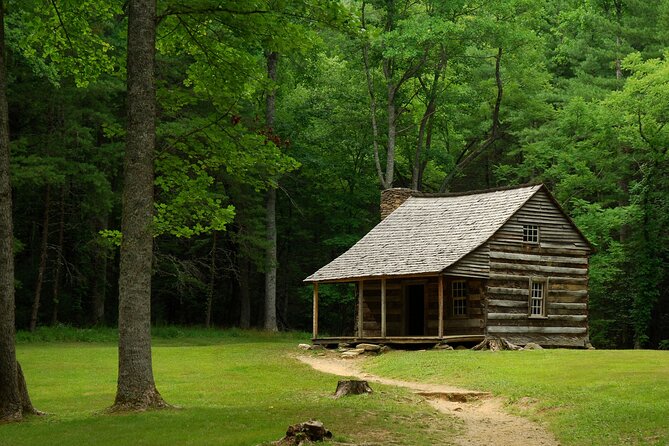
This experience combines two useful ways to see Great Smoky Mountains National Park. The first follows the main crossing between North Carolina and Tennessee, beginning at the Oconaluftee Visitor Center and eventually reaching Gatlinburg. The second focuses on Cades Cove, an historic mountain valley filled with churches, cabins, mills, fields, and hiking trails.
Each route covers more than 25 miles and includes more than 30 audio stories. The stated driving time is about two to three hours per tour, but that is only the time needed to follow the route. Add photo stops, hikes, wildlife delays, visitor centers, traffic, and picnic breaks, and you can easily spend five or six hours.
That flexibility is the point. You do not need to race from stop to stop. You can pause the tour, walk to a waterfall, skip a story, or return another day. The access does not expire, so a rainy afternoon or a closed road does not have to ruin the purchase.
More Self-Guided Driving Tours in the USA
- Gettysburg Battlefield Self-Guided Driving Audio Tour
★ 4.5 · 910 reviews - Joshua Tree National Park Self-Guided Driving Audio Tour
★ 4.5 · 762 reviews - Ultimate Acadia National Park Self-Guided Driving Audio Tour
★ 4.0 · 521 reviews
Starting at Oconaluftee and entering Cherokee country
The Great Smoky Mountains route begins at the Oconaluftee Visitor Center, near Cherokee, North Carolina. This is a sensible starting point because the drive quickly frames the park as more than a scenic road. The stories introduce the Cherokee homeland, the forced removal known as the Trail of Tears, and figures such as Tsali and Sequoyah.
That context matters. The Smokies are not simply empty woods waiting for roads and tourists. Cherokee people lived here long before the national park existed, and the audio places that fact near the start of your drive instead of treating it as a footnote.
A side trip takes you to Mingus Mill, an 1886 grist mill that still operates. If you visit on a weekend, you may see mill operators grinding corn in the old way. It is a good early stop for families and anyone who prefers a working historic site to a distant viewpoint.
The Beech Flats Quiet Walkway offers a gentler break. You do not need to commit to a long, strenuous hike to step into the woods. The tour also introduces Balsam Point Quiet Walkway and other natural features, helping you notice the smaller forest stops between the major overlooks.
Newfound Gap connects scenery with history
As the road climbs, the audio turns toward the geology of the Smokies, Appalachian bald areas, ghost firs near Clingmans Dome, and the old routes used by trappers, farmers, and merchants. The mountains become easier to understand when you know why people crossed them and how difficult that travel once was.
Newfound Gap is the key scenic and historic stop. The mountain pass sits on the Tennessee and North Carolina border and connects directly with the Appalachian Trail. You can enjoy the view, stretch your legs, and think about the hikers passing through on a much longer journey.
Rockefeller Memorial adds another layer. The memorial recognizes John D. Rockefeller’s role in funding the park and was dedicated by President Theodore Roosevelt. This is practical park history: national parks need land, political support, and money, not just pretty scenery.
Several overlooks follow, including Morton Overlook and Carlos Campbell Overlook. Morton is especially popular near sunset. Carlos Campbell offers broad views of ridges and forest. At Chimney Tops Overlook, the narration explains wildfire damage and why a single fire can affect mountain slopes for years.
The app can occasionally get ahead of the view if you drive faster than the intended pace. Stick close to the speed limit and give the narration time to finish. That small adjustment helps the story arrive before, or as, you reach the feature it describes.
Sugarlands gives the route an easy walking option
The Sugarlands Valley Trail is one of the most accessible walking choices mentioned on the route. It can be used by people with wheelchairs or strollers, making it a practical place to trade a few minutes in the car for a quiet look at the forest.
The Sugarlands Visitor Center is a useful pause point, especially if you need a restroom, information, or a break from the road. Nearby trailheads give stronger hikers more options, but you should not assume every walk mentioned in the narration is short. The tour points out possibilities, while you decide how far to go.
Cataract Falls is another appealing stop. It is a shaded waterfall beneath beech trees and offers a change from the open overlooks. The sound of moving water can make this one of the more pleasant pauses on a busy day.
The route also passes a museum devoted to oddities, including unusual specimens and animal skeletons. Its story begins with a simple comic strip and grows into a national attraction. This stop will appeal to visitors who enjoy roadside kitsch. If that is not your style, skip it and keep your time for the park itself.
Same place, a different route to walk:
- Fort Sumter Admission and Self-Guided Tour with Roundtrip Ferry
★ 4.5 · 3,343 reviews - San Francisco: Alcatraz Ticket, Ferry, & Self-Guided App
★ 4.5 · 2,460 reviews - Los Angeles: Hop-On Hop-Off Bus Tour with Audio Guide
★ 3.7 · 2,030 reviews - City Sightseeing Hop-On Hop-Off Bus Tour with Audio Guide
★ 3.0 · 1,083 reviews
Roaring Fork slows the drive down

The Roaring Fork Motor Nature Trail is where the route shifts from major roads to a more intimate forest drive. You will pass historic buildings and have access to several well-known waterfalls. The idea is not to hurry. This is a road for looking closely at old homes, streams, stonework, and the way early families used the terrain.
Rainbow Falls is the biggest draw in this section. At 80 feet, it is identified as the tallest waterfall in the Smokies. In the right light, spray can catch the sun and create the effect that gave the falls its name. Reaching the waterfall requires a hike, so allow extra time and wear suitable footwear if you plan to go beyond the roadside narration.
Grotto Falls is a different sort of stop. It is less grand than Rainbow Falls but more secluded, and the trail passes through scenery associated with a rare local salamander. Baskins Creek Falls provides another waterfall option, along with a story about the somewhat amusing origin of its name.
The app is particularly useful here because it tells you about attractions before you reach them. You can decide in advance where to pull over instead of passing a sign and then turning around. Still, park traffic and narrow roads can make backtracking awkward, so listen for the advance notice.
Historic cabins show how Appalachian families lived

The drive’s cabins are not decorative props. They help explain daily life in the nineteenth-century Smokies. At Ephraim Bales Cabin, you hear about the family who lived there and the unusual hole in the center of the cabin. Reagen Cabin introduces the tub mill, a simple piece of local technology suited to mountain conditions.
Ely’s Mill offers another look at settlement near Gatlinburg. The story of Andrew Ely is especially personal. After his wife died, he left his law practice and changed direction, moving to Gatlinburg in search of a simpler life.
These stories keep the tour from becoming a string of names and dates. You get individual choices, losses, work, and adaptation. That is useful when you are looking at a small cabin and trying to picture the people who once depended on it.
The route ends in Gatlinburg, where the mountain road meets a busy tourist town. You may want to stop there for food or supplies, but remember that the tour’s quiet forest atmosphere gives way to a very different setting.
Cades Cove is the stronger historic route

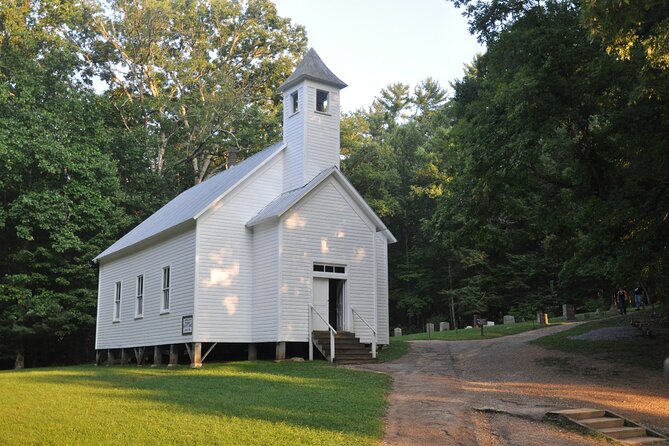
Cades Cove has a more concentrated collection of old buildings and stories. The route introduces Cherokee connections, white settlement, Appalachian families, wildlife, and the final people who lived in the cove.
The churches are especially telling. The Methodist Church cost only $115 to build in 1902, a small detail that makes the community feel real. The Missionary Baptist Church reflects a split from the Primitive Baptist Church over religious differences in the early settlement.
Elijah Oliver Place requires a half-mile walk and rewards you with a more secluded homestead. The story connects the site with an abolitionist who faced danger during the Civil War. This is one of the stops where the historical background adds meaning to a simple building in the woods.
Abrams Falls Trail is another major Cades Cove option. It leads to a powerful waterfall, but the hike takes time. If you are trying to complete the full loop in one afternoon, make a deliberate choice about which trails matter most to you.
John Cable Grist Mill dates from 1870 and remains operational. Seeing a mill in operation gives you something a cabin cannot: motion, noise, and a clearer sense of how a community processed food and used water power.
Tipton Place was once home to a Revolutionary War veteran. Carter Shields Cabin adds a Civil War-era abolitionist perspective. Taken together, the churches, cabins, mill, and homesteads make Cades Cove feel like a former community rather than just a scenic loop.
Technology is useful, but you must set it up correctly

After booking, you receive an email and text with setup instructions and a password. Search for audio tour if the message is hard to find. Download the separate Action Tour Guide app while you have strong Wi-Fi or cellular service, then enter the password.
At the park, open the app and launch the tour that matches your starting point and direction. No one meets you, and there is nothing to scan. Enter the first story point, and the audio should begin as you drive through it.
This distinction matters. If you are already inside the park, do not automatically choose the option that sends you to the starting point. One visitor ended up driving back toward the entrance because the app was used for navigation instead of simply beginning the tour from the current location.
Connect your phone to the car stereo with Bluetooth, USB, or AUX. Bluetooth worked well for many people, but one reported a five-second delay that clipped the beginning of each story. USB or playing through the phone may solve that problem. Apple CarPlay is supported, while Android Auto support is still being added.
The app uses GPS and downloaded maps, so it can continue when cell service disappears. You need an iPhone with iOS 15 or later, an Android device with version 9 or later, or an iPad or tablet with GPS and cellular capability.
The $24.99 price makes sense for a small group
At $24.99 per group of up to four, this is one of the better-value ways to add interpretation to a self-drive. A family or couple pays once for the car, not four separate admission-style fees. You also avoid a fixed bus schedule and can stop for hikes, food, photos, or wildlife.
The value is strongest if you plan to use both routes or return later. Lifetime access means you can split the Great Smoky Mountains drive across two days, revisit Cades Cove after a closure, or listen again on a future trip.
The price does not include park entry, attraction tickets, reservations, food, or parking costs. The national park has no general entrance fee, but individual sites and road conditions can still affect your plans. The audio also cannot solve congestion. Cades Cove can take much longer than the suggested time when traffic backs up.
The tour has a 4.4 rating from 95 reviews, but the useful takeaway is not the number alone. The most praised features are the clear narration, the mix of biology, geology, Cherokee and settler history, the freedom to pause, and the fact that the audio continues offline.
Who should book this Smoky Mountains audio tour?
I would recommend it to families, couples, and first-time visitors who want more than a pretty drive but do not want to join a scheduled group. It is also useful for repeat visitors. Even if you have crossed the mountains before, the stories about funding the park, ghost firs, Cherokee history, Appalachian bald areas, and settlement can give the familiar road new meaning.
It suits people who like to set their own pace. You can stop when you see a bear, wait out rain, spend an hour at a waterfall, or skip a museum that does not interest you.
I would be more cautious if you dislike phone-based tours, need a live guide for questions, or have only a narrow window before a flight. Road closures can cut off part of the route, and the app takes a few minutes of attention at the start.
Check the official park website before departure. Road work and hazard-tree removal can affect US-441, the Spur, Little River Road, Cades Cove Loop, and other roads, especially during winter. Free cancellation is available up to 24 hours before the scheduled start time, but cancellations within 24 hours are not refunded.
Should you book it?
Book this tour if you want a low-cost, flexible guide for your own car and you are willing to handle the technology yourself. Download it early, test the audio, use USB or AUX if Bluetooth cuts off the opening seconds, and check closures before leaving.
Skip it if you want a human guide, a fixed group experience, or a route protected from traffic and closures. For most independent visitors, though, the combination of strong storytelling, offline maps, historic Cades Cove stops, and lifetime access makes $24.99 a sensible addition to a Smoky Mountains road day.
FAQ
How much does the Great Smoky Mountains and Cades Cove tour cost?
The tour costs $24.99 per group of up to four people. You purchase access for the car rather than paying separately for each passenger.
How long does the tour take?
Each route is described as taking about two to three hours to drive. With hikes, historic sites, wildlife stops, photos, traffic, and meals, the full experience can take four to six hours or longer.
Does the tour include both Great Smoky Mountains and Cades Cove?
Yes. It includes a Great Smoky Mountains route between Oconaluftee, Newfound Gap, and Gatlinburg, along with a Cades Cove route featuring cabins, churches, mills, trails, and waterfalls.
Is a guide waiting at the starting point?
No. This is a private, self-guided activity. You drive your own vehicle and begin the audio through the Action Tour Guide app.
Does the audio tour work without cell service?
Yes. You must download the tour while you have strong Wi-Fi or cellular service. After downloading, the audio and maps work offline.
How does the audio start?
Open the Action Tour Guide app at the correct starting point. The first story should begin automatically when you reach its GPS location, followed by additional stories along the route.
What equipment do I need?
You need a compatible smartphone or tablet with GPS. Recommended devices include an iPhone running iOS 15 or later, an Android device running version 9 or later, or an iPad or tablet with GPS and cellular connectivity.
Are park admissions and attraction tickets included?
No. Entry tickets, attraction passes, reservations, food, and other personal costs are not included.
Can I use the tour again later?
Yes. The tour provides lifetime access with no expiry, so you can pause it, return on another day, and use it again on future trips.
Just added around the USA
- Smartphone-Guided Walking Tour of Downtown Indianapolis Sights & Stories★ 4.0 · 25 reviews
- Springfield Self-Guided Walking Audio Tour★ 4.0 · 5 reviews
- Smartphone Guided Indianapolis Downtown Sites Audio Walking Tour★ 4.5 · 7 reviews
- Indiana Dunes National Park Self-Guided Audio Tour★ 3.5 · 4 reviews
- Self-Guided Audio Driving Tour in Kancamagus Highway★ 4.5 · 6 reviews
- An Epic Scavenger Hunt: Bloomington Scenic Southern Indiana★ 3.5 · 6 reviews
- Huntsville Rocket City Smart Phone Self Guided Audio (GPS/APP) Walking Tour★ 4.5 · 5 reviews
- Sights of Downtown Houston Smartphone Audio Walking Tour★ 4.0 · 7 reviews
USA Audio Tours, compared.

Fort Sumter Admission and Self-Guided Tour with Roundtrip Ferry
Read our review →
San Francisco: Alcatraz Ticket, Ferry, & Self-Guided App
Read our review →
Los Angeles: Hop-On Hop-Off Bus Tour with Audio Guide
Read our review →
City Sightseeing Hop-On Hop-Off Bus Tour with Audio Guide
Read our review →
Medieval Torture Museum Ticket with Audio Guide and Ghost Hunting
Read our review →

Ryman Auditorium Self-Guided Tour with Souvenir Photo Onstage
Read our review →
Red Rock Canyon Self-Guided Electric Bike Tour
Read our review →Browse the lists this tour appears in