

REVIEW · USA AUDIO TOURS
Civil War Battlefields Self-Guided Audio Driving Tour Bundle
Gettysburg is only the beginning of this five-day battlefield bundle. You drive at your own pace through Gettysburg, Antietam, Vicksburg, Shiloh, and Yorktown, listening to more than 130 location-based stories that explain what happened at monuments, farms, roads, hills, and cemeteries.
I like two things right away: one purchase covers up to four people, and the audio works offline after you download it. I also like the freedom to stop for photos, skip a point, take a break, or return on another trip with lifetime access.
The main drawback is that this is an app, not a person beside you. One user had trouble getting the app to work, so download each route on strong Wi-Fi, begin at the correct starting point, and connect your phone to the car stereo before setting out.
Key points to know before you book

- Five major battlefield routes: Gettysburg, Antietam, Vicksburg, Shiloh, and Yorktown are spread across five days of suggested touring.
- More than 130 audio stories: Each route runs about one to two hours, though you should allow extra time for walking, monuments, photographs, and side trips.
- Private car-based touring: The $39.99 price covers a group of up to four, making it a strong value for a family or small group.
- Lifetime access: There is no expiry date, so you can split the bundle across trips or repeat a route later.
- Little Round Top is currently inaccessible: The Gettysburg narration and images still explain the site, but you cannot visit the hill in person at this time.
- Two extra admission charges: Antietam and Vicksburg each require a $20 admission fee per booking, while many listed stops are free.
Five battlefields, one flexible audio pass
This experience is best understood as five separate driving tours rather than one long guided outing. Each route begins at a visitor center or another clear starting point, then uses your phone’s GPS to trigger stories as you drive.
The narrator is not identified by name, and there is no live guide waiting at the starting point. That is both the appeal and the limitation. You get privacy, control, and no fixed departure time, but you must handle the route, app, parking, and timing yourself.
Most routes take about one to two hours of driving. In practice, I would allow at least half a day at Gettysburg and extra time at Antietam, Vicksburg, and Yorktown if you want to walk around and read monuments instead of simply passing them by.
The app needs to be downloaded before you arrive. After booking, you receive setup instructions and a password by email and text. Search for audio tour if the message is hard to find, then download the Action Tour Guide app and the route while you have a strong signal.
Once on site, open the app, choose the correct tour and starting point, and let the GPS trigger each story. Bluetooth, USB, or an AUX cable can connect the phone to your car stereo. The tour also works with Apple CarPlay, while Android Auto support is still being developed.
More Self-Guided Driving Tours in the USA
- Gettysburg Battlefield Self-Guided Driving Audio Tour
★ 4.5 · 910 reviews - Joshua Tree National Park Self-Guided Driving Audio Tour
★ 4.5 · 762 reviews - Ultimate Acadia National Park Self-Guided Driving Audio Tour
★ 4.0 · 521 reviews
Gettysburg: three days of battle in one driving loop

Gettysburg is the centerpiece of the bundle. The route covers more than 19 miles and includes more than 60 stories, following the official battlefield auto route from the first day of fighting through Pickett’s Charge and the Gettysburg Address.
Begin at the Gettysburg Heritage Center or the National Park Visitor Center. Admission to the Heritage Center is not included, so you can decide if its museum fits your plans. Starting at one of the recommended points matters because the app can become confused if you begin somewhere else.
The opening stops explain the first day of battle at McPherson’s Ridge and the Railroad Cut. These are useful early stops because the audio connects the ground in front of you with troop movements and battlefield decisions. At the Eternal Light Peace Memorial, the Maine granite base and Alabama limestone pillar provide a physical symbol of national reunion.
Oak Ridge Observation Tower is one of the better places to pause. From above, you get broad views of the fields and a clearer sense of why commanders cared so much about ridges and open ground. The tour then passes the 11th Pennsylvania Infantry Monument, including the small dog sculpture honoring Battlefield Sallie, the regiment’s mascot.
The story moves into the second day at the North Carolina Memorial, Virginia Monument, and the fifth auto tour stop, where Pickett’s Charge will later begin. The Longstreet and Warfield observation towers offer more useful high points, and the optional Eisenhower National Historic Site adds a presidential connection above the battlefield.
Little Round Top requires a practical warning. Ongoing construction currently prevents visitors from reaching the site, but the audio still explains its strategic role, the fighting, and the soldiers whose actions became part of the battle’s story. You will hear the content and see related images, but this is not a substitute for standing on the hill.
The route continues through Devil’s Den, the Wheat Field, the Peach Orchard, and the Abraham Trostle Farm. These stops make the second day feel less like a list of monuments and more like a chain of connected actions. At the Trostle Farm, the sudden evacuation of the family, with dinner reportedly left on the table, brings the civilian cost close to home.
At Plum Run and the George Weikert Farm, the narration turns to the aftermath of fighting and battlefield medicine. A family farm became a hospital, a reminder that Gettysburg was not only about generals and famous charges.
The Pennsylvania Memorial honors nearly 35,000 soldiers from the state. Spangler’s Spring, Culp’s Hill, and East Cemetery Hill then explain the fighting that continued into the night. Culp’s Hill was held by Union forces, but the nearby nighttime attack showed how close the result remained.
The final section covers Pickett’s Charge, the High Water Mark, and the National Cemetery. This is where the audio earns its keep. Instead of seeing an open field without context, you are directed toward the ground crossed by the Confederate attack and the point of its farthest advance.
The tour ends at the cemetery, where Lincoln delivered the Gettysburg Address. Give yourself time here. The route officially ends, but the cemetery is not a place to rush back to the car.
Antietam: the Bloody Lane and Burnside Bridge
Antietam’s route is shorter, covering more than nine miles and 38 audio stories. The battlefield requires a $20 admission fee per booking, and some optional stops also list admission as not included.
The first stops at the Mansfield Monument and West Woods explain the early fighting. Major General Joseph Mansfield was mortally wounded while trying to assess the situation, and the West Woods became the scene of a costly Union attack under Confederate artillery fire.
At the Mumma Farm, you hear how Confederate troops burned the property during their retreat so Union forces could not use it for cover. This is one of the route’s strengths: the farms and houses keep the battle tied to ordinary people, not only military formations.
The Irish Brigade Monument and Piper Farm lead toward the Bloody Lane. The Irish Brigade memorial honors Irish American soldiers who fought and died there, while Piper Farm served as a Confederate headquarters during the battle.
Burnside Bridge is the emotional center of the route. The narration explains the imbalance between the large Union force trying to take the crossing and the much smaller Confederate force defending it. You can stop, walk, and look at the bridge, but check admission details before arriving because this stop is not included in the bundle price.
The McKinley Monument adds a small human story about the future president’s conduct after the fighting. The route returns to Burnside Bridge before moving to the Final Attack Trail, where Union forces pressed the Confederate line back.
Optional detours include the Hawkins’ Zouaves Monument, Tolson’s Chapel and School, the Good-Reilly House, Mount Calvary Cemetery, and Antietam National Cemetery. These add time, but they also widen the story beyond the central battle. Tolson Chapel is especially useful for remembering the Black community that built it shortly after the war.
Antietam National Cemetery contains Union dead from the battle along with later burials from the Spanish-American War, the two world wars, and Korea. I would save this for the end rather than treating it as a quick bonus stop.
Vicksburg: siege lines, state memorials, and the Mississippi River

Vicksburg National Military Park covers more than 15 miles and includes over 44 stories. Admission is listed as $20 per booking, so add that charge when comparing the bundle with other battlefield tours.
The route begins with the Memorial Arch, built after a 1917 reunion where former Union and Confederate soldiers met in peace. From there, the memorials reveal how each state chose to remember its soldiers.
The Minnesota, Michigan, Illinois, Wisconsin, and West Virginia memorials are not simply decorative stops. The narration explains the men they honor and the specific events tied to each location. The Illinois Memorial was designed by W. L. B. Jenney, a veteran of the battle, and carries the names of Illinois soldiers inside.
Logan’s Approach explains a striking Union tactic: engineers dug toward a Confederate fort and placed 2,200 pounds of gunpowder in a mine. The Wisconsin Memorial introduces Old Abe, the real war eagle carried by the 8th Wisconsin Infantry. These unusual details are exactly what keep a long line of monuments from becoming a blur.
The African American Monument provides needed context about Black Union soldiers. The units were segregated, pay was lower, and equipment was often worse, yet these soldiers fought for the Union and their freedom. The Grant Memorial, the 106th Illinois Monument, and the U.S. Navy Monument then explain the commanders, regiments, and naval support behind the campaign.
At Vicksburg National Cemetery, about 17,000 Union soldiers are buried. Fort Hill offers a view toward the river and explains why the position was useful for watching passing ships. The Missouri, Mississippi, Alabama, and Kentucky memorials close the route with stories of divided loyalties and soldiers fighting under different flags.
Same place, a different route to walk:
- Fort Sumter Admission and Self-Guided Tour with Roundtrip Ferry
★ 4.5 · 3,343 reviews - San Francisco: Alcatraz Ticket, Ferry, & Self-Guided App
★ 4.5 · 2,460 reviews - Los Angeles: Hop-On Hop-Off Bus Tour with Audio Guide
★ 3.7 · 2,030 reviews - City Sightseeing Hop-On Hop-Off Bus Tour with Audio Guide
★ 3.0 · 1,083 reviews
Shiloh: a compact route with heavy stories
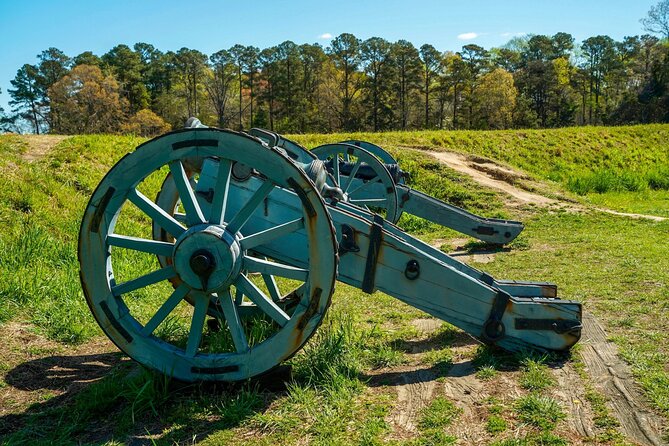
Shiloh is the shortest battlefield route, covering more than six miles and 34 stories. It begins at the visitor center and can be completed in one to two hours, though walking around the monuments will extend your visit.
The Iowa State Monument introduces the memorial style at Shiloh, with an eagle and the figure of Fame. Grant’s Last Line is more direct and military. The audio places you at the point where thousands of Union soldiers gathered with heavy guns in a last effort to stop the Confederate advance.
The Michigan State Memorial honors troops killed, wounded, or missing at Shiloh. At the Daughters of the Confederacy Monument, you hear about Confederate commander Albert Sidney Johnston.
Shiloh Church and Cemetery provide a quieter stop. You can see a modern church and a replica of the original one-room log church, near the area where Sherman and his men made camp. The route is short, but its stories carry plenty of weight, so do not judge it by mileage alone.
Yorktown: a useful Revolutionary War extra

Yorktown is the odd member of a Civil War bundle, but it gives you a change of period and a second kind of military history. The route covers more than ten miles and includes over 20 stories.
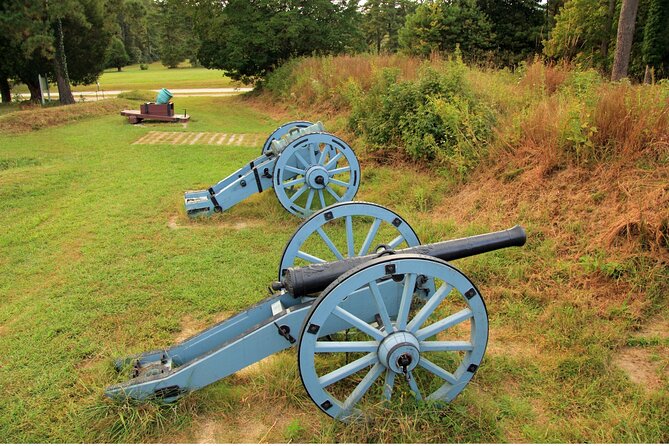
Begin at the Yorktown Battlefield Visitor Center. The stops at Moore House, Washington’s Headquarters, French Artillery Park, and Grand French Battery explain the surrender and the French role in the final battle of the American Revolution.
The Yorktown National Cemetery is a useful correction to assumptions. Despite the setting, it is a Civil War burial ground rather than a Revolutionary War cemetery. The final stop, Yorktown Victory Monument, provides a fitting close to the route.
If your main goal is strictly Civil War history, Yorktown may feel like an extra rather than an essential part of the purchase. If you are already visiting Virginia’s historic sites, it adds variety without requiring another audio product.
Is $39.99 good value for a car?
At $39.99 per group of up to four, the math is favorable. A family of four pays about $10 per person for access to five routes, and a couple pays less than $20 each if they use the full bundle.
The value improves because the access does not expire. You can use Gettysburg on one trip, Vicksburg months later, and repeat a favorite route on another visit. That flexibility matters because these battlefields are spread far apart and few people will visit all five in one vacation.
Remember to add the $20 admission charge for Antietam and the $20 charge for Vicksburg. Gettysburg Heritage Center admission is also not included, and some optional Antietam stops list separate admission requirements.
Who will enjoy this, and who may not?
I would choose this for a self-directed driver who likes history but does not want to join a scheduled bus or pay for a private guide. It suits families, couples, and small groups who want to stop often and control the pace.
It is also a good fit for repeat visitors. The lifetime access lets you use the audio on later trips, and you can skip sections you already know.
I would hesitate if you dislike phone-based navigation or need a live person to answer questions at every stop. The app must be set up correctly, and one failed experience came from the app not working properly. Starting at the wrong point may confuse the route, so follow the setup instructions closely and save the support contact details.
My booking advice
Book this bundle if you plan to visit at least two of the battlefields, especially if you are traveling with up to four people in one car. Gettysburg and Antietam offer the strongest battlefield storytelling, while Vicksburg adds scale, memorial variety, and a clear explanation of the campaign’s larger purpose.
Download the app and routes before you leave reliable Wi-Fi. Begin at the stated starting point, connect the audio to your car, and keep the phone’s GPS active. If you treat the audio as a guide to the ground rather than background sound, the $39.99 price is hard to fault.
FAQ
How much does the Civil War Battlefields Audio Driving Tour Bundle cost?
The bundle costs $39.99 per group of up to four people. It is priced per car rather than per person.
Which battlefields are included?
The bundle includes Gettysburg, Antietam, Vicksburg, Shiloh, and Yorktown. Yorktown covers the American Revolution rather than the Civil War.
How long does each driving tour take?
Each route is designed to take about one to two hours. Gettysburg covers more than 19 miles, Antietam more than nine miles, Vicksburg more than 15 miles, Shiloh more than six miles, and Yorktown more than ten miles.
Are battlefield admission fees included?
Admission is not included at Antietam or Vicksburg. Each lists a $20 admission fee per booking. Gettysburg Heritage Center admission is also not included. Many other listed stops are free.
Does the tour expire?
No. The tour provides lifetime access with no expiry date, so you can use it on different trips and repeat routes as often as you wish.
How do I use the audio guide?
Download the Action Tour Guide app and the tour while you have strong Wi-Fi or cellular service. Enter the password sent by email and text, go to the correct starting point, and let the GPS trigger each story as you drive.
Can I cancel for a refund?
You can cancel at least 24 hours before the experience start time for a full refund. Cancellations or changes made within 24 hours are not refunded.
Just added around the USA
- Smartphone-Guided Walking Tour of Downtown Indianapolis Sights & Stories★ 4.0 · 25 reviews
- Springfield Self-Guided Walking Audio Tour★ 4.0 · 5 reviews
- Smartphone Guided Indianapolis Downtown Sites Audio Walking Tour★ 4.5 · 7 reviews
- Self-Guided Audio Driving Tour in Kancamagus Highway★ 4.5 · 6 reviews
- An Epic Scavenger Hunt: Bloomington Scenic Southern Indiana★ 3.5 · 6 reviews
- Indiana Dunes National Park Self-Guided Audio Tour★ 3.5 · 4 reviews
- Huntsville Rocket City Smart Phone Self Guided Audio (GPS/APP) Walking Tour★ 4.5 · 5 reviews
- Sights of Downtown Houston Smartphone Audio Walking Tour★ 4.0 · 7 reviews
USA Audio Tours, compared.

Fort Sumter Admission and Self-Guided Tour with Roundtrip Ferry
Read our review →
San Francisco: Alcatraz Ticket, Ferry, & Self-Guided App
Read our review →
Los Angeles: Hop-On Hop-Off Bus Tour with Audio Guide
Read our review →
City Sightseeing Hop-On Hop-Off Bus Tour with Audio Guide
Read our review →
Medieval Torture Museum Ticket with Audio Guide and Ghost Hunting
Read our review →

Ryman Auditorium Self-Guided Tour with Souvenir Photo Onstage
Read our review →
Red Rock Canyon Self-Guided Electric Bike Tour
Read our review →Browse the lists this tour appears in