
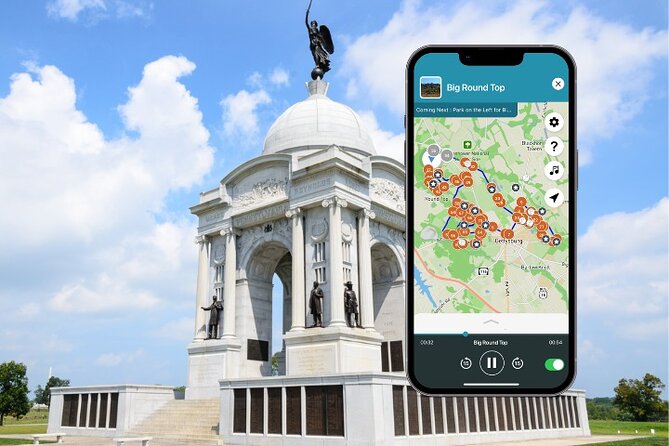
REVIEW · USA AUDIO TOURS
Gettysburg Battlefield Self Guided Audio Driving Tour
Gettysburg is best understood from the road, where one ridge, farm, or rocky hill leads to the next. This self-guided audio tour turns your car into a private history lesson, linking the battle’s three days with automatic narration, directions, music, and stops across the national military park.
I like the $11.19 price for an entire vehicle of up to 15 people, and I like the freedom to linger at Little Round Top, skip a monument, or pause the tour for lunch. The route also covers the big names and the quieter corners, from Pickett’s Charge to Spangler’s Spring.
The main concern is technology. A few users had trouble signing in or getting the app to work, while others found the GPS accurate and the app easy to use. Download everything on strong Wi-Fi, test the app before setting out, and keep support contact details handy.
Gettysburg at a glance
- A full battlefield circuit: The route begins and ends at Soldiers’ National Cemetery and covers 19 stops across the park.
- One price per car: At $11.19 per group, the value is strongest when several people share the vehicle.
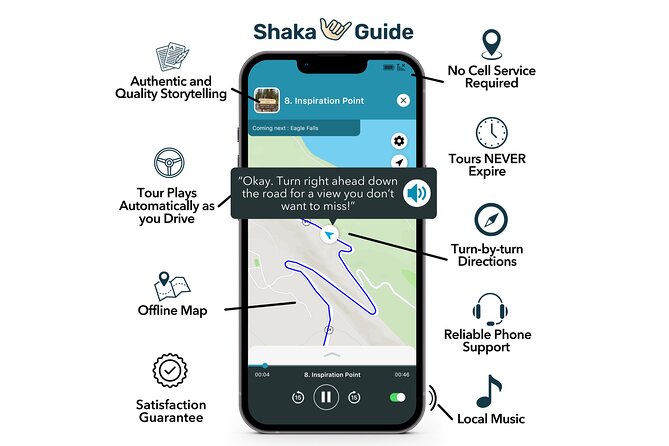
- Automatic GPS narration: Stories, directions, and music play as you drive, with the option to pause or skip stops.
- Key views from above: Observation towers at Oak Ridge and Warfield Ridge, along with monuments and elevated positions, help you understand troop movements.
- A flexible day out: The stated route takes about 8 to 9 hours, though a shorter visit is possible if you skip stops.
- Two paid attractions: The Gettysburg National Military Park Museum and Visitor Center and Seminary Ridge Museum require separate admission.
How this Gettysburg audio drive works
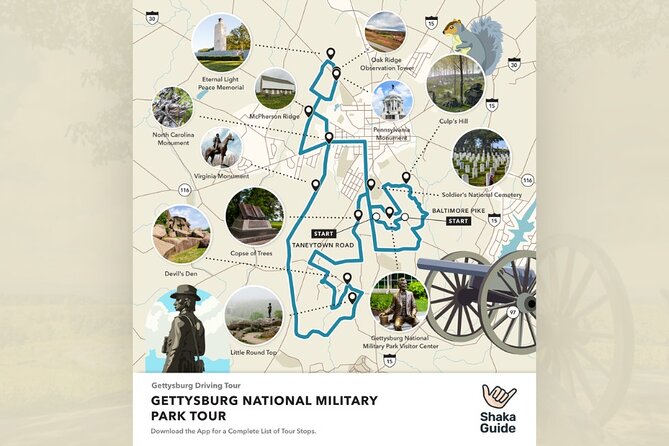
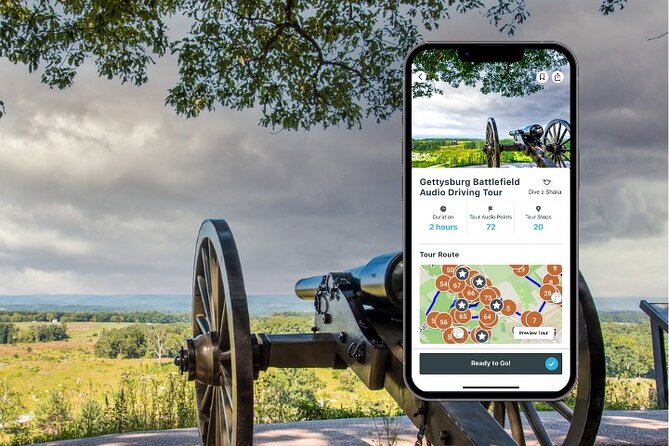
You book the tour and receive confirmation with instructions to download the Shaka Guide app. After entering the redeem code, you load the tour under the My Stuff tab, download the route, and begin at Soldiers’ National Cemetery, 1648 Taneytown Road.
The tour uses GPS rather than a live guide. As you approach each point, the app plays the related narration and gives turn-by-turn directions. This means you can keep your eyes on the road instead of handling the phone while driving.
The offline map matters. Cell service can be unpredictable, and you do not want your history tour to stop at the same moment your signal disappears. Download the full experience before leaving Wi-Fi, then keep your phone charged and connected to your car’s audio system.
The instructions suggest following the route and suggested speed for the best timing. Still, you control the day. You can pause, resume, or skip ahead, and the tour does not expire. That makes it useful for a slow day in Gettysburg or a return visit spread across more than one day.
The audio is offered in English. Music is mixed into the narration, and one user specifically enjoyed hearing Yankee Doodle Dandy during the drive. The tone is meant to keep a long day moving, though anyone who prefers silence can pause the audio.
More Self-Guided Driving Tours in the USA
- Gettysburg Battlefield Self-Guided Driving Audio Tour
★ 4.5 · 910 reviews - Joshua Tree National Park Self-Guided Driving Audio Tour
★ 4.5 · 762 reviews - Ultimate Acadia National Park Self-Guided Driving Audio Tour
★ 4.0 · 521 reviews
Starting at the museum and McPherson Ridge
The first stop is the Gettysburg National Military Park Museum and Visitor Center, where you can spend about an hour getting oriented. Its exhibits cover the Civil War and the battle, with artifacts, interactive displays, and multimedia presentations.
The center’s Cyclorama is a huge 360-degree painting of Pickett’s Charge. A film narrated by Morgan Freeman, A New Birth of Freedom, adds wider context before you head onto the battlefield. Rangers also offer talks, tours, and educational programs, while the bookstore has books and souvenirs.
Admission is not included in the audio tour price. That is an important cost to check before arrival, especially if you want the full museum experience. The visitor center also has a period-inspired refreshment saloon, which can be useful before the long drive.
From there, the route moves to McPherson Farm and McPherson Ridge, where the battle opened on July 1, 1863. The stop is brief, about 10 minutes in the suggested schedule, but it gives you a useful first look at the ground: woodlots, open fields, the McPherson Barn, and the ridge itself.
The barn served as a field hospital. Monuments and wayside signs identify the regiments and officers involved, including General John Reynolds. Pause here if you need the basic geography of the first day. The broad views help explain why control of the ridge mattered.
Nearby, the Abner Doubleday Monument recalls Doubleday’s role commanding the Union First Corps after Reynolds was killed. His connection with baseball is a popular myth, but the monument points to his Civil War service instead. It is a quick stop, best treated as part of the larger McPherson Ridge story.
Oak Hill and the first day of fighting
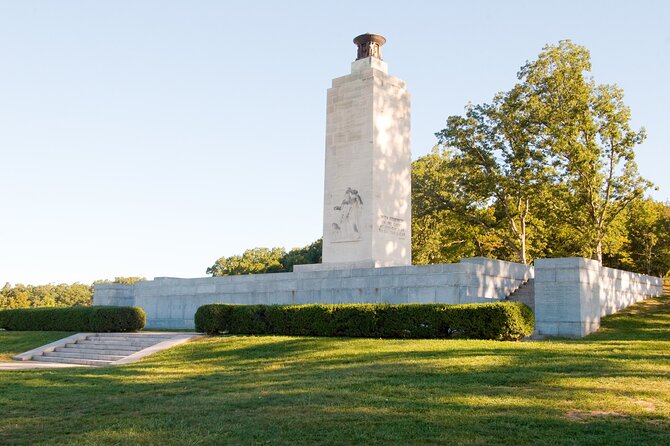
The Eternal Light Peace Memorial sits on Oak Hill, surrounded by Union and Confederate markers. Built in 1938 for the battle’s 75th anniversary, its gas flame represents peace and unity between North and South.
The setting is quiet, and the view reaches across the northern part of the battlefield toward the fields where the first day’s fighting unfolded. I would give this stop a few extra minutes if you want a pause between the opening combat sites and the next observation point.
The Oak Ridge Observation Tower gives you a stronger sense of scale. From above, you can look toward McPherson Ridge, the Eternal Light memorial, and the Union defensive line. The audio can describe troop movements, but the view helps you connect those movements to actual distances.
Near the tower, the 11th Pennsylvania Volunteer Infantry Monument honors the regiment and its mascot, Sallie. The bronze dog is one of Gettysburg’s most memorable small details. Sallie stayed with wounded and fallen soldiers, and the monument gives a human face to a regiment otherwise encountered through dates and maneuvers.
These stops work well together. Oak Hill explains the first day from a commanding point, while Sallie’s monument brings the story down to a personal scale.
Lee’s Headquarters and Seminary Ridge
The route then crosses to Lee’s Headquarters, the stone Mary Thompson House used by Robert E. Lee during the battle. The house also served as a field hospital. Interpretive signs explain Lee’s decisions, Confederate command activity, and the nearby artillery positions.
This stop is scheduled for about an hour, though you can shorten it. Views toward Seminary Ridge show the ground from the Confederate command’s side. The small garden area offers a quiet place to think about the house’s changing roles during the battle.
Seminary Ridge Museum and Education Center is another major stop. The Lutheran Theological Seminary and its cupola played an important role as an observation point for Union General Buford. Museum exhibits cover the battle and the wider Civil War, while the ridge provides views toward Pickett’s Charge.
Admission is separate, so decide ahead of time if you want both paid museum stops. If you are mainly interested in outdoor monuments and views, you can spend your time on the grounds. If you want exhibits and indoor interpretation, budget extra time and money.
The North Carolina Monument and Virginia Monument sit along Seminary Ridge. The North Carolina memorial shows five Confederate soldiers moving into battle and looks toward the field of Pickett’s Charge. The Virginia Monument features Robert E. Lee on Traveller, surrounded by relief figures of Confederate soldiers.
These monuments reflect the states and units that fought here, but they also require thoughtful reading. Their language comes from an older era of Civil War memorial design. The audio route gives you the setting and military story, while the monuments show how later generations chose to remember the conflict.
Same place, a different route to walk:
- Fort Sumter Admission and Self-Guided Tour with Roundtrip Ferry
★ 4.5 · 3,343 reviews - San Francisco: Alcatraz Ticket, Ferry, & Self-Guided App
★ 4.5 · 2,460 reviews - Los Angeles: Hop-On Hop-Off Bus Tour with Audio Guide
★ 3.7 · 2,030 reviews - City Sightseeing Hop-On Hop-Off Bus Tour with Audio Guide
★ 3.0 · 1,083 reviews
Warfield Ridge, Big Round Top, and Little Round Top
Warfield Ridge Observation Tower shifts the focus to the southern battlefield and the fighting of July 2. From the tower, you can see toward Little Round Top, Devil’s Den, and the Peach Orchard. The view clarifies the direction of the Confederate approach and the Union positions they attacked.
The suggested stop lasts about 30 minutes. This is one place where you should avoid rushing. A map can show arrows, but the elevated view lets you see the folds, roads, and distances that shaped the battle.
Big Round Top offers a different experience. The trail is short but moderately challenging, climbing through dense forest to the battlefield’s highest elevation. The summit is wooded, so do not expect a wide view. Instead, you get a peaceful walk among boulders and scattered traces of the area’s wartime importance.
Interpretive markers explain why Big Round Top mattered. Wear sensible shoes if you take the trail, and remember that the stop can add real walking to an already long driving day.
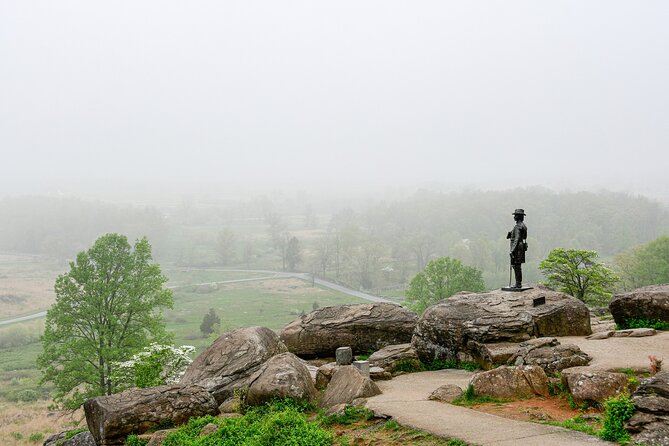
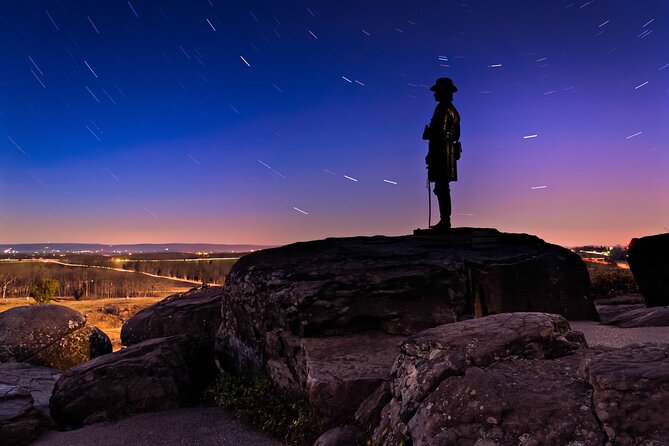
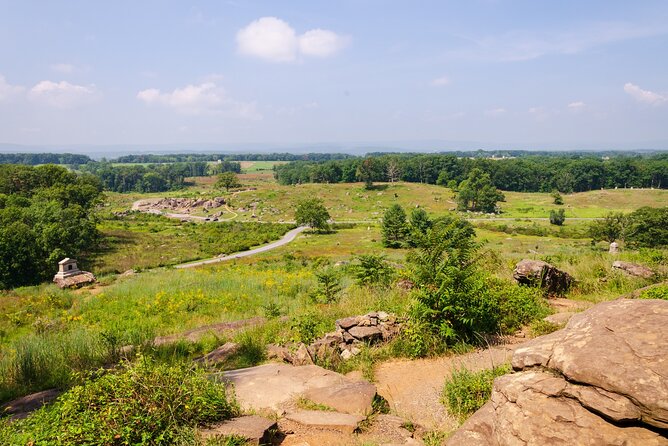
Little Round Top is one of the most dramatic sites on the route. Rocky outcroppings look toward Devil’s Den, the Wheatfield, and the Peach Orchard. The 20th Maine Monument recalls Colonel Joshua Chamberlain and the regiment’s stand, while the Warren Statue honors Gouverneur K. Warren, who recognized the hill’s importance to the Union position.
The route suggests about 30 minutes here, but this is an easy place to spend longer. The many monuments can feel crowded with names and details, so use the audio as your guide, then stop at the locations that help you picture the fighting.
At Devil’s Den, large boulders and rough ground show why the fighting was so close and brutal. The Slaughter Pen was a deadly area of combat. Signs and monuments describe the actions of Union and Confederate units, and the view back toward Little Round Top reveals the tactical connection between the two sites.
Devil’s Den is also a good reminder that Gettysburg was not fought on a neat parade field. Rocks, trees, rises, and narrow passages shaped what soldiers could see and where they could move.
The Pennsylvania Monument and Culp’s Hill
The Pennsylvania State Monument is the largest monument in the park. Its dome, bronze tablets listing Pennsylvania soldiers, and statues of leaders such as Meade and Reynolds make it hard to miss.
You can climb to the observation deck for wide views across the battlefield. The First Minnesota Monument sits across the road, marking the regiment’s costly charge on July 2. More than 80 percent of the regiment was lost, a stark figure that gives weight to the polished stone and bronze around you.
This is a strong stop for understanding the scale of the Union defense. Give it around 30 minutes, or longer if you want the view from the dome.
Spangler’s Spring brings the tone down. The spring is associated with stories of Union and Confederate soldiers sharing water during quiet moments in the fighting. The site is peaceful, but nearby monuments and trails point to the violence on Culp’s Hill.
Culp’s Hill combines preserved Union breastworks, monuments, trails, and an observation tower. The breastworks are especially valuable because they show how soldiers changed the ground to protect the Union position. The tower gives a broad view, while the trails lead toward Spangler’s Spring and other parts of the hill.
The Maryland Monument is unusual because it honors both Union and Confederate troops. That detail makes Culp’s Hill a useful place to consider the personal and regional divisions behind the battle, not just the larger movement of armies.
Pickett’s Charge and Soldiers’ National Cemetery
The Copse of Trees on Cemetery Ridge marks the Confederate High Water Mark during Pickett’s Charge. The cluster is small, but its role in the story is huge. Nearby signs and monuments explain how the assault reached this point and was pushed back.
Look across toward Seminary Ridge and try to picture the distance the Confederate troops crossed. The ground makes the scale of the attack clearer than a paragraph in a book can.
The final stop is Soldiers’ National Cemetery, which is also the starting and ending point. More than 3,500 Union soldiers are buried here. The Soldiers’ National Monument anchors the cemetery, and the Lincoln Speech Memorial recalls Abraham Lincoln’s Gettysburg Address, delivered at the dedication in 1863.
The cemetery is not simply a final photo stop. It gives the entire route a moral and human center. After a day of troop movements, artillery positions, and tactical decisions, the rows of graves bring you back to the cost of the battle.
Plan to walk slowly here. The tour suggests about an hour, and that feels reasonable if you want to see the main memorials and take in the view toward Cemetery Hill.
What the $11.19 price really buys
At $11.19 per group, the tour is unusually inexpensive for a private driving experience. A group of two pays very little per person, and a larger family or group of friends can share the same purchase for up to 15 people.
You provide the car, fuel, meals, and any parking or entrance fees. The museum at the visitor center and Seminary Ridge Museum are not included. Those extra costs do not weaken the value of the audio route, but you should add them to your budget if indoor exhibits matter to you.
The main value is not transportation. It is the structure. Gettysburg has many roads, monuments, and names, and an unplanned drive can leave you with scattered impressions. The GPS route connects the first day at McPherson Ridge, the second day around Little Round Top, and the final Confederate advance toward the Copse of Trees.
A live private guide would offer conversation and personal adjustment, but would cost more and keep you to a set schedule. This app gives up that human contact in exchange for privacy, low cost, and control.
Who should choose this tour?
I would choose it for anyone who wants a private day in the car, especially families or groups with mixed interests. You can stop for a serious history talk, skip a monument, or pause for food without waiting for a group.
It also suits repeat visitors. Since the tour never expires, you can use it over more than one day and return to sections you rushed through.
It is less suitable if you dislike smartphone setup, want a live historian, or prefer to wander without following a suggested route. The technology has worked very well for some users, but sign-in and connection problems have affected others. Download ahead, confirm the route opens, and connect your phone to the car before leaving.
Most people can participate, and service animals are allowed. The route includes uneven outdoor sites and a moderately challenging Big Round Top trail, so you can simply skip that walk if it does not suit your group.
Should you book the Gettysburg audio drive?
Book it if you want broad coverage, low cost, and the freedom to set your own pace. The tour reaches the essential sites, adds lesser-known stops such as Sallie’s monument and Spangler’s Spring, and uses GPS to keep the day organized.
Do not book it expecting admission to the museums, private transportation, or a person beside you answering questions. Think of it as a well-planned audio route that makes your own car useful.
For the best experience, download the app on strong Wi-Fi, charge your phone, allow a full day, and decide which paid museums you want before arriving. With those basics handled, this is a practical way to see Gettysburg without paying a per-person guide fee.
FAQ
How long does the Gettysburg audio tour take?
The suggested duration is about 8 to 9 hours. You can make the visit shorter by skipping stops or spending less time at each location.
Where does the tour begin and end?
It begins and ends at Soldiers’ National Cemetery, 1648 Taneytown Road, Gettysburg, Pennsylvania 17325.
Is the tour private?
Yes. One purchase covers a group of up to 15 people in the same vehicle. You drive your own car, and private transportation is not included.
Is admission to the museums included?
No. Admission to the Gettysburg National Military Park Museum and Visitor Center and Seminary Ridge Museum is not included. Parking fees, meals, and refreshments are also separate.
Does the audio tour need Wi-Fi or mobile data?
You should download the tour using strong Wi-Fi before starting. After that, the offline map allows the tour to work without continuous Wi-Fi or data.
What happens if I need to cancel?
You receive a full refund if you cancel at least 24 hours before the experience start time. Cancellations or changes made within 24 hours are not refunded.
Just added around the USA
- Smartphone-Guided Walking Tour of Downtown Indianapolis Sights & Stories★ 4.0 · 25 reviews
- Springfield Self-Guided Walking Audio Tour★ 4.0 · 5 reviews
- Smartphone Guided Indianapolis Downtown Sites Audio Walking Tour★ 4.5 · 7 reviews
- Indiana Dunes National Park Self-Guided Audio Tour★ 3.5 · 4 reviews
- Self-Guided Audio Driving Tour in Kancamagus Highway★ 4.5 · 6 reviews
- An Epic Scavenger Hunt: Bloomington Scenic Southern Indiana★ 3.5 · 6 reviews
- Huntsville Rocket City Smart Phone Self Guided Audio (GPS/APP) Walking Tour★ 4.5 · 5 reviews
- Sights of Downtown Houston Smartphone Audio Walking Tour★ 4.0 · 7 reviews
USA Audio Tours, compared.
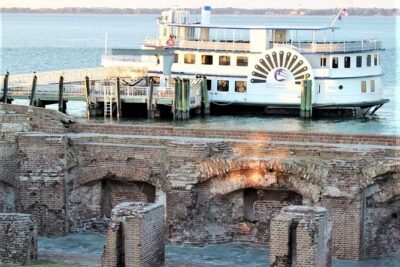
Fort Sumter Admission and Self-Guided Tour with Roundtrip Ferry
Read our review →
San Francisco: Alcatraz Ticket, Ferry, & Self-Guided App
Read our review →
Los Angeles: Hop-On Hop-Off Bus Tour with Audio Guide
Read our review →
City Sightseeing Hop-On Hop-Off Bus Tour with Audio Guide
Read our review →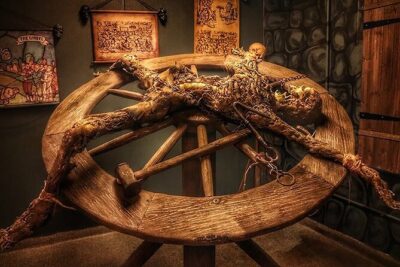
Medieval Torture Museum Ticket with Audio Guide and Ghost Hunting
Read our review →

Ryman Auditorium Self-Guided Tour with Souvenir Photo Onstage
Read our review →
Red Rock Canyon Self-Guided Electric Bike Tour
Read our review →Browse the lists this tour appears in