REVIEW · USA AUDIO TOURS
Chicago’s Storied Neighborhood: An Audio Tour
Hyde Park is one of Chicago’s most intriguing neighborhoods, and this self-guided walk gives you a local voice to listen to as you move between the University of Chicago, Frank Lloyd Wright’s Robie House, Washington Park, and the DuSable Museum. Bill Ayers brings personal stories and an insider’s point of view that a standard sightseeing app cannot easily match.
I like the freedom to stop, wander, and restart the commentary whenever you wish. I also like the route’s mix of university architecture, political history, public art, and African American culture, rather than focusing on only one part of Hyde Park.
The main caution is the amount of quiet walking. The route covers about three miles, and several stretches have limited narration. You should not book this expecting a guided visit inside the University of Chicago buildings or a nonstop stream of commentary.
Key points to know before you go
- Bill Ayers narrates the walk: You hear a local professor and activist discuss Hyde Park from a personal perspective.
- The route covers about three miles: Allow more than the basic 40-minute estimate if you stop for photos or move at an easy pace.
- You pass, rather than tour, several major sites: The route goes by Rockefeller Memorial Chapel, Robie House, university buildings, and the DuSable Museum.
- The app works offline: Download the audio, maps, and location data before setting out.
- Long silent stretches are part of the format: Bring your own interest in the neighborhood, not just your expectation of spoken commentary.
- The tour is private and self-guided: Your group follows the route alone, without a live guide or a fixed departure time.
Hyde Park through a local voice
The best reason to choose this tour is its narrator. Bill Ayers is presented as a local professor and activist, and his connection to Hyde Park gives the walk a personal tone. You are not simply being directed from one pin on a map to another. You are hearing commentary shaped by someone with a long relationship to the neighborhood.
That personal angle matters in Hyde Park. The area combines an internationally known university, landmark architecture, public green space, museums, and major moments in Chicago’s civic life. A short audio walk cannot explain everything, but a local voice can help you notice why these places belong together.
I would treat the narration as a thoughtful companion rather than a full lecture. The strongest material is the personal perspective and the way it frames the neighborhood. If you want dates, detailed architectural analysis, or a continuous account of every building, you may find the content too light.
The audio begins automatically through the VoiceMap app when you reach the correct location. That is handy because you do not need to keep checking a printed route or guess when to press play. You can also pause the tour, explore on your own, and return to the audio when you are ready.
More Audio Tours in the USA:
- Fort Sumter Admission and Self-Guided Tour with Roundtrip Ferry
★ 4.5 · 3,343 reviews - San Francisco: Alcatraz Ticket, Ferry, & Self-Guided App
★ 4.5 · 2,460 reviews - Los Angeles: Hop-On Hop-Off Bus Tour with Audio Guide
★ 3.7 · 2,030 reviews
Starting at the Laboratory Schools
The tour begins outside the University of Chicago Laboratory Schools at 1362 East 59th Street. This is a practical starting point for a walk centered on Hyde Park and the university district.
From the beginning, you should think of the route as an outdoor orientation to the neighborhood. You are not entering the Laboratory Schools, and the tour does not promise admission to university buildings along the way. The point is to get your bearings and begin hearing how Hyde Park’s institutions fit into its streets.
Bring a charged smartphone and headphones. Neither is included, and the app depends on your own device. Download the audio and map data before you leave your hotel or accommodation, since offline access is one of the tour’s useful features.
The route is open to follow at any time because the tour operates as a self-guided activity. That makes an early start, a late afternoon walk, or a flexible stop during a day in Chicago possible. The listed operating period runs daily, around the clock, through March 7, 2027.
Rockefeller Memorial Chapel and the university district
The walk passes Rockefeller Memorial Chapel, one of the University of Chicago’s best-known buildings. Even from outside, the chapel gives the university area a strong visual marker and helps explain the formal character of the campus.
You should expect to pass the chapel rather than receive a full interior visit. That distinction is important. If you want to see the inside, check separately for admission or opening information, since interior access is not included in this audio experience.
The route also passes several University of Chicago faculties and buildings. This is where the tour can work well as a first look at the campus. You get a sense of the university’s scale and the way its buildings shape Hyde Park, while the commentary adds local context.
At the same time, this section may feel slow if you want constant action. One practical criticism of the route is the amount of time spent walking between spoken segments. The app may place you correctly and guide you along the route, but it does not fill every minute with narration.
I suggest treating those quieter stretches as time to look around. You can notice the buildings, streets, and public spaces at your own speed instead of trying to keep up with a live guide. Still, if you prefer a tightly scripted tour with no pauses, this format may test your patience.
Frank Lloyd Wright’s Robie House
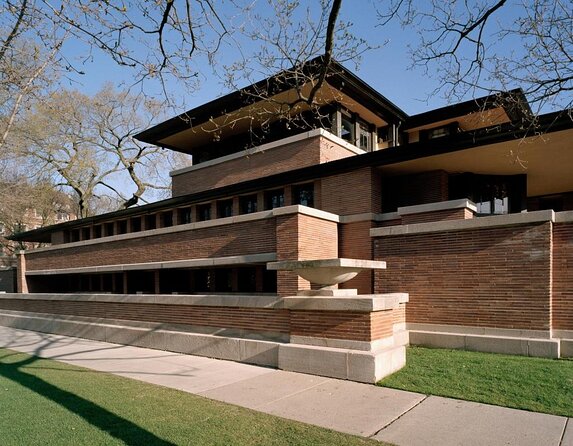
The route passes Frederick C. Robie House, one of the major architectural highlights in Hyde Park. Its inclusion gives the tour an important change of focus. You move from the university’s institutional buildings to a landmark associated with Frank Lloyd Wright and modern residential design.
Again, the wording matters: you pass the house. This experience does not include an interior tour or an admission ticket. If Robie House is a main reason for visiting Hyde Park, plan extra time to see whether a separate visit fits your schedule.
Even without entering, the house adds value to the walking route because it gives you another way to read the neighborhood. Hyde Park is not just a university quarter. It is also a place where major architectural ideas appear alongside everyday city streets.
The audio can help you connect the building to the larger route, but I would not book this tour as a substitute for a dedicated Robie House visit. Use it as an introduction, then decide if you want a closer look.
Same place, a different route to walk:
- City Sightseeing Hop-On Hop-Off Bus Tour with Audio Guide
★ 3.0 · 1,083 reviews - Medieval Torture Museum Ticket with Audio Guide and Ghost Hunting
★ 5.0 · 962 reviews - Gettysburg Battlefield Self-Guided Driving Audio Tour
★ 4.5 · 910 reviews - Ryman Auditorium Self-Guided Tour with Souvenir Photo Onstage
★ 4.5 · 903 reviews
The Nuclear Energy Sculpture
The Nuclear Energy Sculpture adds a piece of public art and science to the walk. This stop gives the route a different mood from the chapel, university buildings, and residential architecture.
The sculpture is especially relevant to the University of Chicago’s role in nuclear research, though the supplied tour details do not promise a long explanation or an interior science exhibit. You should expect an outdoor stop with audio context, not a museum-style presentation.
This is one reason the route feels broader than a simple campus stroll. It moves through education, architecture, politics, science, and public memory. The variety is useful if you want to understand Hyde Park as a neighborhood with several identities at once.
The tradeoff remains the same: the audio may not say enough for someone who wants a detailed account. Give yourself permission to pause near the sculpture and look at it carefully. Since the tour follows your pace, you are not forced to hurry on to the next point.
Washington Park and the longer walking stretches
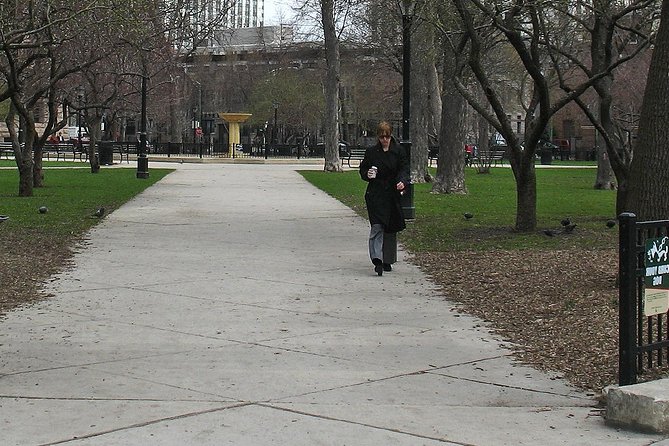
The route continues through parts of Washington Park. This section brings more open space into the experience and breaks up the built-up university surroundings.
Washington Park is also where the walking distance may become more noticeable. The route is described as taking about 40 minutes to one hour, but one account of the experience put the walk at roughly three miles. Those numbers do not always fit neatly together, especially if you stop, walk slowly, or spend time looking at the sites.
I would budget at least an hour and allow more if you want photographs or an unhurried pace. At 82, one participant found the distance too much, which is a useful warning for anyone with limited walking stamina. The activity is not described as wheelchair inaccessible, but the supplied information does not provide a detailed surface, slope, or restroom assessment, so you should check those points before booking if they matter to you.
The Washington Park portion also has some of the longer quiet stretches. You may hear less narration while walking through the park than you expect. Bring water, wear comfortable shoes, and think of the route as a neighborhood walk with audio stops rather than a continuous podcast.
That quiet can work in your favor. You have room to watch the surroundings and talk with the people in your group. But if your main goal is information every few steps, the gaps will feel like a weakness.
The DuSable Museum and Hyde Park’s wider story
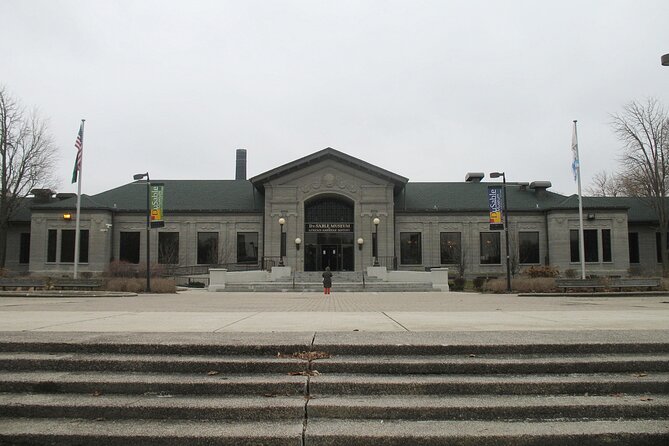
The tour passes the DuSable Museum of African American History, an important cultural stop in Hyde Park. Its place on the route signals that the neighborhood’s story extends beyond the university and its architecture.
The audio walk does not include museum admission. If you want to visit the museum, treat that as a separate activity and set aside additional time. The tour gives you the location and context, but it is not a replacement for the museum’s exhibitions.
This stop is valuable because it broadens the route’s focus. A walk that only discussed the University of Chicago would give you an incomplete picture of Hyde Park. Passing the DuSable Museum points you toward the area’s African American history and cultural life, even if the audio cannot cover the subject in museum-level detail.
I would consider adding the museum before or after the walk if its subject interests you. Since the audio tour ends nearby, you may find it easy to build the two activities into the same day, though the supplied information does not give museum hours or ticket details.
Finishing near 1101 East Hyde Park Boulevard
The tour ends outside 1101 East Hyde Park Boulevard Apartments. This is not a major attraction in the same way as Robie House or the DuSable Museum, but it gives the route a clear endpoint in the neighborhood.
A defined finish is useful when you are planning transportation or the rest of your day. The tour does not include transport, food, drinks, or personal expenses, so you need to arrange those yourself. The area is near public transportation, which makes the route practical to connect with other Chicago plans.
Because the tour is private, only your group participates. That offers privacy and control, but it does not mean a live person is walking with you. The VoiceMap app supplies the map, location data, and audio, while you handle the navigation and timing.
How the app and timing work
You receive lifetime access to the English-language tour through the VoiceMap app for Android and iOS. You also receive offline access to the audio, maps, and geodata. I would download everything before arriving at the starting point, then test your headphones and phone volume.
The route is available every day during the stated operating period, and you can begin whenever you like. There is no fixed group departure to catch. That flexibility is one of the tour’s real strengths, especially if you are fitting Hyde Park between other Chicago plans.
The advertised duration is about 40 minutes to one hour. In practice, plan extra time if you stop at the sites, take pictures, visit a museum, or walk at a slower pace. The roughly three-mile distance makes this more of a proper neighborhood outing than a quick audio introduction.
The tour is offered in English only. Most people can participate, but the activity requires walking and the use of your own smartphone and headphones.
Is the experience worth the price?
No price is provided here, so I cannot make a precise cost comparison. I would judge the value by what you want from the day.
The tour offers good value if you want a flexible introduction to Hyde Park, appreciate a personal narrator, and prefer exploring without a group. Lifetime access is useful if you want to replay sections or return to the neighborhood later. Offline maps and audio also reduce the need for a steady mobile connection during the walk.
The value is weaker if you expect a live guide, entry to university buildings, a Robie House visit, museum admission, or nonstop spoken content. You are paying for the route, the narration, and the app access. You are not paying for transportation, food, headphones, or admission fees.
The mixed score of 2.8 reflects that gap between expectation and format. The most positive response praised the app’s ability to start the commentary in the right place and valued Bill Ayers’ personal stories. The sharpest criticism focused on silence, limited information, and the lack of entry into the university’s original buildings.
That tells you exactly how to book wisely: choose this for independence and local perspective, not for a packed schedule of guided explanations.
Who should book this Hyde Park walk?
I would recommend it to independent visitors who enjoy setting their own pace and want a broad introduction to the neighborhood. It suits people interested in the University of Chicago, architecture, public art, Washington Park, and African American culture in one outing.
It is also a good fit if you dislike large groups or fixed departure times. You can walk only with your own party, pause as often as you like, and use the app again later.
I would be cautious if you have limited walking ability, since the route can reach about three miles. I would also be cautious if you want a detailed academic tour. The audio has personal appeal, but the quiet sections and limited commentary may leave you wanting more.
Free cancellation is available if you cancel at least 24 hours before the local start time. Inside that window, the payment is not refunded, and changes are not accepted.
Should you book it?
Book this Hyde Park audio tour if you want a flexible outdoor introduction led by Bill Ayers and you are comfortable filling some quiet walking time with your own observations. The combination of university buildings, Robie House, the Nuclear Energy Sculpture, Washington Park, and the DuSable Museum gives you a useful route through several sides of the neighborhood.
Skip it if you need interior access, a live guide, or a constant flow of information. If you do book, download the content first, wear good walking shoes, bring headphones, and reserve extra time beyond the one-hour estimate. Used that way, the tour can help you get oriented before exploring Hyde Park more deeply on your own.
FAQ
How long does the Hyde Park audio tour take?
The stated duration is approximately 40 minutes to one hour. You should allow more time if you stop at the sites, take photographs, walk slowly, or add separate visits.
How far is the walking route?
The route is about three miles based on the distance described for the experience. The official duration is shorter than many people may expect for that distance because the route includes walking between audio sections.
Who narrates the audio tour?
The tour is narrated by Bill Ayers, a local professor and activist.
What language is the tour offered in?
The tour is offered in English.
Where does the tour begin?
It begins outside the University of Chicago Laboratory Schools at 1362 East 59th Street, Chicago, Illinois 60637.
Where does the tour end?
It ends outside 1101 East Hyde Park Boulevard Apartments at 1101 East Hyde Park Boulevard, Chicago, Illinois 60615.
Are admission tickets included?
No. Personal expenses and admission fees are not included. The route passes several sites, including Robie House and the DuSable Museum, but it does not include their admission.
Do I need my own phone and headphones?
Yes. A smartphone and headphones are not included. You use the VoiceMap app on your own Android or iOS device, with offline access to the audio, maps, and geodata.
Can I cancel the booking?
Yes. You can receive a full refund by canceling at least 24 hours before the local start time. Cancellations or changes made within 24 hours are not accepted for a refund.
Just added around the USA
- Smartphone-Guided Walking Tour of Downtown Indianapolis Sights & Stories★ 4.0 · 25 reviews
- Springfield Self-Guided Walking Audio Tour★ 4.0 · 5 reviews
- Smartphone Guided Indianapolis Downtown Sites Audio Walking Tour★ 4.5 · 7 reviews
- Indiana Dunes National Park Self-Guided Audio Tour★ 3.5 · 4 reviews
- Self-Guided Audio Driving Tour in Kancamagus Highway★ 4.5 · 6 reviews
- An Epic Scavenger Hunt: Bloomington Scenic Southern Indiana★ 3.5 · 6 reviews
- Huntsville Rocket City Smart Phone Self Guided Audio (GPS/APP) Walking Tour★ 4.5 · 5 reviews
- Sights of Downtown Houston Smartphone Audio Walking Tour★ 4.0 · 7 reviews
USA Audio Tours, compared.

Fort Sumter Admission and Self-Guided Tour with Roundtrip Ferry
Read our review →
San Francisco: Alcatraz Ticket, Ferry, & Self-Guided App
Read our review →
Los Angeles: Hop-On Hop-Off Bus Tour with Audio Guide
Read our review →
City Sightseeing Hop-On Hop-Off Bus Tour with Audio Guide
Read our review →
Medieval Torture Museum Ticket with Audio Guide and Ghost Hunting
Read our review →
Ryman Auditorium Self-Guided Tour with Souvenir Photo Onstage
Read our review →