

REVIEW · USA AUDIO TOURS
Charleston Self-Guided Audio Walking Tour
Charleston’s past unfolds block by block on this GPS-guided walking tour, from an old meetinghouse and grand private homes to places tied to slavery, war, religion, and trade. You follow the route on your phone rather than a guide, so the city sets the pace and you can stop whenever you wish.
I like the freedom to pause for a museum, lunch, or photos, and I like the strong value of lifetime access for $14.99. You can use the tour on future visits, replay stories at home, or split the walk over more than one day. The main concern is the technology: GPS audio can misfire if you leave the route, and the first half has few easy bathroom stops.
Key details before you start

- More than two miles and 45-plus stories: Plan on one to two hours of walking time, though stops, meals, museums, and photos can stretch the outing to several hours.
- Charleston’s difficult past is included: The route visits the Slave Auction Site Memorial and Old Slave Mart Museum, giving the tour more weight than a simple architecture stroll.
- Pause whenever you like: Audio stops automatically, but you can stop, skip a story, replay it, or return another day.
- The Action Tour Guide app works offline: Download the tour over strong Wi-Fi or cellular service before reaching the starting point.
- The route ends at City Market: This makes it easy to finish with local crafts, Gullah sweetgrass baskets, food, and a look through the market stalls.
- English is the only language offered: You need a compatible iPhone, Android phone, or GPS-enabled iPad or tablet.
What the $14.99 price really buys you
At $14.99 per person, this is priced below many live city walks, but the comparison is not quite like for like. You do not get a human guide, group conversation, or the chance to ask questions. You do get a private experience for your own party, a planned route, GPS-triggered narration, offline maps, and access that does not expire.
That last point matters. If you have only a short stop in Charleston, you can complete the route in one stretch. If you are staying longer, you can break it into two days. You can also use the tour again on a future trip, which makes the price easier to justify than a one-time activity.
The app includes extra content through its Learn More sections. If you enjoy history and find the main narration a little brief, use those additions. One useful strength is the mix of stories. The route is not only a parade of pretty houses. It also addresses Irish immigration, colonial life, government, slavery, religious freedom, the Civil War, and local commerce.
For couples, the supplied information suggests sharing one tour by splitting headphones. Still, the access instructions say the password can be used on the same number of devices as the number of booked participants. If you want separate phones, check your booking details before you go.
More Self-Guided Walking Tours in the USA
- Self Guided Classic Freedom Trail Location Aware (GPS) Walking Audio Tour
★ 4.5 · 258 reviews - Self-Guided Smartphone Ghost Walking Tour in Salem
★ 4.5 · 225 reviews - Cape Cod & Provincetown Self-Guided Driving & Walking Audio Tour
★ 4.0 · 207 reviews
Getting the Action Tour Guide app ready

After booking, look for an email and text with setup instructions and a password. Search for audio tour if the message is hard to find. You must download the separate Action Tour Guide app and download the Charleston tour while you have a strong signal.
Once the route is stored on your phone, it works without Wi-Fi or cellular service. Bring earbuds or headphones, and keep the phone active rather than letting it go into sleep mode. One person using an older phone reported more trouble than someone using a newer Galaxy phone, so updated equipment is the safer choice.
The starting point is listed at 152 Market Street. No guide meets you there. You open the app, select the correct Charleston tour if more than one version appears, and walk to the first story point. The narration is designed to start when you enter the proper GPS area.
This is the key practical rule: follow the route and walking direction closely. If you wander too far away, the audio may not trigger at the next stop. The app map can help you find your way back, but this is not a free-form audio file that plays perfectly from any street.
From Circular Congregational Church to the Four Corners of Law
The route begins with Circular Congregational Church, one of Charleston’s oldest continuously worshiping congregations. The congregation dates to 1681, when dissenters who did not follow the Church of England gathered at the White Meeting House.
The round church you see today dates from 1891, after fire destroyed the earlier building. This is a useful first stop because it introduces one of Charleston’s central themes: religious groups shaping the city while operating outside the official English church.
Next comes Hibernian Hall, built in 1840 for the Hibernian Society. Irish immigrants and their descendants formed the society in 1801 to provide support and social activity for Charleston’s Irish community. The stop is short, but it adds an important reminder that colonial and early American Charleston was shaped by many immigrant groups.
The South Carolina Historical Society Museum follows. The society was founded in 1855 and preserves material connected with South Carolina and its people. Entry tickets are not included, so treat the building as an audio stop unless you decide to visit separately.
At the Four Corners of Law, Broad and Meeting Streets meet beneath four major buildings tied to law and government. The name points to the unusual concentration of civic and legal power at one intersection. It is a quick stop, but it helps you read Charleston as a working political city rather than only a collection of handsome facades.
South Carolina Society Hall, built in 1803, brings you back to private societies and civic life. The South Carolina Society was founded in 1737 and played a role in the city’s social and charitable world.
The John Robert Pringle House offers a smaller-scale story about European colonists in early Charleston. The stop is not about the snack brand suggested by the name. It is a chance to consider how individual residents lived within the wider colonial system.
Grand houses and White Point Garden

The next portion moves toward larger houses and the waterfront. The Patrick O’Donnell House is said to have taken 12 years to build, reportedly because O’Donnell wanted a perfect home for his fiancée. That kind of story gives the architecture a human angle, even if your attention is mostly caught by the building’s ornate exterior.
White Point Garden has served several purposes over time. It was once called Oyster Point, functioned as a public gathering place, and served as a defensive position during wartime. The route also connects the garden to Charleston’s military past through a monument to General William Moultrie.
Moultrie commanded the fort on Sullivan’s Island during the 1776 Battle of Sullivan’s Island. The fort later became known as Fort Moultrie. This stop is especially useful if you want the Revolutionary War context behind Charleston’s role as a coastal stronghold.
The Palmer Home was built in 1825 for Thomas Bennett Jr., a former governor of South Carolina. John Ravenel Palmer bought it in 1861, and the Palmer family held the property for decades. Nearby, the Edmondston-Alston House adds another 19th-century residence with connections to notable Charleston residents and visitors.
This is where the tour can feel less like a quick sightseeing circuit and more like a neighborhood walk. Give yourself time to look up, compare facades, and notice how grand private houses sit close to narrow lanes and working streets.
Same place, a different route to walk:
- Fort Sumter Admission and Self-Guided Tour with Roundtrip Ferry
★ 4.5 · 3,343 reviews - San Francisco: Alcatraz Ticket, Ferry, & Self-Guided App
★ 4.5 · 2,460 reviews - Los Angeles: Hop-On Hop-Off Bus Tour with Audio Guide
★ 3.7 · 2,030 reviews - City Sightseeing Hop-On Hop-Off Bus Tour with Audio Guide
★ 3.0 · 1,083 reviews
Longitude Lane and the story behind Rainbow Row

Longitude Lane is one of the route’s most picturesque passages. Its story also connects back to White Point Garden, where a fake cannon is displayed. The real cannon was taken from this lane, making the narrow alley part of a larger piece of Charleston’s military and street history.
Rainbow Row is the postcard stop. The colorful houses began as mercantile stores and residences for merchants and traders. Their appeal today comes from the bright facades, but the audio places them in the context of commerce and preservation rather than treating them as simple photo backdrops.
The walking portion here is easy to enjoy at your own speed. Pause for pictures, but listen before moving on if you want the background story. Since the tour is private and self-guided, you do not have to wait for a group to clear the view or keep moving because a guide has a schedule.
Facing slavery and the Civil War
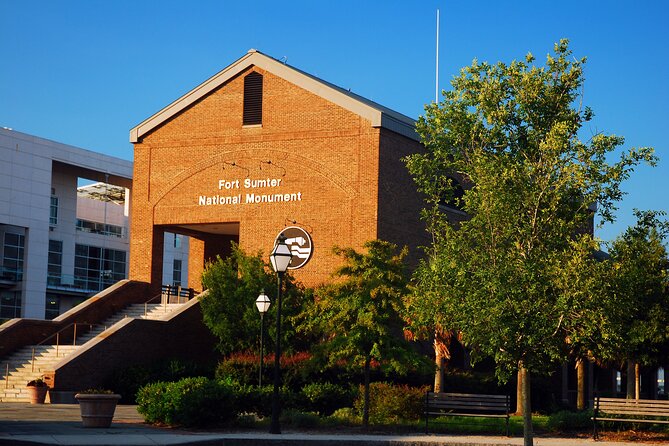
The tour becomes more serious at the Slave Auction Site Memorial. It marks land where slave auctions took place in the late 18th and early 19th centuries. This is one of the most important stops because it puts the city’s wealth, trade, and later conflict into direct human context.
The Old Slave Mart Museum comes next. Entry is not included, and the museum may require its own ticket or arrangements. If you choose to enter, allow extra time beyond the stated walking schedule. The audio stop gives you a starting point, but the museum is a separate experience.
The route also discusses Charleston’s strategic role in the Civil War. The city’s deepwater port and place in cotton production and export made it important to both Confederate and Union forces. The tour does not treat the war as an isolated military chapter. Instead, it connects Charleston’s port, commerce, slavery, and political importance.
This section deserves a slower pace. The audio format lets you stop at the memorial, read signs, and take a quiet moment without a group pressing onward. You should also expect the subject matter to be direct rather than decorative.
Pineapple Fountain, Dock Street Theater, and St. Philip’s Church

Pineapple Fountain is a lighter stop with a historical reference behind its design. The fountain was built in 1990, but the pineapple has a connection to Charleston’s past and hospitality traditions.
Dock Street Theater brings a different kind of story. The site began as a theater in 1736 and reopened as a theater in 1937. The interesting question is what happened during the long gap between those dates. The narration uses the building to show that Charleston’s cultural life has changed, paused, and restarted over time.
St. Philip’s Church gives you a close look at how Charleston’s streets developed around older buildings. The church projects onto Church Street, causing the street to bend before straightening again. It is a small detail, but it helps you see the city as a place shaped by old property lines and long-standing institutions.
Ending at Charleston City Market

Charleston City Market has operated since 1804 and is the natural finish for this route. You can browse local arts and crafts, Gullah sweetgrass baskets, and food after the historical stops.
Ending here is practical. You can use the market as a reward after the walk, stop for a meal, or browse without feeling rushed by a guide. If you take your time at the earlier houses, museums, and memorials, the full outing can reach three or four hours even though the walking time itself is closer to one or two hours.
The listed end point is Charleston City Market at 188 Meeting Street. Since market hours and individual vendors can change, use the stated tour hours of 9:00 a.m. to 6:00 p.m. as a planning guide rather than assuming every stall will operate all day.
Timing, bathrooms, and route limits
The advertised walk covers more than two miles and includes over 45 audio stories. The listed stop times add up to a short outing, but real use will take longer if you stop for photos, read plaques, enter museums, eat, or browse the market.
You can start and pause the experience on any day, and the access does not expire. That makes splitting the route a smart choice. One suggested break point is after the historic homes and White Point Garden, before continuing toward Rainbow Row and the market.
Plan bathroom stops carefully. The first half has few convenient facilities, so use one before starting or take advantage of a museum, restaurant, or other open business when you find one. The app has a Near Me option for restrooms and restaurants, but do not wait until you are desperate.
GPS performance is the main variable. Keep your phone out of sleep mode, begin at the designated point, and stay close to the route. If the narration seems to stop, check your position on the map before walking a long distance in the wrong direction.
Who will like this Charleston walk?
I would choose this tour for independent visitors who want structure without a fixed schedule. It suits couples, families, history fans, and anyone with only a few hours in downtown Charleston.
It is especially useful if you like to stop for food and photos or want to visit a museum along the way. Families can pause when children need a break, and history fans can use the extra app content for more detail.
I would be more cautious if you want a live guide who can answer questions, adjust the route, or explain every building you pass. The tour focuses on specific audio points, so some sites and stretches between stops may receive little or no commentary. Earlier versions also had route and audio gaps, although the tour has since been updated.
Should you book it?
Book it if you want an inexpensive, private introduction to Charleston with a clear route, strong flexibility, and access you can use again. The combination of Circular Congregational Church, Rainbow Row, White Point Garden, the slavery memorial sites, and City Market gives you a broad look at the city in one walk.
Skip it if you dislike app-based navigation or expect a guide to fill every quiet stretch with commentary. Download the tour before you arrive, bring headphones, plan a bathroom break, and follow the route closely. For $14.99, the lifetime access makes this a sensible pick for a self-guided first look at Charleston.
FAQ
How much does the Charleston Self-Guided Audio Walking Tour cost?
The tour costs $14.99 per person.
How long does the walking tour take?
The walk covers more than two miles and usually takes about one to two hours of walking time. Stops for museums, food, photos, and breaks can extend the outing to three or four hours.
Is the tour available all year?
Yes. You can use the tour throughout the year, and the access does not expire.
What language is offered?
The tour is offered in English.
Does the tour include attraction admission?
No. Museum entry tickets, attraction passes, and reservations are not included.
Where does the tour start and end?
The listed starting point is 152 Market Street in Charleston. The route ends at Charleston City Market, 188 Meeting Street.
Do I need Wi-Fi during the walk?
No. You need strong Wi-Fi or cellular service to download the tour first. After downloading, the app works offline.
Is there a guide waiting at the meeting point?
No. This is a self-guided activity. You open the Action Tour Guide app at the starting point, and the audio begins when you reach the first story location.
Just added around the USA
- Smartphone-Guided Walking Tour of Downtown Indianapolis Sights & Stories★ 4.0 · 25 reviews
- Springfield Self-Guided Walking Audio Tour★ 4.0 · 5 reviews
- Smartphone Guided Indianapolis Downtown Sites Audio Walking Tour★ 4.5 · 7 reviews
- Indiana Dunes National Park Self-Guided Audio Tour★ 3.5 · 4 reviews
- Self-Guided Audio Driving Tour in Kancamagus Highway★ 4.5 · 6 reviews
- An Epic Scavenger Hunt: Bloomington Scenic Southern Indiana★ 3.5 · 6 reviews
- Huntsville Rocket City Smart Phone Self Guided Audio (GPS/APP) Walking Tour★ 4.5 · 5 reviews
- Sights of Downtown Houston Smartphone Audio Walking Tour★ 4.0 · 7 reviews
USA Audio Tours, compared.
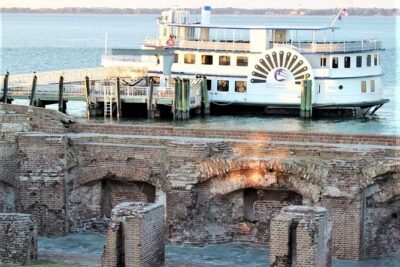
Fort Sumter Admission and Self-Guided Tour with Roundtrip Ferry
Read our review →
San Francisco: Alcatraz Ticket, Ferry, & Self-Guided App
Read our review →
Los Angeles: Hop-On Hop-Off Bus Tour with Audio Guide
Read our review →
City Sightseeing Hop-On Hop-Off Bus Tour with Audio Guide
Read our review →
Medieval Torture Museum Ticket with Audio Guide and Ghost Hunting
Read our review →

Ryman Auditorium Self-Guided Tour with Souvenir Photo Onstage
Read our review →
Red Rock Canyon Self-Guided Electric Bike Tour
Read our review →Browse the lists this tour appears in