
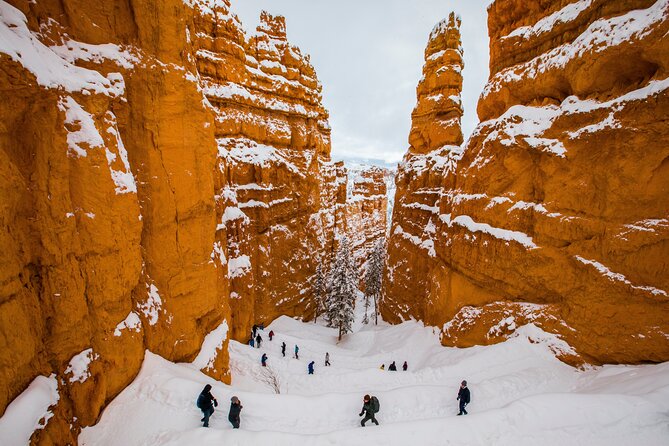
REVIEW · USA AUDIO TOURS
Bryce Canyon National Park Self-Guided Driving Audio Tour
Bryce Canyon’s hoodoos are strange enough on their own, but this audio tour gives the odd shapes a backstory. As you drive from the Visitor Center toward Rainbow Point, the narration explains how ice, water, uplift, and erosion carved the orange limestone into towers, fins, windows, and spires. I especially like the hands-free GPS playback and the way the tour mixes geology with Paiute traditions, pioneer stories, wildlife, and astronomy.
The price is another strong point: $16.99 per group of up to four, rather than a fee for each person. You can stop for photos, pause for lunch, skip a story, or return another day because access no longer expires. The main caution is the app setup. You must download the separate Action app and tour while you have a strong connection, and a few people have found the starting directions or pause controls confusing.
Key points to know before you go
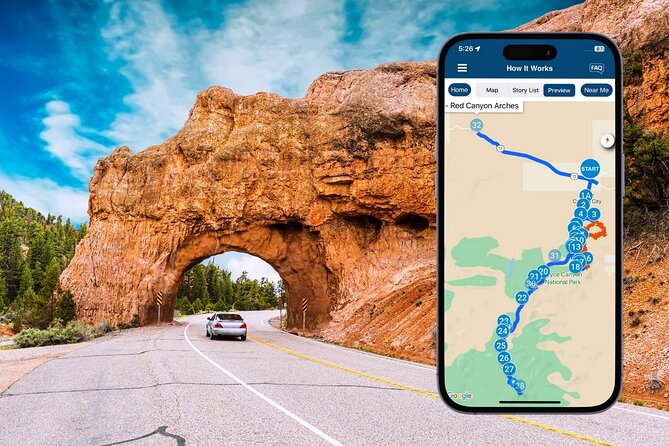
- More than 30 audio stories: The route covers the park’s major overlooks and continues toward Rainbow Point.
- A geology lesson with personality: Learn about hoodoos, the Claron Formation, the Grand Staircase, and the end of the last ice age.
- Private and flexible: Your group stays in its own car, with no guide, bus, or fixed departure time.
- Strong value for families: One purchase covers up to four people, and the same tour can be used again without expiry.
- Download before entering the park: Cell service can be unreliable, so complete the setup at home or somewhere with good Wi-Fi.
- Useful for planning hikes: The drive gives you a clear look at Bryce’s main viewpoints before you decide where to spend more time on foot.
What this Bryce Canyon audio tour is really like
This is not a live excursion with a guide waiting beside the Visitor Center. It is a phone-based driving tour that uses GPS to trigger narration as you reach different points along the road. You begin near the Bryce Canyon Visitor Center in Bryce Canyon City, then follow the route toward the park’s major viewpoints and the southern end of the scenic road.
The advertised drive takes about one to two hours, but that refers to the audio route itself, not a complete visit to Bryce Canyon. You will want extra time for overlooks, short walks, photos, traffic, shuttle arrangements, and weather. The route is described as more than 60 miles long, though some users have completed a shorter section in the park. Treat the timing as a rough guide, not a schedule.
I like this format because Bryce Canyon rewards pauses. You can stop at Sunset Point for ten minutes, walk a trail, and restart the narration when you are ready. A bus tour cannot offer that kind of freedom. On the other hand, a live guide can answer questions and adjust the story to your interests. This app gives you structure, but you remain responsible for navigation and timing.
More Self-Guided Driving Tours in the USA
- Gettysburg Battlefield Self-Guided Driving Audio Tour
★ 4.5 · 910 reviews - Joshua Tree National Park Self-Guided Driving Audio Tour
★ 4.5 · 762 reviews - Ultimate Acadia National Park Self-Guided Driving Audio Tour
★ 4.0 · 521 reviews
Start at the Visitor Center with Bryce’s origin story

The first audio point is near the Bryce Canyon Visitor Center. The opening sets up the two themes that carry through the drive: the remarkable geology and the people who have lived in or passed through this area.
You will hear how Bryce Canyon received its name from Ebenezer Bryce, a Mormon pioneer, and how it became a national park in 1924. The narration also introduces the Paiute people, whose connection to the area predates the park and whose stories offer a different way to understand the hoodoos.
This is a good place to get organized. Download the app and tour before you arrive, confirm that the GPS is working, and connect your phone to the car stereo by Bluetooth, USB, or AUX. If you start by searching for help inside the Visitor Center, you may be disappointed. Staff there are not responsible for this private app, so know how to launch it before you enter the park.
Fairyland Point gives you an early preview
Fairyland Point is the first major detour. It offers a broad introduction to Bryce’s scenery, with cliffs, distant formations, and the first major look at the hoodoo-filled amphitheaters.
The stop works well early in the drive because it gives you a visual sense of what lies ahead. You can see the broad scale of the park before focusing on individual rock towers. The audio story is short, listed at about five minutes, so it does not take over the stop.
The drawback is simple: an overlook cannot replace walking among the hoodoos. If you have limited time, you may prefer to keep moving toward the Bryce Amphitheater area, where several famous viewpoints sit close together.
Sunrise Point and the Bryce Amphitheater
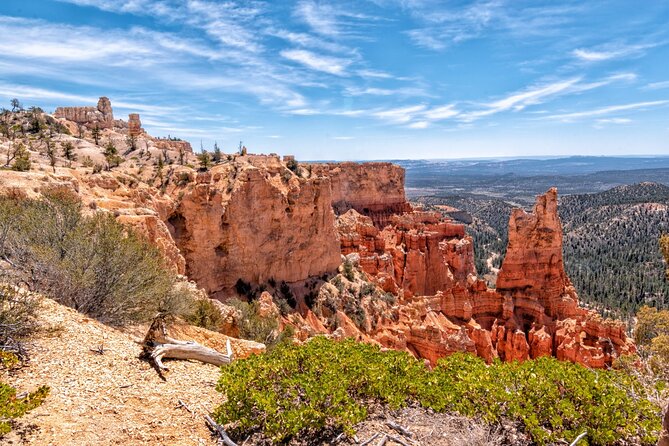
Sunrise Point is one of the essential stops. The view opens over tall, thin formations and trails that lead down into the amphitheater. The narration helps you recognize what you are seeing instead of treating the view as one big wall of orange rock.
From there, the route continues around the Bryce Amphitheater, the great semicircular bowl that gives the park much of its fame. The narration explains that this is not a conventional river-cut canyon. The formations are part of the Claron Formation, a layer of limestone shaped by repeated freezing, thawing, and erosion.
That explanation matters. Once you understand that water enters cracks, freezes, expands, and breaks the rock apart, the hoodoos look less like random sculpture and more like a work in progress. The park is still being altered by the same forces that made it.
More National Park Audio Tours in the USA:
- Self-Guided Ebike Tours of Acadia National Park Carriage Roads
★ 5.0 · 427 reviews - Great Smoky Mountains National Park Self-Guided Driving Tour
★ 4.0 · 292 reviews - Arches National Park Self-Guided Driving Audio Tour
★ 4.5 · 288 reviews - Yellowstone National Park Self-Guided Driving Audio Tour
★ 4.5 · 249 reviews
Sunset Point explains how hoodoos are made
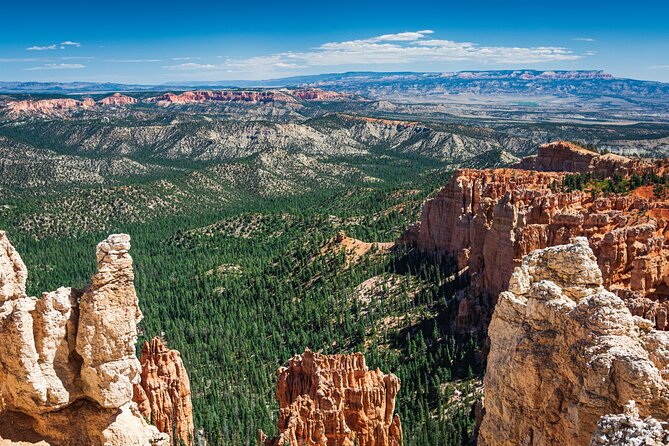
Sunset Point is a natural companion to Sunrise Point. It looks across the same broad amphitheater from a different angle, and the audio focuses on the science behind the formations.
You will learn what makes a hoodoo different from a fin, arch, or ordinary cliff. The story also places the process on a huge time scale, which is useful because the rock seems almost too carefully shaped to be natural. The bright colors and narrow towers can make Bryce feel unreal, but the explanation brings the view back to basic forces: rock, water, ice, gravity, and time.
This is one of the most useful parts of the tour for families. Children may not remember every geological term, but they can follow the idea that winter weather slowly breaks the rock and rain carries pieces away. Adults get enough context to understand why the park looks so different from Zion or the Grand Canyon.
Inspiration Point adds Paiute stories
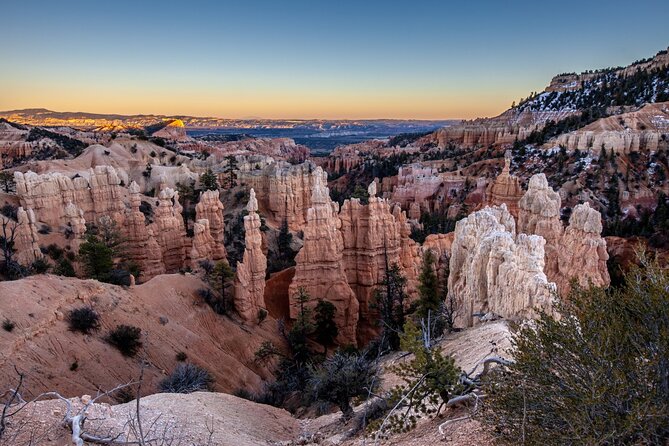
At Inspiration Point, the focus shifts from geology to culture. The audio discusses the Paiute people and their explanations for the hoodoos. These stories add a human layer to a place that can otherwise feel like a collection of dramatic viewpoints.
I appreciate that the tour does not stay only with the familiar pioneer narrative. Bryce’s story includes Native people, Mormon settlers, scientists, wildlife, and modern park protection. You get a wider view of the area instead of hearing only how a national park was named.
The overlook itself is another strong place for photos, though conditions can affect what you see. Snow, cold, sun, and shadows change the color and mood of the formations. Give yourself time here rather than treating the stop as a quick audio checkpoint.
Bryce Point is best for a broad view
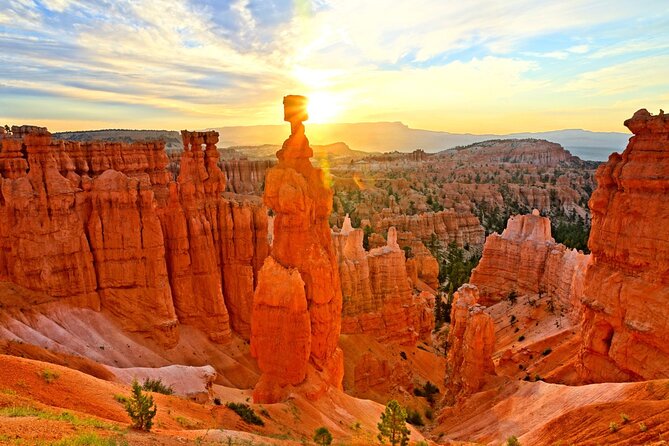
Bryce Point looks across much of the amphitheater and is especially associated with sunrise. The audio describes how the first rays light the tops of the hoodoos while shadows remain in the lower recesses.
Even if you do not arrive at sunrise, the story helps you picture why early morning is special. It also discusses Mormon settlers and the difficult work of making a life in this high, cold, dry country. That context makes the scenery feel less detached from human history.
This stop is useful for orientation. After visiting several close-up overlooks, Bryce Point shows how the formations fit together as one vast bowl. If your visit is short, the central viewpoints around Sunrise, Sunset, Inspiration, and Bryce Points give you the best return for your time.
Paria View and the end of the Ice Age
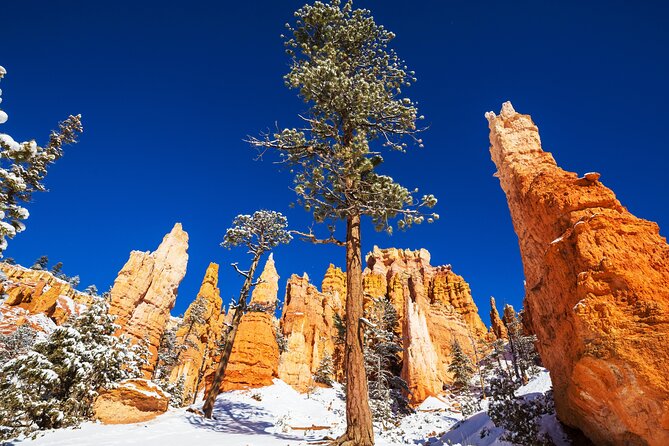
Paria View introduces the effects of glacial melt after the last ice age ended about 12,000 years ago. The explanation connects Bryce Canyon to a much larger story involving the ice that covered huge areas of North America and the water released as the climate warmed.
You will not get a technical geology lecture, and that is probably the right choice for a driving tour. The narration gives you a useful framework without demanding too much attention from the person behind the wheel.
Keep the volume comfortable and let the driver concentrate on the road. This is a scenic drive, not a place to read a long script while moving. The app is designed to play automatically, but you can pause it when you reach an overlook.
Swamp Canyon and the Butch Cassidy connection
Swamp Canyon Overlook takes you into a quieter section of the park. The story turns to Butch Cassidy and the Sundance Kid, separating the historical figure from the legend that grew around him.
This change of subject keeps the drive from becoming a steady stream of geology terms. It also gives the less crowded southern section some character. You may find this stretch more peaceful than the busy central viewpoints, though conditions and road access can change.
One practical warning: check current park conditions before relying on every stop. A section of road or an overlook may be closed because of weather, construction, or seasonal access. The audio can still play a story for a place you cannot reach, which is frustrating if you expected every stop to be available.
Farview Point, Natural Bridge, and Agua Canyon
Farview Point combines a high viewpoint with a discussion of clean air and bristlecone pines. These trees are among the oldest on Earth, and their presence gives the story a useful connection to Bryce’s high-elevation environment.
Natural Bridge follows with an unusual formation near the road. The narration points out that Bryce offers more than hoodoos. Arches, windows, fins, and other shapes appear throughout the area, each showing a different stage of erosion.
At Agua Canyon, two large hoodoos are known as the Hunter and the Rabbit. The names are playful, since the formations do not clearly resemble either animal. The audio then shifts to local wildlife and the ways animals cope with hot summers and severe winter cold.
These stops work best as a set. You get trees, rock formations, and animals in a fairly short section of driving. The information is pleasant and easy to follow, but do not expect every stop to have the same visual impact as the Bryce Amphitheater.
Ponderosa Canyon and Black Birch Canyon
Ponderosa Point marks the route into the farther reaches of the park. Junipers spread across the views, and the narration points out that you are heading into some of Bryce’s more remote scenery.
Black Birch Canyon changes the subject again, this time to the night sky. Bryce is known for dark skies, and the audio introduces amateur astronomy and the park’s stargazing potential. This is a valuable reminder that Bryce is not only a daytime destination. If you stay nearby, the view above you can be as impressive as the formations below.
The southern drive also gives you breathing room after the concentrated viewpoints near the amphitheater. It takes time to reach Rainbow Point, but the extra miles are part of the experience. If you are rushing through Bryce, this is the section most likely to be cut. The tour helps explain why it is worth continuing.
Rainbow Point and the Grand Staircase
Rainbow Point and nearby Yovimpa provide the broadest views on the route. From here, you can see hoodoos, cliffs, forest, and the large stepped structure that extends south toward the Grand Canyon.
The audio explains the Grand Staircase as a series of geological levels descending through southern Utah and Arizona. Bryce sits near the upper part of that enormous sequence. It is a useful bit of regional context, especially if you are also visiting Zion, Grand Staircase-Escalante, or the Grand Canyon.
Rainbow Point is listed as the end of the tour. The itinerary also includes Red Canyon, where the route passes through two human-made arches cut for the road in 1914. Confirm the direction shown in your app before setting out, since the route details describe both the park drive and the approach through Red Canyon.
How the app works, and where it can go wrong
After booking, you receive setup instructions and a password by email and text. Search for audio tour if the message is hard to find. Then download the separate Action Tour Guide app, enter the password, and download the Bryce tour while you still have strong Wi-Fi or cellular service.
Once inside the park, open the app and go to the starting point. The first story should begin when you reach its GPS location, and later stories should play as you follow the route. You can pause, skip a story, take a side trip, and return to the route later.
The technology is useful but not perfect. Some people have had trouble launching the tour, following the first directions, or stopping playback at the end. If the app seems to send you in a circle, reinstalling it or contacting support may help. Clear the app from your recent apps when finished so it does not keep running.
Use an iPhone with iOS 15 or later, an Android device with version 9 or later, or an iPad or tablet with GPS and cellular capability. Apple CarPlay is supported. Android Auto support is described as forthcoming, so do not count on it if you use Android.
Is $16.99 good value?
For a group of up to four, the price is modest. A family or two couples can split the cost, making it far less expensive than hiring a private guide. You also pay once for access that does not expire, so you can use it on a later trip or replay sections at home.
The value depends on what you want. If you mainly need directions and basic facts, the free National Park Service app may be enough. If you want a narrated route that automatically points out stops while you drive, this tour offers convenience and a clear sequence.
The audio is not a substitute for time on foot. I would use it to understand the park’s layout, then spend extra time at the viewpoints and trails that interest you. Think of it as a helpful companion for the drive, not the whole Bryce Canyon experience.
Who should book this tour?
I would choose it for a self-directed first visit, a family that wants simple explanations, or anyone who likes learning while driving. It is also useful if you are arriving for one afternoon and want a quick overview before deciding where to hike the next day.
You should think twice if app setup irritates you, if you want a live guide who can answer questions, or if you prefer a very detailed academic treatment of geology. The narration is designed to be listened to while driving, so some subjects are introduced rather than explored at length.
My advice is straightforward: download everything before you arrive, allow more than two hours, and check park road conditions. At $16.99 for the car, the tour is a sensible buy for flexible sightseeing, provided you are comfortable managing the phone yourself.
FAQ
How long does the Bryce Canyon audio tour take?
The driving portion takes approximately one to two hours. Plan additional time for stopping at overlooks, taking photos, walking, eating, and dealing with park conditions.
How many people does one purchase cover?
The price of $16.99 covers one group of up to four people. It is purchased per car rather than per person.
Does the tour require cellular service inside Bryce Canyon?
No. You must download the app and tour while you have strong Wi-Fi or cellular service. After that, the tour works offline.
Where does the tour start and end?
The tour begins near the Bryce Canyon Visitor Center in Bryce Canyon City and is listed as ending at Rainbow Point, Utah. Red Canyon is also included in the described route.
Is the Bryce Canyon park entrance fee included?
No. You must pay the separate Bryce Canyon National Park entry fee.
Can I use the tour again later?
Yes. The tour has lifetime access with no expiry date. You can use it on another trip, over multiple days, or replay it whenever you like.
More National Park Trips in the USA
- Self-Guided GPS Audio E-Bike Tour Hawaii Volcanoes National Park
★ 4.5 · 131 reviews - Shenandoah National Park Self-Guided Driving Audio Tour
★ 4.5 · 109 reviews - Self-Guided Audio Driving Tour in Glacier National Park
★ 4.5 · 101 reviews - Rocky Mountain National Park Self-Guided Driving Audio Tour
★ 4.5 · 92 reviews
Just added around the USA
- Smartphone-Guided Walking Tour of Downtown Indianapolis Sights & Stories★ 4.0 · 25 reviews
- Springfield Self-Guided Walking Audio Tour★ 4.0 · 5 reviews
- Smartphone Guided Indianapolis Downtown Sites Audio Walking Tour★ 4.5 · 7 reviews
- Indiana Dunes National Park Self-Guided Audio Tour★ 3.5 · 4 reviews
- Self-Guided Audio Driving Tour in Kancamagus Highway★ 4.5 · 6 reviews
- An Epic Scavenger Hunt: Bloomington Scenic Southern Indiana★ 3.5 · 6 reviews
- Huntsville Rocket City Smart Phone Self Guided Audio (GPS/APP) Walking Tour★ 4.5 · 5 reviews
- Sights of Downtown Houston Smartphone Audio Walking Tour★ 4.0 · 7 reviews
USA Audio Tours, compared.

Fort Sumter Admission and Self-Guided Tour with Roundtrip Ferry
Read our review →
San Francisco: Alcatraz Ticket, Ferry, & Self-Guided App
Read our review →
Los Angeles: Hop-On Hop-Off Bus Tour with Audio Guide
Read our review →
City Sightseeing Hop-On Hop-Off Bus Tour with Audio Guide
Read our review →
Medieval Torture Museum Ticket with Audio Guide and Ghost Hunting
Read our review →

Ryman Auditorium Self-Guided Tour with Souvenir Photo Onstage
Read our review →
Red Rock Canyon Self-Guided Electric Bike Tour
Read our review →Browse the lists this tour appears in