
REVIEW · USA AUDIO TOURS
Selma Civil Rights Walk of Freedom Self Guided GPS APP Audio Tour
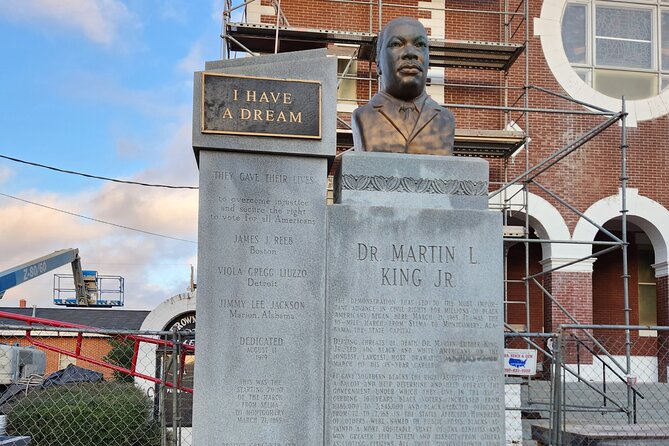
Selma’s Civil Rights story is best understood on foot, one block at a time. This self-guided GPS audio tour takes you from the Old Depot Museum to Brown Chapel AME Church, with stops at Edmund Pettus Bridge, the Dallas County Courthouse, and the place where Martin Luther King Jr. was jailed.
I like two things right away: you set your own pace, and the tour costs only $9.75. You can listen when the town’s museums are closed, pause for photographs, and spend more time at the sites that matter most to you. The main drawback is that you depend on your phone and the app, with no live guide to help if the technology fails.
Key points about the Selma walking tour
- Old Depot Museum to Brown Chapel AME Church: The route connects two important Civil Rights landmarks in central Selma.
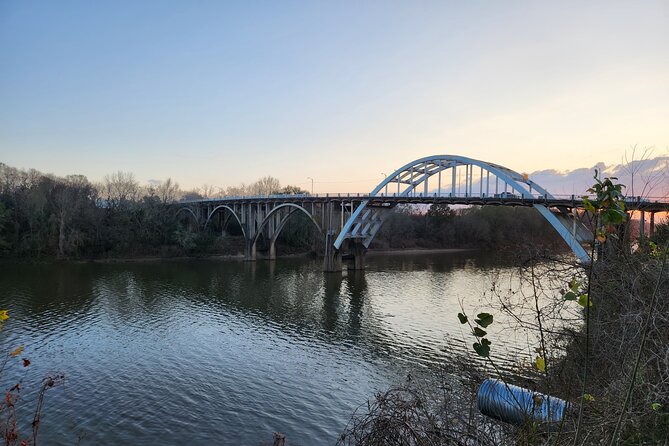
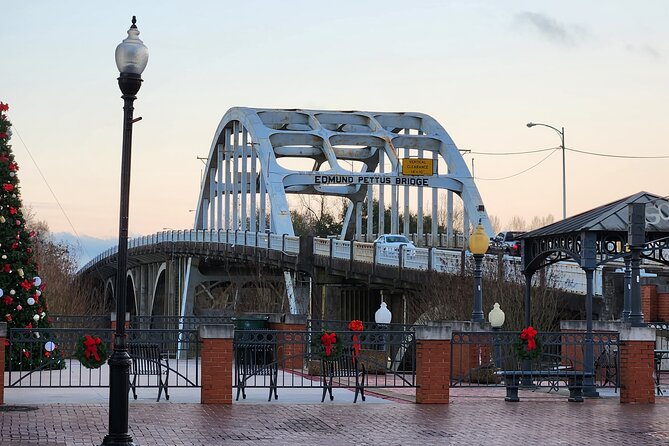
- Edmund Pettus Bridge: Spend about 15 minutes learning about Bloody Sunday, Turnaround Tuesday, and the third march.
- A self-guided GPS format: Start any time during the listed operating hours and listen at your own speed.
- Outdoor history only: No museum admissions, food, or drinks are included.
- Key Martin Luther King Jr. sites: Hear about his arrest at the Selma Municipal Court and his actions at the Dallas County Courthouse.
- A low-cost private experience: Only your group participates, and the price is $9.75 per person.
Why this Selma walk matters
Selma is not a place where the Civil Rights story sits safely behind glass. Much of the route takes place on ordinary streets, outside courthouses, churches, and other buildings connected to the struggle for voting rights. That makes the walk powerful, but it also means you need to bring some imagination. The audio fills in the names, events, and conflicts that are not always obvious from the buildings themselves.
The tour begins at the Old Depot Museum, at 4 Martin Luther King Street. You learn about the depot’s past and its connection to the Civil Rights Movement before setting off through town. This is a sensible starting point because it gives you a bit of local context before you reach the most famous site, Edmund Pettus Bridge.
I like the way the route builds toward the bridge instead of treating it as an isolated photo stop. You hear the story in stages, then arrive at the place where the events took a brutal turn. The walk also helps connect the bridge to the churches, court buildings, and streets that made Selma a center of the voting rights campaign.
More Smartphone App Tours in the USA:
- San Francisco: Alcatraz Ticket, Ferry, & Self-Guided App
★ 4.5 · 2,460 reviews - Self-Guided Smartphone Ghost Walking Tour in Salem
★ 4.5 · 225 reviews - Waimea Canyon & Na Pali Driving Tour app
★ 4.5 · 116 reviews
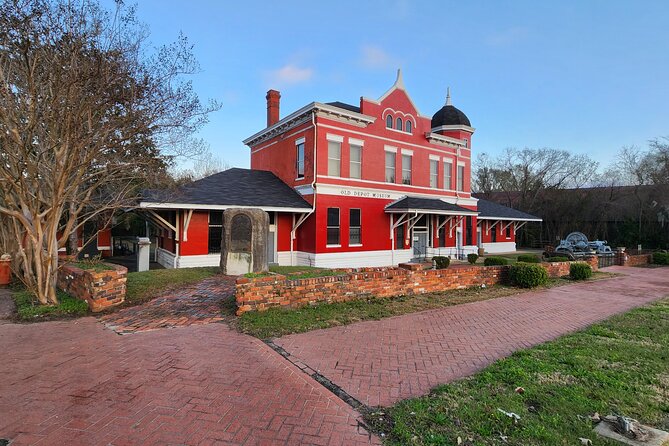
Starting at the Old Depot Museum
The Old Depot Museum is the first orientation point. The audio explains the building’s history and its link to Selma’s Civil Rights events. From there, the app guides you step by step through the city.
Because this is an outdoor audio tour, you do not need to match a museum schedule. The listed hours run from midnight to 11:30 p.m. daily, giving you broad flexibility. That does not mean every nearby attraction will be open at those hours. It simply means the walking route can be started at a time that suits your plans.
This flexibility is especially useful if you arrive on a weekend or when local sites are closed. You can still hear the basic story before moving on to your next stop. One visitor found that freedom especially useful when there was little else open in town.
The tradeoff is simple: the tour gives you a route and narration, but not a person standing beside you. Make sure your phone is charged, and give yourself enough time to follow the GPS directions without rushing.
St. James and the story of a former slave
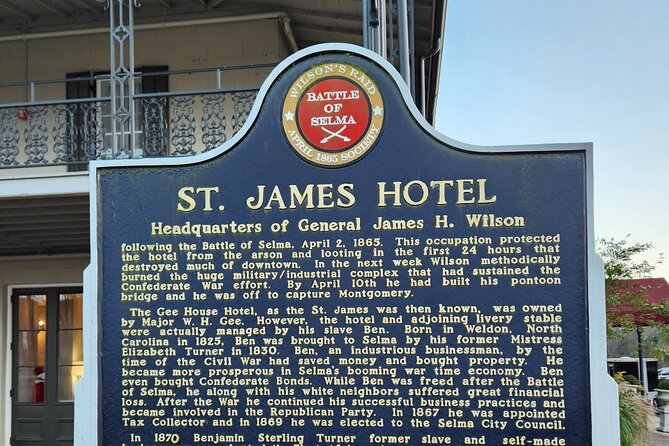
One stop takes place outside St. James. Here, the narration covers the building’s history, the battle connected with it, and the role of one former slave in its survival.
This is the sort of stop that makes the walking format worthwhile. You are not just hearing a list of dates. You are looking at a real structure and considering the people whose choices helped it remain in place. The stop takes about five minutes, so it is short but focused.
The app’s location-based format should prompt the audio as you reach each site. Still, keep an eye on the route and your surroundings. A phone tour is useful, but it is not a substitute for paying attention to where you are walking.
Edmund Pettus Bridge and Bloody Sunday
The bridge is the emotional center of the route. You spend about 15 minutes hearing about the march, the attack known as Bloody Sunday, Turnaround Tuesday, and the third march that finally moved forward toward Montgomery.
This is more than a stop for a photograph. The bridge gives physical shape to an event that can otherwise feel distant in a book or documentary. The approach, the crossing, and the location itself help you picture the marchers facing police violence as they tried to continue their campaign for voting rights.
The audio also explains why the bridge matters beyond Bloody Sunday. Turnaround Tuesday and the later march show that the movement did not end with the first attack. The story continues through repeated attempts, national attention, and organized action.
I would give this stop your full attention. Pause the audio if you need time to take in the site. The narration is designed to recreate the feeling of the period, and one of the strongest responses to the tour praised its ability to bring out the emotion of those events.
More Audio Tours in the USA:
- Fort Sumter Admission and Self-Guided Tour with Roundtrip Ferry
★ 4.5 · 3,343 reviews - Los Angeles: Hop-On Hop-Off Bus Tour with Audio Guide
★ 3.7 · 2,030 reviews - City Sightseeing Hop-On Hop-Off Bus Tour with Audio Guide
★ 3.0 · 1,083 reviews - Medieval Torture Museum Ticket with Audio Guide and Ghost Hunting
★ 5.0 · 962 reviews
Walking Selma’s streets for about 30 minutes
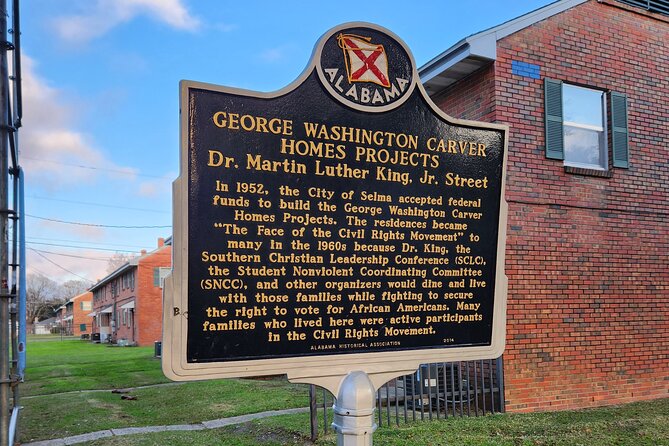
The longest part of the experience is a roughly 30-minute walk through Selma’s streets. Along the way, the audio points out historic sites and explains their Civil Rights connections.
This section is where the tour earns its low price. You are not being taken from one famous landmark to another by vehicle. You are moving through the town and seeing how the campaign occupied everyday public space. Churches, courthouses, streets, and commercial buildings all become part of the story.
The setting may also challenge your expectations. Parts of the area can look worn, with boarded buildings, old vehicles, and litter. One person found the surroundings uncomfortable and decided not to continue. That concern should not be brushed aside. If you are uneasy, go in daylight and consider joining another person or a larger group rather than walking alone.
At the same time, the condition of the streets is part of what you will encounter in present-day Selma. The tour cannot repair the town or turn the walk into a polished heritage district. It offers history in place, with all the visible signs of a community that has seen hard times.
I would not plan this as a rushed stop between other attractions. Allow the full hour to 75 minutes, and leave room for photographs and pauses. The route is more useful when you listen carefully instead of treating it as background sound.
Brown Chapel AME Church, the route’s final stop
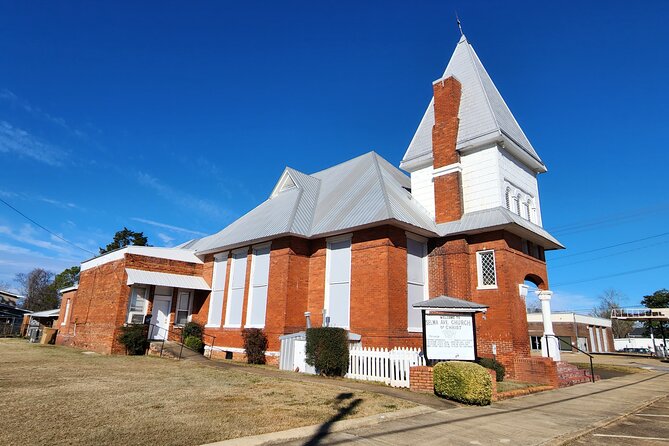
The tour ends at Brown Chapel AME Church, at 410 Martin Luther King Street. This is one of the most important places in the story because the church was used to plan and organize the Selma to Montgomery march.
The final stop takes about five minutes, but its importance reaches far beyond that short time. By the time you arrive, the earlier stops have introduced the bridge, the court buildings, the movement’s leaders, and the people who supported the campaign. Brown Chapel brings those threads together as a place of organization and action.
The ending also makes practical sense. You finish at a major Civil Rights landmark rather than simply returning to the starting point. If you want to visit the church’s interior or another attraction, check separately because the $9.75 tour includes outdoor narration only and no admissions.
Martin Luther King Jr. at the municipal court
The route stops outside the Selma Municipal Court, where you hear about Martin Luther King Jr.’s imprisonment and the reason he was jailed.
This stop adds a personal dimension to the wider movement. The bridge tells the story of mass action and police violence. The court stop shows how local legal systems were used in the conflict and how King’s presence in Selma carried real personal cost.
Since the tour stays outside, you will not receive an indoor courtroom visit or a formal presentation. The value comes from standing at the location while the app explains what happened there. That format works best for people who enjoy connecting a physical place with a spoken story.
Dallas County Courthouse and the voting rights fight
The Dallas County Courthouse is another major stop. The narration explains its importance to voting rights and what Martin Luther King Jr. did there.
Courthouses often look like ordinary civic buildings when you first see them. The audio gives this one a clearer role in the struggle. The stop helps explain that the fight was not limited to marches. It also involved registration, access to the ballot, public protest, arrests, and pressure on local institutions.
This is one reason I prefer the complete route over visiting only the bridge. The courthouse, municipal court, churches, and streets show the campaign as a long effort with many fronts. You get a better sense of how much work surrounded the headline events.
Remembering Reverend James Reeb
The tour also takes you to a memorial plaque for Reverend James Reeb. The narration tells how he came to Selma in support of Civil Rights and was killed.
The plaque is a small physical marker, but the story gives it weight. Reeb’s death shows that people came from outside Alabama to support the movement, and that such support could carry a terrible cost. The stop takes about five minutes, making it easy to overlook if you are rushing, but it deserves a quiet pause.
This part of the route also widens the story beyond the most familiar names. You hear about a person who traveled to Selma because he believed the campaign mattered, then paid for that commitment with his life.
What the $9.75 price really buys you
At $9.75 per person, this is an inexpensive way to get a guided structure for a Selma visit. You are paying for the app, GPS route, and recorded narration rather than a live guide, transportation, food, or entry tickets.
The value is strongest if you want flexibility. You can start when convenient, pause the audio, repeat a section, and spend more time at the bridge or courthouse without holding up a group. It is also useful when other local attractions are closed.
The price is less attractive if you want personal conversation or detailed answers on the spot. A live guide can respond to questions and adjust the pace. Here, you receive the same prepared narration and must solve any phone or app problem yourself.
The experience is private in the basic sense that only your group participates. That makes it a good fit for families, couples, or friends who want to talk quietly as they walk. It also means you are responsible for staying on the route and managing your own timing.
Practical advice before you start
I would choose daylight hours, particularly because one account described the surrounding area as run down and uncomfortable. The route is available at any time in the listed operating window, but flexibility does not mean every hour is equally pleasant for every person.
Wear shoes suited to about an hour of city walking. The tour includes a bridge stop, several outdoor sites, and roughly 30 minutes of walking through town. There is no food or drink included, so plan those needs separately.
Keep your phone charged and have the tour ready before you leave the Old Depot Museum. One reported experience involved the app not working and limited help from the provider. That may not happen to you, but it is the clearest practical risk with a phone-based tour.
You should also expect some variation in the condition of the streets. Litter was noted during one visit, and the town may not look polished. Go for the history and the location, not for a carefully staged attraction.
Free cancellation is available if you cancel at least 24 hours before the scheduled start time. Cancellations inside that window are not refunded, and changes made within 24 hours are not accepted.
Who should book this Selma tour?
I would choose this tour if you want a low-cost introduction to Selma’s Civil Rights sites and prefer to move at your own speed. It suits independent visitors, people arriving when museums are closed, and anyone who wants the bridge explained in the context of the broader movement.
It is also a good option if you have only about an hour and want a clear route rather than a loose list of places to find. The narration covers Bloody Sunday, Turnaround Tuesday, the third march, Martin Luther King Jr.’s arrests and actions, Reverend James Reeb, and the planning work at Brown Chapel.
I would think twice if you need a live guide, indoor admissions, or strong technical support. I would also avoid starting after dark if the condition of the area would make you uncomfortable. For older visitors or anyone sensitive to heat, the walk may be demanding on a hot day, so choose your timing carefully.
Should you book the Selma Civil Rights Walk of Freedom?
Book it if you want an affordable, flexible way to connect Selma’s key Civil Rights locations. The best parts are the bridge narration, the link between the city’s churches and courthouses, and the freedom to listen at your own pace.
Skip it if you expect a polished attraction, a live historian, or included entry to buildings. This is an outdoor phone tour, and its success depends on your app, your battery, the weather, and your comfort with the surroundings.
For most independent visitors who plan ahead, go in daylight, and treat the $9.75 as payment for a structured audio walk, it is a worthwhile addition to a Selma visit.
FAQ
How long does the Selma Civil Rights Walk of Freedom take?
The tour takes approximately one hour to one hour and 15 minutes. The itinerary includes about 15 minutes at Edmund Pettus Bridge, about 30 minutes walking through the streets, and several shorter five-minute stops.
Where does the tour start?
The tour starts at the Old Depot Museum, located at 4 Martin Luther King Street, Selma, Alabama 36703.
Where does the tour end?
The tour ends at Brown Chapel AME Church, located at 410 Martin Luther King Street, Selma, Alabama 36703.
Is this a guided tour with a person?
No. This is a self-guided GPS audio tour delivered through a walking tour app on your smartphone. Only your group participates.
Are admissions included?
No. The tour takes place outdoors, and no attraction admissions, food, or drinks are included.
What language is the tour offered in?
The tour is offered in English.
Just added around the USA
- Smartphone-Guided Walking Tour of Downtown Indianapolis Sights & Stories★ 4.0 · 25 reviews
- Springfield Self-Guided Walking Audio Tour★ 4.0 · 5 reviews
- Smartphone Guided Indianapolis Downtown Sites Audio Walking Tour★ 4.5 · 7 reviews
- Indiana Dunes National Park Self-Guided Audio Tour★ 3.5 · 4 reviews
- Self-Guided Audio Driving Tour in Kancamagus Highway★ 4.5 · 6 reviews
- An Epic Scavenger Hunt: Bloomington Scenic Southern Indiana★ 3.5 · 6 reviews
- Huntsville Rocket City Smart Phone Self Guided Audio (GPS/APP) Walking Tour★ 4.5 · 5 reviews
- Sights of Downtown Houston Smartphone Audio Walking Tour★ 4.0 · 7 reviews
USA Audio Tours, compared.
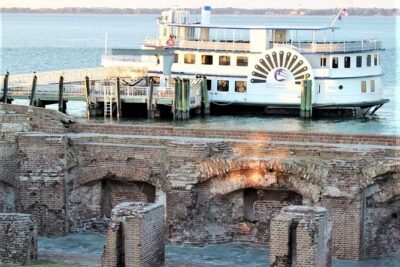
Fort Sumter Admission and Self-Guided Tour with Roundtrip Ferry
Read our review →
San Francisco: Alcatraz Ticket, Ferry, & Self-Guided App
Read our review →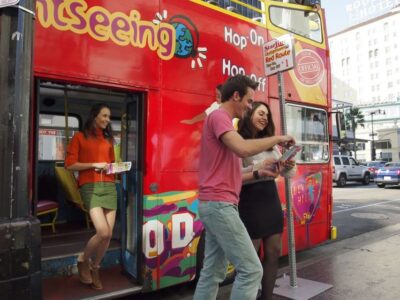
Los Angeles: Hop-On Hop-Off Bus Tour with Audio Guide
Read our review →
City Sightseeing Hop-On Hop-Off Bus Tour with Audio Guide
Read our review →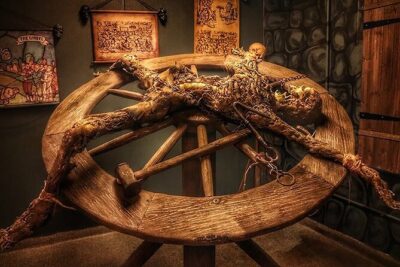
Medieval Torture Museum Ticket with Audio Guide and Ghost Hunting
Read our review →

Ryman Auditorium Self-Guided Tour with Souvenir Photo Onstage
Read our review →
Red Rock Canyon Self-Guided Electric Bike Tour
Read our review →Browse the lists this tour appears in