
REVIEW · ROME AUDIO TOURS
Rome: Palazzo Barberini Galleria Corsini Ticket & Audioguide
Palazzo Barberini gives you one of Rome’s best pairings of art and architecture. Inside this grand palace, you’ll find major works by Bernini and Caravaggio, along with paintings by Raphael, Holbein, El Greco, Rubens, Titian, and other European masters.
I like the freedom to visit at your own pace, and I like that one ticket covers both Barberini and Corsini. The main catch is that no live guided tour is included, and some rooms may occasionally close for a conference or special event.
Key points
- Two galleries in one ticket: Visit Galleria Barberini and Galleria Corsini, each with its own palace setting.
- Bernini and Caravaggio: See major works by two of Rome’s most important artists.
- Digital app audioguide: Add context as you walk through the galleries, though you’ll need to use your own smartphone.
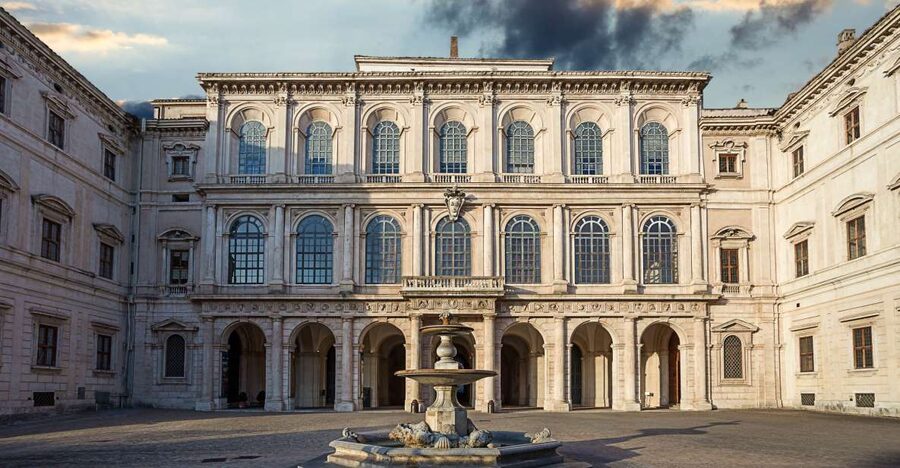
- Barberini palace architecture: Explore a building created for Pope Urban VIII and designed by Carlo Maderno.
- Flexible pace: Spend more time with the paintings that catch your eye instead of following a fixed group schedule.
- Useful practical value: The ticket costs about $19 per person and includes both entrance fees.
Why Palazzo Barberini is the main event
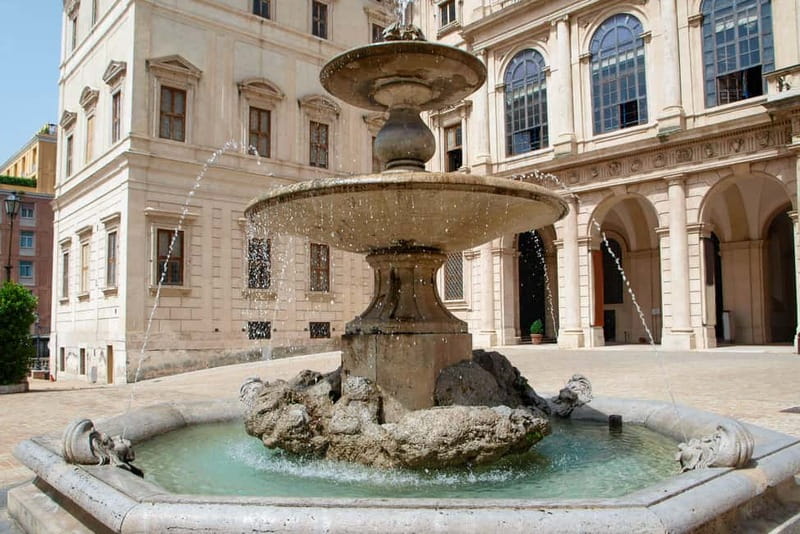
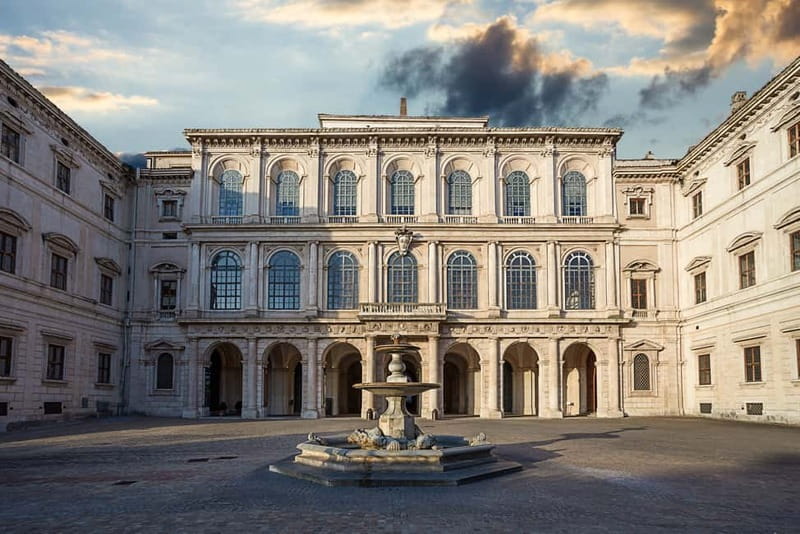
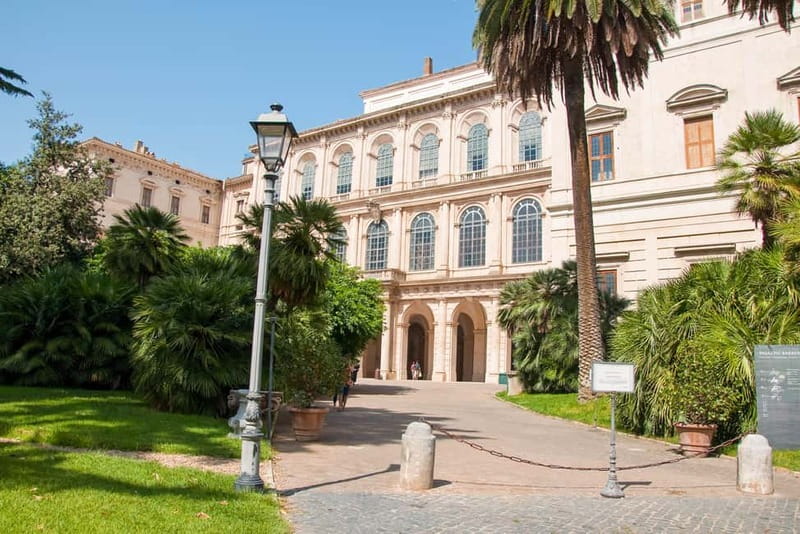
If you have time for only one of the two museums, Palazzo Barberini is likely to be your priority. The palace itself gives the visit much of its appeal. It was created for Pope Urban VIII, a member of the Barberini family, and built on the former site of Villa Sforza.
Carlo Maderno designed the building in the 16th century. As you move through its rooms, you are not simply walking into a neutral gallery box. The architecture is part of the experience, with the paintings displayed inside a former aristocratic and papal residence.
That matters in Rome. The city’s art often works best when you see it in the kind of setting for which it was made. Here, grand rooms and painted canvases share the same stage. You can look at the collection as a museum visit, or pay attention to the palace as a work of art in its own right.
The collection covers several centuries and a wide range of styles. You might find works associated with Beato Angelico, Filippo Lippi, Lotto, Preti, Poussin, El Greco, Raphael, Tiepolo, Tintoretto, Rubens, Murillo, Ribera, and Titian.
That long list gives you a sense of the museum’s strength, but it also creates a practical issue. This is not a small, tightly focused exhibition. If you try to inspect every painting with equal attention, you may run out of energy quickly. I recommend choosing a few artists or works you especially want to see, then letting the rest of the collection provide pleasant surprises.
More Audio Tours in Rome:
- Rome: Colosseum & Forum with Audio Guide App -Optional Arena
★ 4.2 · 24,770 reviews - Rome: City Sightseeing Hop-on Hop-off Bus with Audioguide
★ 4.0 · 16,045 reviews - Rome: St. Peter’s Basilica & Dome Entry Ticket & Audio Tour
★ 4.2 · 7,537 reviews
Bernini and Caravaggio are the anchors
The most important reason to book this ticket is the chance to see the work of Bernini and Caravaggio in a serious Roman collection. Both artists are central to the city’s Baroque identity, but they offer very different experiences.
Bernini is associated with movement, theatrical effect, and the energy of the Baroque. Caravaggio is famous for stark light, intense emotion, and figures that feel unusually direct. Seeing their work in the same museum lets you compare two powerful approaches to drama.
The collection also includes important northern and Spanish painters, so you are not limited to Italian art. Van Dyck, Holbein, Rubens, Murillo, and Ribera add a wider European view. That makes the gallery more useful for someone who wants a broad art visit rather than a single-artist exhibition.
I especially like this kind of collection for a first or second visit to Rome. You get famous names, but you are not confined to the city’s best-known ancient monuments or church interiors. The museum offers a quieter change of pace and gives you room to look closely.
The audioguide can help you make sense of what you are seeing. It is accessed through a downloadable app, so check that your phone is charged and ready before you begin. The supplied information does not identify a live guide, and the ticket does not include a guided tour, so the app is your main source of organized commentary.
The palace is more than a backdrop
A common mistake in major art museums is to rush from famous painting to famous painting while ignoring the building. Palazzo Barberini rewards a slower approach.
Look up as you move through the rooms. Notice how the display spaces relate to the palace’s original purpose. Even if you know little about 16th century or Baroque architecture, the scale and design help explain the power of the Barberini family.
The connection with Pope Urban VIII gives the building added context. This was not designed as an ordinary private home. It was made for a major Roman family with close ties to the papal world, so the setting reflects status, ceremony, and ambition.
That context improves the art visit. A portrait, religious painting, or grand historical scene feels different when you see it in a palace built for people who commissioned and collected works of this kind.
You should not expect every area to be open at all times. One visit had some rooms unavailable because of a conference. That kind of closure can affect the value of the ticket, especially if you have traveled across Rome specifically for one artist or section. It is worth checking current access details before setting your expectations too high.
What the Corsini Gallery adds
Galleria Corsini is a different experience from Barberini. It forms part of Palazzo Corsini, a late-Baroque palace built for the Corsini family between 1730 and 1740.
The building was designed according to plans by Ferdinando Fuga. That later date gives the palace a distinct character, and the visit works well as a second chapter after Barberini. You are not simply seeing another set of paintings in the same type of museum room. You are visiting another Roman residence connected with a powerful family and a different phase of Baroque design.
The Corsini stop is also valuable because it keeps the ticket from being a one-museum purchase. At around $19 per person, the price is easier to justify when you plan to visit both galleries rather than treating Corsini as an optional extra.
You should allow enough time for both sites. The activity information describes the admission as valid for one day, but it also states that the ticket is for one visit and can be used within 20 days after purchase. Those details do not fully match, so read the conditions attached to your selected booking carefully. The practical point is simple: confirm the allowed visit date before you plan your route.
The Corsini Gallery may appeal most to visitors who enjoy rooms, furniture, and palace atmosphere as much as individual paintings. If you only want the biggest names, Barberini will probably hold your attention longer. If you like comparing buildings and collections, visiting both gives you a fuller picture.
Same place, a different route to walk:
- Colosseum, Roman Forum & Palatine Hill with Audioguide App
★ 4.4 · 6,291 reviews - Vatican & Sistine Chapel Ticket with Optional Audio Guide
★ 4.1 · 5,405 reviews - Rome: Castel Sant’Angelo Entry Ticket & Digital Audioguide
★ 4.7 · 5,347 reviews - Rome: Pantheon Priority Entry Ticket & Interactive App
★ 4.1 · 5,114 reviews
How the digital audioguide changes the visit
The app audioguide is useful because it gives structure without forcing you into a group. You can pause, move ahead, or spend extra time with a painting that catches your attention.
That flexibility suits Rome, where museum days often need to fit around churches, meals, walking, and changing plans. You are not tied to a guide’s pace, and you do not have to stay with a group at every stop.
The tradeoff is that the experience depends on your own phone. Download the app and any required content before entering, if possible. Bring headphones if you prefer not to hold the phone to your ear, and make sure the battery will last through both galleries.
The audioguide also cannot answer a question in the moment. A live tour can adjust its explanations to your interests, while an app gives you prepared information. Since no guided tour is included, choose this ticket if you are comfortable exploring independently.
A positive feature of the visit is the helpful staff. Assistance at the museum matters when you need to exchange the smartphone voucher, find the correct entrance, or understand how to access the gallery. The staff can make the practical side much easier, even though the ticket itself is not a guided experience.
Timing, tickets, and the $19 price
At about $19 per person, this is a fair price if you use both admissions. Buying access to two historic palaces and two art collections is more useful than paying the same amount for a brief single-gallery visit.
The value drops if you only see Barberini. In that case, you are still getting a strong collection, but the combined ticket’s main advantage is no longer being used.
The booking information says you exchange your smartphone voucher at the Palazzo Barberini ticket office for an official entry ticket. It also describes the ticket as allowing you to skip the ticket line. Since you still need to exchange the voucher, do not assume you can walk directly into every gallery without any stop at the ticket office.
The listed duration is one day, with starting times subject to availability. Plan your visit around the time shown when booking, and allow room for both palaces rather than squeezing them into a short gap between other appointments.
The activity is non-refundable. That makes accurate planning more important. If your Rome schedule is uncertain, confirm the date and access rules before paying.
Wheelchair access is available, which makes this a practical choice for visitors who need an accessible museum visit. The information provided does not give further details about every room or route, so contact the provider if you need specific access arrangements.
Who will enjoy this most
This ticket suits you if you like European painting, Roman palaces, and independent museum visits. It is especially good for someone who wants to see Caravaggio and Bernini without committing to a longer live tour.
It also works for art lovers who prefer to choose their own pace. You can listen to the app when you want more context, then move quietly through rooms that interest you less.
The experience may be less satisfying if you want a guide to explain every painting, answer questions, and lead you through a carefully planned route. The audioguide adds information, but it does not replace a live expert.
Families and mixed-interest groups can also make good use of the flexible format. One person can spend time with a favorite painting while another moves ahead. Just remember that the ticket covers entry and the digital guide, not a private group experience.
If you are visiting Rome for ancient monuments alone, this is a useful change of subject. If your schedule already includes several major art museums, decide how much Baroque painting you want before adding another collection.
A practical way to plan the visit
Start at Palazzo Barberini, where you exchange your smartphone voucher for the official entry ticket. Give yourself time to look at the building before focusing on the collection.
Use the audioguide selectively. Begin with the works by Bernini and Caravaggio, then choose a few painters from the wider collection. You do not need to listen to every track for the visit to feel worthwhile.
After Barberini, continue to Palazzo Corsini as the second half of the ticket. The Corsini visit is best treated as a separate palace and collection, not just an extra room attached to Barberini.
Build in flexibility. Some rooms may be closed for a conference or other event, and the information does not guarantee that every section will always be accessible. A little spare time keeps a partial closure from ruining your day.
The strongest part of this experience is the combination of art and setting. The collection gives you famous artists, while the palaces explain the world in which the art was commissioned and displayed.
Should you book the Barberini and Corsini ticket?
Book it if you want Bernini, Caravaggio, and grand Roman interiors in a self-guided format. At about $19, the combination offers good value when you visit both galleries, and the app lets you explore without a fixed group schedule.
Skip it if you need a live guide or if your Rome plans are too uncertain for a non-refundable booking. Also check the date and access terms carefully, since the information includes both one-day validity and a 20-day period after purchase.
For an independent art visit with two historic palaces, this is a sensible choice. Palazzo Barberini is the main reason to go, while Corsini makes the ticket more worthwhile and gives you a second view of Rome’s Baroque world.
FAQ
What does the ticket include?
The ticket includes entrance to Galleria Barberini, entrance to Galleria Corsini, and a digital app audioguide.
Is a live guided tour included?
No. The activity includes a digital app audioguide, but not a live guided tour.
Which artists can I see?
The collections include works by Bernini, Caravaggio, van Dyck, Holbein, Beato Angelico, Lippi, Lotto, Preti, Poussin, El Greco, Raphael, Tiepolo, Tintoretto, Rubens, Murillo, Ribera, and Titian.
Where do I start the visit?
You start by exchanging your smartphone voucher at the Palazzo Barberini ticket office for an official entry ticket.
How long is the ticket valid?
The activity is listed as valid for one day, with starting times shown during availability checks. The information also says the ticket is for one visit and is valid for 20 days after purchase, so check the conditions attached to your selected booking.
Can I visit both galleries at my own pace?
Yes. The entrance tickets allow you to explore the galleries independently rather than following a fixed live tour.
Is the experience wheelchair accessible?
Yes, the activity is listed as wheelchair accessible.
Can some areas be closed?
Yes. Some areas may be unavailable because of a conference or another access restriction.
Can I cancel for a refund?
No. The activity is listed as non-refundable.
Just added around Rome
- Rome: St. Peter’s Basilica and Dome Entry + Audio Guide★ 4.5 · 13 reviews
- St. Peter’s Basilica: Hosted Entrance & Digital Audioguide★ 4.1 · 35 reviews
- Sorrento & Pompeii Day Trip from Rome Audio Guide Tour★ 4.2 · 50 reviews
- Rome:Ostia Antica Skip-the-line Ticket & Audioguide★ 4.3 · 11 reviews
- Rome+Jubilee Audioguide – TravelMate app for your smartphone★ 4.2 · 38 reviews
- Rome:St. Peter’s Basilica Hosted Entry + Official Audioguide★ 3.4 · 10 reviews
- Rome: St. Peter’s Basilica Entry Ticket and AudioGuide★ 4.4 · 57 reviews
- Colosseum, Roman Forum, Palatine Hill access and AudioGuide★ 4.7 · 12 reviews
Rome Audio Tours, compared.

Rome: Colosseum & Forum with Audio Guide App -Optional Arena
Read our review →
Rome: City Sightseeing Hop-on Hop-off Bus with Audioguide
Read our review →
Rome: St. Peter’s Basilica & Dome Entry Ticket & Audio Tour
Read our review →
Colosseum, Roman Forum & Palatine Hill with Audioguide App
Read our review →
Vatican & Sistine Chapel Ticket with Optional Audio Guide
Read our review →
Rome: Castel Sant’Angelo Entry Ticket & Digital Audioguide
Read our review →
Rome: Pantheon Priority Entry Ticket & Interactive App
Read our review →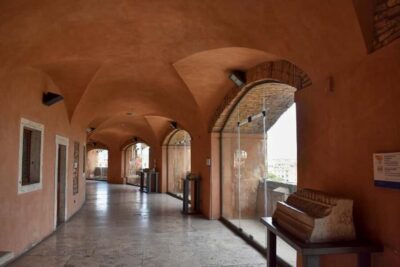
Rome: Castel Sant’Angelo Entry Ticket & Audio App
Read our review →Browse the lists this tour appears in