
REVIEW · ROME AUDIO TOURS
Rome: Guided Catacombs Tour & Capuchin Crypt (Audio Guide)
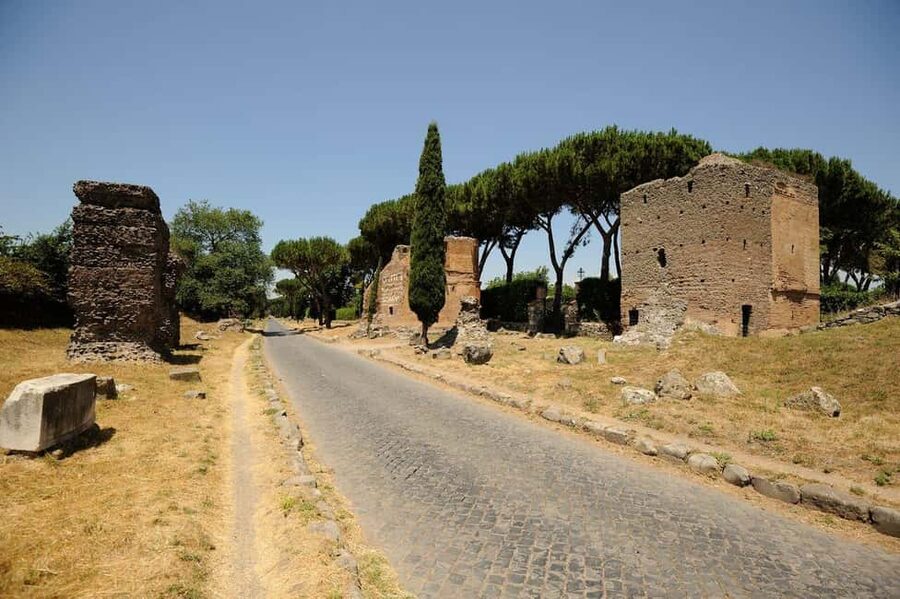
Rome’s most unsettling sights sit below and behind the grand monuments. This five-hour outing takes you into the ancient catacombs, then to the Capuchin Crypt, where the bones of nearly 4,000 friars form chapels, crosses, clocks, and chandeliers. I like the contrast between the quiet Christian burial tunnels and the theatrical Baroque crypt. I also like that transport is built in, since these sites are far apart. The main drawback is that the schedule and transfers need careful attention, especially if a catacomb closes or you need to reach the crypt during its limited afternoon entry window.
I love the guided catacomb visit, where guides such as Luisa bring a difficult subject to life with clear explanations. I also like the freedom at the Capuchin Crypt: you visit at your own pace with an audio guide rather than being tied to another group. Just remember that the crypt visit is not a guided tour, and the catacombs are narrow, dark, and unsuitable for wheelchair users or people with claustrophobia.
Key points to know before booking
- The catacomb changes by day: Domitilla is normally used except on Tuesday, when the visit is scheduled at Callisto.
- The underground tour lasts about 45 minutes: Expect small spaces, religious history, and a burial site nearly 2,000 years old.
- The Capuchin Crypt is self-guided: Your ticket includes an audio guide, not a live guide.
- Afternoon timing matters: For a same-day visit to both sites, the Capuchin Crypt entry window begins at 14:45 and ends at 17:00.
- The bus connection adds value: You receive transfers to the catacombs plus a three-hour hop-on hop-off panoramic bus ticket.
- The price reflects convenience, not luxury: At $93 per person, this works best if you value transport and reserved entry more than a low-cost independent visit.
Why Rome’s catacombs feel so different
Rome usually presents its past in open air, with temples, forums, fountains, and triumphal arches. The catacombs reverse that experience. You leave the city streets and follow a guide into underground corridors that once served as burial places and worship spaces for early Christians.
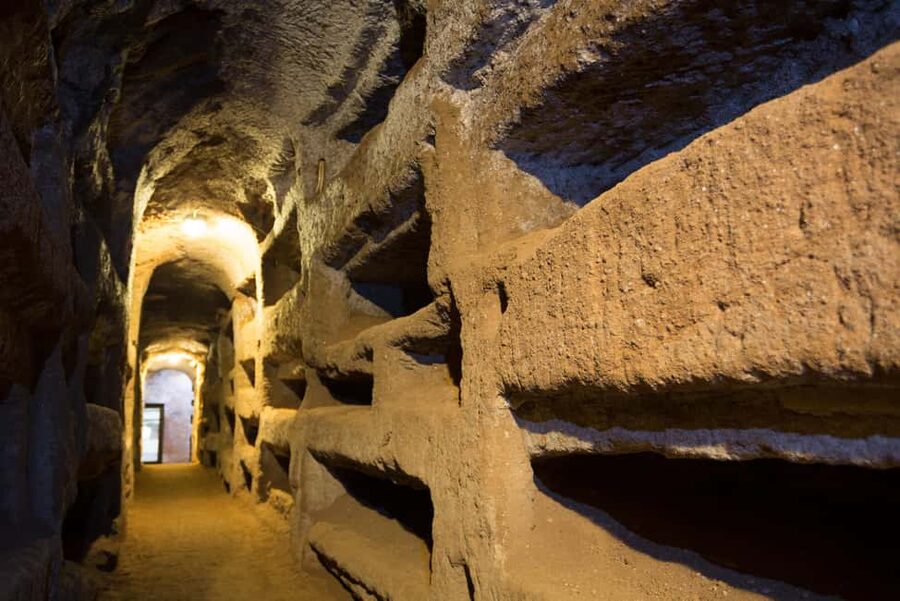
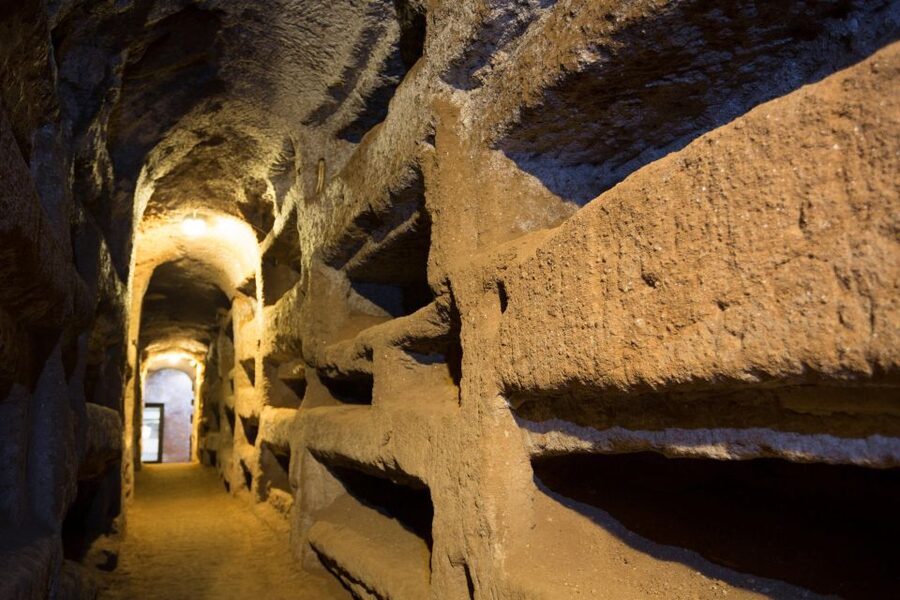
The tunnels date back almost 2,000 years, with origins in the 2nd century AD. This is not a polished museum built to imitate antiquity. You are walking through a real burial complex, although the exact route and rooms available can depend on the site’s operating arrangements.
The atmosphere is quiet and serious. The subject is death, but the visit is not designed as a horror attraction. Your guide explains how the catacombs functioned and why they mattered to Rome’s first Christian communities. That live explanation is important because the corridors and burial spaces can be difficult to understand on their own.
You should also prepare for a physically limited route. The tunnels are small, and the experience is not recommended if enclosed spaces make you uncomfortable. It is not suitable for wheelchair users or people with severe motor disabilities. Cover your shoulders and knees, as the catacombs are sacred sites with a required dress code.
More Audio Tours in Rome:
- Rome: Colosseum & Forum with Audio Guide App -Optional Arena
★ 4.2 · 24,770 reviews - Rome: City Sightseeing Hop-on Hop-off Bus with Audioguide
★ 4.0 · 16,045 reviews - Rome: St. Peter’s Basilica & Dome Entry Ticket & Audio Tour
★ 4.2 · 7,537 reviews
Starting at Piazza d’Aracoeli
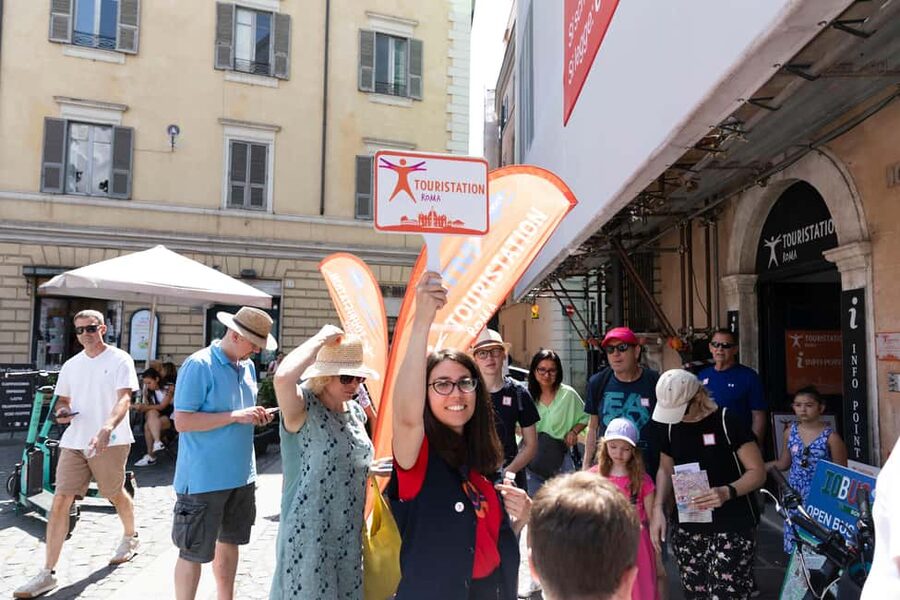
The meeting point is the Touristation Aracoeli office at Piazza d’Aracoeli 16. Look for the fountain and orange flags near the entrance. You exchange your voucher there before boarding the transfer.
This arrangement is useful for first-time visitors because you do not have to work out a complicated public transport route to the catacombs. The included ride takes about 30 minutes. It is best to arrive with enough time to find the office, especially since Piazza d’Aracoeli is close to several major sights and can be busy with sightseeing traffic.
The transfer is not hotel pickup. You need to reach the meeting point yourself, and the experience ends at the Capuchin Museum and Crypt on Via Veneto. That distinction matters when planning the rest of your day.
Choosing between Domitilla and Callisto
The catacomb included depends on the day. The usual arrangement is a reserved entrance to the Domitilla Catacombs, except on Tuesday, when the scheduled site is the Callisto Catacombs.
You do not select freely between the two as part of the standard plan. Check the date carefully before booking, particularly if one site matters more to you than the other. Both are ancient Christian burial complexes, but the practical point is that the exact location affects the route, timing, and overall feel of the visit.
The reserved entry saves you from arranging a separate ticket at the site. Once there, a live guide leads the 45-minute underground tour in Italian, English, Spanish, French, or German. The guide explains the burial grounds and places of worship, giving meaning to what could otherwise feel like a series of dim passageways.
Guide Luisa received especially strong praise for her work in the Domitilla Catacombs. Her clear, friendly approach is the kind of personal touch that can make a serious subject easier to follow. The tour is short enough to remain manageable, but long enough to give the catacombs a proper sense of place.
The 45-minute underground visit
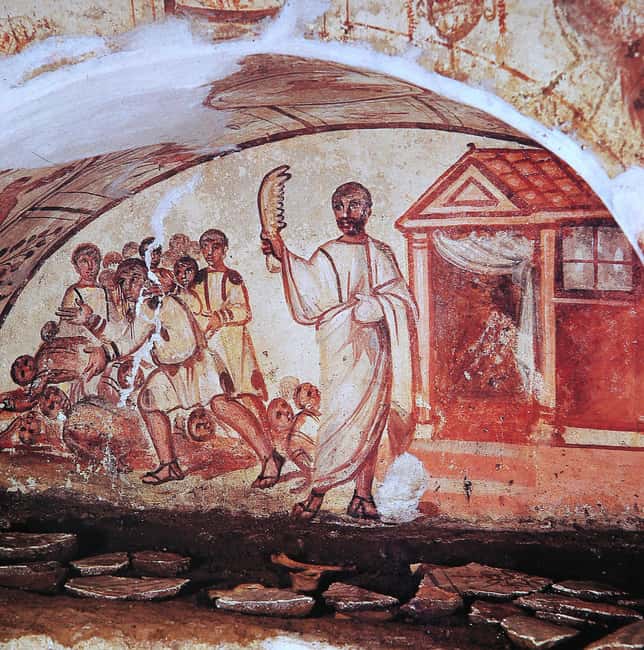
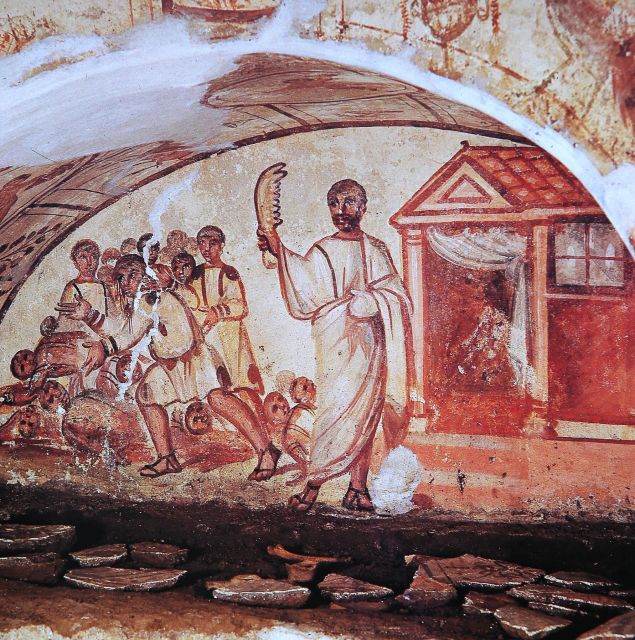
The catacombs are valuable because they show a side of Roman life that the grand city center cannot. Here, the focus is not imperial power or artistic display. It is burial, faith, and the practical needs of an early religious community.
You will see narrow corridors and spaces cut into the earth. The small scale is part of the experience, but it is also the main physical limitation. Wear sensible shoes and expect the atmosphere to feel enclosed. Large bags and luggage are not allowed, so bring only what you need.
The guide’s role is central. You cannot expect a self-guided walk through the tunnels, and there is no separate catacomb audio guide included. The live explanation connects the rooms, the burial practices, and the religious purpose of the site.
Photography rules are not provided here, so follow the instructions given on arrival. The catacombs are sacred places, not simply archaeological scenery. A quiet, respectful attitude is appropriate.
Same place, a different route to walk:
- Colosseum, Roman Forum & Palatine Hill with Audioguide App
★ 4.4 · 6,291 reviews - Vatican & Sistine Chapel Ticket with Optional Audio Guide
★ 4.1 · 5,405 reviews - Rome: Castel Sant’Angelo Entry Ticket & Digital Audioguide
★ 4.7 · 5,347 reviews - Rome: Pantheon Priority Entry Ticket & Interactive App
★ 4.1 · 5,114 reviews
The transfer to the Capuchin Crypt
After the catacomb visit, the included transfer returns you toward the city and drops you near a Big Bus hop-on hop-off stop. From there, you take the panoramic bus toward Via Veneto and the Capuchin Crypt.
This part requires more attention than a simple coach transfer. The ride to the catacombs is organized from the meeting point, but the onward journey uses the hop-on hop-off network. You need to follow the instructions from the local staff and allow time for the bus connection.
The experience includes a three-hour hop-on hop-off ticket. That gives you more than a ride directly to the crypt. You can use the panoramic route to see Rome’s major sights at your own pace, provided the operating schedule fits your plans. It is a useful bonus if you want a broad city view without adding another sightseeing bus ticket.
Still, do not treat the bus as an instant taxi. Rome traffic can be slow, and the crypt has a fixed entry window. Build in spare time rather than aiming for the last possible arrival.
Inside the Capuchin Museum on Via Veneto
The Capuchin Crypt is attached to the Baroque church of Santa Maria della Concezione, near Piazza Barberini. Your visit starts in the museum, which explains the Capuchin friars and their way of life.
The museum focuses on the order’s origins in the 16th century and its continuing identity. You learn about a simple lifestyle, closeness to poor communities, and the importance of fraternity. This background is useful because the crypt can otherwise seem like a macabre display with no context.
The museum helps explain the people behind the remains. That makes the next part more thoughtful and less like a quick shock stop. You are encouraged to consider the friars’ religious traditions and their attitude toward death, not just the visual effect of the bone decorations.
Your ticket includes an audio guide in Italian, English, Spanish, or French. There is no live guide for this section, so you control the pace. If you want to listen closely to every explanation, allow more than the basic 30-minute visit.
The Bone Chapel and its unsettling artistry
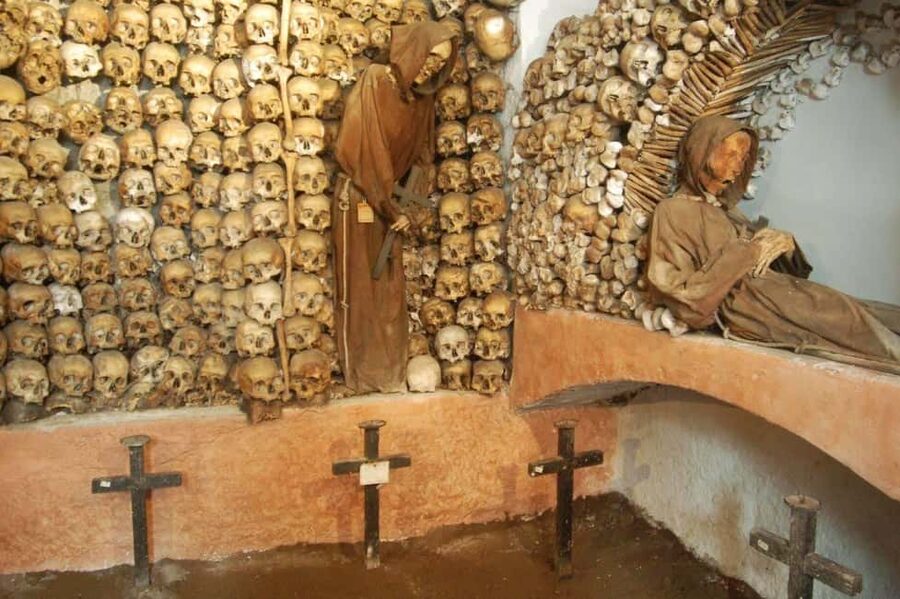
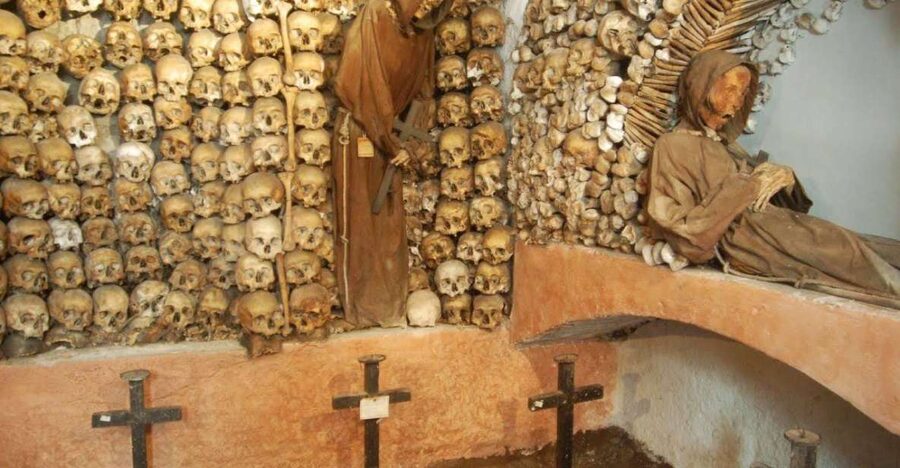
The crypt contains five chapels arranged along a long corridor. The bones of nearly 4,000 friars, dating from the 16th through the 19th centuries, form the decorations.
You may see shinbones, femurs, and skulls used as architectural material. They create rosettes, stars, pilasters, hourglasses, clocks, butterflies, chandeliers, and crosses. Some niches contain skeletons dressed in the habit of the friars.
It is an extraordinary example of Baroque taste, but it is not light entertainment. The design is intentionally stark and theatrical. It asks you to think about mortality while surrounding you with carefully arranged reminders of it.
Each chapel is named for the bones used in its decoration. Tradition also holds that the chapels contain earth brought from Palestine or Jerusalem. The audio guide supplies the setting for these details and lets you pause when the atmosphere becomes intense.
I would not choose this visit for young children without first considering their reaction to human remains. The information provided does not set an age restriction, but the subject is plainly macabre. For adults interested in religious art, Roman customs, and unusual places, it is one of the city’s more memorable stops.
How the five-hour schedule works
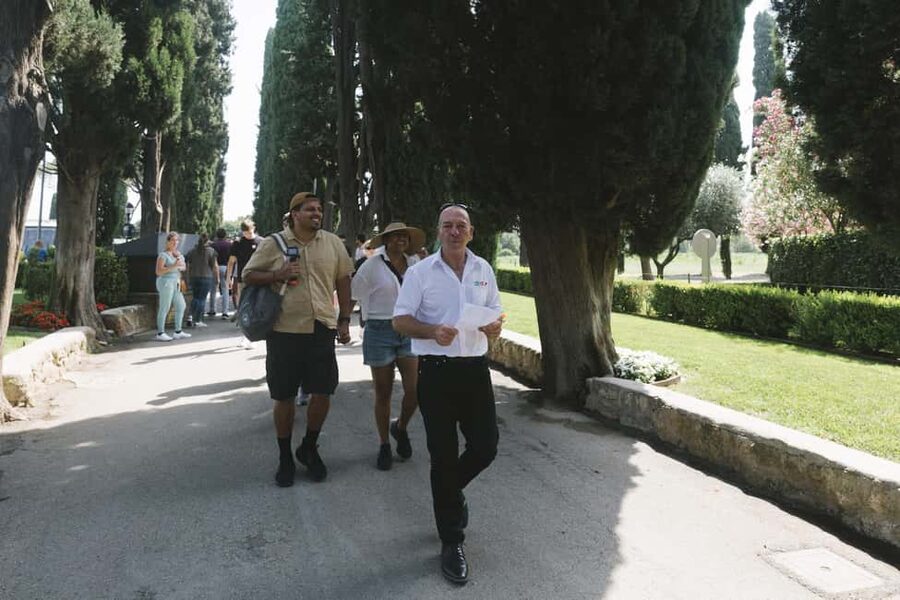
The listed itinerary totals about five hours, including transfers and both visits. The outline is simple:
- Meet at Touristation Aracoeli.
- Ride about 30 minutes to the catacombs.
- Take a guided catacomb visit lasting about 45 minutes.
- Transfer back toward the hop-on hop-off route.
- Continue to Via Veneto by panoramic bus.
- Visit the Capuchin Crypt with the audio guide.
- Finish at the Capuchin Museum and Crypt.
The timing is less rigid at the crypt than at the catacombs. The Capuchin ticket is flexible, with entry available from 14:45 to 17:00. However, that flexibility does not mean you can arrive at any hour of the day. If you want to complete both sites on the same date, the earliest crypt entry is 14:45.
This schedule suits people who like a planned half-day. It is less suitable if you want to wander without watching the clock. The two attractions are in different parts of Rome, and the bus connection can affect how much free time you have.
Is $93 a fair price?
At $93 per person, this is not a budget outing. The catacomb entrance itself is only one part of the cost, and the price also covers the guided visit, the Capuchin Crypt admission, audio guide, transfer to the catacombs, and three-hour hop-on hop-off ticket.
The value depends on how much of that arrangement you would use independently. If you already plan to buy a sightseeing bus ticket and prefer organized transport, the package is easier to justify. It removes the need to arrange separate catacomb admission and gives you a live guide for the underground visit.
If you are comfortable using Rome’s public transport and only want one attraction, the price is harder to defend. One positive account of the experience praised the smooth transport and entry arrangements but still wished the cost had been closer to $100 for two people. That is a fair reminder that convenience comes at a premium.
The most serious concern is what happens if a site or transfer changes. One booking had a catacomb closure, a canceled transfer to the crypt, and an unusable replacement arrangement because the person was leaving Rome. The catacomb guide was good, but the disruption meant the crypt could not be visited as planned. This is not a reason to dismiss the entire experience, but it is a reason to confirm the day’s arrangements locally and keep your schedule flexible.
Small details that make the day easier
Cover your shoulders and knees from the start. That avoids needing to adjust clothing before entering either religious site.
Do not bring luggage or a large bag. Pets, glass objects, alcohol, and drugs are also not allowed. A small day bag is the sensible choice.
Use the free cancellation option if your plans are uncertain. You can cancel up to 24 hours ahead for a full refund, and the reserve-now, pay-later option lets you hold a place without paying immediately.
The service is offered in Italian, English, Spanish, and French. The catacomb guided tour also lists German among its languages, while the Capuchin audio guide is available in Italian, English, Spanish, and French.
Visitors with specific disabilities may qualify for a free catacomb ticket by speaking directly with the catacomb ticket office. The tour itself is not wheelchair accessible, so confirm your needs before booking.
Who should book this experience?
I would recommend it to you if you want Rome’s unusual side, prefer a guide for ancient religious sites, and like having transportation arranged. It is especially good for an afternoon away from the usual Colosseum and Vatican route.
You should book it if the catacombs genuinely interest you and the Capuchin Crypt sounds like more than a quick curiosity. The two sites work well together: one shows Christian burial underground, while the other presents death through religious art and ritual.
I would hesitate if you dislike enclosed spaces, need step-free access, or want a relaxed day with no fixed timing. I would also think twice if you only want the crypt, since the package includes a longer catacomb program and transport structure.
Should you book the Rome catacombs and Capuchin Crypt tour?
Book it if you value organized transport, a live catacomb guide, and two unusual sites in one half-day. The ancient tunnels are the stronger guided experience, while the Capuchin Crypt gives you more freedom and a striking audio-guided visit.
Before paying, check whether your date uses Domitilla or Callisto, confirm that the transfer is operating, and protect the 14:45 to 17:00 crypt entry window. With those details in place, this is a memorable choice for curious adults who want Rome beyond its grand monuments.
FAQ
Where does the tour start?
You meet at the Touristation Aracoeli office at Piazza d’Aracoeli 16. A fountain and orange flags are in front of the entrance.
Which catacomb will I visit?
The tour normally visits the Domitilla Catacombs. On Tuesdays, it visits the Callisto Catacombs instead.
How long is the catacomb visit?
The guided visit lasts about 45 minutes. The transfer from the meeting point to the catacombs takes about 30 minutes.
Is the Capuchin Crypt guided?
No. The Capuchin Crypt visit is self-guided with an audio guide. The audio guide is available in Italian, English, Spanish, and French.
When can I enter the Capuchin Crypt?
For a same-day visit to both sites, the earliest available entry is 14:45. The ticket allows entry between 14:45 and 17:00.
Is the tour suitable for wheelchair users?
No. The catacomb visit is not suitable for wheelchair users or people with severe motor disabilities. It is also not recommended for people with claustrophobia.
What does the price include?
The $93 price includes assistance at the meeting office, catacomb admission, the live catacomb tour, transfers to the catacombs, Capuchin Crypt admission with audio guide, and a three-hour hop-on hop-off bus ticket. Food, drinks, and hotel pickup are not included.
Just added around Rome
- St. Peter’s Basilica: Hosted Entrance & Digital Audioguide★ 4.1 · 35 reviews
- Rome: St. Peter’s Basilica and Dome Entry + Audio Guide★ 4.5 · 13 reviews
- Sorrento & Pompeii Day Trip from Rome Audio Guide Tour★ 4.2 · 50 reviews
- Rome:Ostia Antica Skip-the-line Ticket & Audioguide★ 4.3 · 11 reviews
- Rome+Jubilee Audioguide – TravelMate app for your smartphone★ 4.2 · 38 reviews
- Rome:St. Peter’s Basilica Hosted Entry + Official Audioguide★ 3.4 · 10 reviews
- Rome: St. Peter’s Basilica Entry Ticket and AudioGuide★ 4.4 · 57 reviews
- Colosseum, Roman Forum, Palatine Hill access and AudioGuide★ 4.7 · 12 reviews
Rome Audio Tours, compared.

Rome: Colosseum & Forum with Audio Guide App -Optional Arena
Read our review →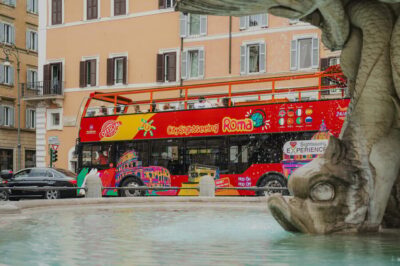
Rome: City Sightseeing Hop-on Hop-off Bus with Audioguide
Read our review →
Rome: St. Peter’s Basilica & Dome Entry Ticket & Audio Tour
Read our review →
Colosseum, Roman Forum & Palatine Hill with Audioguide App
Read our review →
Vatican & Sistine Chapel Ticket with Optional Audio Guide
Read our review →
Rome: Castel Sant’Angelo Entry Ticket & Digital Audioguide
Read our review →
Rome: Pantheon Priority Entry Ticket & Interactive App
Read our review →
Rome: Castel Sant’Angelo Entry Ticket & Audio App
Read our review →Browse the lists this tour appears in