
REVIEW · ROME AUDIO TOURS
Rome: Castel Sant’Angelo Entry Ticket with Audio guide
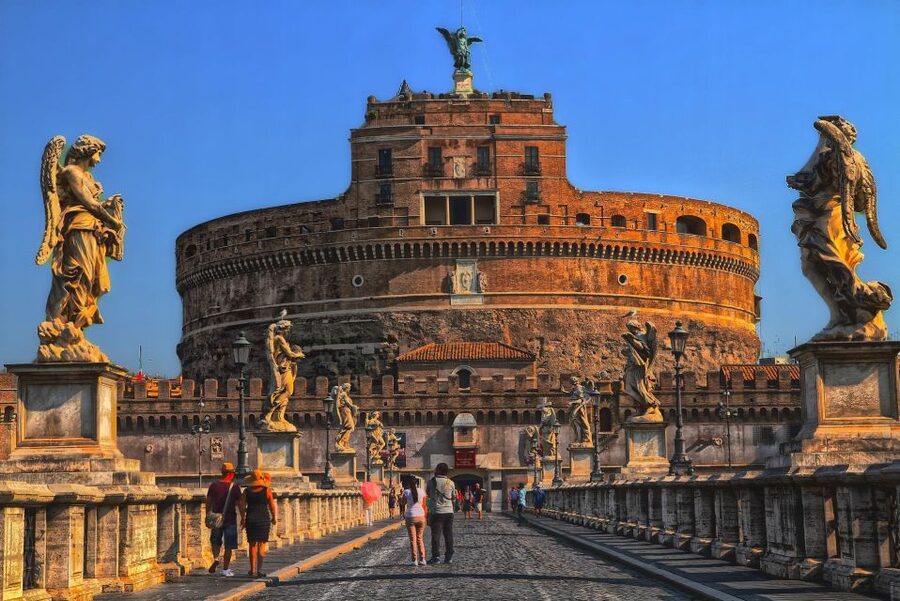
Castel Sant’Angelo is not just another Roman ruin. It is a 2,000-year-old tomb turned fortress, papal refuge, and museum, with one of the best high views in central Rome. The route carries you from the heavy round mass of Hadrian’s Mausoleum up through rooms, corridors, artwork, and stairways to the open terrace.
I like the freedom to explore at your own pace, especially with the phone audio guide. I also like the reserved entry, which can save a hot half-hour when the ticket line stretches along the entrance. The main drawback is the price: at $31, it costs much more than the official €16 admission, and the audio guide requires your own charged phone and headphones.
Key points to know before you go
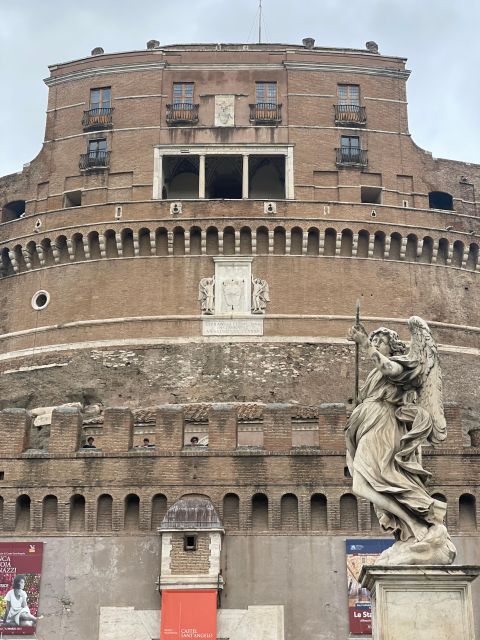
- Hadrian’s tomb is the starting point: The castle began as the Mausoleum of Emperor Hadrian, also called Hadrian’s Mole.
- The rooftop is the payoff: You climb stairs to reach sweeping views of Rome, the Tiber, St. Peter’s, and Ponte Sant’Angelo.
- Reserved entry can matter: Morning queues have been long enough to save about half an hour, though quiet winter visits may have little line at all.
- The audio guide is app-based: Bring a charged smartphone and headphones. The guide is available in English, Italian, French, Spanish, German, and Chinese.
- Allow two hours, or more: Two hours works for a focused visit, but people who read every panel, use the audio, or stop at the café may spend three or four hours.
- The climb is real: The terrace requires stairs, and the site is not suitable for wheelchair users or people with mobility impairments.
Why Castel Sant’Angelo is more than a castle
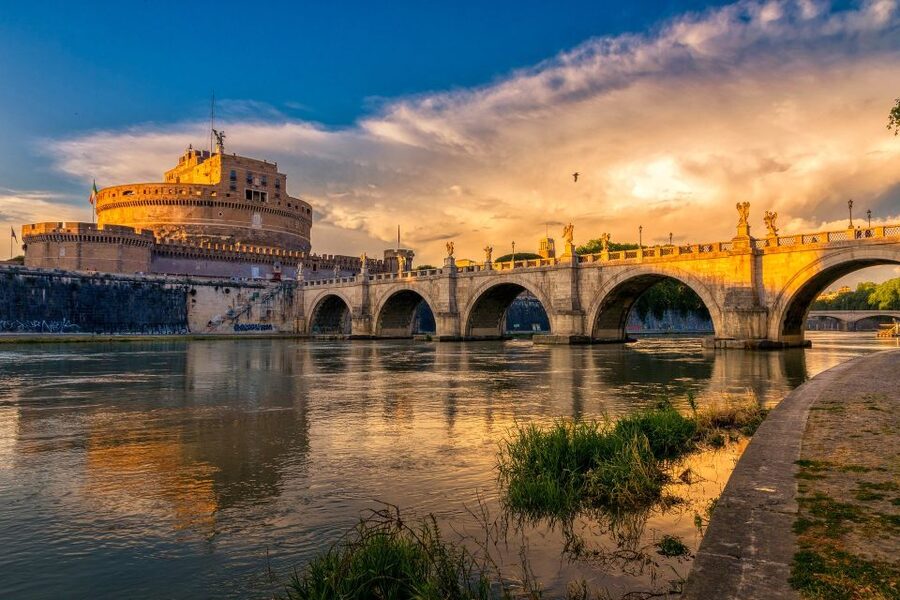
From the outside, Castel Sant’Angelo can look like a blunt, oversized fortress beside the Tiber. That first impression misses the point. The building changed jobs many times, and each layer helps explain Rome’s unusual ability to reuse its past.
Emperor Hadrian commissioned the original mausoleum for himself and his family. The great cylindrical tomb was later absorbed into the city’s defenses and eventually became a papal stronghold. Inside, you are not walking through one clean period of Roman history. You are moving through a building altered for burial, war, protection, residence, and display.
That mixture gives the visit its character. Some rooms feel formal and artistic. Other passages feel defensive and severe. The thick walls, stairways, upper platforms, and papal routes make the castle easy to picture as a place where people could shelter during danger.
The castle sits on the right bank of the Tiber, a short walk from Vatican City. That location makes it a sensible pairing with a Vatican visit, though you should not treat the two attractions as one quick stop. Castel Sant’Angelo deserves its own block of time.
More Skip-the-Line Audio Guide Tickets in Italy
- Rome: St. Peter’s Basilica & Dome Entry Ticket & Audio Tour
★ 4.2 · 7,537 reviews - Rome: Castel Sant’Angelo Entry Ticket & Digital Audioguide
★ 4.7 · 5,347 reviews - Rome: Pantheon Priority Entry Ticket & Interactive App
★ 4.1 · 5,114 reviews
Getting inside with a reserved ticket
Your ticket is sent by WhatsApp or email, generally 24 hours before the activity. Check your messages before leaving for the castle, and keep the ticket easy to display on your phone. Punctuality matters, and the meeting point can vary depending on the option you book.
The benefit of reserved entry depends on the day. On a busy morning, it can save you from waiting in the ticket queue, which has been reported to snake around the entrance corridor. On a quiet February morning, the advantage may be small. That is the honest tradeoff: you pay for convenience and support, not a guaranteed dramatic wait in every season.
The last entry is at 6:30 PM. Do not arrive at the final moment if you want enough time to reach the terrace. The site has stairs, several levels, and plenty to read and see.
Large bags, luggage, baby strollers, baby carriages, weapons, sharp objects, and pets are not allowed. Bring comfortable shoes. The walking is not extreme, but uneven historic spaces and repeated stairs make flimsy footwear a poor choice.
Following Hadrian’s original mausoleum

The most important thing to understand as you enter is that the castle began as Hadrian’s tomb. It was not built as a medieval castle from the start. The original structure, known as Hadrian’s Mole, was a monumental burial building for a Roman emperor.
That fact changes how you read the heavy circular architecture. The walls are not simply defensive. They belong to a grand funerary project, later reinforced and adapted as Rome’s needs changed.
You will find the building more expansive than its exterior suggests. The route moves through interior spaces, historic information, artwork, and passageways. Some sections are visually polished, while others communicate the building’s military purpose more clearly.
I recommend beginning with the broad story rather than trying to memorize every date. Notice how the same structure became a tomb, fortress, and papal refuge. The interest comes from those changes, not just from the age of the stones.
Papal corridors and the castle’s defensive role
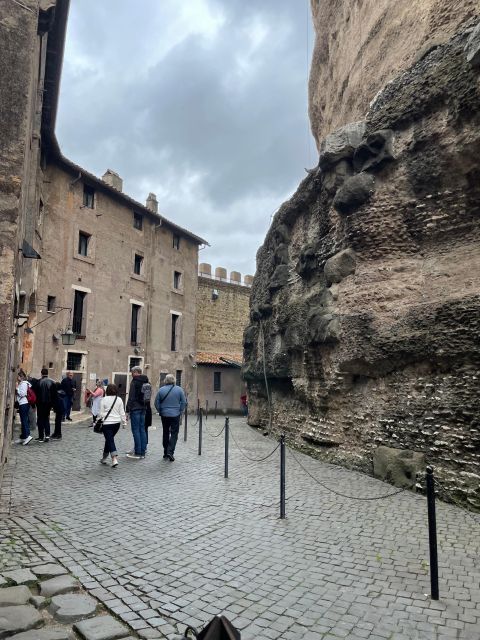
The papal corridors are among the most intriguing parts of the visit because they show how Castel Sant’Angelo connected to the political and religious life of Rome. These routes offered protected movement toward the Vatican area, turning the old mausoleum into a practical refuge.
The corridors help explain why the castle mattered long after Hadrian’s death. It was not a forgotten monument sitting beside the river. It remained useful because its massive walls and position could protect people during periods of trouble.
The castle’s military side can feel more austere than its decorated rooms. That contrast is worth noticing. You may pass from painted interiors to bare stone, narrow routes, or spaces that make defense easier to imagine.
An optional live guide is available in English or Spanish, with a small-group option. One guide named Dimosthenis was praised for bringing archaeological insight and extra material to the visit. If you prefer a person who can explain the building as you go, choose the live option. If you like stopping, backing up, and lingering over details, the audio guide gives you more control.
More Skip-the-Line Audio Guide Tickets in Rome
- Rome: Castel Sant’Angelo Entry Ticket & Audio App
★ 4.3 · 4,952 reviews - Rome: Borghese Gallery Skip-the-Line Ticket & Audioguide
★ 4.3 · 4,318 reviews - Rome: Pantheon Priority Entry Tickets with Interactive App
★ 4.6 · 4,108 reviews - Rome: Borghese Gallery Skip-the-Line Tickets with Audioguide
★ 4.6 · 2,562 reviews
The Archangel Michael and the name Castel Sant’Angelo
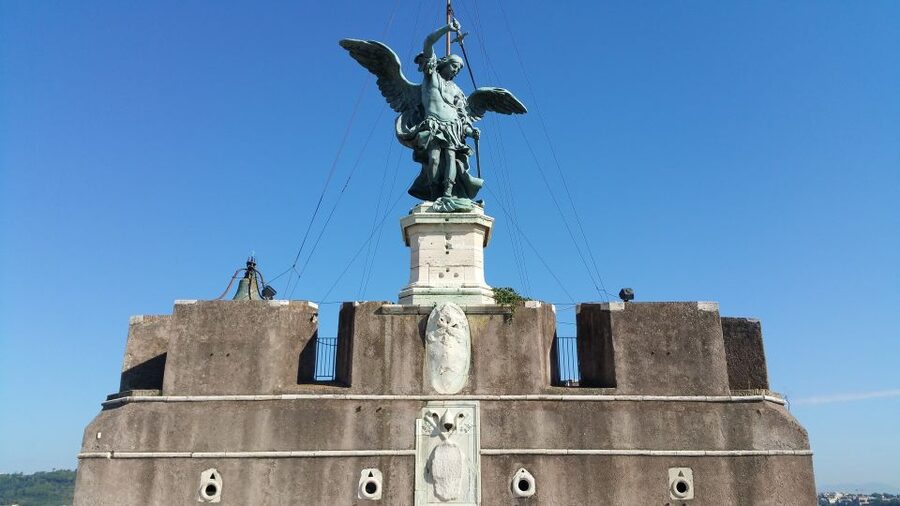
The castle’s present name comes from a legend tied to the plague of 590. According to the story, the Archangel Michael appeared above the mausoleum and sheathed his sword, signaling that the plague had ended.
You will encounter this legend as part of the castle’s later identity. It explains the famous statue of the angel on top and gives the building a strong link to Rome’s religious imagination.
The story is best understood as legend rather than a literal historical report. Still, it matters because monuments are shaped by the stories people attach to them. The angel helped turn Hadrian’s tomb into Castel Sant’Angelo, a place known not only for imperial Rome but also for papal Rome and Christian tradition.
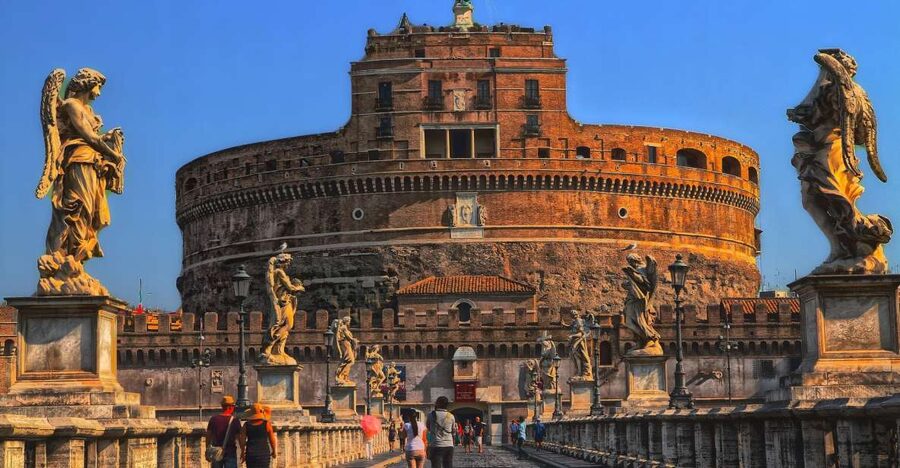
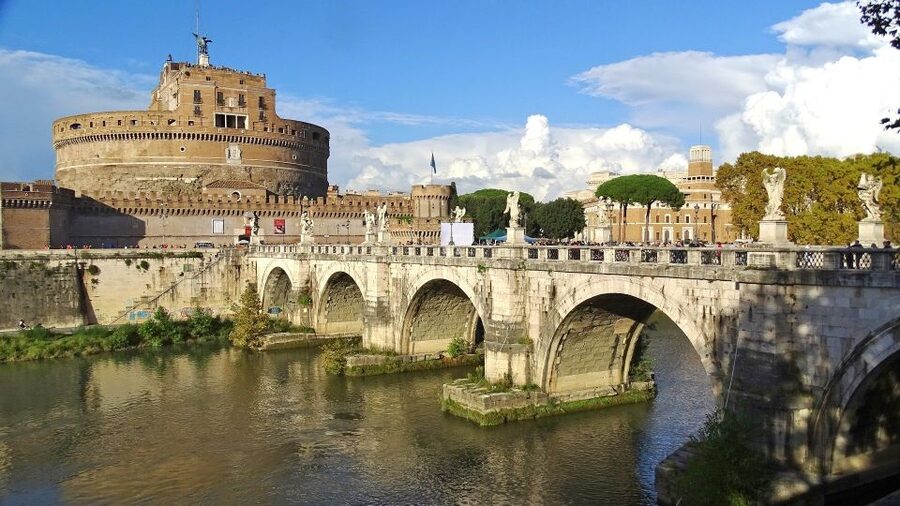
Look up as you move through the building. The upper statue and the castle’s position beside the bridge create one of Rome’s most recognizable views. The bridge and fortress work together visually, especially when seen from the riverbank.
The artwork, rooms, and signs inside
The interior is not only about walls and military history. Artwork, decorated rooms, and information panels add detail to the long story of the building.
You can explore with the app audio guide if you select that option. It is available in six languages: English, Italian, French, Spanish, German, and Chinese. The audio is delivered through your own smartphone rather than a separate headset, which avoids collecting and returning equipment.
That setup is convenient, but it puts the preparation on you. Download and set up the guide before you arrive, and bring headphones. Several people have found the text useful as well, so you are not forced to listen to every section.
The audio format suits this building because you can pause whenever a room catches your attention. You can also ignore a section without holding up a group. On the other hand, an audio guide can make you focus too much on your screen. I suggest listening in short sections, then putting the phone away and looking carefully at the room.
If you do not choose the audio option, the castle still has signs and information to guide an independent visit. A self-guided visit works particularly well for people who prefer to wander and read only what interests them.
Climbing to the terrace for Rome’s best views
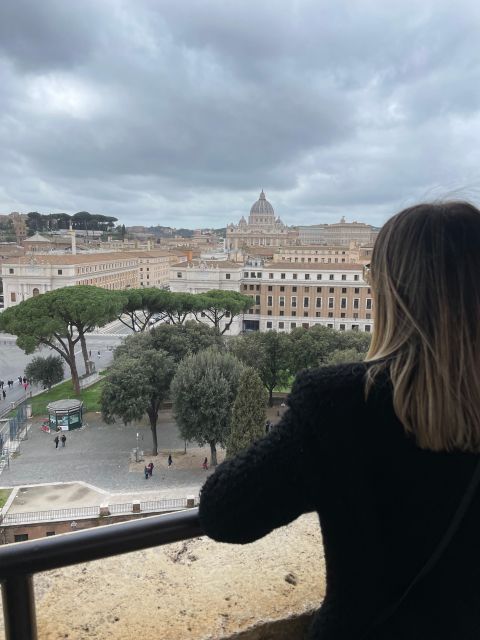
The terrace is the clear payoff, but you must earn it with stairs. The experience is not suitable for wheelchair users or people with mobility impairments, and anyone with knee or balance concerns should plan accordingly.
At the top, the view opens across Rome and the Tiber. St. Peter’s is especially important from here because you can see the castle’s close connection to the Vatican area. The river, rooftops, domes, and historic center spread out below.
Ponte Sant’Angelo, also called the Bridge of Angels, is a major photo subject. From the castle, you get a different perspective from the familiar street-level approach. The bridge leads toward the fortress and helps frame the whole scene.
The terrace can be busy, particularly when the weather is clear. You may need patience for an unobstructed photo, but the view remains worthwhile even when other people are present. Sunset can be beautiful, though you should check the entry time and allow enough time to reach the top before the last admission.
The terrace is also a good place to pause and connect the castle’s parts. From above, its defensive position makes sense. So does its relationship to the Tiber, the bridge, and the Vatican.
A pause at the café, with one price warning
There is a café inside the castle, including a halfway point with views toward Vatican City. It can be a welcome break, particularly if you spend three or four hours reading, listening, and climbing through the building.
The setting is the attraction. You can stop for a drink or something to eat while looking across the city. But prices can be high. A 330-milliliter bottle of cola has been priced at €5, so treat the café as a scenic convenience rather than a bargain stop.
You do not need to build your visit around the café. If you are watching costs, eat beforehand and use the stop only if the view is worth the extra expense to you.
Is $31 a fair price?
The official Castel Sant’Angelo admission is €16. The $31 experience therefore carries a considerable markup. The extra cost covers the audio guide when selected, ticket distribution, operational expenses, platform commissions, and customer support.
That can be worthwhile if you are visiting in a busy period and want reserved entry, especially if waiting in line would cost you valuable sightseeing time. The benefit is also useful if you want clear instructions and help receiving your ticket.
The value is weaker if you visit during a quiet period, do not want an audio guide, and are comfortable handling basic admission yourself. In that case, the official €16 ticket may be the better deal, if available for your chosen date and entry conditions.
The audio guide adds practical value for many people because it lets you explore independently in your language. The live guide option costs more in exchange for direct explanation and the ability to ask questions. Think of the $31 as a convenience package, not simply an entrance ticket.
How long to plan and when to go
The stated duration is two hours. That is enough for a steady visit through the main areas and a stop at the terrace. If you use the audio guide fully, read most of the signs, take photos, or stop at the café, plan closer to three hours. One especially unhurried visit lasted four hours.
Morning visits can help with queues and heat. Early entry also gives you a quieter start, though no time can guarantee an empty castle. Late afternoon may provide attractive light, but you must watch the 6:30 PM last entry.
Weather does not cancel the point of the visit. Rain can make the terrace less comfortable, but the interiors and views can still be rewarding. Bring shoes suited to stairs and historic flooring.
Who should book this experience?
I would recommend it to first-time Rome visitors who want more than an exterior photograph, anyone interested in Roman and papal history, and independent sightseers who dislike being hurried through rooms.
It suits couples, solo visitors, and small groups who want to choose their own pace. The audio guide is a good match for people who enjoy context but do not want a fixed tour schedule. The live option is better if you learn more easily through conversation.
I would hesitate if you have limited mobility, dislike stairs, or are mainly looking for a short photo stop. I would also compare the cost carefully if your visit falls in a quiet season and you do not need the audio or reserved-entry service.
Should you book Castel Sant’Angelo with the audio guide?
Book it if you want a flexible visit with an easier entry process, and if $31 fits your Rome budget. The strongest reasons are the castle’s unusual transformation from Hadrian’s tomb to papal fortress, the freedom to explore without a fixed group, and the terrace views across St. Peter’s, the Tiber, and Ponte Sant’Angelo.
Skip this particular package if you only want basic admission and are happy to arrange the €16 official ticket yourself. Either way, do not judge Castel Sant’Angelo from the street. The rooms, corridors, legend, artwork, and high terrace make it far more rewarding inside than its stern exterior suggests.
FAQ
How long does the Castel Sant’Angelo experience last?
The listed duration is two hours. You may spend longer if you use the full audio guide, read the information panels, take photos, or stop at the café.
What does the ticket include?
It includes reserved entry. The smartphone audio guide is included only if you select that option. A live guide in English or Spanish is available with the relevant option.
Which languages are available for the audio guide?
The app-based audio guide is available in English, Italian, French, Spanish, German, and Chinese.
Do I need to bring headphones?
Yes. Headphones are not included, and the audio guide uses your own smartphone.
What should I bring?
Bring your passport or ID card, comfortable shoes, headphones, and a charged smartphone if you selected the audio guide.
Can wheelchair users visit Castel Sant’Angelo?
The activity is not suitable for wheelchair users or people with mobility impairments. You also need to climb stairs to reach the panoramic terrace.
What time is the last entry?
The last entry to Castel Sant’Angelo is at 6:30 PM.
Are large bags or strollers allowed?
Luggage, large bags, baby strollers, and baby carriages are not allowed. Pets, weapons, and sharp objects are also prohibited.
Can I cancel the booking?
You can cancel up to 24 hours before the activity for a full refund. Ticket delivery details may vary by the option selected, so check your booking messages before your visit.
Just added around Rome
- Rome: St. Peter’s Basilica and Dome Entry + Audio Guide★ 4.5 · 13 reviews
- St. Peter’s Basilica: Hosted Entrance & Digital Audioguide★ 4.1 · 35 reviews
- Sorrento & Pompeii Day Trip from Rome Audio Guide Tour★ 4.2 · 50 reviews
- Rome:Ostia Antica Skip-the-line Ticket & Audioguide★ 4.3 · 11 reviews
- Rome+Jubilee Audioguide – TravelMate app for your smartphone★ 4.2 · 38 reviews
- Rome:St. Peter’s Basilica Hosted Entry + Official Audioguide★ 3.4 · 10 reviews
- Rome: St. Peter’s Basilica Entry Ticket and AudioGuide★ 4.4 · 57 reviews
- Colosseum, Roman Forum, Palatine Hill access and AudioGuide★ 4.7 · 12 reviews
Rome Audio Tours, compared.
Rome: Colosseum & Forum with Audio Guide App -Optional Arena
Read our review →
Rome: City Sightseeing Hop-on Hop-off Bus with Audioguide
Read our review →
Rome: St. Peter’s Basilica & Dome Entry Ticket & Audio Tour
Read our review →
Colosseum, Roman Forum & Palatine Hill with Audioguide App
Read our review →
Vatican & Sistine Chapel Ticket with Optional Audio Guide
Read our review →
Rome: Castel Sant’Angelo Entry Ticket & Digital Audioguide
Read our review →
Rome: Pantheon Priority Entry Ticket & Interactive App
Read our review →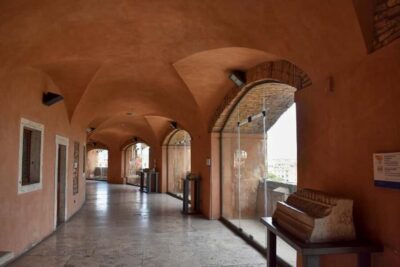
Rome: Castel Sant’Angelo Entry Ticket & Audio App
Read our review →Browse the lists this tour appears in