
REVIEW · ROME AUDIO TOURS
Rome: Ancient Baths of Caracalla Ticket & Audio Guide
The Baths of Caracalla show ancient Rome at its grandest and most practical. This was not just a place to wash. It was a public leisure center with pools, exercise rooms, massage rooms, artwork, and a remarkable underfloor heating system called a hypocaust. I like the freedom to explore at your own pace, especially on a site this large. I also like that the audio guide points out 17 specific places, so you are not left staring at walls and guessing what they once were.
The main catch is that this is a phone-based audio visit, not a guided tour. You must download the guide, bring your own headphones, and keep track of the route yourself. Some people have found the audio difficult to follow, and winter restoration work can close parts of the complex.
Key points to know before you go
- The hypocaust is the engineering star: Learn how hot air moved beneath the floors to heat the baths.
- Seventeen audio stops add structure: The route includes the swimming pool, gymnasium, massage rooms, mosaics, and other major remains.
- You explore independently: There is no live guide, group tour, headset, or transport included.
- Bring your own equipment: You need a charged smartphone, headphones, and the downloaded audio guide.
- The site is large and exposed: Wear proper walking shoes and allow about two hours.
- The value depends on your setup: The ticket is listed at $20, while buying admission and audio separately may cost less in some cases.
Why the Baths of Caracalla matter
Rome has more famous ruins, but the Baths of Caracalla can give you a clearer sense of how ordinary public life worked in the imperial city. The Colosseum explains spectacle. The baths explain routine: exercise, bathing, conversation, relaxation, and social life on a huge public scale.
Construction began under Emperor Septimius Severus and continued under his son, Caracalla. The complex opened to the public during Caracalla’s reign. Its size helped make it one of the great imperial bath complexes, second only to the largest Roman baths in scale.
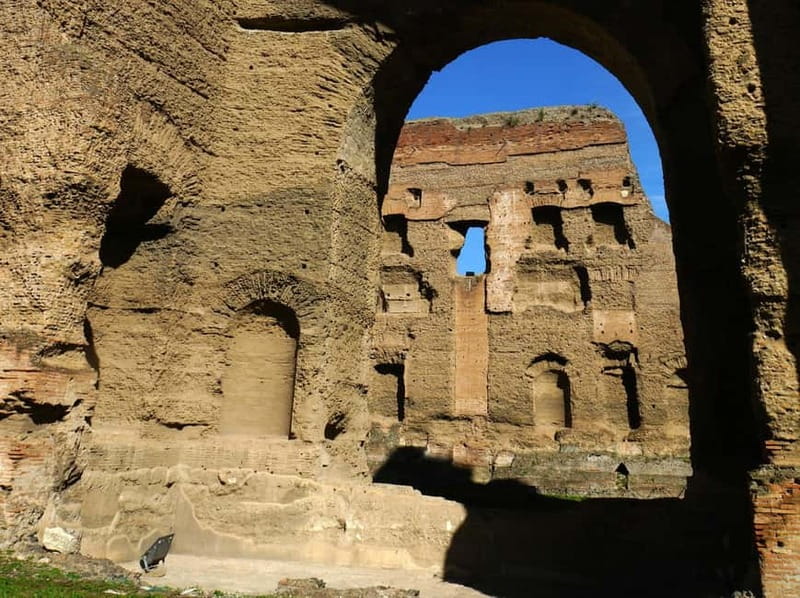
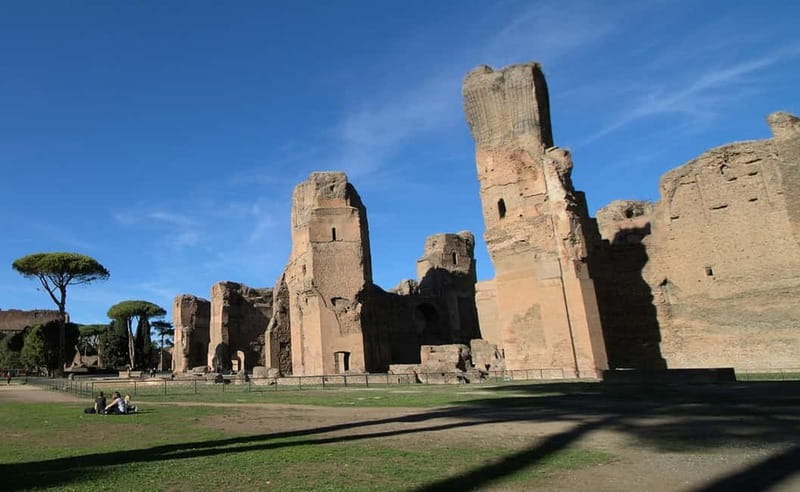
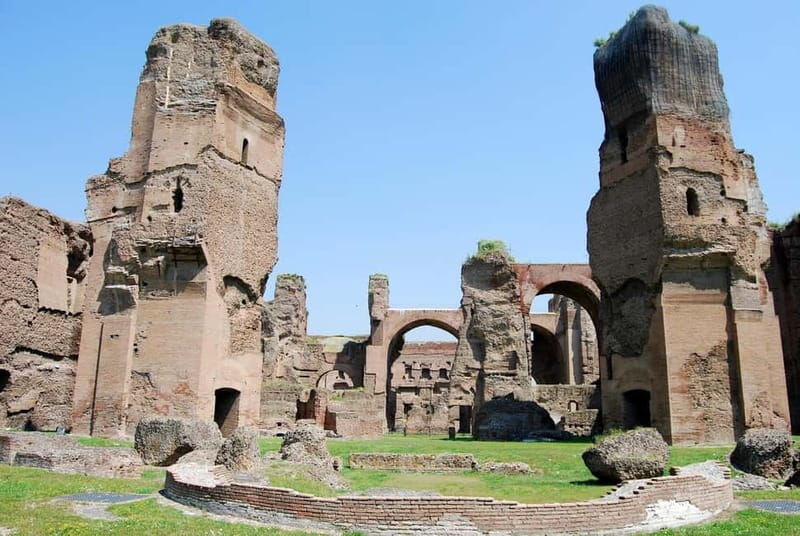
I find the site most rewarding when I picture it as a working building rather than a pile of ruins. The soaring walls once enclosed grand halls. Marble floors and mosaics covered areas that now show brick, stone, and fragments. Thousands of people could use the complex, and its design had to support an impressive amount of water, heat, movement, and maintenance.
The phrase one of the seven wonders of Rome is used to describe the baths in the tour material. You should not expect a polished monument with every room intact. Its appeal comes from the size of the surviving structure and the chance to read the remains with help from the audio commentary.
More Audio Tours in Rome:
- Rome: Colosseum & Forum with Audio Guide App -Optional Arena
★ 4.2 · 24,770 reviews - Rome: City Sightseeing Hop-on Hop-off Bus with Audioguide
★ 4.0 · 16,045 reviews - Rome: St. Peter’s Basilica & Dome Entry Ticket & Audio Tour
★ 4.2 · 7,537 reviews
Entering at Viale delle Terme di Caracalla
You go directly to the main entrance at Viale delle Terme di Caracalla. There is no transport included, so you must make your own way there. Have your e-ticket downloaded and ready to show at the entrance.
The ticket is sent for download through WhatsApp within 24 hours of your travel date. That timing makes it important to check your phone before leaving for the site. Do not assume you can sort everything out at the gate.
The audio guide uses your own smartphone. Scan the QR code on the voucher to download it before arrival, and bring headphones. This is a small but important point. Without headphones, you may need to hold your phone up for the whole visit, which is awkward and drains the battery faster.
The site is listed as wheelchair accessible. Still, the ruins cover a substantial area, and restoration work or uneven surfaces can affect how easily you move through individual sections. If access is a serious concern, check current site conditions before setting out.
Following the 17 audio points
The audio guide gives your visit a basic framework. Rather than wandering across the grounds with no context, you can follow 17 points of interest and hear what each space did.
The exact flow may not always feel obvious. One recent experience found the route hard to follow and the audio points not fully up to date. I would treat the numbered stops as useful markers, but not expect the precision of a live guide walking beside you.
The commentary is available in English, Spanish, French, German, and Italian. One useful feature is the audio guide for Rome landmarks included with the package. That extra material may help if you want more sightseeing commentary after leaving the baths, though the main reason to buy this activity is access to the Caracalla site and its dedicated audio tour.
Give yourself time to pause between stops. The largest rooms need a moment before their scale becomes clear. Look up at the surviving walls, then look down at the floor fragments and mosaic work. The contrast between immense brick construction and detailed decoration tells you something about Roman priorities: utility and luxury were built into the same complex.
The swimming pool and grand bathing spaces
The swimming pool is one of the key points on the route. It helps you understand the baths as a place for public recreation, not simply a sequence of hot rooms.
The original complex included different bathing temperatures and areas for exercise and grooming. The audio guide explains the role of the gymnasium and massage rooms, which gives the ruins a more human feel. You can picture people moving from physical activity to bathing, then spending time talking or being treated.
The surviving walls can make the building feel stern and empty. That is why the commentary matters. Without it, you may notice the scale but miss the daily rhythm. With it, the rooms become part of a social center used by the wider public.
Do not rush from one large chamber to the next. The site rewards close looking. Mosaics, marble fragments, and decorative details are easy to miss if you focus only on the tallest walls.
Same place, a different route to walk:
- Colosseum, Roman Forum & Palatine Hill with Audioguide App
★ 4.4 · 6,291 reviews - Vatican & Sistine Chapel Ticket with Optional Audio Guide
★ 4.1 · 5,405 reviews - Rome: Castel Sant’Angelo Entry Ticket & Digital Audioguide
★ 4.7 · 5,347 reviews - Rome: Pantheon Priority Entry Ticket & Interactive App
★ 4.1 · 5,114 reviews
The hypocaust and Roman heating technology
The most interesting technical part of the visit is the hypocaust. This system heated the baths by sending hot air beneath raised floors and through parts of the walls.
It was a clever answer to a difficult problem. A huge public bath needed steady heat, lots of fuel, water management, and workers to keep everything running. The hypocaust shows that Roman engineering was not only about roads, arches, and aqueducts. It also shaped comfort and public life.
The audio guide helps translate the remains into a working system. You can better understand how a floor that looks like a broken platform once sat above a heated space. The baths depended on hidden infrastructure, and much of that infrastructure is now easier to imagine than to see.
I would put this section near the top of your priorities. Even if engineering is not your main interest, the heating system makes the entire complex more understandable. You stop seeing isolated rooms and start seeing one connected machine.
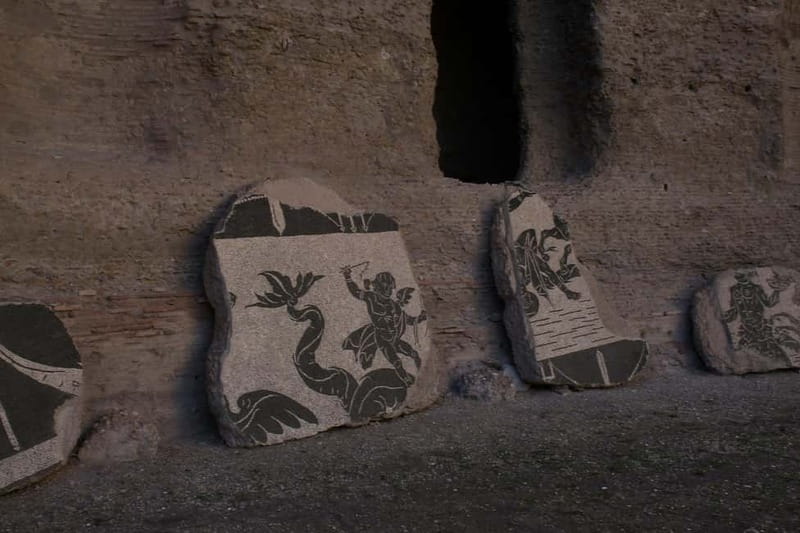
Mosaics, marble, and decoration
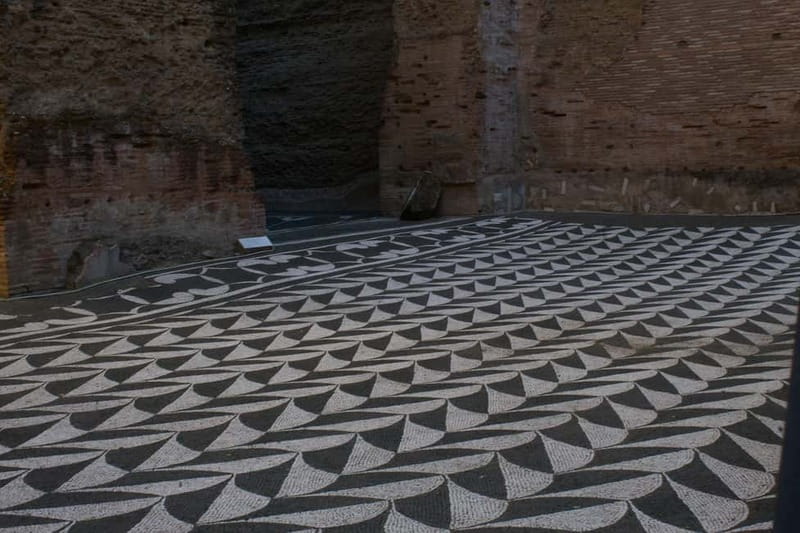
The baths were built for public use, but they were not plain. Preserved mosaics and marble details show how much decoration went into the complex.
The mosaics are a strong reason to slow down. The large walls may grab your attention first, but smaller floor sections can show more about the building’s original character. Take photographs where permitted, but also look closely at the pattern and material.
You will need some imagination. Much of the original decoration has disappeared, and the ruins are not fully reconstructed. The remains can feel unfinished if you expect restored rooms, polished surfaces, or complete statues.
That unfinished quality is also part of the site’s value. You are looking at fragments of a real ancient building rather than a modern recreation. The audio guide supplies the missing explanation, while your own eyes supply the scale and texture.
From imperial bathhouse to later Rome
One striking piece of context is what happened to the stone after the baths fell out of use. Materials from the complex were eventually used in the construction of St. Peter’s Basilica.
That detail changes how you read the ruins. The baths were not simply abandoned and left untouched. Their stone and decoration became part of later Rome. The city was repeatedly built from its own past, often by dismantling earlier structures.
The audio commentary connects the remains to this long afterlife. You are not only seeing a Roman bath complex. You are also seeing one stage in the making of the later city.
This is one reason I prefer an audio guide here to a silent visit. The physical remains alone cannot explain every change across almost 2,000 years. A few well-placed facts help you understand why the site looks the way it does.
How long to spend and when to go
The stated duration is two hours. That is a sensible amount of time for a self-guided visit, though your pace will depend on how closely you listen and how many photographs you take.
Two hours gives you enough time to cover the major points without turning the visit into an exhausting half-day stop. If you like ancient architecture, you may want to linger longer at the mosaics, heating system, and biggest halls. If you are adding several other Rome sights on the same day, two hours keeps the visit manageable.
Season matters. Some sections were closed for restoration during a winter visit, so the full route may not always be available. Restoration is normal at a major archaeological site, but it can affect your expectations. Check current conditions if seeing every area is important to you.
The site also includes substantial outdoor walking. Comfortable shoes are essential. Flip-flops and sandals are not allowed, and the stated dress code also excludes shorts and sleeveless shirts. Wear clothing that meets those rules before you arrive.
Is the $20 price good value?
The advertised price is $20 per person. That covers the entrance ticket, the Caracalla audio guide, applicable taxes and fees, and an additional audio guide covering Rome landmarks.
The value depends on how much you want interpretation. A ticket alone gives you access to impressive ruins, but the baths can be hard to understand without background. The audio guide adds purpose to the rooms and explains the heating technology, public role, artwork, and later use of the stone.
There is also a practical price comparison to consider. One recent booking experience calculated admission at about 8 euros per person and the phone audio guide at about 6 euros per person. That means buying directly or arranging parts separately may cost less, depending on current rates and availability.
The package earns its price if you prefer to have the ticket and audio material arranged together. It is less attractive if you are comfortable buying admission on site and using your own guidebook or free information. The included Rome landmarks commentary adds value only if you plan to use it.
The phone audio guide, honestly assessed
The audio guide is the main convenience and the main possible weakness. You can go at your own pace, stop when you want, and listen in one of five languages. That works well for independent sightseeing.
The tradeoff is that you must manage the technology yourself. Download the application or audio content before arrival, scan the QR code, charge your phone, and bring headphones. A rushed setup can leave you standing at the entrance trying to make the guide work.
The route may also feel less clear than a live tour. One person found the points difficult to follow, while another found the audio more complete than the information available at the site. Both experiences are possible because a self-guided app depends on your phone, the current route, and how clearly the stops are marked.
I would use the audio as a companion, not as a strict marching order. If the sequence seems confusing, focus on the 17 highlighted points and match the descriptions to the major spaces. You do not need to listen every second to get value from the visit.
Who will enjoy this visit most?
This experience suits you if you like ancient architecture, Roman engineering, and independent sightseeing. It is also a good choice if you prefer to pause for photos rather than stay with a group.
Families with older children may find the heating system and huge public rooms easier to understand with audio support. The site can give children a sense of scale that smaller ruins do not, though the lack of reconstructed rooms means you may need to explain what is missing.
It is less suitable if you want a live guide, a tightly managed route, or a fully restored monument. You must bring your own device and solve minor audio problems yourself. If you learn best through conversation, a private or group guided tour may suit you better.
Practical preparation that makes a difference
Before leaving, take these steps:
- Download the ticket and audio guide.
- Scan the voucher QR code in advance.
- Charge your phone fully.
- Pack headphones.
- Wear comfortable shoes that are not sandals or flip-flops.
- Avoid shorts and sleeveless shirts.
- Allow about two hours.
- Check for restoration closures if you are visiting in winter.
These details sound ordinary, but they shape the visit. The most common problems here are not about the ruins. They come from arriving without the ticket ready, missing headphones, or expecting someone else to explain the route.
Should you book the Baths of Caracalla audio tour?
Book it if you want a flexible, low-cost way to add context to one of Rome’s largest ancient sites. The hypocaust, swimming pool, mosaics, gymnasium, and later reuse of the stone give you plenty to look at, while the 17 audio points help explain what you are seeing.
Think twice if you want a live guide or if you dislike phone-based tours. The route can be hard to follow, the audio may require patience, and restoration can close some areas. Also compare the $20 package with current direct admission and audio prices before paying.
For an independent visitor who prepares the phone setup and arrives in proper clothing, this is a worthwhile two-hour stop. You will need imagination, but the scale of the Baths of Caracalla makes that effort pay off.
FAQ
Where do I enter the Baths of Caracalla?
Go directly to the main entrance at Viale delle Terme di Caracalla, 00153 Rome. Have your downloaded ticket ready to show.
What languages are available for the audio guide?
The audio commentary is available in English, Spanish, French, German, and Italian.
Do I get a headset and mobile device?
No. You must bring your own charged smartphone and headphones.
Is this a guided tour?
No. This is a self-guided visit with an audio guide. A live guide, headset, mobile device, and transportation are not included.
How long does the visit take?
The stated duration is two hours. You explore at your own pace and follow 17 points of interest.
What clothing and footwear do I need?
Wear comfortable shoes. Flip-flops, sandals, shorts, and sleeveless shirts are not allowed.
Just added around Rome
- Rome: St. Peter’s Basilica and Dome Entry + Audio Guide★ 4.5 · 13 reviews
- St. Peter’s Basilica: Hosted Entrance & Digital Audioguide★ 4.1 · 35 reviews
- Sorrento & Pompeii Day Trip from Rome Audio Guide Tour★ 4.2 · 50 reviews
- Rome:Ostia Antica Skip-the-line Ticket & Audioguide★ 4.3 · 11 reviews
- Rome+Jubilee Audioguide – TravelMate app for your smartphone★ 4.2 · 38 reviews
- Rome:St. Peter’s Basilica Hosted Entry + Official Audioguide★ 3.4 · 10 reviews
- Rome: St. Peter’s Basilica Entry Ticket and AudioGuide★ 4.4 · 57 reviews
- Colosseum, Roman Forum, Palatine Hill access and AudioGuide★ 4.7 · 12 reviews
Rome Audio Tours, compared.
Rome: Colosseum & Forum with Audio Guide App -Optional Arena
Read our review →
Rome: City Sightseeing Hop-on Hop-off Bus with Audioguide
Read our review →
Rome: St. Peter’s Basilica & Dome Entry Ticket & Audio Tour
Read our review →
Colosseum, Roman Forum & Palatine Hill with Audioguide App
Read our review →
Vatican & Sistine Chapel Ticket with Optional Audio Guide
Read our review →
Rome: Castel Sant’Angelo Entry Ticket & Digital Audioguide
Read our review →
Rome: Pantheon Priority Entry Ticket & Interactive App
Read our review →
Rome: Castel Sant’Angelo Entry Ticket & Audio App
Read our review →Browse the lists this tour appears in