
REVIEW · ATHENS AUDIO TOURS
Athens: National Archaeological Museum Ticket w/ Opt. Audio
The National Archaeological Museum holds the kind of objects you already know from history books, then places them in front of you at arm’s length. The Mask of Agamemnon, the Antikythera mechanism, the Cup of Nestor, and major statues of Zeus, Poseidon, and Aphrodite are all part of the experience.
I like the simple e-ticket system, which can save you from the ticket-purchase line, and I like the freedom to set your own pace inside. The main caution is the museum’s size: an hour gives you a taste, but the collection deserves much longer. The optional audio app can also be awkward to navigate and may use plenty of phone battery.
Key points to know
- World-class ancient objects: See Mycenaean gold, Cycladic and Minoan artifacts, classical sculpture, Roman works, and the famous Antikythera mechanism.
- Pre-booked entry: Scan your ticket at the gate, but look carefully for the correct line because ticket buyers, ticket holders, and audio-device users may queue separately.
- Your own schedule: The ticket is valid for one day and lets you explore independently rather than follow a group.
- Optional English audio: The self-guided tour adds background, but some stops may not activate and the route may not flow clearly.
- A useful indoor stop: The museum can fill a hot afternoon, though some rooms may feel warm and seating is limited.
- Easy city access: Omonoia is the nearest metro station, and the museum is wheelchair accessible.
Why the National Archaeological Museum deserves your time
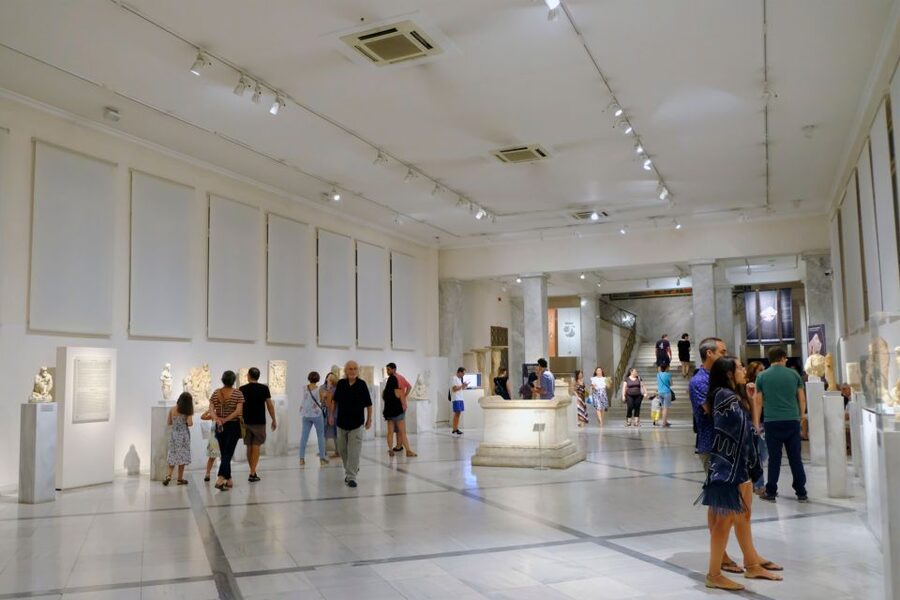
Athens offers famous ruins outdoors, but this museum lets you see the objects that made ancient Greece more than a set of broken columns. Here, gold funeral masks, painted pottery, marble bodies, bronze weapons, funerary steles, and delicate household objects sit together in a long account of Greek art and daily life.
The museum is Greece’s largest archaeological museum and one of the world’s major collections devoted to ancient Greek art. That scale is both its strength and its challenge. You can spend an hour on a brisk highlights tour, or several hours following artistic change from prehistoric times through the classical and Roman periods.
I especially like the way the collection puts famous masterpieces beside less famous objects. A celebrated statue may draw the eye, but a small cup, seal, or fragment can tell you just as much about how people lived, traded, worshiped, and buried their dead.
More Museum Audio Guides in Athens
- Athens: Acropolis Museum Ticket with optional Audio Guide
★ 4.4 · 2,652 reviews - From Athens: Small-Group Delphi, Museum & Arachova Day Trip
★ 4.8 · 2,476 reviews - Athens: Acropolis Museum Ticket with Audio Guide
★ 4.1 · 835 reviews
Arriving at Omonoia and finding the right entrance line
The nearest metro station is Omonoia. From there, allow time to reach the museum entrance and get oriented before your booked slot. Your e-ticket arrives by email, so keep it easy to open on your phone.
At the entrance, do not automatically join the longest line. There may be separate lines for people buying tickets, people with pre-booked tickets, and people who have already checked in and are collecting an electronic narrator device. A quick question to the staff can save you needless waiting.
The pre-booked ticket is most useful during busier periods, especially in the morning and in the warmer months. It is less essential in winter, when the line may be short. Even with a ticket in hand, you still need to pass through entry checks and, if required, bag screening.
Bring your passport or identity card. A copy is accepted according to the ticket information. Children under five and visitors eligible for reduced admission should pay close attention to the age rules before buying an adult ticket. Reduced-price tickets are not offered online, and identification is required at the ticket booth for applicable concessions.
A chronological look at Greece through objects
Once inside, use the rooms as a broad timeline, even though the route may not always make that easy. The museum covers prehistoric cultures, the Bronze Age, Archaic and Classical Greece, Hellenistic art, and Roman-era works.
The prehistoric and Mycenaean material gives the visit its dramatic opening. This is where the famous Gold Death Mask of Agamemnon appears, along with other objects linked to elite burials and palace culture. The mask is traditionally connected with Agamemnon, though the museum experience is more valuable when you view it as evidence of Mycenaean power and craftsmanship rather than simply as the face of a legendary king.
Gold jewelry, vessels, weapons, and burial goods show the skill and wealth of Bronze Age communities. You get a useful sense of how far back the story of Greek civilization reaches, long before the familiar marble temples and philosophers.
The collection also includes the Cup of Nestor and the Ring of Theseus, objects that add a personal scale to the larger story. They are not only impressive because of their age. They also show how writing, ceremony, status, and myth shaped objects made for human hands.
Sculpture galleries with Zeus, Poseidon, and Aphrodite
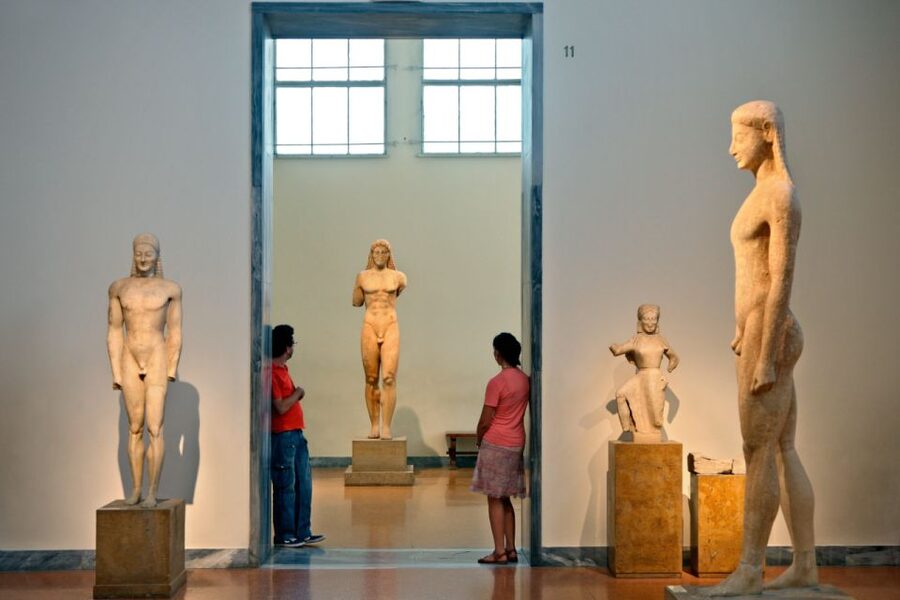
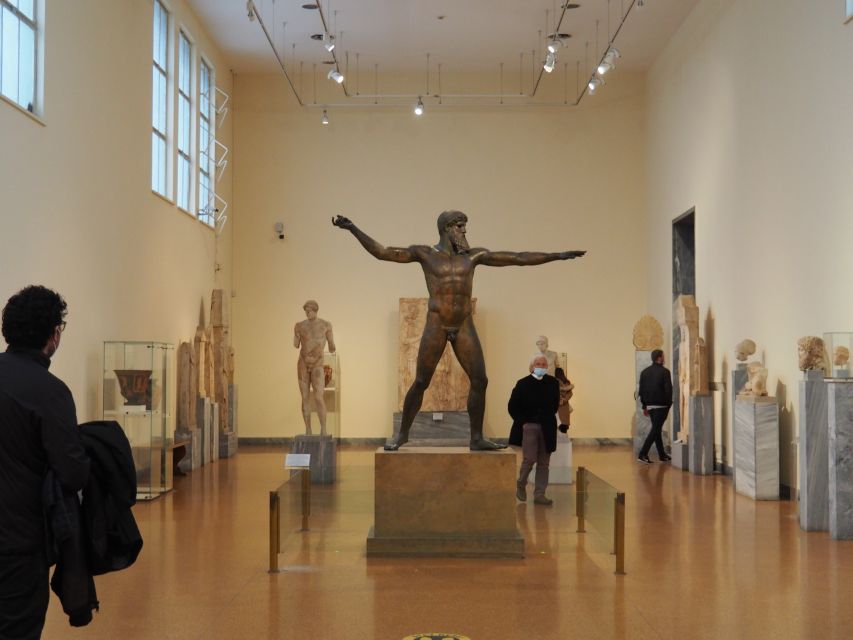
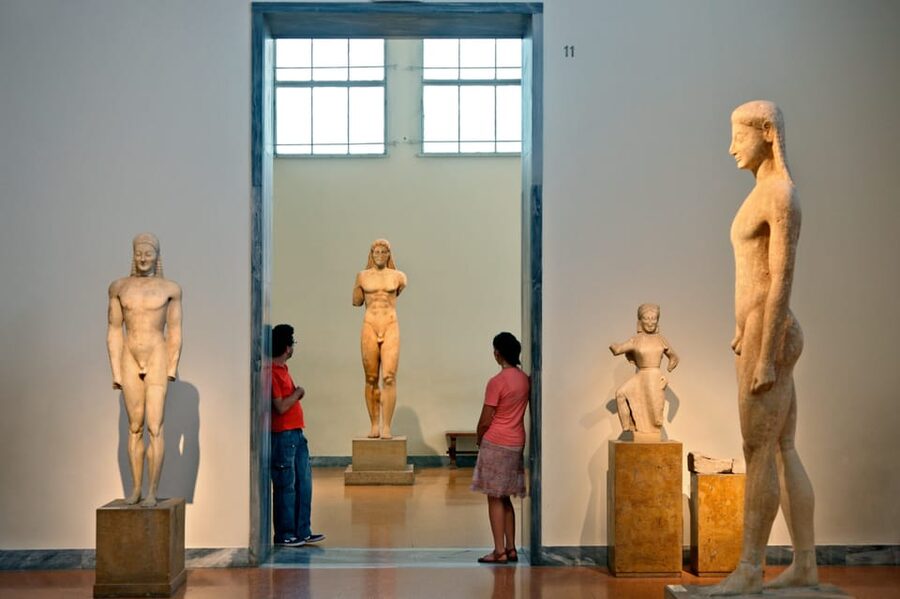
The sculpture rooms are the museum’s great crowd-pleaser, and rightly so. Marble and bronze figures show how Greek artists developed increasingly natural poses, carefully observed anatomy, and a strong interest in movement.
Look for the statues of Zeus and Poseidon, two of the most memorable works associated with the Greek gods. Their scale and posture make them easy to imagine in a public or religious setting, while their idealized bodies reveal the artistic standards of the period.
Aphrodite offers a different mood, with the focus placed on beauty, proportion, and graceful form. You will also encounter statues, vases, steles, and other works that help fill out the story beyond the best-known gods.
The displays generally let you view important pieces at close range and near eye level. That makes a real difference. You can examine tool marks, folds in clothing, surface damage, and small details that disappear in a photograph or behind a distant barrier.
Some labels may be low or difficult to read in dimmer rooms. If you care about the written explanations, bring patience and allow extra time. The galleries are not always arranged as a perfectly obvious one-way route, so you may need to check the room signs and use the map rather than rely on arrows alone.
More Museum Audio Guides in Greece
- Athens: Acropolis & Acropolis Museum Ticket with Audio Guide
★ 4.1 · 556 reviews - From Athens: Small-Group Delphi, Museum & Arachova Day Trip
★ 4.5 · 267 reviews - Athens National Archaeological Museum E-Ticket with Audio Guide
★ 3.0 · 57 reviews - Acropolis Museum E-Ticket and Multilingual Audio Guide
★ 4.0 · 42 reviews
The Antikythera mechanism, the museum’s great surprise
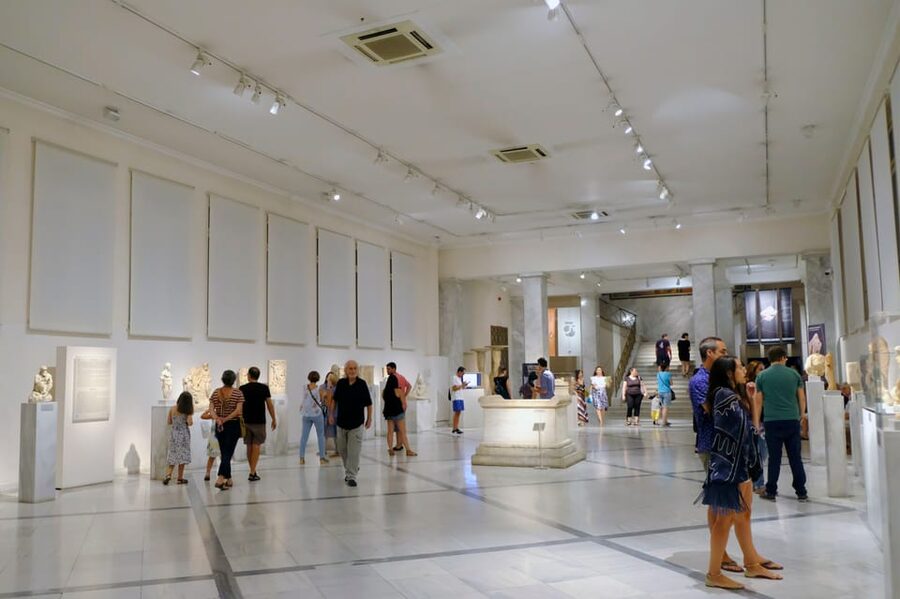
Even visitors who come mainly for sculpture should make time for the Antikythera mechanism. This ancient device is one of the collection’s most remarkable objects because it points to a level of mechanical and astronomical understanding that is easy to underestimate.
The mechanism is displayed with explanatory material that helps show why it matters. It is not simply an old clock. Its surviving parts reveal an ancient attempt to calculate cycles in the heavens, making it one of the most important scientific objects from antiquity.
The display can be a highlight for anyone interested in engineering, astronomy, mathematics, or the less familiar sides of Greek culture. You may find that it changes your picture of ancient Greece from a world of marble statues to one that also produced sophisticated instruments.
Santorini and the Bronze Age world
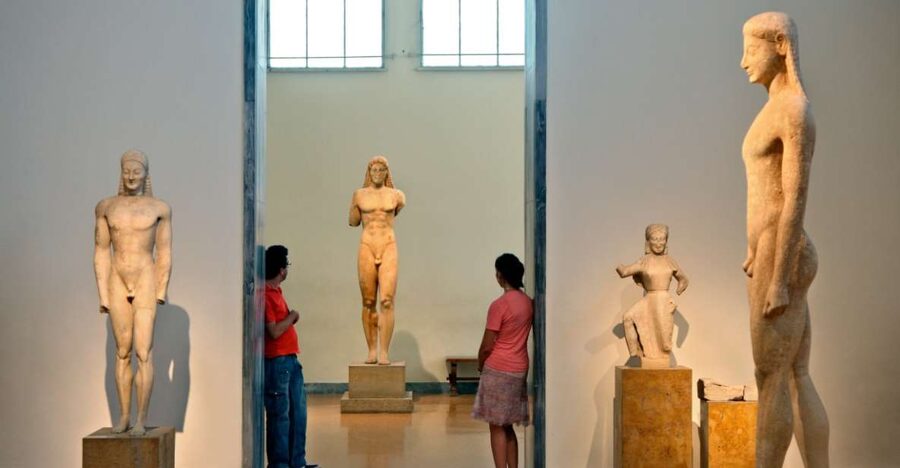
Set aside time for the material from Santorini, especially if you want to see art from outside the usual Athens and mainland story. The displays include pictures, pottery, amphorae, and jugs preserved by volcanic ash after the island’s major eruption.
The Santorini rooms add color and movement to the museum visit. Painted scenes and everyday vessels provide a glimpse of a Bronze Age society before disaster sealed many objects away. This section is especially useful after the Mycenaean galleries because it shows that the ancient Aegean was made up of several connected cultures, not one single Greek style.
The material is also a reminder that archaeology is not only about temples and rulers. Household objects, paintings, and storage vessels can reveal patterns of work, trade, food, and social life.
How much time should you allow?

The official experience is valid for one day, but that does not mean you need to spend the entire day indoors. I would allow at least two hours for a worthwhile first visit. One hour can work if you focus on the major objects, but you will pass many rooms quickly.
For a fuller visit, plan three hours or more. That gives you time to read selected labels, return to favorite sculptures, and see the prehistoric, Santorini, sculpture, and Antikythera sections without racing.
The museum’s size can feel overwhelming. I suggest choosing a short list before you enter:
- The Mask of Agamemnon
- The Antikythera mechanism
- The Cup of Nestor
- The Ring of Theseus
- The statues of Zeus and Poseidon
- The Santorini displays
- A few rooms of pottery, steles, and everyday objects
This approach keeps the visit focused without turning it into a scavenger hunt. If you have more time, then follow your curiosity.
Is the optional audio guide worth adding?
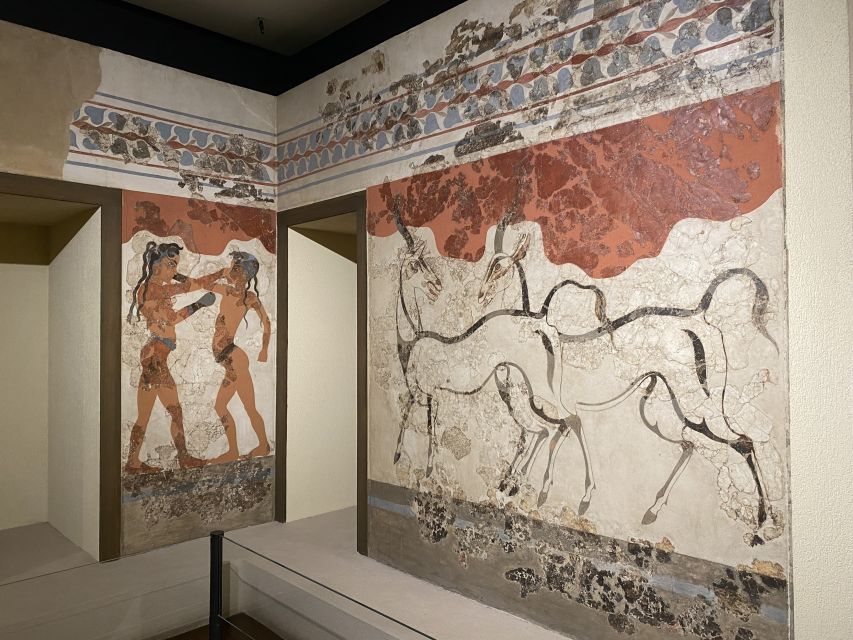
The optional audio guide is in English and is intended for self-guided use. It can give you useful context about Greek history, artistic change, and individual objects, especially if you do not want to read every label.
The weak point is the app and route design. Some audio references may not activate, and the route can send you across the museum in a way that feels more like a treasure hunt than a clear gallery sequence. Descriptions may mention objects as if they are close together when they are actually on opposite sides of a room.
You may get more from the audio if you use it selectively rather than following every instruction. Start with the main exhibits, listen to the stops that work, and keep the museum map in hand. Bring your own headphones, as they are specifically recommended.
A charged phone is important. The app can consume a lot of battery, so a portable charger is sensible if you plan to listen for several hours. If the technology gives you trouble, the museum’s labels and the objects themselves still make the visit worthwhile.
The ticket information also includes a self-guided audio tour for Athens’ Old Town and Plaka with all options. The National Archaeological Museum audio is included only when you select that option, so check your booking choice carefully before paying.
Heat, seating, and the practical side of the visit
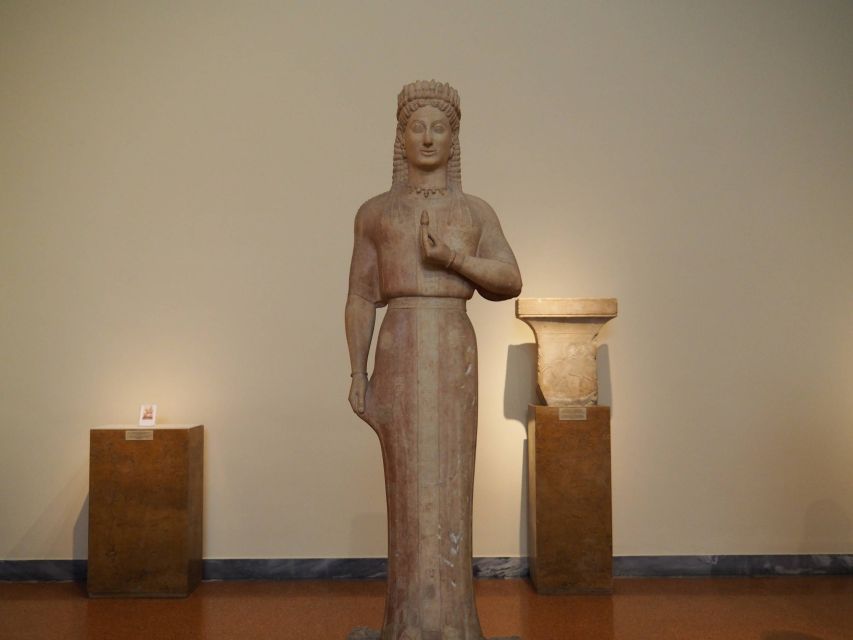
The museum is an appealing escape from Athens’ summer heat, but do not assume every room will be cool. Air conditioning can vary, and some galleries may feel warm in July or August.
Seating is limited. Wear comfortable shoes, especially if you plan to see the whole building. The museum is large enough that tired feet can shorten your visit before you reach the later rooms.
Some galleries may occasionally be closed for maintenance or other reasons. That is outside the control of the ticket seller, and it can be disappointing if a particular object or section is your main reason for coming. It is wise to keep your schedule flexible rather than reserving this for the final hour before another fixed appointment.
The building receives natural light in parts of the exhibition area, which makes many displays pleasant to view. At the same time, low light in certain rooms can make small labels hard to read.
The museum is wheelchair accessible. The ticket does not include hotel pickup, drop-off, personal expenses, or a live guide, so you are responsible for reaching the entrance and exploring independently.
Opening hours and the best time to visit
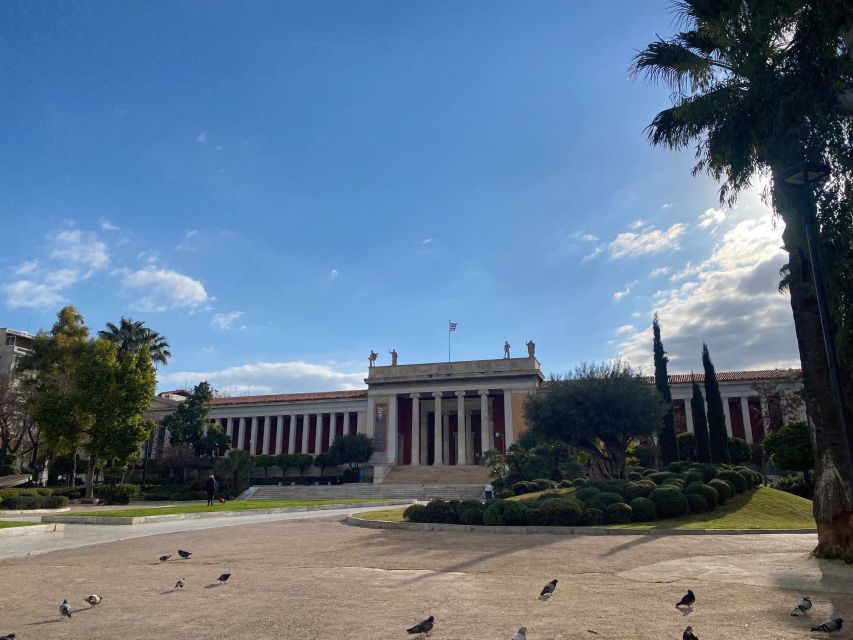
Hours change by season, and Tuesday is the day most likely to catch you out.
From November 1 through March 31, the museum is open Wednesday through Monday from 8:30 a.m. to 3:30 p.m. On Tuesday, it opens from 1 p.m. to 8 p.m.
From April 16 through October 31, it is open Wednesday through Monday from 8 a.m. to 8 p.m. Tuesday hours remain 1 p.m. to 8 p.m. Special occasions can change these times, so check before setting out. The supplied hours do not specify the full schedule for April 1 through April 15, which is another reason to confirm close to your visit.
For a quieter experience, early morning is a smart choice during the long summer opening period. A morning visit can also help you avoid the busiest period associated with organized groups and cruise traffic. In winter, pre-booking may save less time because queues are often shorter.
Is $30 a fair price?
At $30 per person, the ticket is not the cheapest museum admission in Athens. Its value depends on how you use it.
If your goal is a quick hour inside, the price may feel high, especially in winter when you might not face much of a line. If you plan to spend two or three hours with the major collections, the cost becomes easier to justify. You are paying for access to an unusually large concentration of important Greek antiquities, not a small single-theme exhibition.
The pre-booking has practical value when the museum is busy. It removes the need to buy a ticket at the counter and can get you moving faster, though it does not eliminate all entry procedures. The audio option is worthwhile for people who want more context but less attractive if you dislike apps or prefer to read labels at your own pace.
This is not a guided tour, and there is no hotel transportation. If you need a person to connect the objects into a clear story, you may prefer to hire a separate guide. If you enjoy independent museum visits, the ticket gives you plenty of control.
Who should book this museum ticket?
I would recommend it to anyone with a serious interest in Greek art, archaeology, mythology, or ancient technology. It is also a strong choice for a rainy day, a hot afternoon, or a change of pace after visiting Athens’ outdoor sites.
Families can use the major objects as anchors, especially the gold mask, large statues, and Antikythera mechanism. Younger children may find the full collection tiring, so keep the visit short and focus on a few memorable rooms.
The ticket suits independent visitors who want flexibility. It is less suitable if you need a tightly directed route, a live explanation, or guaranteed access to every gallery. The optional audio guide helps, but it should be treated as an extra tool rather than a flawless museum companion.
Should you book it?
Book this ticket if you want to see the major treasures of Greek antiquity without spending time at the ticket counter, and if you can give the museum at least two hours. The Mask of Agamemnon, Antikythera mechanism, Santorini material, and monumental sculpture make it one of Athens’ most rewarding indoor attractions.
Skip the pre-booking if you are visiting in the quiet winter season and prefer to decide on the day. You might also skip the audio add-on if you have a limited phone battery or dislike self-guided apps. For most visitors over 25, the ticket offers good value when used for a focused, unhurried visit.
FAQ
Where is the National Archaeological Museum located?
The museum is in central Athens, Greece. The nearest metro station is Omonoia.
How long is the ticket valid?
The ticket is valid for one day, on the selected date and time slot.
Is the ticket refundable?
No. This activity is non-refundable.
Does the ticket include a live guide?
No. The ticket provides independent entry. An optional self-guided audio tour is available in English.
Is the National Archaeological Museum audio tour included with every option?
No. The National Archaeological Museum audio tour is included only when you select that option. All options include a self-guided audio tour for Athens Old Town and Plaka.
What language is the audio guide available in?
The optional audio guide is available in English.
What should I bring?
Bring headphones for the audio tour and a passport or identity card. A copy of the identification document is accepted.
Is the museum wheelchair accessible?
Yes, the activity information states that the museum is wheelchair accessible.
What are the museum’s winter opening hours?
From November 1 through March 31, the museum is open Wednesday through Monday from 8:30 a.m. to 3:30 p.m. On Tuesday, it opens from 1 p.m. to 8 p.m.
What are the museum’s summer opening hours?
From April 16 through October 31, it is open Wednesday through Monday from 8 a.m. to 8 p.m. On Tuesday, it opens from 1 p.m. to 8 p.m. Hours can change for special occasions, so check before visiting.
Just added around Athens
- Temple of Olympian Zeus: Self-Guided Audio Tour on your Phone (without ticket)★ 4.0 · 8 reviews
- Self Guided Tour In Athens With 100 Captivating Audio Stories★ 4.0 · 4 reviews
- Athens National Archaeological Museum E-Ticket with Audio Guide★ 3.0 · 57 reviews
- Athens: Acropolis Museum Ticket with Self-Guided Audio tour App★ 3.5 · 40 reviews
- Ancient Agora of Athens: A Self-Guided Audio Tour★ 3.5 · 3 reviews
- Athens Highlights Self guided scavenger hunt and Walking Tour★ 4.5 · 6 reviews
- Athens Hop-On Hop Off w/ Acropolis & Acr.Museum tickets & 3 audio★ 3.0 · 5 reviews
- Shore Excursion: Athens Half Day Self-Guided Tour with Private Driver★ 4.5 · 8 reviews
Athens Audio Tours, compared.

Athens: Cape Sounio & Poseidon Temple Trip with Audio Guide
Read our review →

From Athens: Delphi Full Day V.R. Audio Guided Tour
Read our review →
Athens: Acropolis Museum Ticket with optional Audio Guide
Read our review →
From Athens: Small-Group Delphi, Museum & Arachova Day Trip
Read our review →
Athens: Peloponnese Highlights Day Trip and V.R. Audio Guide
Read our review →
Athens: Acropolis Museum Ticket with Audio Guide
Read our review →
Acropolis & Parthenon Entrance Ticket w/optional SG Audio Tours
Read our review →Browse the lists this tour appears in