REVIEW · ROME AUDIO TOURS
Pamphilj Gallery Skip The Line Tickets and Audio Guide
Rome’s Palazzo Doria Pamphilj is packed with art, but it does not feel like a standard museum. You move through the family palace, where paintings fill reception rooms, gallery wings, and private apartments. I like the chance to see major works by Caravaggio, Raphael, Titian, and Velázquez in an intimate setting, and I like having an audio guide to give shape to such a large collection.
The main caution is value. The advertised price is $46 per person, yet one booking record reports paying €78 after finding an audio-guide ticket locally for €16. Check the direct price before you commit. The palace itself is the draw, but the convenience of skip-the-line entry needs to justify the extra cost.
Key points to know
- Caravaggio, Raphael, and Titian give the visit its major artistic appeal.
- The collection fills an actual family palace, not just a series of bare gallery rooms.
- Flemish Baroque, French, Spanish, and Italian works make this more than a one-artist stop.
- An English audio guide helps you make sense of the large collection without joining a guided group.
- Two hours is a sensible visit length, though the sheer number of paintings may tempt you to stay longer.
- Price checking matters, since the local ticket price may be much lower than the booked option.
A private palace filled from wall to wall
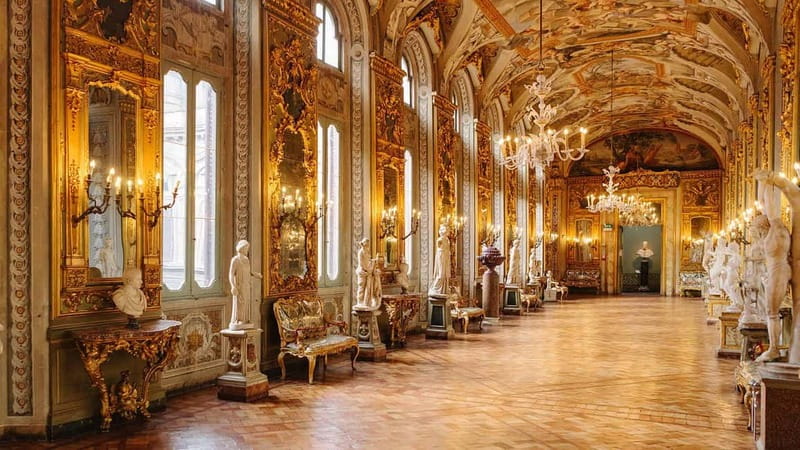
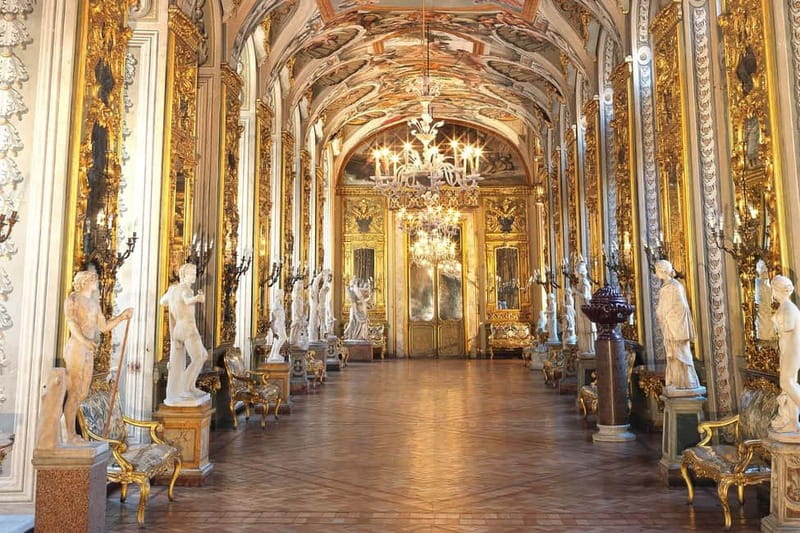
The first thing to understand is the scale. This is not a small room with a handful of famous paintings. The Doria Pamphilj family collection covers the walls of reception rooms, gallery wings, and private apartments.
That changes how you should approach the visit. You are not simply walking from one famous canvas to the next. You are seeing how an aristocratic family displayed art in its own home. Paintings occupy the rooms in generous numbers, and the setting helps explain why collecting art was a central part of palace life.
I like this format because it gives you two experiences at once. You get important works by major artists, but you also get a sense of the rooms in which the collection was enjoyed and shown. The palace setting adds atmosphere without requiring you to leave Rome for a country estate or a separate museum district.
The drawback is easy to predict: there is a lot to take in. If you try to study every painting, two hours will pass quickly. If you arrive without a plan, the collection can feel crowded with names, dates, and styles. The audio guide is useful here, since it helps you decide which works deserve your closest attention.
More Museum Audio Guides in Italy
- Rome: Borghese Gallery Skip-the-Line Ticket & Audioguide
★ 4.3 · 4,318 reviews - Rome: Borghese Gallery Ticket + Audioguide or Guided Tour
★ 4.6 · 3,219 reviews - Rome: Borghese Gallery Skip-the-Line Tickets with Audioguide
★ 4.6 · 2,562 reviews
Following the audio guide through the palace
This is an entry ticket with an audio guide, not a live guided tour. The host or greeter is listed as English-speaking, and the additional information identifies English as the available language. If you need another language, confirm it before booking rather than assuming that in your language means every language is offered.
The guide gives you a way to build a route through the palace. Start with the headline artists, then allow time for the rooms themselves. The collection includes Italian masters, Flemish painters, French artist Claude Lorrain, and Spanish Baroque painter Diego Velázquez.
I find an audio guide especially helpful in a collection like this. A live guide can adjust to your questions, but an audio guide lets you pause, skip, or move at your own speed. That suits visitors who want to spend longer with Caravaggio or move faster through works that are less familiar.
The tradeoff is that the experience depends on your own attention. You will not have a guide pointing out a detail in a painting or changing the explanation to match your interests. If you prefer conversation and questions, this may feel limited. If you like freedom, it is a good match.
Caravaggio, Raphael, Titian, and the Italian core
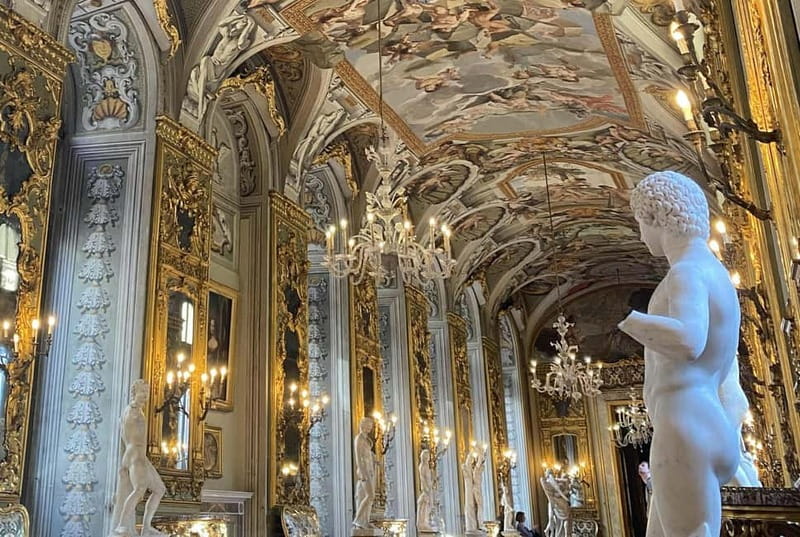
The Italian paintings are likely to be the main reason you book. Caravaggio brings drama and strong contrasts of light and shadow. Raphael and Titian represent two different sides of the Italian tradition, while Carracci and Bernini add further Baroque weight to the collection.
The useful point is not just the number of famous names. The palace lets you see these artists as part of a larger collection, rather than as isolated stars in a single-artist museum. You can compare different approaches to religious subjects, portraiture, composition, and color as you move through the rooms.
Caravaggio deserves your best attention. His work often rewards a slower look, so do not simply stop for a few seconds because the name is famous. Use the audio guide, then examine how the figures, light, and setting work together.
Raphael and Titian offer a different kind of interest. Raphael is associated with balance and controlled composition, while Titian is known for color and painterly force. I would not try to turn the visit into an art-history exam. Pick the works that catch your eye, then use the guide to understand why they matter.
Bernini is also represented, adding sculpture and Baroque energy to a collection better known for its paintings. The supplied details do not specify the exact works or their locations, so the audio guide will be your best source for identifying what you are seeing on the day.
Flemish, French, and Spanish works widen the picture
One pleasant feature of the collection is its international range. The Flemish masters add a northern European voice, with the detailed, carefully observed style that makes Flemish painting so rewarding at close range.
You will also find works by Claude Lorrain, the French painter known for poetic views and carefully arranged outdoor scenes. These paintings provide a useful pause after the intensity of Italian Baroque art. Their appeal often comes from the way light, distance, and architecture create a calm sense of space.
Velázquez brings Spain into the collection. His work gives you another chance to compare national styles and courtly art traditions without visiting several separate museums. The presence of Italian, Flemish, French, and Spanish works makes the palace feel like an international family collection, not a narrow display of local art.
This variety is valuable, but it also adds to the need for pacing. You may begin with a mental list of famous Italian artists and then find yourself spending more time with a Flemish or Spanish work than expected. I would treat that as part of the pleasure. A private collection is not arranged only around the modern visitor’s top ten list.
More Museum Audio Guides in Rome
- Rome: Borghese Gallery Skip the line ticket and Audioguide
★ 4.3 · 1,535 reviews - Rome: Borghese Gallery Ticket and Optional Audio Guide
★ 4.3 · 902 reviews - Borghese Gallery, Home to Canova’s Art – Entry with Audioguide
★ 4.0 · 884 reviews - Rome: Borghese Gallery Skip-the-Line Ticket & Audioguide
★ 4.0 · 768 reviews
Reception rooms, gallery wings, and private apartments
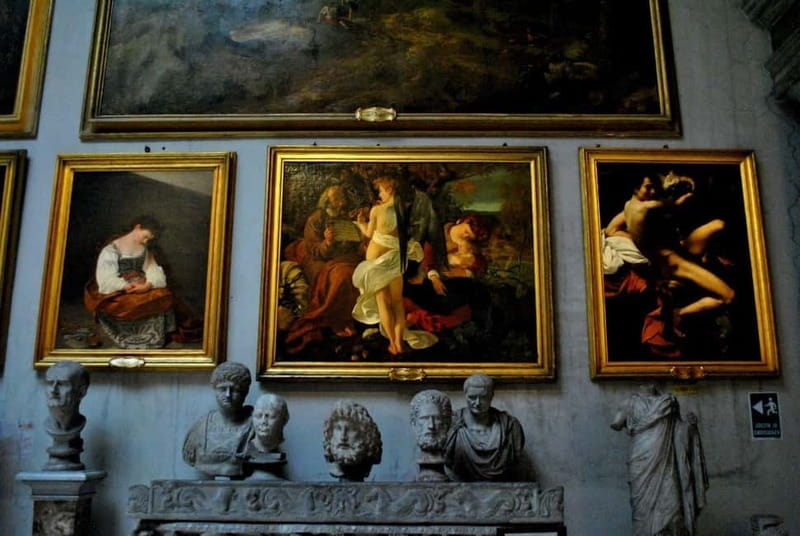
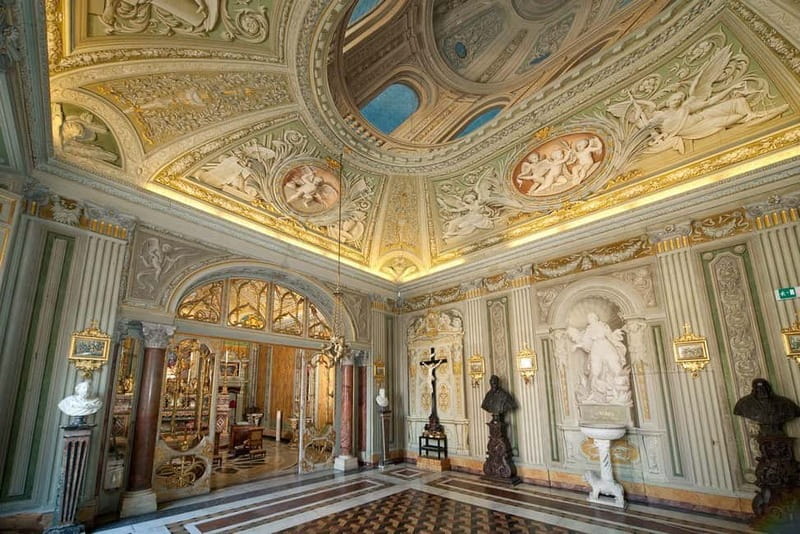
The palace rooms are part of the experience, not just containers for art. Reception rooms show how paintings could be used to impress and entertain. The gallery wings give the collection room to expand, while the private apartments offer a more personal sense of the family’s world.
The supplied information does not promise access to every room in the broader palace, so follow the route permitted by your ticket. Still, the advertised visit includes the reception rooms, gallery, wings, and private apartments, giving you a broader look at the building than a single exhibition room would provide.
Pay attention to the density of the display. Paintings cover the walls rather than appearing one at a time with large areas of empty space between them. That presentation may differ from the quiet, carefully spaced style of a modern art museum.
Some people will love this visual abundance. I do, especially when the goal is to understand a historic collection. Others may find it tiring. If you prefer a spare display with one painting per wall, this palace can feel busy. Take short pauses and let your eyes settle before moving on.
How two hours works in practice
The stated duration is two hours, which is enough for a focused visit. It is not enough to give every painting equal attention. I would divide your time into three parts.
Begin with the setting and a quick look at the overall route. Notice how the palace rooms connect and how the collection changes from reception spaces to gallery areas and private apartments. This first impression matters because the display is part of the story.
Next, use the audio guide for the major works. Prioritize Caravaggio, Raphael, Titian, Carracci, Bernini, Lorrain, and Velázquez. You can then give extra time to the Flemish paintings or any work that catches your attention unexpectedly.
Use the final part of your visit for a second look. Return to one or two works that stayed with you. This is better than racing through every room and remembering only a blur of gilded frames and famous names.
If you are passionate about art, you may want more than two hours. The advertised duration is a guide, not a promise that the collection can be fully absorbed in one sitting. For most people, though, two hours provides a good balance with the rest of a Rome day.
The skip-the-line promise and the meeting point
Skip-the-line entry can save time, but the information provided does not give a street address or a detailed arrival procedure. The meeting point is described as the place from which you can take the entrance to the gallery. Before setting out, make sure your voucher or booking confirmation shows the exact entrance details.
The listed host or greeter is English-speaking. This is useful if you need help finding the entrance, but do not confuse it with a live museum tour. The included service is access to the collection and an audio guide.
There is no transportation included. Plan to reach Palazzo Doria Pamphilj on your own, and leave enough time to find the entrance. Since the exact meeting instructions are not supplied here, checking them before the day of your visit is sensible.
The skip-line feature has the most value when the palace is busy or when your schedule is tight. If you are already nearby and the local ticket desk has availability, the convenience may not justify a large markup. That leads to the biggest practical question: price.
Is $46 a fair price for this visit?
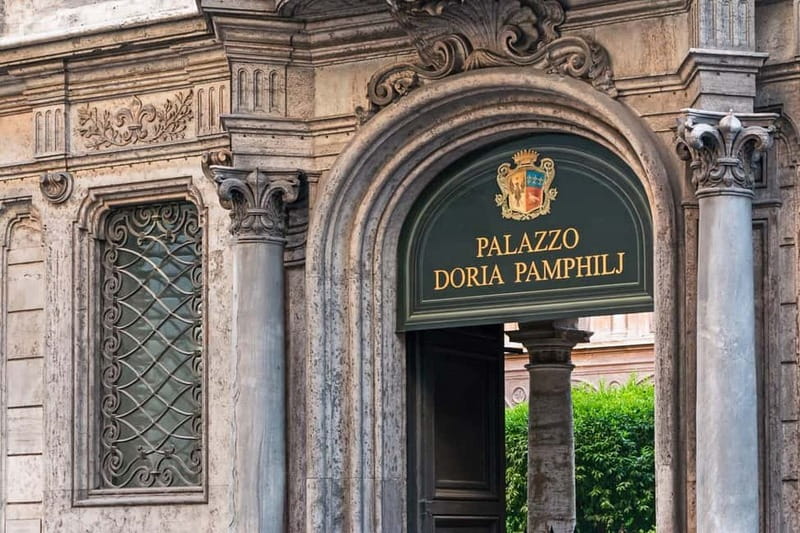
At $46 per person, this is not a cheap museum ticket. The price can make sense if you place a high value on advance booking, skip-line access, and the audio guide. It is less convincing if you can buy the same basic admission and audio guide directly for much less.
One booking record reports a payment of €78 and a local audio-guide price of €16. That is a large gap, so check the official or on-site price before booking this version. Prices can change, but the warning remains useful: do not assume the skip-line package is automatically the best deal.
The booking does offer free cancellation up to 24 hours before the visit and a reserve-now, pay-later option. Those features add flexibility, especially when your Rome schedule is still shifting. They do not erase a price difference, but they may matter if you are building a tightly timed day.
I would compare three things before paying:
- The direct palace price
- The cost of the audio guide on its own
- The value of skipping the ticket line on your chosen date
If the difference is modest, the convenience may be worthwhile. If the difference is large, buy directly if you can do so with confidence about availability.
Who will enjoy Palazzo Doria Pamphilj most?
I would recommend this visit to anyone who likes old palaces, dense art displays, and a mix of famous and less familiar painters. It suits you especially well if Caravaggio, Raphael, Titian, or Velázquez is high on your Rome list.
It also works for independent visitors who do not want a live group tour. The audio guide gives you structure without forcing you to keep pace with a guide or a large party.
Families and mixed-interest groups may find the two-hour length manageable, though the many paintings could test the patience of younger children. Since no child-specific activities are listed, plan to keep the visit focused and use the palace rooms as a change from painting after painting.
This is not the best pick if you want a short, sharply edited museum stop with only a few headline works. It is also a poor value if you are booking solely because of the phrase skip the line without checking the direct admission price.
Should you book this palace visit?
Book it if you want to see major Italian, Flemish, French, and Spanish works in a family palace, and you appreciate having an audio guide rather than a live group tour. The collection’s best feature is its combination of famous art and lived-in palace rooms.
Pause before booking if the price is much higher than the direct ticket. I would compare costs, confirm the English audio-guide details, and check the entrance instructions first. If the numbers are reasonable, Palazzo Doria Pamphilj is a rewarding two-hour addition to a Rome art day. If not, visit directly and keep the savings for another museum or a long Roman lunch.
FAQ
Where is this experience located?
It takes place at Palazzo Doria Pamphilj in Rome, in Italy’s Lazio region.
How long does the visit last?
The stated duration is two hours.
What artists can I see?
The collection includes works by Caravaggio, Titian, Raphael, Carracci, Bernini, Claude Lorrain, Diego Velázquez, and Flemish masters.
Is an audio guide included?
Yes. Access to the private collection and an audio guide are included.
Is this a live guided tour?
No. A guided tour is not included. The experience provides an audio guide instead.
What language is listed for the audio guide?
The additional information lists English. The activity description refers to an audio guide in your language, so confirm other language options before booking.
Is transportation included?
No. Transportation is not included.
Can I skip the ticket line?
Yes. Skip-the-ticket-line entry is listed as part of the activity.
Can I cancel for a refund?
Yes. You can cancel up to 24 hours in advance for a full refund.
More Skip-the-Line Audio Guide Tickets in Rome
- Rome: Pantheon Priority Entry Tickets with Interactive App
★ 4.6 · 4,108 reviews - Rome: Castel Sant’Angelo Entry Ticket with Audio guide
★ 4.4 · 3,646 reviews - Rome: Pantheon Entry Ticket With Interactive App + Host
★ 4.2 · 762 reviews - Santa Maria Maggiore: Pope Francis Entry Ticket, Audio Guide
★ 3.9 · 688 reviews
More Skip-the-Line Audio Guide Tickets in Italy
- Rome: St. Peter’s Basilica & Dome Entry Ticket & Audio Tour
★ 4.2 · 7,537 reviews - Rome: Castel Sant’Angelo Entry Ticket & Digital Audioguide
★ 4.7 · 5,347 reviews - Rome: Pantheon Priority Entry Ticket & Interactive App
★ 4.1 · 5,114 reviews - Rome: Castel Sant’Angelo Entry Ticket & Audio App
★ 4.3 · 4,952 reviews
Just added around Rome
- Rome: St. Peter’s Basilica and Dome Entry + Audio Guide★ 4.5 · 13 reviews
- St. Peter’s Basilica: Hosted Entrance & Digital Audioguide★ 4.1 · 35 reviews
- Sorrento & Pompeii Day Trip from Rome Audio Guide Tour★ 4.2 · 50 reviews
- Rome+Jubilee Audioguide – TravelMate app for your smartphone★ 4.2 · 38 reviews
- Rome:St. Peter’s Basilica Hosted Entry + Official Audioguide★ 3.4 · 10 reviews
- Rome:Ostia Antica Skip-the-line Ticket & Audioguide★ 4.3 · 11 reviews
- Rome: St. Peter’s Basilica Entry Ticket and AudioGuide★ 4.4 · 57 reviews
- Colosseum, Roman Forum, Palatine Hill access and AudioGuide★ 4.7 · 12 reviews
Rome Audio Tours, compared.
Rome: Colosseum & Forum with Audio Guide App -Optional Arena
Read our review →
Rome: City Sightseeing Hop-on Hop-off Bus with Audioguide
Read our review →
Rome: St. Peter’s Basilica & Dome Entry Ticket & Audio Tour
Read our review →
Colosseum, Roman Forum & Palatine Hill with Audioguide App
Read our review →
Vatican & Sistine Chapel Ticket with Optional Audio Guide
Read our review →
Rome: Castel Sant’Angelo Entry Ticket & Digital Audioguide
Read our review →
Rome: Pantheon Priority Entry Ticket & Interactive App
Read our review →