
REVIEW · GREECE AUDIO TOURS
Olympia: The Famous VR Glasses Tour with Audio Guide
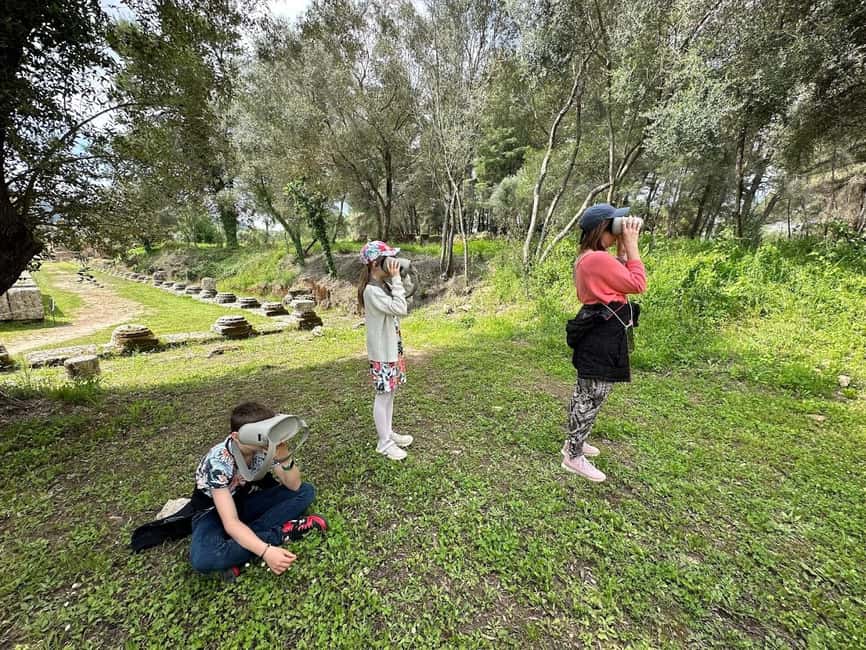
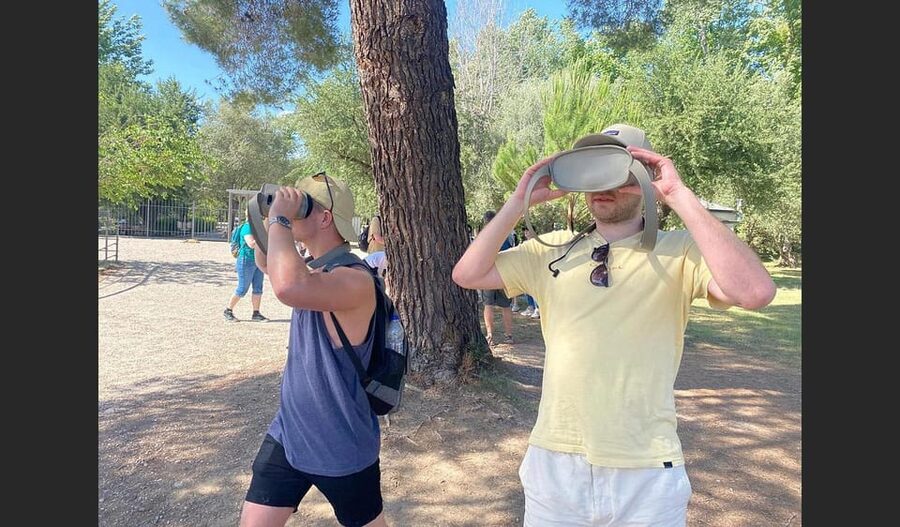
Ancient Olympia is a powerful place, but many of its buildings survive as foundations, scattered stones, and a few columns. The VR glasses rebuild 15 monuments around you, showing the Temple of Zeus, athletes in training, and the original Olympic stadium as they may have appeared 2,000 years ago.
I like the freedom to move at your own pace, and I like the short audio stories that give each stop more meaning than the site signs alone. The main catch is practical: the €20 entry ticket is extra, and the headset’s GPS can occasionally need reorienting.
Key points at a glance
- See Olympia before the ruins: 3D reconstructions show temples, fountains, workshops, and athletic grounds in use.
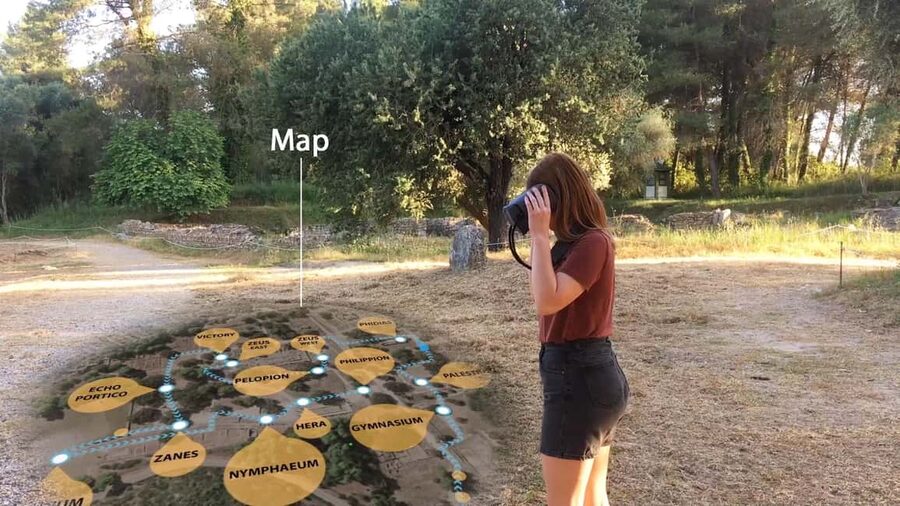
- Visit 15 marked locations: The route includes the Temple of Zeus, Phidias Workshop, ancient gymnasium, Palestra, stadium, and Nymphaeum.
- Follow your own schedule: The audio guide and virtual map let you pause, take photos, and move on without a large group.
- Useful for families: Animated scenes and ancient competitions give children something to watch while they learn.
- Plan for the extra cost: The activity is $29 per person, while archaeological-site admission is listed separately at €20 for most adults.
- Allow time for collection and return: The office is near the main church, generally an easy walk from the ruins, but coach passengers should build in extra time.
Why VR makes Olympia easier to understand
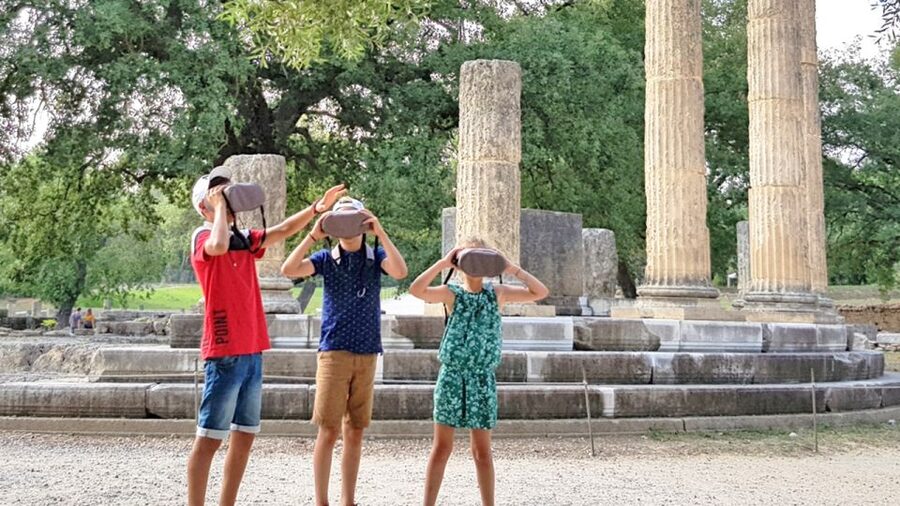
The first sight of Ancient Olympia can be confusing. You know this was the birthplace of the Olympic Games, yet the physical remains do not always show the scale or purpose of the original buildings. A broken wall may have been part of a major temple, while a flat stretch of ground once held thousands of spectators.
The glasses solve that problem by placing a digital reconstruction over the real site. You still see the stones beneath your feet, but the headset adds columns, roofs, walls, people, colors, and movement. This helps you connect the surviving pieces with the larger sanctuary.
The images are not photographs. They have the look of animated or video-game graphics, which is worth knowing before you book. Still, the scale is the important part. You can get a much clearer idea of where buildings stood, how large they were, and how the sanctuary worked as a whole.
The audio guide keeps the information brief. That suits the setting. You can listen at each marked location, look around, and continue without standing still for a long lecture. The commentary is available in Dutch, French, English, German, Spanish, Italian, and Greek.
More Audio Tours in Greece:
- Athens: Acropolis Ticket with Optional Audio or Live Guide
★ 4.2 · 11,055 reviews - Athens: Cape Sounio & Poseidon Temple Trip with Audio Guide
★ 4.4 · 4,521 reviews - Athens: Acropolis Ticket with Audio Guide
★ 4.0 · 3,575 reviews
Collecting the equipment near the main church
You begin at the local office, listed on Google Maps as Olympia Back in Time. It is across from the main church and is usually about a five-minute walk from the archaeological-site entrance. Some cruise or coach visitors may need longer, especially if they are dropped off away from the center, so I would not arrive at the last minute.
At the office, the staff provide a short demonstration. You receive the VR glasses, audio guide, and directions for the virtual map. The equipment is designed for independent use, not for a guide leading you from stop to stop.
You need to provide a passport, driving licence, or other accepted ID as a deposit. Comfortable shoes are a sensible choice because you will walk across an outdoor archaeological site. The activity is listed as wheelchair accessible.
The start-up lesson matters. The glasses use location information to match the reconstruction with the place where you are standing. Early in the visit, you may need a moment to understand the arrows and menu. One useful rule is to follow the blue arrow shown by the device, even if the arrow seems to point away from the direction you think you should face. The display adjusts after a few seconds.
The gymnasium and Palestra: Olympia as a training center
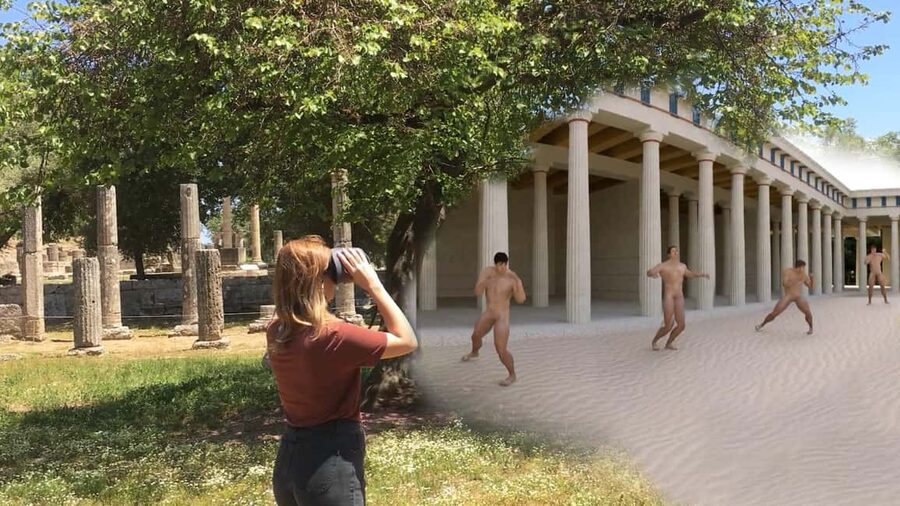
The first stops show that Olympia was not just a stadium. Athletes came here to prepare, train, and compete, and the ancient gymnasium and Palestra help explain that routine.
At the gymnasium, virtual scenes show athletes exercising and preparing for competition. The reconstruction gives you a better sense of the open training area and the activity that filled it. Without the added scenes, it is easy to walk past the remains and see only another set of stone foundations.
The Palestra focuses on boxers and wrestlers. This is one of the more useful stops for families because it links the empty ruins with recognizable sports. The animation gives children something concrete to follow, while the audio explains the role of the building.
The information is intentionally compact. If you want a long academic discussion of ancient athletics, this is not that kind of tour. If you want enough context to understand what you are seeing, the shorter format works well.
Phidias Workshop and the Temple of Zeus
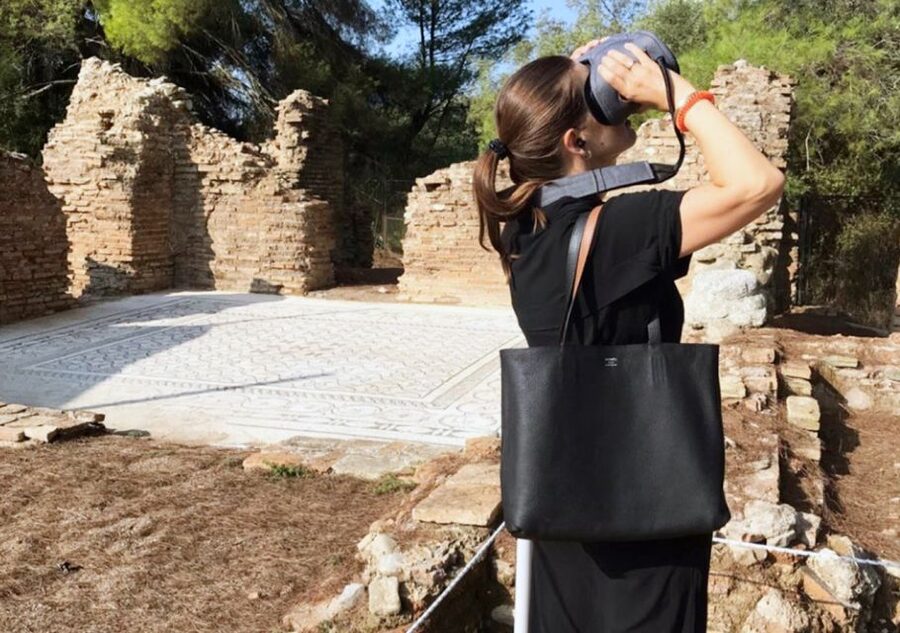
The Phidias Workshop is one of the most memorable stops because it connects the site with the creation of the famous Statue of Zeus. The sculptor Phidias is shown working in the place associated with the statue’s construction.
The physical remains of the workshop cannot easily communicate the importance of the work once carried out there. The virtual reconstruction adds a sense of purpose and activity. You can picture the craft process rather than simply reading the name on a sign.
The Temple of Zeus is the major visual payoff. The remains today can make it hard to grasp the building’s original height and presence. Through the glasses, you can look inside the reconstructed temple and see the enormous Statue of Zeus in its original setting.
This is where the technology has real value. You are not just looking at a finished illustration on a screen. The reconstruction is placed at the site, so you can compare the remaining foundations and columns with the proposed original form. That comparison helps you think about what is known and what has been digitally rebuilt.
You should treat the scenes as historical visualization, not as proof that every detail is certain. The headsets show an informed reconstruction, and the audio gives the broader story. Their job is to help you understand the ruins, not replace careful archaeological study.
Same place, a different route to walk:
- From Athens: Delphi Full Day V.R. Audio Guided Tour
★ 4.6 · 3,028 reviews - Athens: Acropolis Museum Ticket with optional Audio Guide
★ 4.4 · 2,652 reviews - Athens: Acropolis Ticket & Optional Self-Guided Audio Tours
★ 4.1 · 2,542 reviews - From Athens: Small-Group Delphi, Museum & Arachova Day Trip
★ 4.8 · 2,476 reviews
The ancient stadium and the first Olympic Games
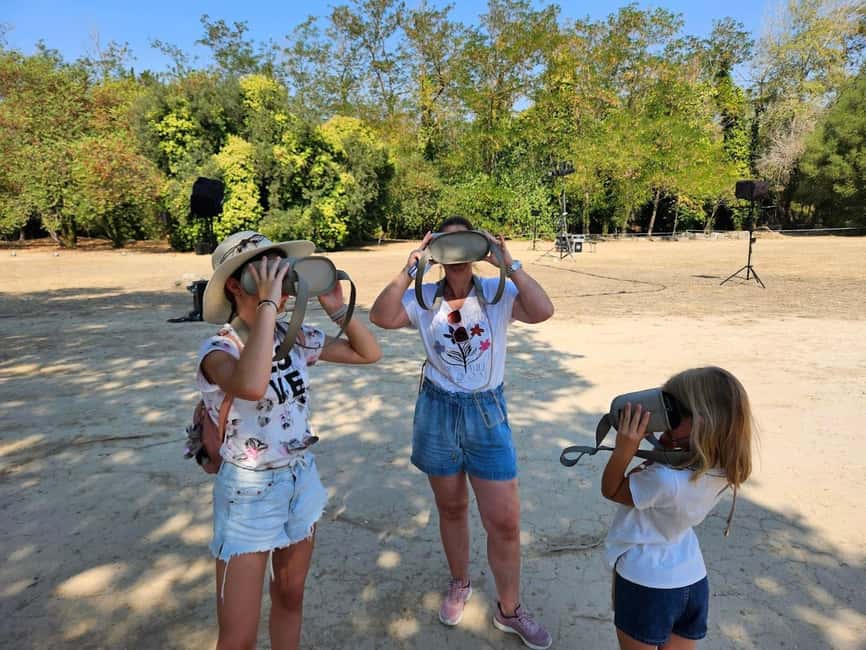
The stadium is the emotional center of the visit. Here, the headset turns the open track into an active sporting venue, with athletes competing in the ancient Olympic Games.
The difference between viewing the bare stadium and seeing a virtual contest is substantial. The scene gives you a sense of movement, competition, and spectatorship. It also helps you understand why this long strip of ground mattered so much.
You can move around the stadium area and view the reconstruction from the marked position. The finish-line area is especially effective because the virtual action gives the space a clear purpose. You are not simply standing beside an ancient track. You are seeing how the track functioned.
Keep your awareness of the real surroundings. The headset narrows your view, and a crowded site can make walking while looking through the display uncomfortable. I would pause the visual content when crossing busy areas or moving between monuments.
The Nymphaeum and the Olympic Flame
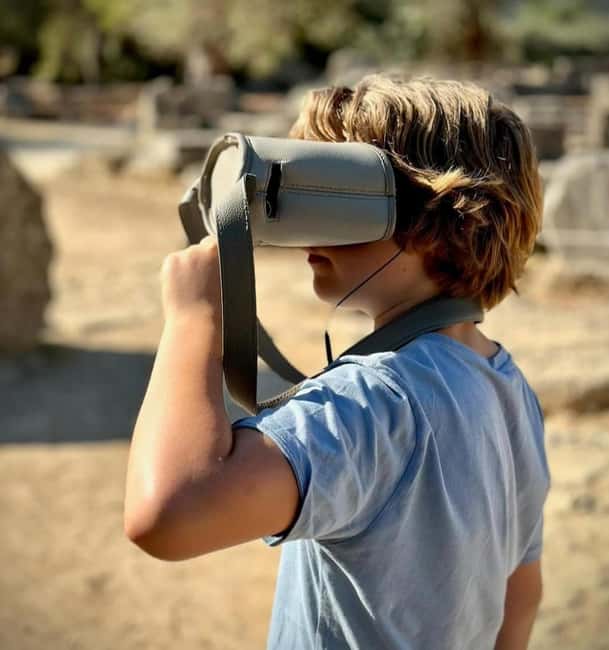
The Nymphaeum of Herodes Atticus is a good example of how the tour adds details that would otherwise be easy to miss. The reconstructed fountain shows a finished structure rather than the remains visible today.
The fountain had a practical role. It helped supply water during the hot summer Games, when large crowds gathered at Olympia. That detail changes how you see it. This was not only an ornamental structure. It helped the sanctuary cope with thousands of people.
The final Olympic Flame sequence gives the visit a clear ending. The virtual ceremony links ancient Olympia with the modern Olympic tradition without requiring a separate guided presentation. It is a symbolic moment, but the reconstruction keeps it connected to the actual ground where you are walking.
The route covers 15 monuments in total, so these highlights are part of a broader circuit rather than the entire experience. Use the virtual map to keep track of the stops, especially if you pause for photographs or wander slightly away from the suggested direction.
How easy are the glasses to use?
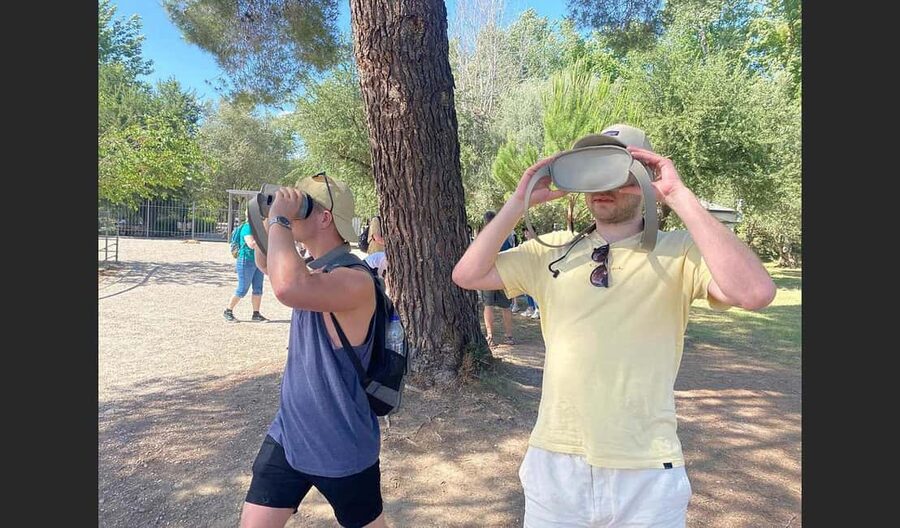
Most of the equipment is straightforward after the demonstration. You select or arrive at a marked location, watch the reconstruction, and listen to the matching audio. You can continue at your own pace rather than keeping up with a guide or group.
The main technical issue is location accuracy. GPS can occasionally lose your position or fail to recognize exactly where you are. If that happens, you may need to wait, reorient yourself, or use the physical signs to match the correct stop.
A headset may also need to be restarted. Technical support is included, and replacement equipment can be brought out if necessary. That support is useful, but it still makes sense to test the device carefully before walking down to the ruins.
The audio guide can be more useful than the signs for visitors who want basic context. It explains what each area was used for and adds short stories about the Games. The commentary is not so long that it takes over the visit.
How much time should you allow?
The advertised duration is two hours. That is a reasonable target for the archaeological site with the headset, particularly if you move steadily and do not stop for a long time at every reconstruction.
Your actual schedule can depend on the return time assigned to your equipment. Some arrangements give you about three hours before the glasses must be returned. That may sound generous, but Olympia also has museums, including the Museum of the History of the Olympic Games, and it is possible to run short if you try to combine everything.
I would use the headset for the outdoor site first. Afterward, return the equipment and visit the museums if your schedule allows. Returning the glasses may mean walking back to the office and then heading toward the museums, so leave a buffer rather than planning the final return for the exact minute.
Coach and cruise passengers need special care with timing. The office is close to the site, but you may need around 20 minutes each way from a distant drop-off point. Late arrivals of more than 45 minutes are canceled without a refund.
The price and who gets good value

The activity costs $29 per person. Admission to the archaeological site is not included and is listed at €20 for most visitors. Visitors from the European Union under 25 and visitors from outside the European Union under 18 enter free under the stated rules.
For an adult paying both charges, this is not a cheap add-on. The value depends on how much help you need visualizing ruined buildings. If you already enjoy reading archaeological plans and imagining missing structures, a standard site visit may be enough. If the remains seem hard to interpret, the glasses can make the admission feel far more productive.
Families often get strong value because the animated scenes hold children’s attention. Independent adults can also avoid paying for a private guide while still receiving explanations at each stop. You share the device if that suits your group, though only the person wearing it gets the full visual effect at a time.
The booking terms add flexibility. You can cancel up to 24 hours in advance for a full refund, and the reserve-now, pay-later option lets you keep money in your pocket until your plans are firmer.
Who should book this experience?
I would recommend it most strongly to first-time visitors who want to understand the ruins rather than simply photograph them. It is also a good choice for families, teenagers, and anyone who prefers an independent visit to a fixed group tour.
It suits people who enjoy technology and short explanations. The audio is available in seven languages, and the instructor or support staff can provide help in Dutch, French, English, German, Spanish, Italian, and Greek.
You may prefer a traditional guide if you want a continuous narrative, detailed discussion, or answers to questions as you walk. The headset gives you independence, but it cannot respond to your specific interests in the way a live guide can.
I would also think twice if you dislike wearing equipment over your eyes or if you plan to spend a long time in both museums. The tour works best when you treat it as a focused outdoor visit and manage the return time carefully.
Should you book the Olympia VR tour?
Yes, if the ruins alone seem difficult to read. The VR scenes give scale to the Temple of Zeus, activity to the training grounds, competition to the stadium, and practical meaning to the Nymphaeum. Those additions make the visit easier to follow without turning it into a crowded group presentation.
Book it with three precautions: budget for the separate entry ticket, collect the equipment with plenty of time, and use the headset at the outdoor site before visiting the museums. If you follow those steps, this is one of the more useful ways to make Ancient Olympia understandable, especially for families and independent visitors.
FAQ
Is the archaeological-site entry ticket included?
No. The VR glasses, audio guide, demonstration, technical support, and information are included, but entry to Olympia costs €20 for most visitors.
How long does the experience last?
The advertised duration is two hours. The equipment return time may vary, and some arrangements allow about three hours, so check your assigned time when collecting the glasses.
Where do I collect the VR glasses?
Search for Olympia Back in Time on Google Maps. The office is across from the main church and is generally about a five-minute walk from the archaeological-site entrance.
Which languages are available?
The audio guide and activity support are available in Dutch, French, English, German, Spanish, Italian, and Greek.
Do I need identification?
Yes. A passport, driving licence, or other accepted ID is required as a deposit for the equipment.
What happens if I arrive late?
Arrivals more than 45 minutes late are canceled without a refund. Allow extra time if you are coming from a coach or shuttle drop-off point.
Just added around Greece
- Jeep exploration 4X4 self drive★ 5.0 · 3 reviews
- Knossos Palace & Archeological Museum: E-Tickets with Audio Tours★ 4.0 · 18 reviews
- E-Ticket to Heraklion Archaeological Museum with Audio Guide★ 4.5 · 26 reviews
- Full-Day 4×4 Self-Drive Safari in East Crete with Lunch★ 5.0 · 8 reviews
- Kasos Audio-Tour from Karpathos by Art and Walk★ 4.5 · 4 reviews
- Delphi: Self-guided Audiovisual Tour with 3D Representations★ 5.0 · 5 reviews
- Delphi Self-guided Audio Tour on Your Phone (no ticket)★ 3.5 · 10 reviews
- Delphi: Archaeological Site & Museum Ticket with Audio★ 3.5 · 24 reviews
Greece Audio Tours, compared.
Athens: Acropolis Ticket with Optional Audio or Live Guide
Read our review →
Athens: Cape Sounio & Poseidon Temple Trip with Audio Guide
Read our review →
From Athens: Delphi Full Day V.R. Audio Guided Tour
Read our review →
Athens: Acropolis Museum Ticket with optional Audio Guide
Read our review →
Athens: Acropolis Ticket & Optional Self-Guided Audio Tours
Read our review →
From Athens: Small-Group Delphi, Museum & Arachova Day Trip
Read our review →
Parthenon & Acropolis Museum with Audio or Live Tour Option
Read our review →Browse the lists this tour appears in