
REVIEW · LISBON AUDIO TOURS
Lisbon: National Tile Museum E-Ticket & Audio Guide
Lisbon’s National Tile Museum tells the story of Portugal through one of its most recognizable art forms. You’ll move from Mudéjar patterns and 16th-century tiles to the playful Mickey Mouse panel, then into the elegant Dona Leonor Chapel. The building itself adds much to the visit, especially its courtyard and decorated interior.
I like the freedom to explore without keeping up with a live guide, and I like being able to replay the audio stories as often as you wish. The $16 price is fair if you want context as you look, though the app can be awkward because its sections may not match your exact route through the museum.
Key points to know before you go
- The Mickey Mouse panel is an unusual highlight: It adds a touch of modern fun to a museum largely focused on historic Portuguese tilework.
- The Dona Leonor Chapel is part of the appeal: Its ornate setting helps show how tiles worked with architecture, not just as separate works of art.
- The audio guide is English and phone-based: Download the app, audio, maps, and text before arriving.
- The visit usually takes one to two hours: You can move faster, but the audio content may tempt you to stay longer.
- Skip-the-line access has limits: The ticket includes this service, but long entrance queues can still occur.
- You need one compatible device per booking: A smartphone and headphones are not supplied.
Why Lisbon’s tile museum deserves your time

Lisbon is famous for tiled façades, but the National Tile Museum lets you see how that tradition developed. Instead of looking only at colorful walls around town, you can examine the patterns, techniques, and changing styles in one place.
The collection reaches from Portugal’s medieval past to modern times. That span matters because Portuguese tiles are not a single style. You’ll see influences from the Mudéjar tradition, elaborate religious decoration, geometric designs, and later pieces with a lighter, more playful character.
I especially like the way the museum connects art to daily life and architecture. A tile panel is not simply something to admire in a frame. It can cover a chapel, shape a courtyard, decorate a wall, or turn a practical surface into a work of art.
The audio guide adds useful background as you look. It is built around short stories and facts rather than a live escort leading you from room to room. You can pause, replay sections, or skip ahead when something does not interest you.
That freedom is useful, but it also requires a little effort. The audio does not always follow the museum walk in a clear order. You may need to select the image or room that matches your location instead of simply pressing play at the beginning and following along.
More Skip-the-Line Audio Guide Tickets in Portugal
- Lisbon: São Jorge Castle E-Ticket and Audio Guide
★ 4.3 · 2,182 reviews - Lisbon: Tram 28 Entry Ticket & Audio Guide with 24-Hour Pass
★ 4.0 · 930 reviews - Lisbon: Jerónimos Monastery E-Ticket and Audio Guide
★ 3.7 · 660 reviews
Entering with an e-ticket
Your ticket arrives by email with instructions for downloading the app and audio content. Check your spam folder if the message does not appear soon after booking.
The ticket includes adult admission and a skip-the-line service. That can save time, but do not treat it as a guarantee of instant entry. Long queues may still form at the entrance, and museum staff may adjust the entry process or route through the building.
Free and reduced-price tickets work differently. They do not include skip-the-line privileges and must be obtained at the museum. Children up to age 12 enter free, so families should check the on-site process rather than assuming the adult ticket is needed for every child.
A practical point is easy to miss: book per device, not per person. If two people want to listen separately on two phones, you need to account for that when booking. The audio guide is not included as a physical device, so you bring your own phone and headphones.
Your phone needs about 100 to 150 MB of storage. It must use Android 5.0 or later or iOS. The guide does not work with Windows Phones, iPhone 5 or 5C, older iPhones, older iPod Touch models, or older iPads listed in the booking information.
Download everything before you reach the museum. This is especially sensible if you do not want to rely on a data connection while looking at the exhibits.
The first rooms: Portugal’s tile tradition
Begin by letting the museum establish the basics. The early sections help explain how tile-making became part of Portuguese art and architecture. The audio stories place individual pieces in a wider national setting, from the medieval period to later changes in design.
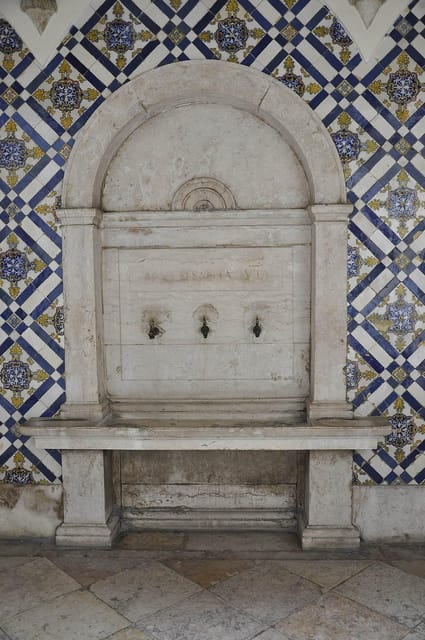
You’ll encounter the Mudéjar patterned tiles, with their ordered geometry and strong decorative rhythm. These designs reward a close look. From a distance, they can seem like repeating shapes, but the appeal is in how small units combine into a larger surface.
This is where an audio guide earns its fee. Wall labels can tell you what you are seeing, but spoken explanations can point out connections between patterns, buildings, and periods. The guide is not a substitute for looking carefully, though. Pause the narration when a panel catches your eye and spend a moment studying the details.
The route is not necessarily a straight historical march. If you listen from the first track without checking your position, the commentary may get ahead of you. Use the app’s room images or section choices to find the part of the museum you are actually standing in.
That small adjustment makes the guide easier to use. You are not tied to a fixed tour time, and you do not have to finish every recording.
The Dona Leonor Chapel
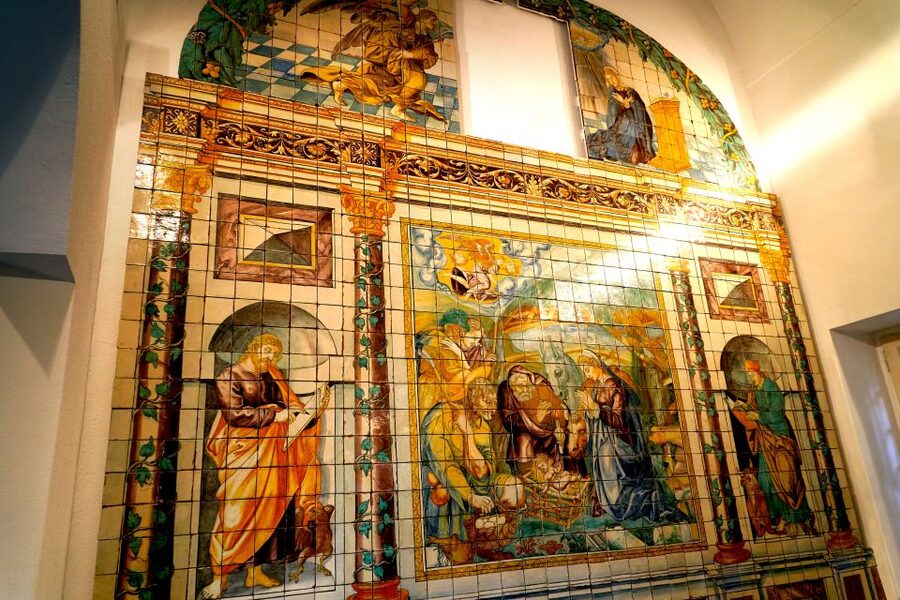
The Dona Leonor Chapel is one of the visit’s strongest architectural moments. Here, tiles are part of a complete interior rather than isolated examples. The chapel helps you understand how decoration, worship, and building design came together.
Take time to look beyond the central visual impression. Notice how the tiled surfaces work with the shape of the room and how repeated patterns create order. The chapel also gives the museum a sense of place that a standard gallery could not provide.
The audio guide uses brief stories to connect the chapel with Portugal’s past. Some of the material reaches back to the medieval period, while other sections explain how the country’s tile industry changed over time.
You can replay the narration, which is helpful if you are sharing the experience with someone or if you find the first explanation too quick. The lack of a live guide means you can linger here without holding up a group.
More Museum Audio Guides in Lisbon:
- Lisbon: National Coach Museum Entry Ticket and Audio Guide
★ 4.5 · 49 reviews - Paris: Louvre Museum Hosted Entry and Mona Lisa Audioguide
★ 4.6 · 5,235 reviews - Venice: St. Mark Basilica Ticket, Audioguide+History Gallery
★ 3.9 · 4,780 reviews - Rome: Borghese Gallery Skip-the-Line Ticket & Audioguide
★ 4.3 · 4,318 reviews
The Mickey Mouse panel and later surprises

The Mickey Mouse tile panel is an unexpected stop. After rooms filled with historic patterns and religious decoration, this panel shows that tile art did not remain trapped in the past.
It is also a good reminder that the museum is not only about solemn church interiors. The collection includes examples that feel more playful and modern, helping you see the tile industry as an evolving art form.
I would not plan the whole visit around this one panel, but it gives the museum a welcome change of tone. Children may respond to it immediately, while adults can appreciate the contrast between popular imagery and earlier decorative traditions.
The Diamond-patterned panel offers a different pleasure. Its appeal is based on repetition, geometry, and the way a simple pattern can become visually powerful when spread across a large surface. Look at it from several distances, since the overall effect and the individual details are not quite the same.
The guide’s stories are most useful when they help you compare such pieces. You can move from a religious or historic work to a later panel and start noticing how the same basic material supports very different ideas.
A courtyard break and the pace of the visit
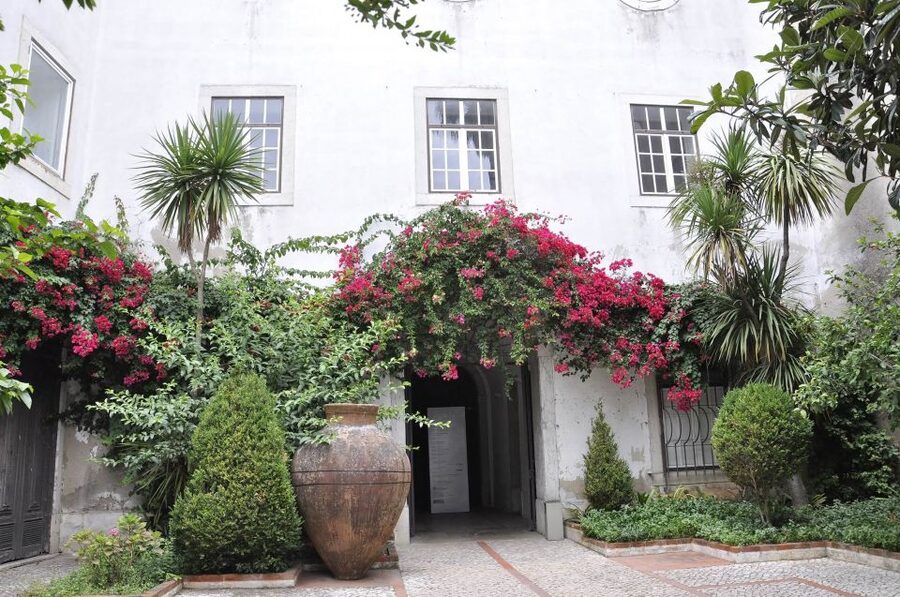
The museum includes a pretty courtyard near the cafeteria, with tables and chairs where you can sit with food or a drink. This makes the visit less tiring, especially if you are taking your time with the audio.
The official duration is one to two hours, but the museum can easily take longer if you listen to many tracks. One person reported feeling that three hours would have been possible, while also noting that sections can be skipped.
I suggest allowing at least 90 minutes if you want more than a quick look. Give yourself extra time for the chapel, the major panels, and any display that catches your attention. If you are short on time, choose the sections that match your interests rather than trying to hear every recording.
The courtyard is also useful for families and anyone who wants a quiet pause. It gives you a chance to remove your headphones, review what you have seen, and decide whether to continue.
How good is the phone audio guide?
The audio guide is full of information, and its strongest feature is flexibility. You can stop, replay, or skip sections. The content includes facts and less familiar stories about Portugal’s tile industry, from earlier periods through modern times.
The main weakness is navigation. The recordings may not follow the physical route in the order you expect, and the app can initially seem confusing. Start by matching the room or image on your phone to the place where you are standing. Do not assume the first track is the only sensible starting point.
A little preparation will help:
- Download the app and offline content before entering.
- Bring headphones and make sure your phone is charged.
- Check the storage space needed, about 100 to 150 MB.
- Use the room or exhibit images to choose the right section.
- Skip tracks freely instead of trying to complete everything.
- Keep the museum’s own instructions in mind if the route changes.
The audio is in English. If your phone or the app gives you trouble, the museum has wall labels that provide useful information, so the visit does not collapse without the recording. Some visitors may also prefer the museum’s free download available on arrival, though the paid ticket adds admission and the skip-the-line service.
Price, timing, and practical value
At $16 per person, this is a sensible choice if you want both entry and a structured introduction to the collection. The value comes less from the length of the visit and more from the setting, the major displays, and the added context.
If you only want to see the building and a few famous panels, you may find the price less compelling. The museum can still be enjoyed with wall labels and a self-guided pace, and the audio is not essential for every visitor.
For someone who likes knowing why an object matters, the ticket makes more sense. You are paying for an adult entry ticket, an English audio guide, offline text and maps, and the convenience of arranging it before arrival.
The skip-the-line feature is another reason to consider booking, but keep expectations realistic. The information warns that queues may still occur, so this is not a promise of walking straight inside at any time.
The activity is listed as a small group limited to 10 participants, though the actual museum visit is self-guided through your phone. That limit may matter for the booking setup, but you should expect to move through the museum independently rather than as part of a live group led by a named guide.
A taxi from Lisbon’s city center has been an easy way to reach the museum. No detailed transport service is included, so arrange your own way there and confirm the meeting instructions for the option you book.
Access and cancellation details
The museum is wheelchair accessible. The route or visit conditions can change, so follow the site’s instructions on the day.
You can cancel up to 24 hours before the activity for a full refund. That gives you some flexibility if your Lisbon plans shift, but check the exact booking terms attached to your selected option.
The meeting point may vary by option. Read the arrival instructions carefully rather than relying on a single fixed location.
Who will enjoy this museum most?
I would recommend this experience to you if you enjoy architecture, decorative art, religious interiors, or the everyday visual character of Lisbon. It is also a good rainy-day choice because much of the appeal is indoors and the visit can be taken at your own speed.
Families may like the Mickey Mouse panel and the freedom to skip long explanations. Children up to age 12 enter free, though the adult audio content may be better suited to older children and adults.
Independent visitors will appreciate not having to keep pace with a guide. You can spend extra time in the chapel, move quickly through sections that interest you less, and return to an audio story later.
You may want to skip the paid audio option if you dislike phone-based tours, do not have a compatible device, or prefer reading wall labels. The app is useful but not perfectly arranged, and you need to bring headphones yourself.
Should you book the National Tile Museum ticket?
Book it if you want a focused cultural stop that explains why tiles matter in Portugal, not just a quick look at pretty patterns. The Dona Leonor Chapel, Mudéjar designs, Diamond-patterned panel, and Mickey Mouse panel give the visit a good range, from historic to playful.
The $16 cost is worthwhile for visitors who will use the audio guide and appreciate advance entry arrangements. Download the material early, match each track to the room you are in, and allow closer to two hours if you want the museum to sink in.
Skip it if your schedule is extremely tight, you dislike listening through a phone, or you are happy with a quick visual visit and wall labels. For everyone else, this is a thoughtful Lisbon stop that adds meaning to the tiled façades you’ll see throughout the city.
FAQ
How long does the National Tile Museum visit take?
The listed duration is one to two hours. You can spend longer if you listen to most audio sections and examine the displays closely.
Is the audio guide included?
Yes. An English smartphone audio guide is included, along with offline text, audio narration, and maps.
Do I need to bring my own phone?
Yes. You need a compatible Android or iOS smartphone. A smartphone and headphones are not provided.
Do I need headphones?
Headphones are not included, so bring your own if you want to listen privately and comfortably.
Which phones are compatible with the audio guide?
The guide works with Android version 5.0 and later or iOS. It is not compatible with Windows Phones, iPhone 5 or 5C, older iPhones, older iPod Touch models, or older iPads listed in the booking information.
Is the museum wheelchair accessible?
Yes, the museum is wheelchair accessible.
Are children admitted free?
Children up to 12 years old enter free. Free and reduced admission tickets must be obtained on-site and do not include skip-the-line privileges.
Can I cancel the booking?
Yes. You can cancel up to 24 hours in advance for a full refund.
More Skip-the-Line Audio Guide Tickets in Lisbon
- Lisbon: National Palace of Ajuda E-Ticket & City Audio Guide
★ 4.1 · 87 reviews - Lisbon: National Pantheon E-Ticket & Audio City Tour
★ 4.0 · 49 reviews - Barcelona: Sagrada Familia Entry Ticket with Audio Guide
★ 4.6 · 105,312 reviews - Rome: Pantheon Fast-Track Ticket and Official Audioguide
★ 4.5 · 27,353 reviews
Just added around Lisbon
- Lisbon: National Pantheon E-Ticket & Audio City Tour★ 4.0 · 49 reviews
- Lisbon: Saint George’s Castle Entry & City Self-Guided Tours★ 3.6 · 16 reviews
- Lisbon: National Coach Museum Entry Ticket and Audio Guide★ 4.5 · 49 reviews
- Lisbon 6H Ride in an Electric Car & GPS Audio Guide★ 4.5 · 15 reviews
- Lisbon: City Audio Guide with 24-Hour Transportation Pass★ 3.4 · 12 reviews
- Lisbon: Electric Car Discovery Tour & GPS Audio Guide★ 4.4 · 15 reviews
- Lisbon: Electric Car Moorish Tour with GPS Audio Guide★ 5.0 · 6 reviews
- From Lisbon: Alcobaça & Óbidos Self-Guided Tour★ 4.3 · 30 reviews
Lisbon Audio Tours, compared.

Lisbon: São Jorge Castle E-Ticket and Audio Guide
Read our review →
Lisbon: Tram 28 Entry Ticket & Audio Guide with 24-Hour Pass
Read our review →
Lisbon: Jerónimos Monastery E-Ticket and Audio Guide
Read our review →
Lisbon Self-Drive Sightseeing Tour in an Electric Car
Read our review →Lisbon Self-Drive Sightseeing Tour in an Electric Car
Read our review →
From/To Lisbon: Sintra Hop-on Hop-off Tickets + Audio Guide
Read our review →
Lisbon: National Palace of Ajuda E-Ticket & City Audio Guide
Read our review →
Lisbon: National Coach Museum Entry Ticket and Audio Guide
Read our review →Browse the lists this tour appears in